Tools & materials you'll need
Affiliate linksAs an Amazon Associate FixlyGuide earns from qualifying purchases — at no extra cost to you. Prices and availability are accurate as of publication and subject to change.
Quick Answer
Regularly cleaning your outdoor grill is crucial for safety and performance. This includes scrubbing cooking grates, cleaning burner covers, and clearing out debris from the firebox and grease tray. Performing a deep clean at least twice a year and inspecting components will keep your grill working efficiently and safely, preventing common issues like uneven heating or sudden flare-ups.
The Problem
Over time, food residue, grease, and environmental factors can build up on your outdoor grill. This accumulation can lead to several problems: uneven cooking due to blocked burners, dangerous flare-ups from grease fires, rust on grates and internal components, and ultimately, a shortened lifespan for your grill. A dirty grill also poses health risks as leftover food particles can harbor bacteria.
Step-by-Step Fix
- Disconnect Power/Gas: Before you begin any cleaning, ensure your grill is completely cooled down. For gas grills, turn off the gas supply at the tank and disconnect the hose. For electric grills, unplug them from the power outlet.
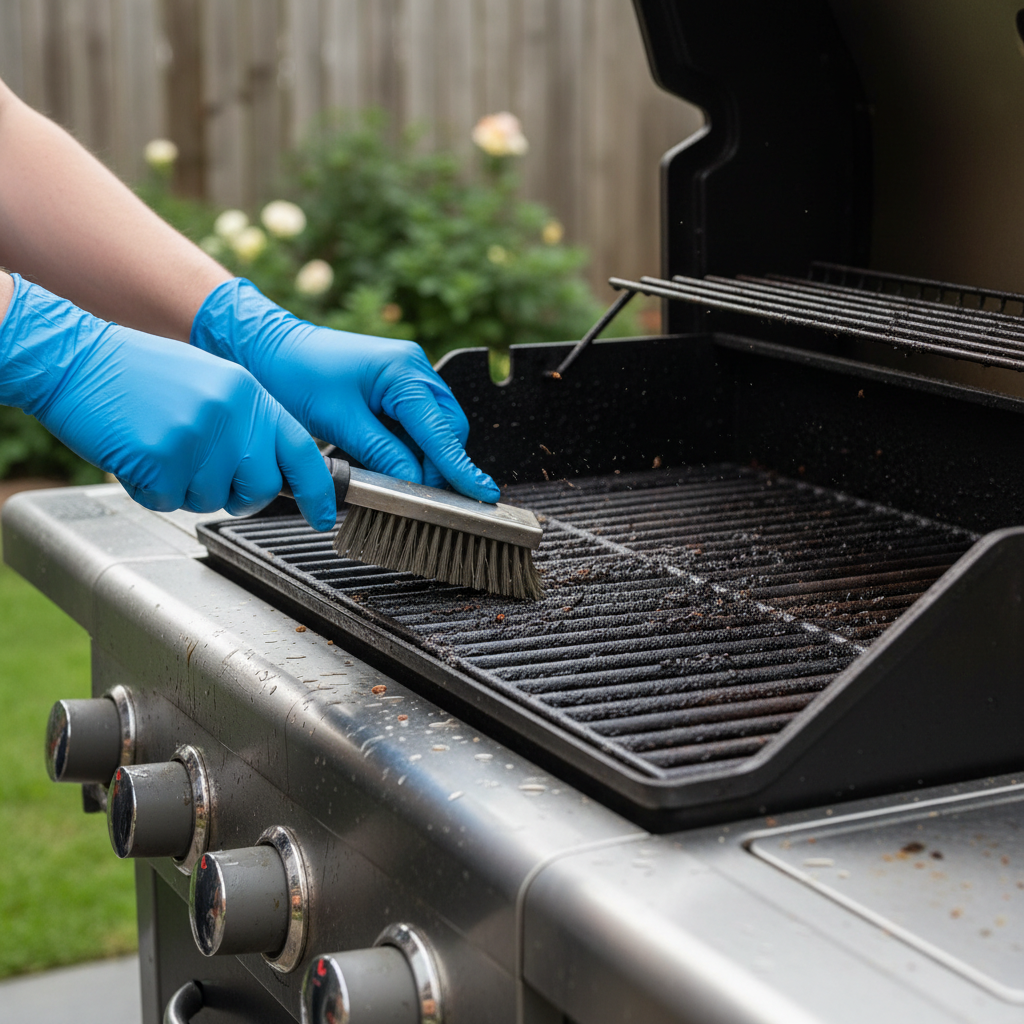
- Remove and Clean Grates: Take out the cooking grates. For tough, baked-on residue, soak them in warm, soapy water. Use a stiff wire brush or a specialized grill brush to scrub away food particles. Rinse thoroughly and dry completely.
- Clean Burner Covers/Heat Diffusers: Remove the burner covers (also called flavorizer bars or heat diffusers). Use your grill brush or a scraper to remove any gunk or rust. Inspect them for excessive corrosion or holes; replace if necessary.
- Clear Burner Ports: Gently brush the burner tubes to remove any debris blocking the small gas ports. A toothpick or paperclip can be used to clear stubborn blockages. If burners are heavily corroded, they may need replacement.
- Clean the Firebox/Cookbox: Scrape the inside of the firebox or cookbox with a plastic scraper to remove loose carbon and grease buildup. Push debris into the grease tray. Avoid harsh chemicals that can damage the finish.
- Empty and Clean Grease Tray/Drip Pan: Remove the grease tray or drip pan and empty its contents. Wash it thoroughly with warm, soapy water. Line new disposable drip pans with aluminum foil for easier cleanup next time.
- Wipe Down Exterior: Use a damp cloth and mild dish soap to clean the exterior surfaces of the grill. For stainless steel, wipe with the grain and consider using a specialized stainless steel cleaner for a streak-free shine.
- Inspect and Reassemble: Check all connections, hoses (for gas grills), and electrical cords (for electric grills) for cracks or damage. Once everything is clean and dry, reassemble your grill.
Common Causes
- Infrequent Cleaning: The most common cause of grill issues is simply not cleaning it often enough. Regular cleaning prevents buildup.
- Grease Accumulation: Grease is highly flammable. If not cleaned, it accumulates in the firebox and drip pan, leading to dangerous flare-ups.
- Food Residue: Leftover food bits can carbonize, creating tough spots that hinder heat distribution and can affect the taste of new food.
- Environmental Exposure: Rain, humidity, and general outdoor exposure can lead to rust and corrosion if the grill is not covered or properly maintained.
Tips & Prevention
- Preheat and Post-Cook Brushing: Always preheat your grill, then brush the grates before placing food. After cooking and once the grill cools slightly, brush the grates again while they are still warm.
- Use a Grill Cover: Protect your grill from the elements by using a weather-resistant grill cover when not in use.
- Regular Deep Cleans: Perform a deep clean at the beginning and end of each grilling season, and after every 5-10 uses for frequent grillers.
- Check for Gas Leaks: For gas grills, periodically check for gas leaks using a soapy water solution on the hose and connections. If bubbles form, you have a leak.
- Season Cast Iron Grates: If your grill has cast iron grates, season them regularly with cooking oil to prevent rust and improve non-stick properties.
When to Call a Professional
If you detect a gas smell, suspect a significant gas leak, or hear hissing noises from your gas grill connections that you cannot resolve, immediately turn off the gas and call a licensed professional for inspection and repair. If you notice persistent electrical issues with an electric grill that doesn
This article was independently written by FixlyGuide based on the source topic.
Frequently asked questions
How often should I clean my grill?+
For optimal performance and safety, clean your grill grates after every use. A deeper clean of the internal components, like burner covers and the firebox, should be done every 5-10 uses, or at least twice a year (at the beginning and end of grilling season).
What should I do if my gas grill smells like gas?+
If you smell gas, immediately turn off the gas supply at the tank. Do not attempt to light the grill. Check all connections for leaks using soapy water. If the smell persists or you can't find the source, ventilate the area and call a licensed gas professional immediately.
Can I use household cleaners on my grill?+
It's best to use mild dish soap and water for most grill cleaning, especially on cooking surfaces and interiors. Harsh chemical cleaners can leave residues that are unsafe for cooking or can damage grill finishes. Always rinse thoroughly.

Discussion
Loading comments…