Tools & materials you'll need
Affiliate links- AmazonNut driver set1
- AmazonPhillips head screwdriver1
- AmazonMultimeter (with continuity setting)1 · Optional, but highly recommended for diagnosis
- AmazonShop vacuum with crevice tool1 · For lint cleaning
- AmazonWork gloves1 · Optional, for hand protection
- AmazonDryer vent brush kit1 · If significant vent cleaning is needed
- AmazonReplacement thermal fuse1 · Specific to your dryer model
As an Amazon Associate FixlyGuide earns from qualifying purchases — at no extra cost to you. Prices and availability are accurate as of publication and subject to change.
Quick Answer
If your electric dryer is running through cycles, tumbling your clothes, but leaving them cold and damp, the odds are high that a blown thermal fuse is to blame. This small, non-resettable safety device is designed to cut power to the heating element when the dryer's internal temperature exceeds a safe limit, preventing overheating and potential fire hazards. Fortunately, replacing a thermal fuse is a straightforward repair that most homeowners can accomplish in under an hour with basic tools and an inexpensive part.
The Problem
Your dryer turns on, the drum spins, and the timer advances, but your clothes remain stubbornly wet. This specific symptom – tumble-no-heat – is a strong indicator of a thermal fuse failure. Unlike a tripped circuit breaker, which would kill all power to the dryer, a blown thermal fuse typically only interrupts the heating circuit. This means the motor, lights, and control panel might still function, misleading you into thinking the problem is more complex than it is. While other components like the heating element, thermistor, or high-limit thermostat can also cause a no-heat situation, the thermal fuse is often the first and easiest to check, especially given its low cost and relatively simple replacement process.
How It Works
An electric dryer generates heat using a heating element, essentially a large resistor that glows hot when electricity passes through it. Air is drawn into the dryer, heated by this element, and then circulated through the tumbling drum to evaporate moisture from your clothes. To prevent excessive temperatures, which could damage clothes or even cause a fire, dryers incorporate several safety devices. The thermal fuse is one such critical component.
Typically located on the blower housing or near the heating element duct, the thermal fuse is a small, cylindrical or rectangular device with two wire terminals. It contains a temperature-sensitive link designed to melt and break the electrical circuit if the dryer's internal temperature reaches an unsafe level (often around 300-350°F or 150-175°C). Once this link melts, the fuse is permanently open and must be replaced. It's a single-use safety mechanism. Because it's a safety device, it's crucial to understand why it blew. Often, a blocked vent hose, lint buildup, or a faulty cycling thermostat can cause the dryer to overheat, leading to the fuse's failure. Simply replacing the fuse without addressing the underlying cause will likely result in another blown fuse.
Step-by-Step Fix
Safety First! Before attempting any repair, always unplug your dryer from the electrical outlet. Gas dryers also have an electrical cord that must be unplugged. For electric dryers, double-check that the large 240V plug is completely removed from the wall. Even if you only plan to replace the thermal fuse, components inside can store residual charge.
-
Gain Access to the Dryer's Rear Panel – Unplug the dryer and move it away from the wall. Use a nut driver or screwdriver to remove the screws holding the rear access panel in place. The number and type of screws will vary by model, but they are typically along the edges of the panel.
- Tools: Nut driver (1/4-inch or 5/16-inch) or Phillips head screwdriver
- Tip: Placing a blanket or cardboard on the floor can prevent scratching your flooring as you slide the dryer.
-
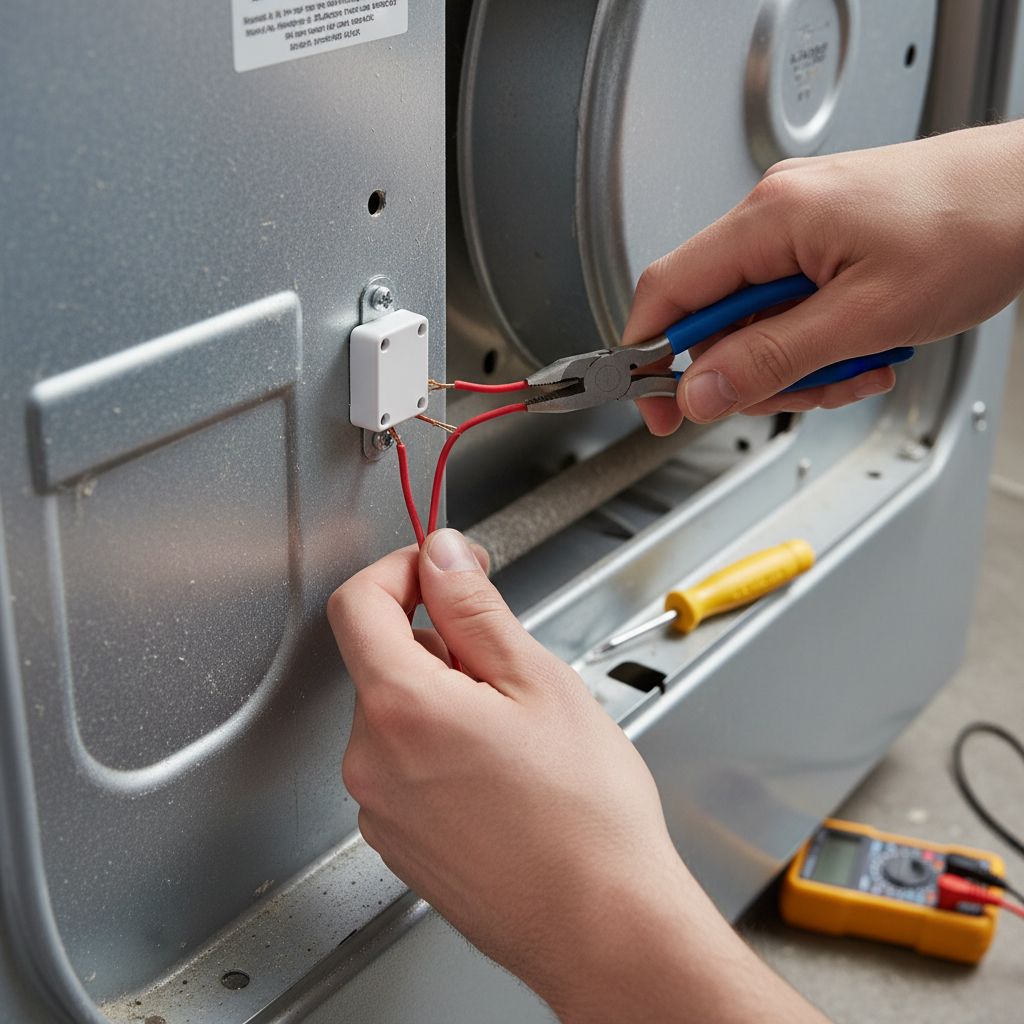
Locate the Thermal Fuse – Once the rear panel is off, identify the thermal fuse. It's usually a small, white plastic component, often rectangular or cylindrical, with two wires connected to it. It's typically mounted on the blower housing or the heating element duct, often alongside the high-limit thermostat. It might be next to a metal cylinder (the high-limit thermostat). The thermal fuse will often be visually distinct by its plastic housing compared to the metal housing of the thermostat.
- Reference: Consult your dryer's wiring diagram, often found inside the control panel or online, if you're having trouble locating it.
-
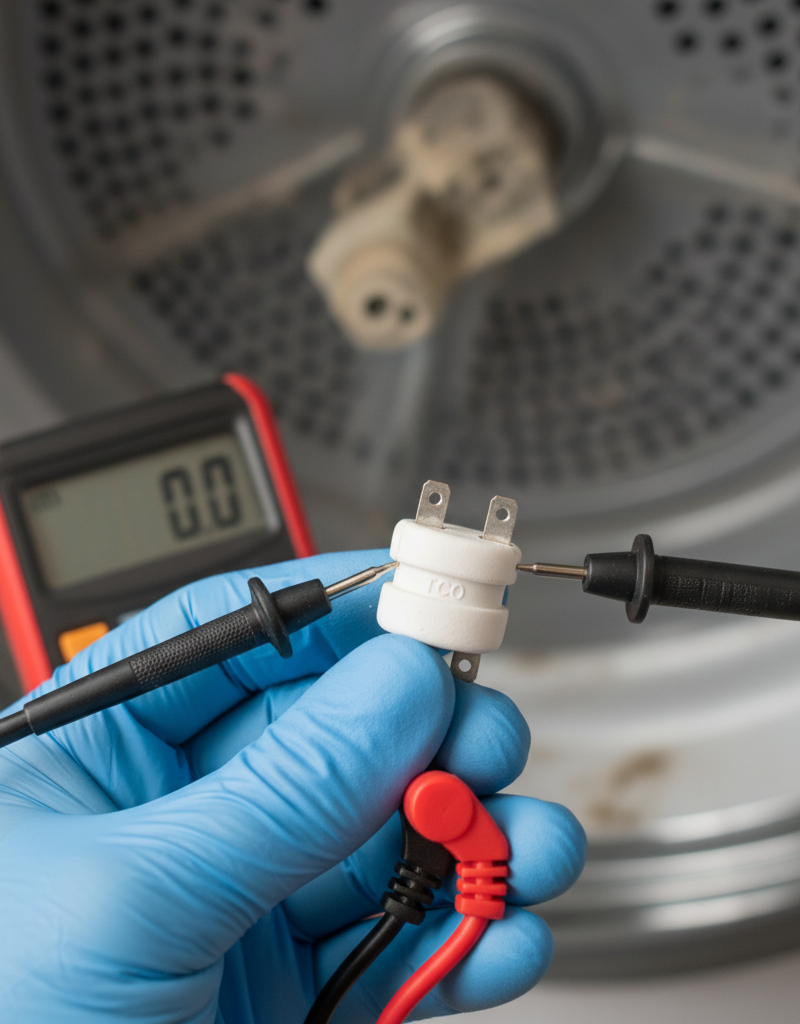
Test the Thermal Fuse for Continuity – Use a multimeter set to the continuity or ohms setting. Disconnect one wire from the thermal fuse to isolate it from the circuit. Touch one probe of the multimeter to each terminal of the fuse.
- Expected Result: A healthy fuse will show continuity (a 'beep' or a reading of 0-1 ohm). A blown fuse will show no continuity (no 'beep' or an infinite resistance/OL reading).
- If this doesn't work: If you don't have a multimeter, you can still proceed, but you're working on the assumption the fuse is faulty. A multimeter confirms the diagnosis.
-
Disconnect the Wires – Carefully pull the wires off the terminals of the old thermal fuse. These are usually spade connectors that pull straight off. Avoid pulling on the wires themselves; grasp the connectors. If they are spring clips, gently squeeze the clip to release.
-
Remove the Old Thermal Fuse – Unscrew the retaining screw(s) holding the fuse to the dryer. There's usually one or two Phillips head or hex head screws. Keep track of these screws as you'll need them for the new fuse.
-
Clean Out Lint Buildup – This is crucial. A blown thermal fuse often indicates an underlying airflow problem. Use a shop vacuum with a crevice tool to thoroughly clean all accessible lint from the dryer's interior, especially around the blower housing, the heating element, and the exhaust duct. Check the entire length of the exhaust vent hose for blockages.
- Safety Note: Lint is highly flammable. Regular cleaning prevents fires.
-
Install the New Thermal Fuse – Mount the new thermal fuse in the same location as the old one. Secure it with the retaining screw(s) you removed earlier. Ensure it's snug but don't overtighten.
-
Reconnect the Wires – Push the wires back onto the terminals of the new thermal fuse. It's generally not polarity-sensitive, so either wire can go on either terminal, but ensure they are seated firmly.
-
Reassemble and Test – Replace the rear access panel and secure all screws. Push the dryer back into its original position, plug it back in, and run a test cycle (e.g., air fluff or a low-heat setting for a few minutes). Check for heat coming from the exhaust vent or inside the drum.
- If this doesn't work: If the dryer still doesn't heat up, the problem might lie with another component like the heating element, cycling thermostat, or high-limit thermostat. Re-test the thermal fuse to ensure it wasn't a faulty new part, then investigate these other components.
Common Causes
- Restricted Airflow: This is by far the most common reason a thermal fuse blows. Lint buildup in the dryer vent hose, internal ducts, blower wheel, or even the dryer's lint trap can restrict airflow. When hot, moist air can't escape efficiently, heat builds up inside the dryer, causing the fuse to trip.
- Crushed or Kinked Vent Hose: The flexible duct behind the dryer can easily become kinked or crushed, especially if the dryer is pushed too close to the wall. This severely restricts airflow.
- Clogged Exterior Vent Hood: The vent hood on the outside of your house can become clogged with lint, bird nests, or other debris, blocking exhaust and leading to overheating.
- Faulty Cycling Thermostat: The cycling thermostat regulates the temperature inside the dryer. If it fails to open and close correctly, the heating element might stay on too long, causing the dryer to overheat and blow the thermal fuse.
- Worn Blower Wheel: A damaged or loose blower wheel cannot move air effectively, leading to heat buildup. This is less common but can contribute to overheating.
Common Mistakes
- Not Unplugging the Dryer: Forgetting to disconnect power is dangerous and can lead to electric shock. Always unplug the appliance before opening it up.
- Replacing the Fuse Without Addressing the Cause: The thermal fuse is a symptom, not the root problem. If you don't clean the dryer vents and ensure proper airflow, the new fuse will likely blow again almost immediately.
- Using the Wrong Replacement Part: Thermal fuses are specific to dryer models and brands. Always use the manufacturer-recommended part number. Generic fuses might not have the correct temperature rating, leading to improper operation or continued safety hazards.
- Overtightening Screws: The thermal fuse housing is often plastic. Overtightening can strip the screws or crack the plastic, compromising the component's mounting or electrical connection.
- Skipping the Continuity Test: While not strictly mandatory if you're confident the fuse is the issue, testing the old fuse with a multimeter confirms the diagnosis and prevents you from replacing a perfectly good part.
- Neglecting Lint Clean-up: Underestimating the importance of cleaning all accessible lint from inside the dryer and the entire vent system. A small amount can still restrict airflow significantly.
Cost & Time Breakdown
| Task | DIY cost | Pro cost | Time |
|---|---|---|---|
| Thermal Fuse (part) | $5–$25 | Included in repair | 5–10 minutes |
| Lint cleaning (DIY) | $0 (with tools) | n/a | 15–30 minutes |
| Tools (multimeter, nut driver) | $15–$30 | n/a | 0 (if owned) |
| Professional Diagnosis & Repair | n/a | $150–$300+ | 30–60 minutes |
Tips & Prevention
- Regular Vent Cleaning: Clean your dryer's lint screen after every load. At least once a year, disconnect the dryer vent hose and thoroughly clean it using a dryer vent brush kit or shop vacuum. Don't forget to clear the exterior vent hood.
- Check for Kinks: Periodically pull your dryer away from the wall to inspect the flexible vent hose for kinks, crushes, or tears.
- Proper Installation: Ensure your dryer is installed with adequate space behind it to prevent the vent hose from being crushed.
- Avoid Overloading: Overloading the dryer can restrict airflow, extending drying times and increasing internal temperatures, stressing components like the cycling thermostat and thermal fuse.
- Monitor Drying Times: If drying times suddenly increase, or clothes feel unusually hot after a cycle, it's a sign of a potential airflow issue or component failure that needs investigation before it leads to a blown fuse.
- Consider Upgrading: If your dryer consistently has issues with overheating or blowing thermal fuses despite regular cleaning, it might be a sign of an aging appliance or more complex underlying problems with multiple failing components.
When to Call a Professional
While replacing a thermal fuse is a straightforward DIY task, there are specific situations where calling a licensed appliance repair professional is the safer and more effective course of action. If you've replaced the thermal fuse, thoroughly cleaned your entire vent system, and your dryer still isn't heating, the issue likely lies with a more complex component such as the heating element, cycling thermostat, high-limit thermostat, or even the control board. These repairs can involve working with higher voltages or more intricate disassembly. Additionally, if your dryer is a gas model and you suspect a problem with the gas valve or igniter, never attempt DIY repairs; always call a qualified technician. Any gas-related issue poses a significant safety risk. Professionals have the specialized tools, diagnostic equipment, and expertise to safely and accurately troubleshoot and repair these more involved problems, ensuring your dryer operates safely and efficiently.
Frequently asked questions
Why did my dryer's thermal fuse blow?+
The most common reason a dryer thermal fuse blows is restricted airflow due to lint buildup in the vents, a kinked vent hose, or a clogged exterior vent. This causes the dryer to overheat, tripping the fuse as a safety measure. Less often, a faulty cycling thermostat can cause it to blow.
Can I bypass a thermal fuse on a dryer?+
No, absolutely not. Bypassing a thermal fuse disables a critical safety mechanism designed to prevent fires caused by overheating. This is extremely dangerous and could lead to serious appliance damage or a house fire. Always replace a blown thermal fuse with the correct OEM-equivalent part.
Where is the thermal fuse located on a dryer?+
The thermal fuse is typically located at the back of the dryer, often mounted on the blower housing or near the heating element duct. You'll usually need to remove the rear access panel to find it. It's a small, rectangular or cylindrical component with two wires attached.
How do I test a thermal fuse?+
You can test a thermal fuse using a multimeter set to the continuity or ohms setting. Disconnect one wire from the fuse. Place one probe on each terminal of the fuse. A good fuse will show continuity (a 'beep' or near zero ohms); a blown fuse will show no continuity (infinite resistance or 'OL').
Discussion
Loading comments…