Tools & materials you'll need
Affiliate linksAs an Amazon Associate FixlyGuide earns from qualifying purchases — at no extra cost to you. Prices and availability are accurate as of publication and subject to change.
Quick Answer
When a garage door stops before fully closing, the most common culprits are misaligned safety sensors, an obstruction in its path, or incorrectly set travel limits. These issues typically interrupt the door's closing cycle as a safety precaution. Checking the sensor alignment, clearing any blockages, and resetting the travel limits are usually effective at resolving the problem. A deeper issue could involve the force settings or internal opener components, which might require professional attention.
The Problem
Picture this: You hit the button to close your garage door, and it starts its descent smoothly, only to abruptly stop a few inches or a foot from the ground. Then, to add insult to injury, it often reverses itself, leaving a gap. This isn't just an inconvenience; it's a security risk and a potential invitation for pests or weather into your garage. This frustrating scenario almost always points to a safety mechanism being triggered or a programmed limit being reached prematurely. It's rarely a sign of total system failure, but rather a hiccup in how the opener understands its boundaries or perceives potential hazards.
Approximately 80% of garage door issues that prevent full closure are related to the safety sensors, often referred to as the 'electric eyes.' These small devices, located near the bottom of your garage door tracks, are designed to prevent the door from closing on a person, pet, or object. When their beam is obstructed or misaligned, the opener interprets it as a blockage and stops the door, often reversing it automatically as a built-in safety feature mandated by federal regulations (UL 325 standards).
Beyond the sensors, the 'travel limits' play a crucial role. These are the programmed endpoints that tell your garage door opener how far to open and how far to close. If the down-limit is set too high, or if it drifts over time, the door will stop short, believing it has reached its destination. Similarly, if the 'force settings' — which dictate how much resistance the opener will tolerate before stopping — are too low, even minor friction can cause the door to reverse prematurely.
How It Works
Understanding how your garage door system operates is key to diagnosing why it won't close fully. At its core, a garage door opener is an electro-mechanical system. A motor, typically located in a housing on the garage ceiling, drives a trolley along a rail. This trolley is connected to the garage door by an arm, guiding the door's movement up and down on its tracks. Most modern residential garage door openers use either a chain, belt, or screw drive mechanism.
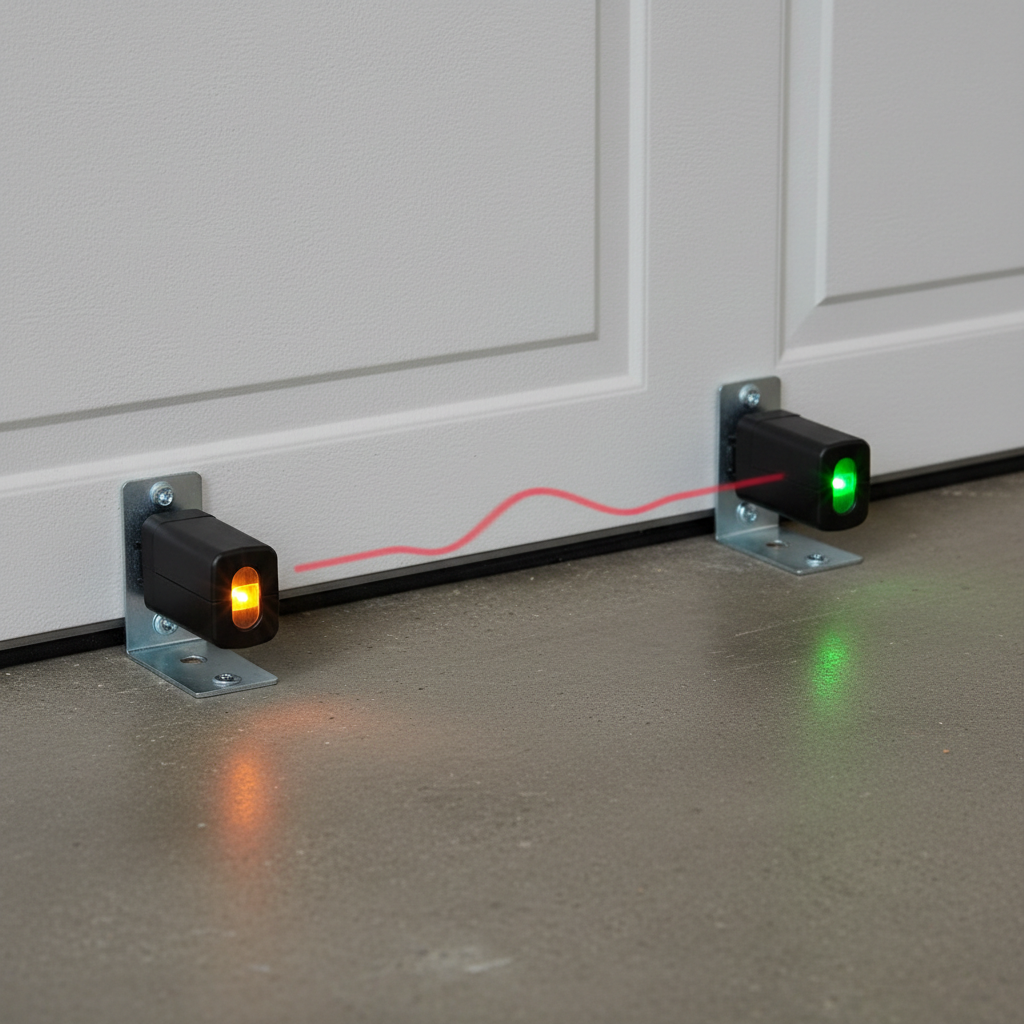
Central to the problem of a door not closing fully are the safety reversal systems. First, there are the photoelectric safety sensors, mandated since 1993. These consist of two units, an emitter and a receiver, mounted a few inches off the floor on either side of the garage door opening. The emitter sends an invisible infrared beam to the receiver. When this beam is continuous, the door can close. If anything breaks the beam during descent, the receiver signals the opener to stop and reverse the door immediately. Even a spiderweb or a thin layer of dust can sometimes interfere with this delicate beam, causing false positives.
Second, all garage door openers have a mechanical or electrical force sensing system. This system monitors the amount of resistance the door encounters during its travel. If the door hits an object and the resistance exceeds a pre-set threshold, the opener perceives an obstruction and will reverse the door. This system acts as a secondary safety measure, backing up the photoelectric sensors and protecting against crushing injuries if an object is beneath the door but not in the sensor's beam path.
Finally, travel limits define the door's open and closed positions. These are set either mechanically via screws on the opener unit or electronically via programming buttons. When the door reaches its programmed down-limit, the motor stops, and the system assumes the door is fully closed. If this down-limit is set too high, the door will stop prematurely, even if there's still a gap. Over time, components can wear, or minor shifts in the garage structure can cause these limits to become misaligned, requiring adjustment.
Step-by-Step Fix
1. Check the Safety Sensors – The most common culprit for a door stopping and reversing.
- Inspect sensor alignment and beam: Look for two small boxes, typically 4-6 inches off the ground, on either side of the garage door opening. One will have an amber light, the other a green light (colors may vary by brand). Ensure both lights are solidly lit. If either is off, blinking, or dim, the beam is interrupted or misaligned. Gently nudge each sensor, observing if the light changes. Use a level to ensure they are perfectly straight and pointing directly at each other across the opening.
- If this doesn't work: Ensure sensor wires are securely connected to the opener unit and the sensors themselves. Check for frayed or damaged wiring, especially near the connections or where they might be pinched.
2. Clear Obstructions – Remove anything blocking the sensor beam or the door's path.
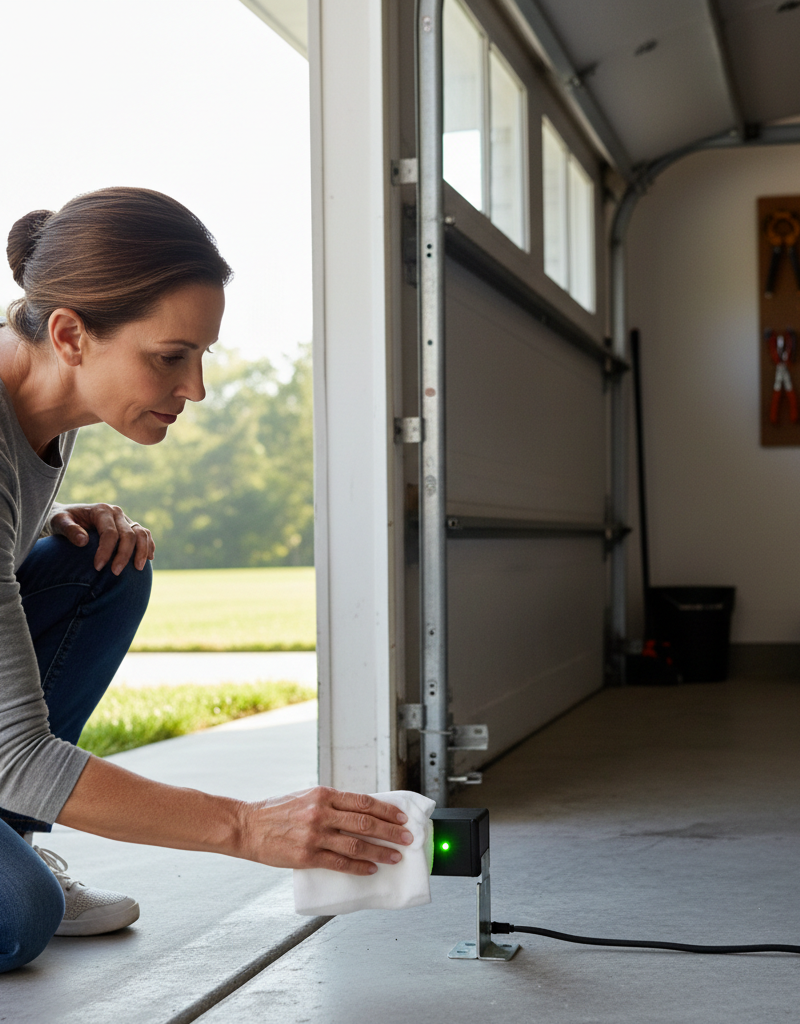
- Clear the sensor path: Wipe down the lenses of both safety sensors with a clean, soft cloth. A thin layer of dust, cobwebs, or even a small insect can block the infrared beam. Ensure no small objects like toys, tools, or even leaves are directly in the path between the two sensors when the door is closing.
- Inspect the entire door path: Look inside the tracks for any debris, loose screws, or bent sections that could impede the rollers. Check the bottom edge of the garage door itself for any warped weather stripping or objects stuck to it that could hit the floor prematurely.
- Safety Note: Never attempt to clear obstructions while the garage door is in motion. Always use the wall button or remote to stop the door completely before approaching it.
3. Adjust the Down Travel Limit – If the door stops short but doesn't reverse.
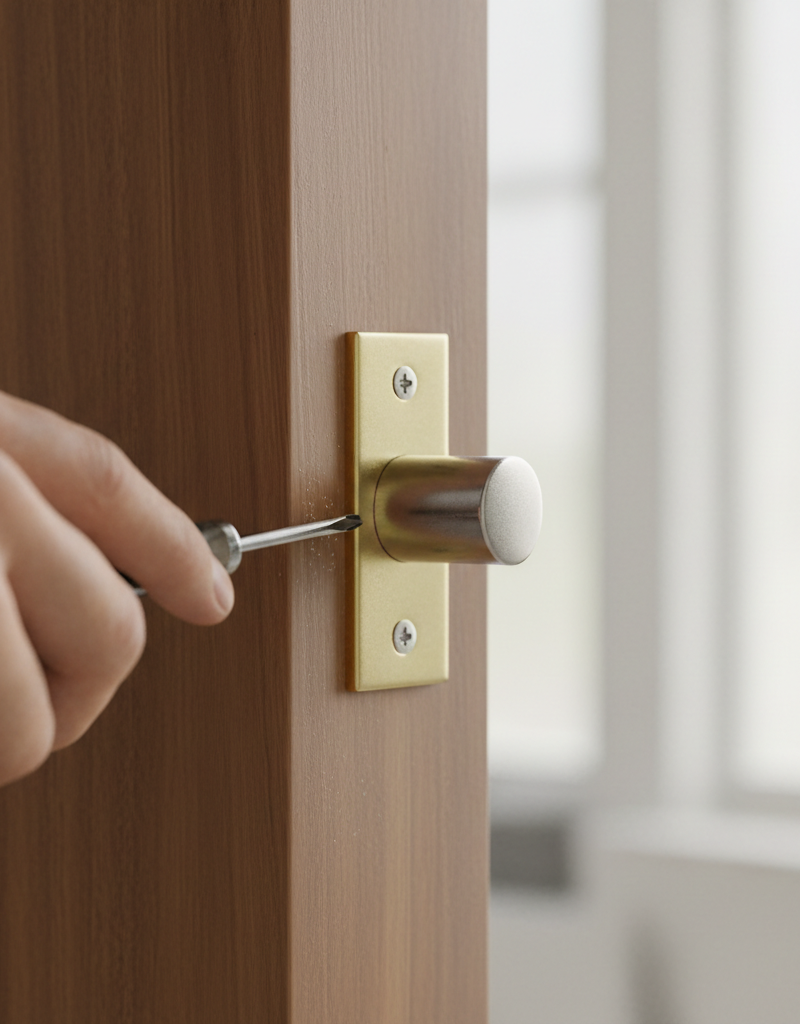
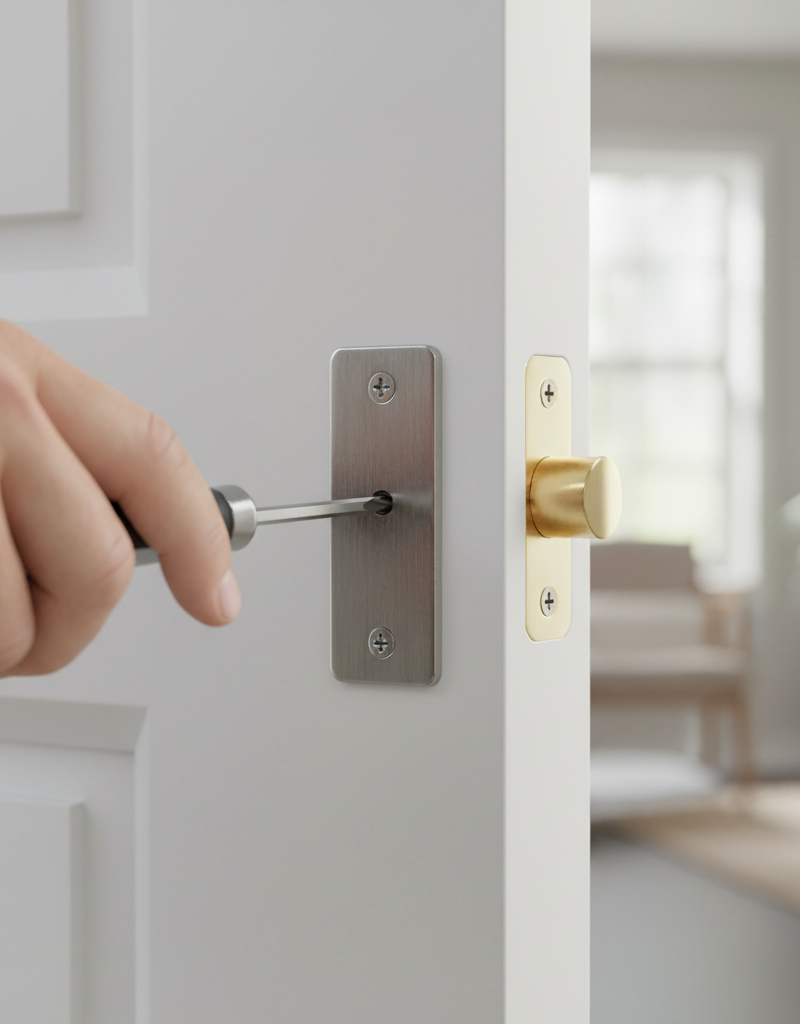
- Locate adjustment screws/buttons: On the back or side of your garage door opener motor unit, you'll find adjustment controls. These are typically two screws (one for 'up' travel, one for 'down' travel, often labeled with arrows) or a set of programming buttons. Consult your owner's manual for exact locations and terminology (e.g., 'Limit Adjust' or 'Travel').
- Increase the down travel: If using screws, turn the 'down' limit screw clockwise in small increments (quarter turns). If using buttons, follow your manual's instructions to enter programming mode and adjust the 'down' limit. After each adjustment, test the door. The goal is for the door to gently meet the garage floor, creating a tight seal without over-forcing it.
- If this doesn't work: If the screw turns freely without resistance, the internal limit switch might be stripped or damaged, requiring a professional repair or opener replacement.
4. Adjust the Down Force Setting – If the door reverses even with no obvious obstruction.
- Locate force adjustment controls: These are usually two more screws on the opener unit, often labeled 'Force' or 'Sensitivity' for 'up' and 'down' travel. They might be smaller than the travel limit screws or part of the electronic programming.
- Slightly increase down force: Turn the 'down' force screw clockwise in tiny increments (eighth turns). Test the door after each adjustment. The door should close completely with minimal force, but not so much that it causes excessive strain on the motor or reverses unnecessarily. Perform the 'paper bag test': Place a standard paper grocery bag (empty) flat on the floor in the center of the door's path. If the door doesn't reverse upon hitting the bag, the force is too high. Decrease force until it reverses, then increase it slightly so it closes without reversing on minor resistance.
- Safety Note: Do not set the force too high. An excessively high force setting can cause serious injury or damage if the door closes on an object or person. This is a critical safety control.
5. Inspect Tracks and Rollers – Ensure smooth, unimpeded movement.
- Visual inspection: With the door closed and unplugged, carefully examine the full length of both vertical and horizontal tracks. Look for dents, bends, or flattened sections. Ensure all mounting brackets are securely fastened to the wall.
- Roller check: Inspect each roller. They should spin freely and move smoothly within the tracks. Look for worn-out, cracked, or broken rollers. Lubricate rollers and hinges with a silicone-based garage door lubricant.
- If this doesn't work: Severely bent tracks or deeply worn rollers significantly hinder operation and may require professional attention for repair or replacement to avoid further damage.
6. Check for Wiring Issues – Damaged wires can disrupt sensor communication.
- Trace sensor wires: Follow the thin wires running from each safety sensor back to the main opener unit. Look for any visible nicks, cuts, or frayed insulation. Pay close attention to areas where wires might be pinched by the door frame, track, or near the opener motor.
- Secure connections: Ensure all wire connections are tight, both at the sensors and at the opener's terminal block. Loose connections can lead to intermittent signals.
Common Causes
- Misaligned or Obstructed Safety Sensors: By far the most common reason. Even a slight bump can knock them out of alignment, or a small object (like a leaf, cobweb, or children's toy) can break the infrared beam.
- Incorrect Down Travel Limit Setting: The opener is programmed to stop at a certain point, and if that point is too high, the door will technically close to its programmed limit but leave a gap at the bottom.
- Low Downward Force Setting: The opener detects too much resistance (even minor friction from tracks or weatherstripping) and reverses as a safety measure, believing it has encountered an obstruction.
- Bent Tracks or Damaged Rollers: Physical impediments in the door's travel path create friction or snagging, causing the force sensor to trigger a reversal.
- Debris in the Door Path: Anything from rocks, tools, or even accumulated dirt directly under the closing path can trigger the safety reversal.
- Frayed or Damaged Sensor Wiring: Compromised wiring between the sensors and the opener can lead to intermittent or complete loss of sensor signal, mimicking a blockage.
Common Mistakes
- Ignoring the Safety Sensors: Many homeowners overlook the sensors, assuming the problem must be mechanical. Always check sensor alignment and cleanliness first.
- Over-tightening Travel Limits: Forcing the door to close harder than necessary by setting the down limit too low puts excessive strain on the opener motor and can damage the door or the floor seal.
- Setting Force Too High: This is a major safety hazard. If the force is set too high, the door will not reverse if it hits an object or person, potentially causing serious injury or property damage. Always test with a paper towel roll or similar object after adjusting force.
- Lubricating the Tracks (Instead of Rollers/Hinges): Applying grease or oil to the tracks actually attracts dirt and grime, creating more friction and making the problem worse. Tracks should be kept clean; rollers and hinges should be lubricated with a silicone-based spray.
- Not Checking Manual for Specific Adjustments: Different opener brands and models have varying adjustment procedures. Guessing can lead to further issues or incorrect settings. Always refer to your specific owner's manual for precise instructions.
- Attempting Major Mechanical Repairs Without Experience: Messing with springs, cables, or complex electrical components can be extremely dangerous. These parts are under high tension and should only be handled by trained professionals.
Cost & Time Breakdown
| Task | DIY Cost | Pro Cost | Time |
|---|---|---|---|
| Sensor Cleaning/Alignment | $0 | $75–$150 | 5–10 minutes |
| Travel/Force Limit Adjustment | $0 | $75–$150 | 10–20 minutes |
| Obstruction Removal | $0 | Included | 1–5 minutes |
| Track/Roller Lubrication | $5–$15 | Included | 15–20 minutes |
| Minor Wiring Repair | $2–$10 | $100–$200 | 20–40 minutes |
| Roller Replacement (DIY) | $20–$50 | $150–$250 | 30–60 minutes |
Tips & Prevention
- Regular Sensor Check: Once a month, quickly check that both safety sensor lights are on and steady. Gently nudge them to ensure they're still aligned.
- Clear the Path Routinely: Keep the area immediately around and under your garage door clear of clutter, especially toys, tools, and garden equipment.
- Lubricate Moving Parts Annually: Apply a silicone-based lubricant to rollers, hinges, and springs once a year to ensure smooth operation and reduce friction. Avoid WD-40 or grease on tracks.
- Inspect Weather Stripping: Periodically check the rubber weather stripping along the bottom of the door. Replace it if it's cracked, stiff, or significantly worn, as it can cause friction or leave gaps.
- Test Reversal Mechanism: Every six months, perform the 'paper bag test' or use a block of wood (2x4 flat) to ensure the safety reversal mechanism is functioning correctly. The door should reverse upon contact.
- Listen for Unusual Noises: Pay attention to grinding, squeaking, or straining noises from the opener or door. These can indicate developing problems with rollers, tracks, or the motor itself.
When to Call a Professional
While many garage door closing issues are DIY-friendly, certain situations warrant calling a licensed professional. If you've diligently followed all the troubleshooting steps—checking sensors, clearing obstructions, and adjusting limits and force—and the door still won't close fully, or if it exhibits erratic behavior, it's time to call in an expert.
You should immediately contact a professional if you suspect issues with the high-tension springs (torsion or extension springs), as these are extremely dangerous to work with and can cause severe injury. Similarly, if the opener motor sounds like it's grinding, smoking, or completely unresponsive, or if there's damage to the tracks or cables that you can't easily fix, a professional has the specialized tools and expertise to diagnose and safely repair these complex components. Never attempt to bypass safety features like the sensors; this is incredibly dangerous and illegal.
Frequently asked questions
Why does my garage door stop and go back up when closing?+
Most often, your garage door stops and reverses because its safety sensors (the 'electric eyes' near the floor) are misaligned, dirty, or something is blocking the infrared beam between them. The opener interprets this as an obstruction and reverses the door to prevent injury or damage.
How do you reset a garage door opener that won't close all the way?+
Resetting usually involves clearing any obstructions, checking and realigning the safety sensors, and then adjusting the 'down' travel limit and 'down' force settings on the opener unit. Consult your owner's manual for specific instructions on how to access and adjust these settings for your model.
Can cold weather affect a garage door not closing?+
Yes, cold weather can affect a garage door's operation. Extreme cold can make rubber weather stripping stiff and less flexible, increasing friction. It can also cause metal components to contract slightly, affecting track alignment or the lubrication of moving parts, leading to the opener needing more force to close the door.
Where are the force adjustment screws on a garage door opener?+
Force adjustment screws are typically found on the side or back panel of the garage door opener motor unit, usually near the travel limit adjustment screws. They are often labeled 'Force' or 'Sensitivity' and may have arrows indicating 'up' and 'down' force. Always refer to your owner's manual for their exact location and adjustment procedure.
Should I lubricate my garage door tracks?+
No, you should never lubricate the garage door tracks themselves. Lubricating tracks can attract dirt and debris, which will cause more friction and operational problems over time. Instead, lubricate the rollers, hinges, and springs with a silicone-based garage door lubricant to ensure smooth operation.
Discussion
Loading comments…