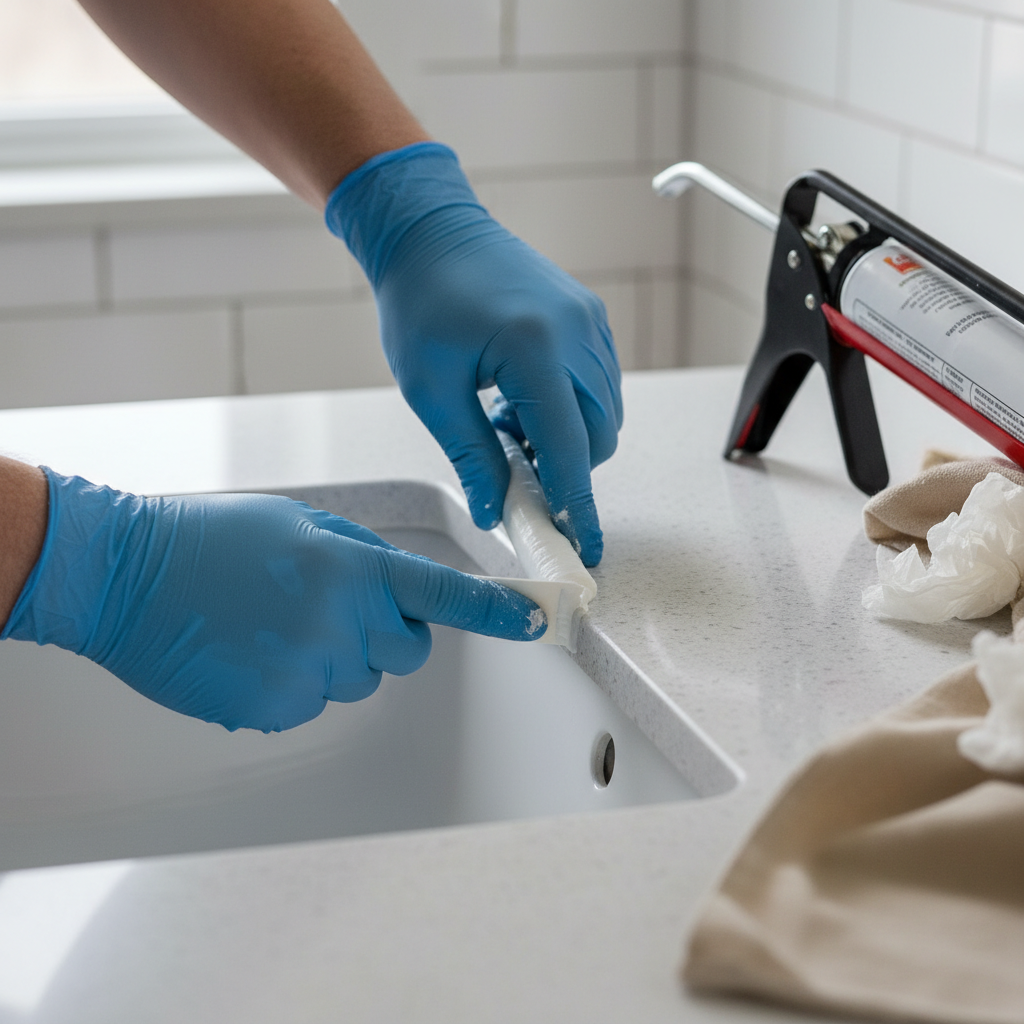
Tools & materials you'll need
Affiliate linksAs an Amazon Associate FixlyGuide earns from qualifying purchases — at no extra cost to you. Prices and availability are accurate as of publication and subject to change.
Quick Answer
To properly caulk around a bathroom sink, you'll need to remove all existing caulk, clean and dry the area completely, and then apply a new bead of silicone caulk. Use a caulk gun to apply a steady, even line, and smooth it with a caulk tool or a gloved finger for a professional, watertight finish. This simple task protects your vanity and walls from water damage.
The Problem
Over time, the caulk around your bathroom sink can crack, peel, or mildew, creating unsightly gaps. These gaps are more than just an aesthetic issue; they allow water to seep behind your sink and into your vanity or walls. This can lead to significant problems like wood rot, mold growth, and structural damage, not to mention a breeding ground for mildew. Addressing old or failing caulk promptly is crucial for maintaining a healthy and damage-free bathroom.
Step-by-Step Fix
Safety Note: Always wear gloves and ensure good ventilation when working with caulk and caulk remover.
-
Prepare the Area: Clear everything off your bathroom counter. Lay down a drop cloth or old towels to protect your vanity surface and floor from caulk residue.
-
Remove Old Caulk: Using a utility knife or a dedicated caulk removal tool, carefully cut along both edges of the old caulk bead. Pry up and pull away the old caulk. Be gentle to avoid scratching the sink or countertop. For stubborn areas, apply a caulk remover product according to its instructions and let it sit before scraping.
-
Clean the Surface: After removing all the old caulk, thoroughly clean the area. Use a scrub brush or a cleaning rag with an all-purpose cleaner to remove any soap scum, mildew, or caulk residue. Rinse the area well and then wipe it down with rubbing alcohol to remove any lingering oils or film. This step is critical for new caulk adhesion.
-
Dry the Surface Completely: The surface must be completely dry before applying new caulk. Use a clean cloth to dry the area, and then allow it to air dry for at least an hour. You can also use a hairdryer on a cool setting to speed up the process.
-
Prepare the Caulk Cartridge: Cut the tip of the caulk tube at a 45-degree angle, making an opening just large enough for the size of the caulk bead you want. Puncture the inner seal of the tube with the long metal rod on your caulk gun.
-
Load the Caulk Gun: Pull back the plunger on your caulk gun and insert the caulk cartridge. Push the plunger forward until it engages with the caulk tube.
-
Apply the Caulk: Hold the caulk gun at a 45-degree angle to the joint. Apply steady, even pressure to the trigger as you pull the gun smoothly along the gap. Aim for a continuous bead. Don't stop in the middle of a line if possible. For corners, release the trigger, reposition, and then continue.
-
Tool the Caulk: Immediately after applying, use a caulk tooling tool or a gloved finger dipped in a small amount of water to smooth the caulk bead. This pushes the caulk into the gap and creates a clean, professional finish. Work quickly, as caulk begins to skin over within minutes.
-
Clean Up: Wipe away any excess caulk with a damp cloth before it dries. Allow the caulk to cure according to the manufacturer's instructions, typically 12-24 hours, before exposing it to water.
Common Causes
- Age and Wear: Over time, caulk naturally dries out, shrinks, and loses its elasticity, leading to cracking and peeling.
- Moisture Exposure: Constant exposure to water and humidity in a bathroom environment can degrade caulk, especially if it's not a mildew-resistant type.
- Improper Application: If the original caulk wasn't applied correctly, or the surface wasn't properly prepared, it will fail prematurely.
- Movement: Minor shifts in your house's foundation or the weight of the vanity can put stress on caulk lines, causing them to crack.
Tips & Prevention
- Choose the Right Caulk: Always use 100% silicone caulk for bathrooms. It's waterproof, flexible, and resistant to mold and mildew. Acrylic latex caulk may be easier to work with but will not last as long in high-moisture areas.
- Proper Ventilation: Use your bathroom exhaust fan during and after showers to reduce humidity, which helps prevent mildew buildup on caulk.
- Regular Cleaning: Clean your caulk lines regularly with a mild bathroom cleaner to prevent soap scum and mildew from accumulating.
- Practice Makes Perfect: If you're new to caulking, practice on a piece of scrap material first to get a feel for the caulk gun and applying a consistent bead.
When to Call a Professional
If you find consistent water leaks that extend beyond the caulk line, notice significant water damage to your vanity or flooring, or suspect a plumbing leak behind the walls, it's time to call a licensed plumber. They can diagnose underlying issues that caulk alone cannot fix.
Frequently asked questions
What's the best caulk to use for a bathroom sink?+
For bathroom sinks, 100% silicone caulk is highly recommended. It offers excellent waterproofing, flexibility, and resistance to mold and mildew, making it ideal for high-moisture environments.
How long does caulk need to dry before getting wet?+
Most silicone caulks require 12-24 hours to cure completely before being exposed to water. Always check the manufacturer's instructions on your specific caulk tube for precise drying times.
Can I caulk over old caulk?+
No, it's best practice to remove all old caulk before applying new. Applying new caulk over old caulk will not create a lasting, watertight seal and can lead to premature failure and mildew growth.
Why does my bathroom caulk keep molding?+
Caulk can mold due to constant humidity, poor ventilation, or if you're not using a mildew-resistant silicone caulk. Ensure good airflow in your bathroom and use 100% silicone specifically designed for baths and kitchens.
What tools do I need to recaulk a bathroom sink?+
You'll need a utility knife or caulk removal tool, an all-purpose cleaner, rubbing alcohol, a clean cloth, a caulk gun, a tube of 100% silicone caulk, and a caulk tooling tool or gloved finger.
Discussion
Loading comments…