Tools & materials you'll need
Affiliate linksAs an Amazon Associate FixlyGuide earns from qualifying purchases — at no extra cost to you. Prices and availability are accurate as of publication and subject to change.
Quick Answer
After a storm, promptly inspect your roof for missing shingles from the ground. If shingles are missing, prioritize safety, gather basic materials like a tarp and roofing cement, and temporarily cover the exposed area to prevent water intrusion. Document all damage for insurance, then arrange for permanent repair.
The Problem
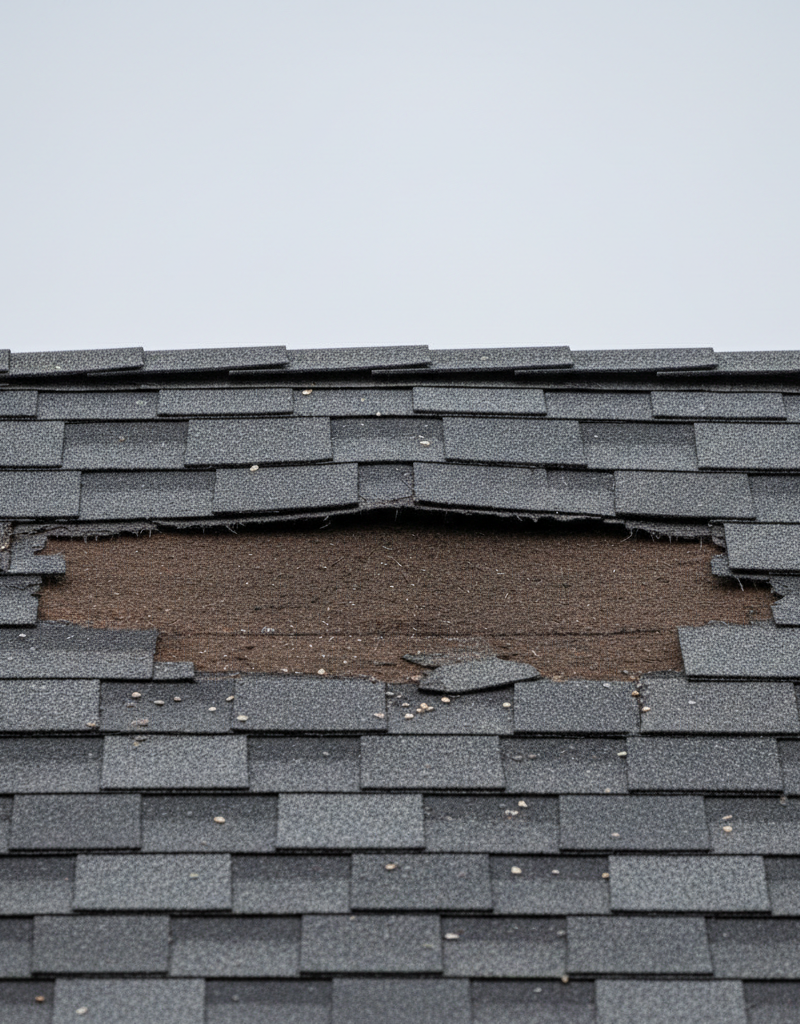
High winds, hail, and heavy rain during a storm can wreak havoc on your roof, dislodging or completely removing shingles. The immediate problem with missing roof shingles isn't just cosmetic; it's a direct threat to your home's structural integrity and interior. Without the protective layer of shingles, your roof deck, underlayment, and eventually your attic and living spaces are exposed to water. Even a small section of missing shingles can lead to significant water leaks, resulting in damaged ceilings, walls, insulation, and even electrical hazards. The longer the roof remains exposed, the greater the risk of mold growth, wood rot, and extensive, costly interior repairs. Understanding how to quickly and safely identify, document, and temporarily protect these vulnerable areas is paramount to minimizing post-storm damage.
How It Works
A typical asphalt shingle roof is a multi-layered system designed to shed water and protect the underlying structure. The base is the roof deck, usually plywood or OSB sheathing, secured to the rafters. Over the deck, an underlayment (felt paper or synthetic material) acts as a secondary water barrier. Shingles are then installed in overlapping courses, beginning at the eaves and working upwards towards the ridge. Each shingle has a self-sealing tar strip that, once heated by the sun, bonds to the shingle below it, creating a wind-resistant, watertight seal. The granules on the shingle surface protect the asphalt from UV degradation and add aesthetic appeal. When a storm hits, high winds create uplift pressure, especially on the edges and corners of shingles that may already be slightly lifted or older. This pressure, combined with strong gusts, can break the shingle's seal, tear through the shingle's nail line, or even shear off the shingle entirely. Hail impact can also dislodge granules or create fractures, weakening the shingle's integrity and making it more susceptible to wind damage. Once a shingle is gone, the underlying underlayment and roof deck are directly exposed to the elements. While underlayment offers some temporary protection, it isn't designed for prolonged direct exposure to sun, rain, or hail, and can quickly degrade or tear, allowing water to penetrate the attic space below. This breach in the roofing system bypasses the intended water-shedding design, creating a direct pathway for moisture into your home.
Step-by-Step Fix
1. Prioritize Safety — Before doing anything, ensure your safety.
*   **Assess Ground-Level First:** Never immediately jump on a ladder after a storm. Do a thorough walk-around of your property. Look for downed power lines, unstable trees or branches, and debris. Only proceed if the immediate area is safe.
*   **Roof Integrity Check:** From the ground, visually inspect your roof. Are there large holes, sagging sections, or major structural damage? If so, stay off the roof immediately and call a professional. Your roof might be unstable.
*   **Tools:** Good quality, sturdy extension ladder, work gloves, non-slip shoes.
*   **Never DIY:** Never attempt roof repairs if there are active thunderstorms, high winds, or if the roof surface is wet or icy. Always enlist a helper to stabilize the ladder and for safety.
2. Document the Damage — Capture clear evidence for your insurance claim.
*   **High-Resolution Photos/Video:** Use your smartphone or a digital camera to take numerous photos and videos of the damaged areas. Get close-ups of missing shingles, any exposed roof deck, and potential interior leaks (ceiling stains, wet insulation).
*   **Broad View:** Also take wider shots that show the entire house and the context of the damage. This helps insurance adjusters understand the scope.
*   **Pre-existing Condition:** If you have any pre-storm photos of your roof, gather those as well. They can help establish the damage as new.
*   **Pro Tip:** Documenting *before* any temporary repairs are made is important for a clear claim.
3. Prepare for Temporary Tarping — Gather your materials and plan your approach.
*   **Measure the Area:** Estimate the square footage of the exposed area. It's always better to have a tarp that is larger than the damaged spot – aim for at least 2-3 feet of overlap on all sides.
*   **Clear Debris:** If it's safe to briefly access the damaged area (following all ladder safety), carefully remove any loose debris like branches or leaves to ensure the tarp lies flat.
*   **Tools:** Utility knife or scissors (to cut tarp if needed), measuring tape, ladder, safety glasses, work gloves.
4. Position and Secure the Tarp — Create a watertight temporary seal.
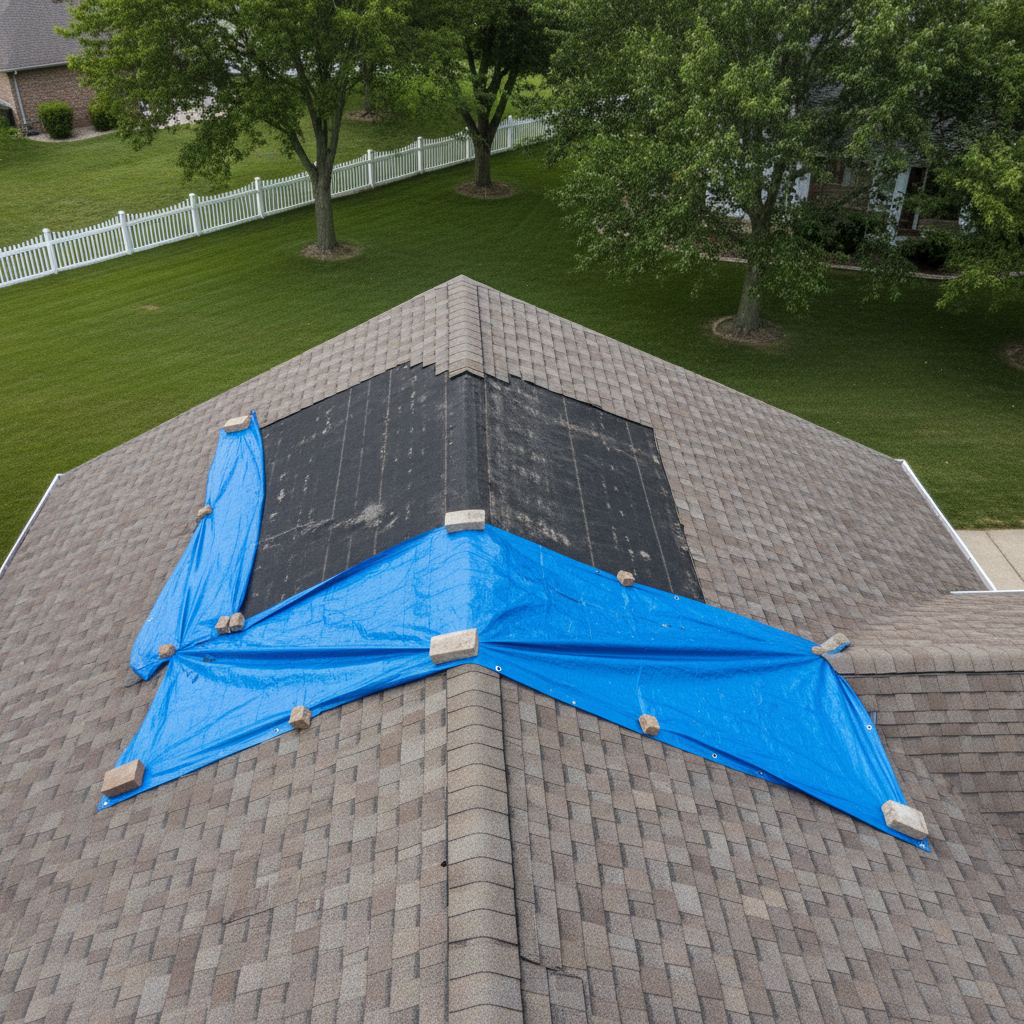
*   **Placement:** Carefully unfold the tarp and position it over the damaged area, ensuring it extends well beyond all exposed sections. The upper edge of the tarp should be tucked *under* an existing row of shingles above the damage if possible, or extend several feet past the damaged zone up the roof slope.
*   **Overlap:** Gravity is your friend here. Ensure the tarp overlaps adequately, especially on the downhill side, so water is shed *over* intact shingles below, rather than channeling underneath.
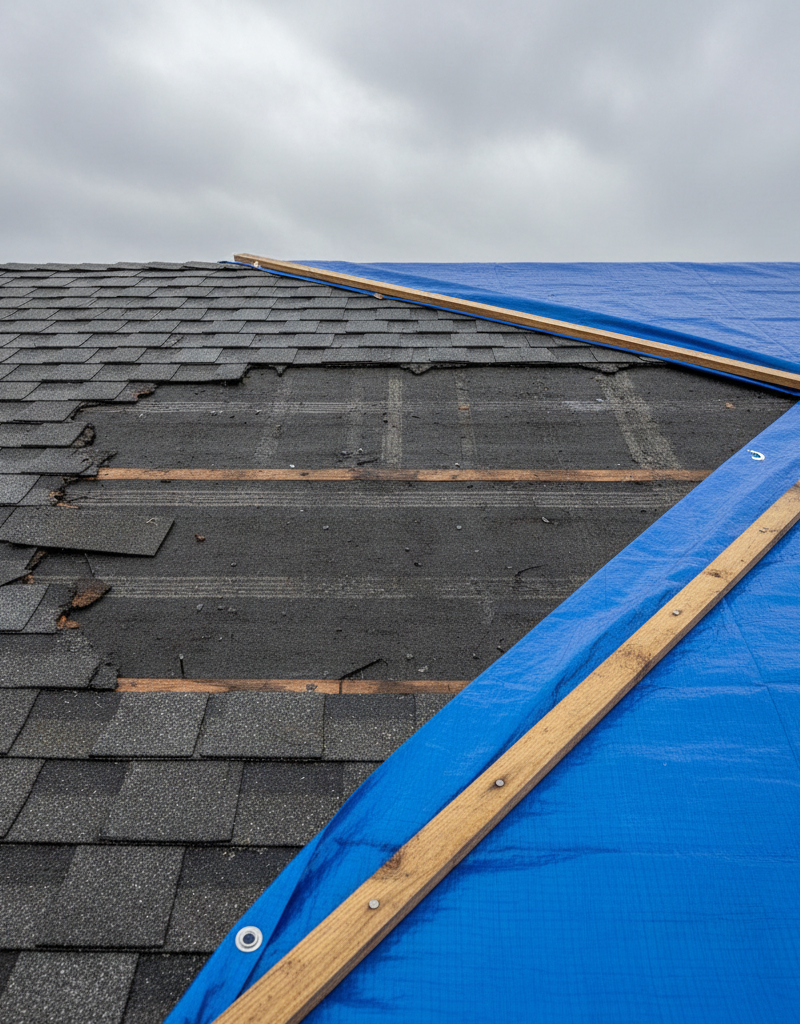
*   **Anchor Points:** Secure the tarp using furring strips or 2x4s and screws, or specialized tarp fasteners. Do *not* nail directly through the tarp into the roof deck unless absolutely necessary and as a last resort, as this creates more holes.
*   **The Sandwich Method:** A common method is to roll the edges of the tarp around a wooden furring strip or 2x4. Then, screw *through the strip and the rolled tarp* into the roof framing (rafters) if possible, or into the solid roof deck at several points. This distributes the pressure and minimizes new penetrations.
*   **Important:** Pull the tarp taut but not so tight that it tears. Ensure no low spots where water can pool.
5. Prevent Water Intrusion Around Edges — Maximize the temporary seal.
*   **Roofing Cement/Sealant:** For extra protection, apply a bead of roofing cement along the edges of the tarp where it meets existing shingles or the roof deck, especially on the uphill side and sides. This adds a secondary seal against wind-driven rain.
*   **Weighted Edges:** In some cases, if you cannot screw down furring strips, carefully place sandbags or heavy, smooth objects along the edges of the tarp to weigh it down. This is less secure than mechanical fasteners but can provide temporary relief in a pinch. Avoid sharp or abrasive items that could damage the tarp.
*   **Monitor:** Regularly check the tarp, especially after further high winds or heavy rain, to ensure it hasn't shifted and is still effectively shedding water.
6. Interior Check — Inspect for any water that may have already entered.
*   **Attic Inspection:** With a flashlight, thoroughly inspect your attic space, paying close attention to the area directly beneath where shingles were missing. Look for wet insulation, water stains on wood rafters or ceiling joists, and active drips.
*   **Living Areas:** Check ceilings and walls in rooms below the damaged roof section for water stains, peeling paint, or dampness.
*   **Mitigate Immediate Leaks:** If you find active leaks, place buckets or tarps to catch water and prevent further interior damage. Move furniture and valuables away from the affected area.
*   **If this doesn't work:** If water continues to enter, the tarp may not be properly secured, or the damage might be more extensive than visible. Re-evaluate the tarp placement or consider calling a professional immediately.
Common Causes
- High Winds: The most common culprit. Wind lifts shingles, breaks their adhesive seals, and can tear them directly off the roof, especially if the nails are corroded or not properly seated.
- Hail Impact: Large hailstones can weaken or fracture shingles, remove protective granules, and compromise their integrity, making them more vulnerable to subsequent wind damage.
- Age and Wear: As shingles age (typically beyond 15-20 years for 3-tab and 20-30 for architectural), they become brittle, their adhesive strips lose effectiveness, and the granules erode. This makes them significantly more susceptible to storm damage.
- Improper Installation: Shingles nailed too high, too low, or with too few nails can easily be ripped off by wind. Insufficient sealant or improper layering also contributes.
- Tree Branches/Debris: Falling branches or storm-borne debris can directly impact and dislodge shingles.
Common Mistakes
- Ignoring Safety: Climbing onto a wet, slippery, or structurally compromised roof can lead to serious injury or death. Always prioritize safety over speed.
- Delaying Temporary Repairs: Every hour your roof is exposed to the elements after shingle loss increases the risk of extensive and costly interior water damage, mold, and structural issues.
- Improper Tarp Installation: Simply throwing a tarp over a hole without proper securement using furring strips or anchoring methods will likely result in the tarp blowing off in the next strong gust, offering no protection.
- Neglecting Documentation: Failing to take comprehensive photos and videos before attempting any repairs can complicate your insurance claim and potentially reduce your payout.
- Assuming a Small Problem: Even one or two missing shingles can lead to significant leaks and damage. Don't underestimate the potential for water intrusion.
- Using the Wrong Fasteners: Nailing a tarp directly into the middle of your roof deck with exposed nail heads can create numerous new leak points. Proper fasteners and techniques (like the sandwich method with furring strips) are crucial.
Cost & Time Breakdown
| Task | DIY Cost | Pro Cost | Time |
|---|---|---|---|
| Ground-level inspection | $0 | $0 | 10–15 minutes |
| Gather supplies (tarp, screws) | $30–$80 | $0 (included) | 15–30 minutes |
| Temporary tarp installation | $0 | $0 | 30–90 minutes |
| Interior damage check | $0 | $0 | 10–20 minutes |
| Total (Temporary) | $30–$80 | $0 (included) | 1–2 hours |
| Permanent shingle repair (pro) | N/A | $200–$800 (small area) | 2–4 hours (pro) |
Tips & Prevention
- Regular Roof Inspections: Have your roof professionally inspected every 3-5 years, especially after its 10th year of life. Look for cracked, curled, or missing shingles during ground-level checks.
- Trim Overhanging Branches: Keep trees trimmed back from your roof to prevent branches from scraping shingles or falling during storms.
- Maintain Gutters: Ensure gutters are clean and draining properly. Clogged gutters can lead to water backing up under shingles.
- Check Shingle Adhesion: On warm, sunny days, sometimes you can gently press down on shingle edges near the eaves or rake to ensure the adhesive is sealed. If they lift easily, it might indicate aging shingles.
- Review Insurance Policy Annually: Understand your homeowner's insurance policy, especially regarding storm damage, deductibles, and replacement cost vs. actual cash value.
- High-Wind Nailing Practices: If getting a new roof, discuss
Frequently asked questions
How do I know if the missing shingle damage is bad?+
Even a single missing shingle is bad because it exposes your roof's underlayment and deck to water, risking leaks, rot, and mold. If you see exposed wood or large sections of missing shingles, the damage is significant and requires immediate temporary repair.
Can I just replace a few missing shingles myself?+
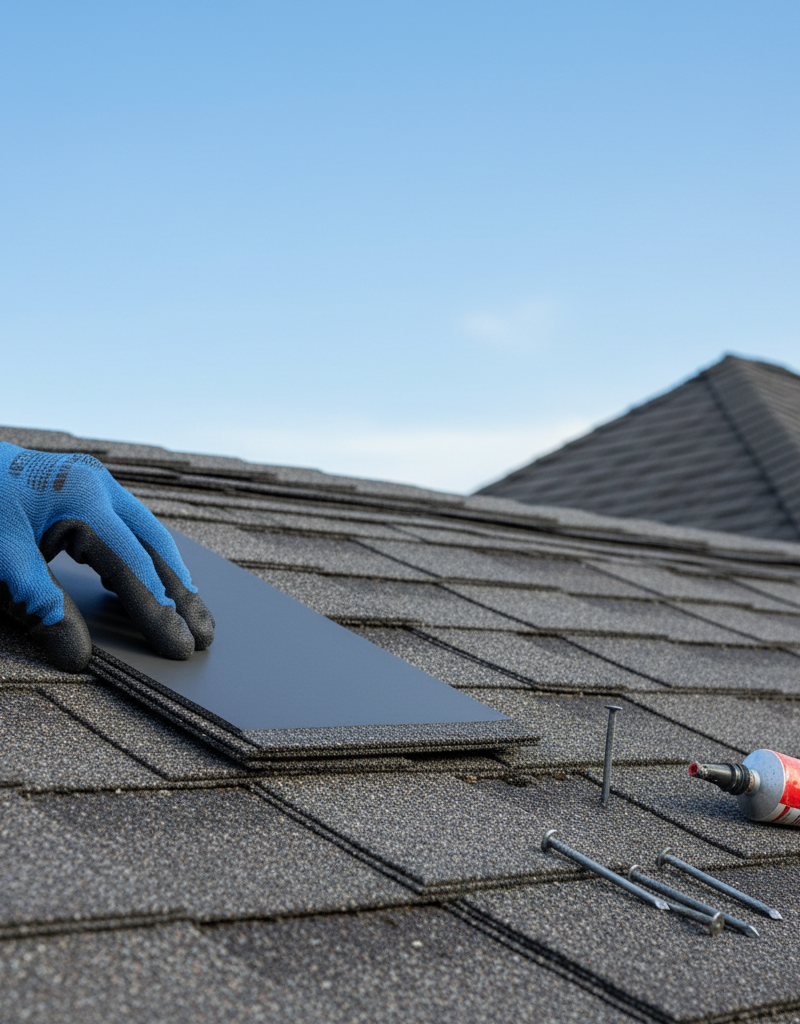
While replacing a few shingles is possible for experienced DIYers, the immediate priority after a storm is temporary protection. Permanent replacement involves matching shingles, proper nailing, and sealing, which is often best left to a roofing professional to ensure a watertight repair that matches your existing roof.
What should I tell my insurance company about missing shingles?+
Contact your insurance company immediately after discovering damage. Provide them with your detailed photos and videos. Explain that you've taken steps for temporary protection to prevent further damage, and inquire about their claims process and whether they require a specific type of inspection or estimate.
How long can a temporary tarp repair last?+
A well-secured temporary tarp repair can last several weeks to a few months, depending on weather conditions and how it was installed. However, it's not a permanent solution and should be replaced by professional shingle repair as soon as possible to avoid further issues and potential tarp degradation.
Should I be worried about mold after missing shingles?+
Yes, absolutely. Once water has an entry point, especially if it's been exposed for some time, moisture can quickly lead to mold and mildew growth in your attic, insulation, and even within walls. This is why prompt temporary repair and professional assessment are crucial to mitigate health risks and prevent structural damage.
Discussion
Loading comments…