Tools & materials you'll need
Affiliate linksAs an Amazon Associate FixlyGuide earns from qualifying purchases — at no extra cost to you. Prices and availability are accurate as of publication and subject to change.
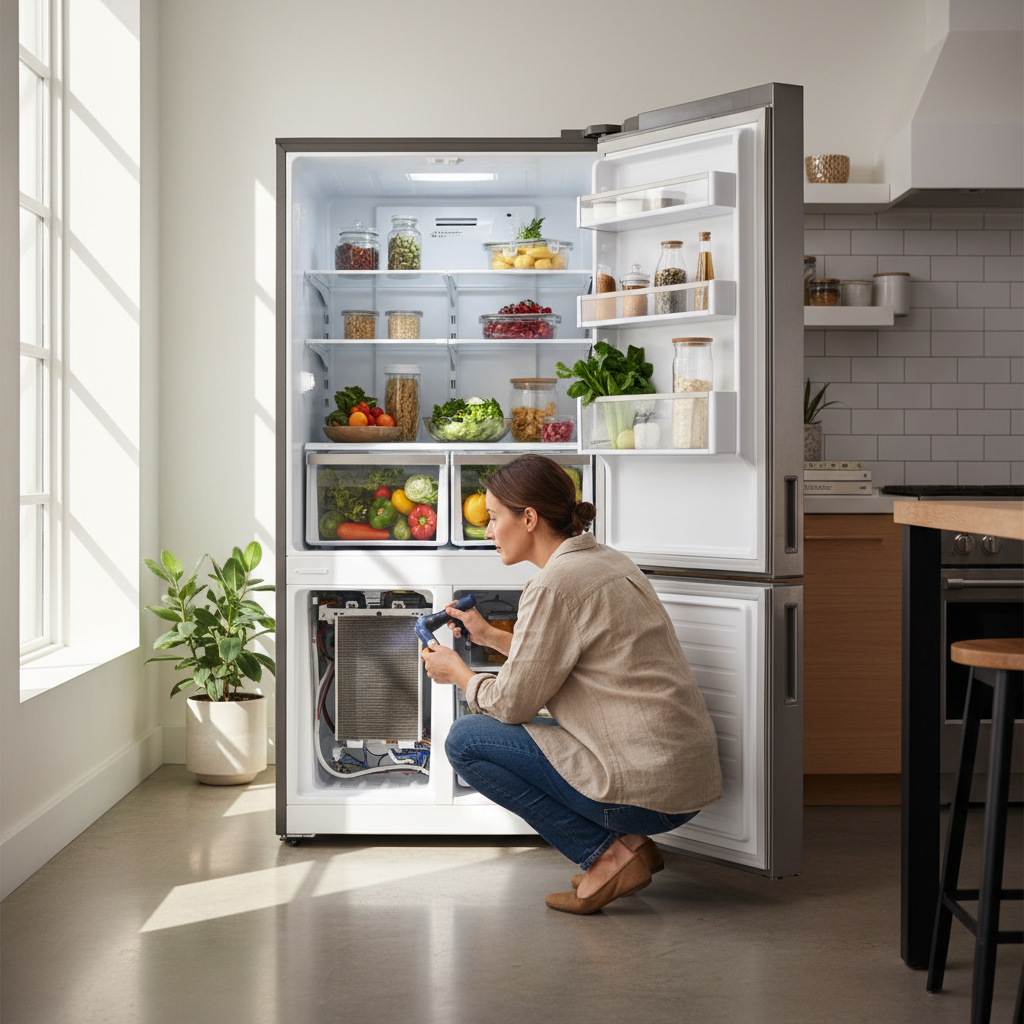
This is one of the most common refrigerator problems and one of the most misunderstood. People assume the fridge is "out of Freon" — almost never the case. In a modern frost-free refrigerator, the freezer is where the actual cold is generated, and a fan blows that cold air into the fridge compartment through a small duct. When that airflow gets blocked, the freezer stays cold and the fridge gets warm.
1. Check the temperature settings
If you cleaned the fridge recently or moved it, the dial may have been bumped. Ideal: fridge 37°F, freezer 0°F.
2. Don't overload the fridge
A packed fridge blocks the air vents on the back wall. Cold air has to physically circulate; leave at least 30% empty space, especially near vents.
3. Check the door seals
If warm air leaks past the gasket, the compressor runs constantly and ice builds up on the evaporator coil. Test by closing the door on a dollar bill — if it slides out easily, the seal is failing. Replace the gasket ($30–$80).
4. Defrost the evaporator coil (most common fix)
Inside the freezer, behind the back panel, sits the evaporator coil. If the defrost system fails, frost builds up and blocks airflow.
Manual defrost:
- Empty the freezer (cooler with ice holds contents 6–8 hours).
- Unplug the refrigerator.
- Leave doors open with towels on the floor for 24 hours.
- Plug back in.
If the fridge cools fine for a few weeks then warms again, you have a failed defrost component (heater, thermostat, or control board) — each is $20–$60.
5. Check the evaporator fan
Open the freezer, depress the door switch, and listen. You should hear a fan. If silent, the fan motor has failed (~$50). Also possible: ice has frozen the blade — defrost first.
6. Clean the condenser coils
Behind or under the fridge, the black condenser coils dump heat. When caked in dust and pet hair, the system can't shed heat efficiently.
- Unplug the fridge and pull it from the wall.
- Vacuum the coils with a brush attachment.
- Do this every 6 months — more often with pets.
When to call a pro
Compressor running constantly with neither side cold (refrigerant leak), compressor not running at all, or a fridge over 12 years old with multiple failures.
Discussion
Loading comments…