Tools & materials you'll need
Affiliate links- AmazonEmpty tuna cans or catch cups5-10
As an Amazon Associate FixlyGuide earns from qualifying purchases — at no extra cost to you. Prices and availability are accurate as of publication and subject to change.
Quick Answer
Adjusting your sprinkler heads to achieve the correct spray pattern and coverage is crucial for efficient watering and a healthy lawn. You can typically modify the spray arc and distance using a flathead screwdriver or a special sprinkler key, ensuring water goes exactly where it's needed and not on your driveway or house.
The Problem
Over time, sprinkler heads can get knocked out of alignment, or their factory settings might not perfectly match your yard's unique layout. This leads to common issues like watering sidewalks, driveways, or fences, leaving dry spots on your lawn, or even under-watering certain areas while over-watering others. Incorrect spray patterns waste water, increase your water bill, and can lead to an unhealthy lawn due to uneven hydration.
Step-by-Step Fix
Safety Note: Always be aware of your surroundings when working with water and electricity (if dealing with an irrigation controller). Avoid adjusting sprinklers during high winds, as this can make accurate adjustments difficult.
1. Identify the Sprinkler Type
Before you begin, determine the type of sprinkler head you have. Most common residential sprinklers are either pop-up spray heads (which emit a continuous fan of water) or rotor heads (which rotate and spray a single stream of water). The adjustment method will vary slightly depending on the type.
2. Turn on the Zone
Manually turn on the specific irrigation zone that contains the sprinkler head you wish to adjust. This will allow you to see the current spray pattern and make real-time corrections.
3. Adjust the Spray Arc (for Rotor and some Spray Heads)
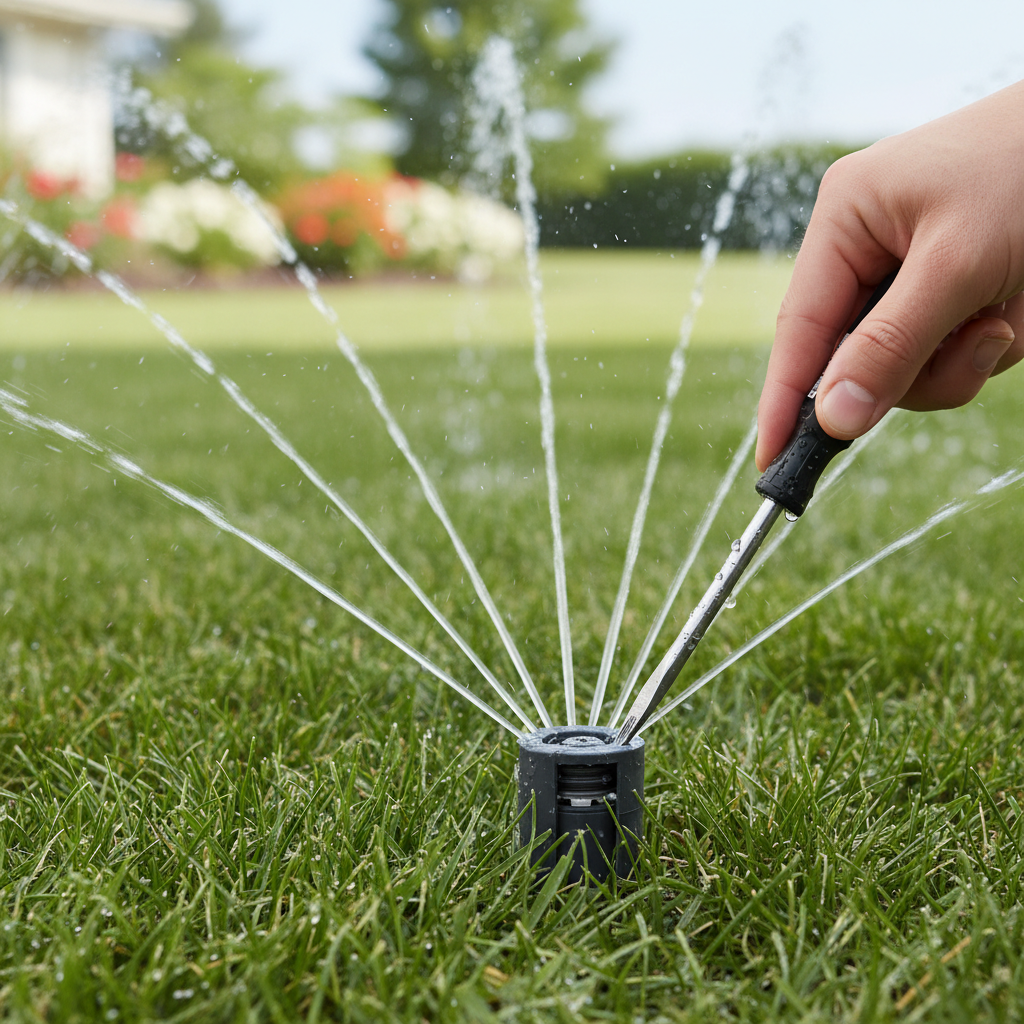
- For Rotor Heads: Most rotor heads have an adjustment screw or a collar on the top. To increase or decrease the spray arc (the degree of rotation), use a flathead screwdriver or the sprinkler key. There is usually a "+" and "-" indicator. Turn towards "+" to increase the arc and towards "-" to decrease it. Some rotors require pulling up the riser and turning the nozzle by hand to set the fixed side of the arc.
- For Adjustable Spray Heads: Some pop-up spray heads have a small collar or a tab that allows you to manually rotate the nozzle to adjust the arc. You may need to firmly grasp the top of the sprinkler head and twist.
4. Adjust the Spray Distance/Radius
- For Rotor Heads: Locate the radius adjustment screw, usually on the top of the sprinkler head. Using a flathead screwdriver, turn this screw clockwise to shorten the spray distance and counter-clockwise to increase it. This screw often has a small "arrow" or "jet" symbol next to it.
- For Spray Heads: Many spray heads have a range adjustment screw directly on the nozzle. Turning this screw clockwise will generally reduce the spray distance by deflecting the water stream. Turning it counter-clockwise will increase. Be careful not to overtighten, as this can damage the nozzle.
5. Check for Alignment and Obstructions
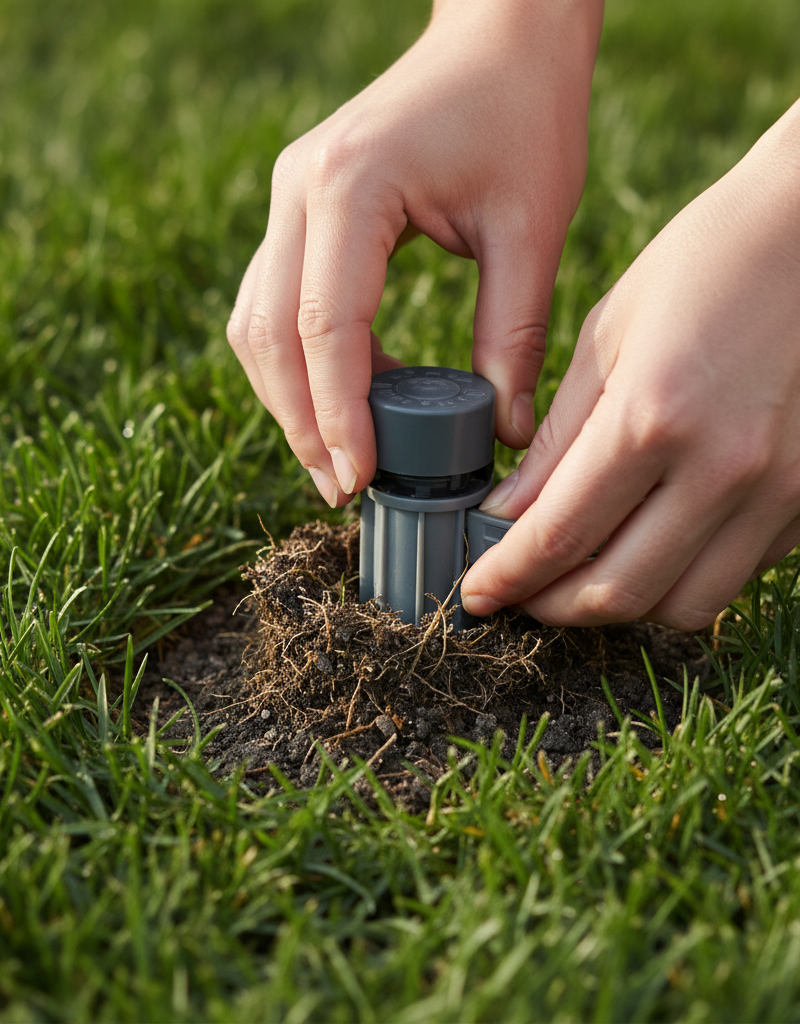
Ensure the sprinkler head is spraying in the intended direction. If it's consistently off, the entire sprinkler body might need to be rotated. Gently twist the body of the pop-up sprinkler (once extended) to reorient it. Also, check for any nearby plants, rocks, or other obstructions that might be blocking the spray pattern.
6. Fine-Tune and Repeat
Make small adjustments, wait for a moment to see the effect, and then fine-tune as needed. It's often helpful to observe the sprinklers run for a full cycle if possible to ensure even coverage across the entire zone. Repeat these steps for all sprinkler heads that require adjustment.
Common Causes
- Physical Impact: Sprinkler heads can be hit by lawnmowers, cars, or even playful children, causing them to shift out of alignment.
- Wear and Tear: Over time, internal components can wear out, affecting the spray pattern. Nozzles can also get clogged with debris.
- Poor Initial Installation: Sometimes, sprinklers are initially installed without precise adjustment, leading to inefficient watering from the start.
- Landscape Changes: New plantings or hardscaping can obstruct existing spray patterns.
Tips & Prevention
- Regular Inspection: Periodically check your sprinkler system while it's running to catch misalignments early.
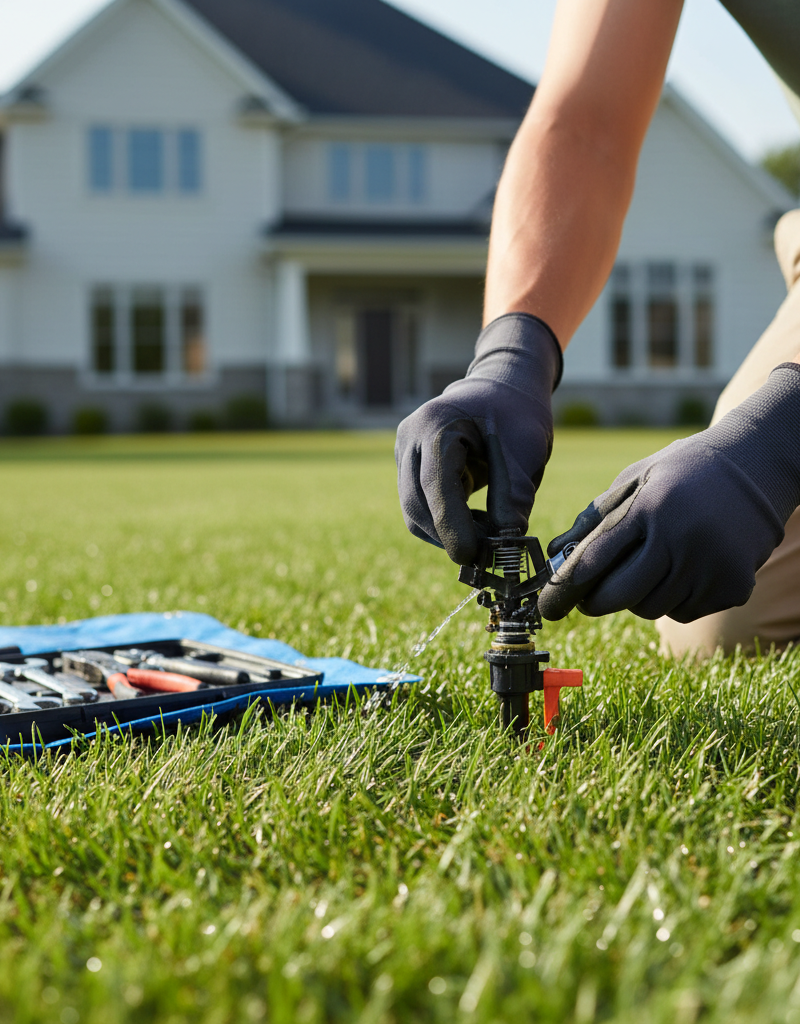
- Clean Nozzles: If you notice a distorted or weak spray, the nozzle might be clogged. Most nozzles can be removed and cleaned with a small brush or rinsed under water.
- Mark Sprinklers: Use sprinkler flags when mowing to make their location obvious and avoid accidentally hitting them.
- Water Early Morning: Adjusting sprinklers in the early morning allows you to see the spray pattern without significant wind interference and before evaporation is too high.
When to Call a Professional
If you find that sprinkler heads are broken, consistently leaking from the base, or if you suspect a deeper issue with your irrigation system's water pressure or main lines, it
Frequently asked questions
How do I make my sprinkler spray further?+
To make most sprinkler heads spray further, locate the radius adjustment screw (often a flathead screw on top of the head) and turn it counter-clockwise. This reduces the amount of water deflected, allowing the stream to reach further.
Why is my sprinkler not spraying a full circle?+
If your sprinkler isn't spraying a full circle, its arc adjustment is likely set incorrectly. For rotor heads, use a flathead screwdriver or sprinkler key to increase the arc setting towards the '+' indicator. For some spray heads, you can manually twist the nozzle to expand the spray pattern.
Can you adjust the height of a pop-up sprinkler?+
Generally, you cannot adjust the pop-up height of a sprinkler head. The height is determined by the specific model and is designed to clear the surrounding grass. If a sprinkler isn't popping up fully, it might be due to low water pressure, debris in the head, or a damaged riser, which may require repair or replacement.
How do I know if my sprinklers are adjusted correctly?+
A good way to tell if your sprinklers are adjusted correctly is to perform a 'catch can test.' Place several empty tuna cans or similar containers uniformly across your lawn within a sprinkler zone. Run the system for a set time (e.g., 15 minutes), then measure the amount of water in each can. Similar water levels indicate good, even coverage.


Discussion
Loading comments…