Tools & materials you'll need
Affiliate linksAs an Amazon Associate FixlyGuide earns from qualifying purchases — at no extra cost to you. Prices and availability are accurate as of publication and subject to change.
Quick Answer
Starting a backyard compost pile efficiently means understanding the delicate balance between 'greens' (nitrogen-rich materials like food scraps and fresh grass clippings) and 'browns' (carbon-rich materials like dry leaves and wood chips). The goal is to create an environment where microorganisms can rapidly break down organic matter. This requires layering these materials, keeping the pile consistently moist but not waterlogged, and providing regular aeration by turning the pile. Following these principles will yield nutrient-rich compost much faster than simply tossing scraps into a heap.
The Problem
Many homeowners want to compost their kitchen and yard waste, transforming it into a valuable soil amendment. However, they often encounter issues like foul odors, a pile that doesn't seem to break down, or an infestation of pests. These problems usually stem from fundamental misunderstandings of the composting process: an incorrect ratio of greens to browns, insufficient moisture, or inadequate aeration. Instead of a thriving ecosystem breaking down organic matter, they end up with a stagnant, smelly mess or a pile that simply sits there, doing nothing. This article will guide you through the correct methods to avoid these common pitfalls and ensure your compost pile actively produces rich, dark compost.
How It Works
Composting is essentially controlled decomposition, a natural process accelerated and optimized by creating ideal conditions for microorganisms. These microscopic decomposers—bacteria, fungi, and actinomycetes—are the unsung heroes of your compost pile. They thrive in an environment rich in both carbon (energy) and nitrogen (protein), hence the need for a balanced 'brown' to 'green' ratio, ideally around 25-30 parts carbon to 1 part nitrogen by weight, which translates roughly to two parts brown material to one part green material by volume.
Aerobic decomposition, which is what we aim for in a backyard compost pile, requires oxygen. When oxygen is plentiful, these beneficial microbes efficiently break down organic matter, generating heat in the process. This heat is a good sign, indicating vigorous microbial activity. A hot pile, reaching temperatures between 130°F to 160°F (54°C to 71°C), effectively kills off weed seeds and pathogens. Without sufficient oxygen (anaerobic conditions), different types of bacteria take over, producing unpleasant odors like sulfur and ammonia, and the decomposition process slows considerably.
Moisture is equally crucial. Imagine the microbes as tiny workers; they need water to transport nutrients and to keep their cellular functions going. The ideal moisture level for a compost pile is similar to a wrung-out sponge—damp but not saturated. Too dry, and microbial activity grinds to a halt. Too wet, and water fills the air pockets, leading to anaerobic conditions, slowing decomposition, and creating odors. Regular turning of the compost pile serves multiple purposes: it introduces oxygen, distributes moisture and microbes, and helps break up larger clumps, facilitating faster breakdown of materials.
Step-by-Step Fix
1. Choose Your Site Wisely – Pick a flat, well-draining spot.
- Locate your compost pile in a shaded or partially shaded area to prevent it from drying out too quickly, especially in hot climates. It should be easily accessible for adding materials and turning, and ideally, not directly against your house or wooden structures due to potential moisture and insect concerns.
- Ensure the site is away from vegetable gardens to avoid attracting pests directly to your crops, but close enough to be convenient for adding kitchen scraps.
2. Gather Your Materials – Start with a balanced mix of greens and browns.
- Browns (Carbon-rich): Include dry leaves, straw, wood chips, shredded newspaper, cardboard (unwaxed, uncolored), and small twigs. These provide energy for microbes and create air pockets. Aim for roughly two parts brown material by volume.
- Greens (Nitrogen-rich): Use kitchen scraps (fruit and vegetable peels, coffee grounds, tea bags), fresh grass clippings, and garden trimmings (non-diseased). These provide protein for microbial growth. Aim for one part green material by volume.
- Avoid: Meat, dairy, oily foods (attract pests), diseased plants (spread disease), pet waste (contains pathogens), and chemically treated wood (toxic chemicals).
3. Layer Your Pile – Build in layers for optimal breakdown.
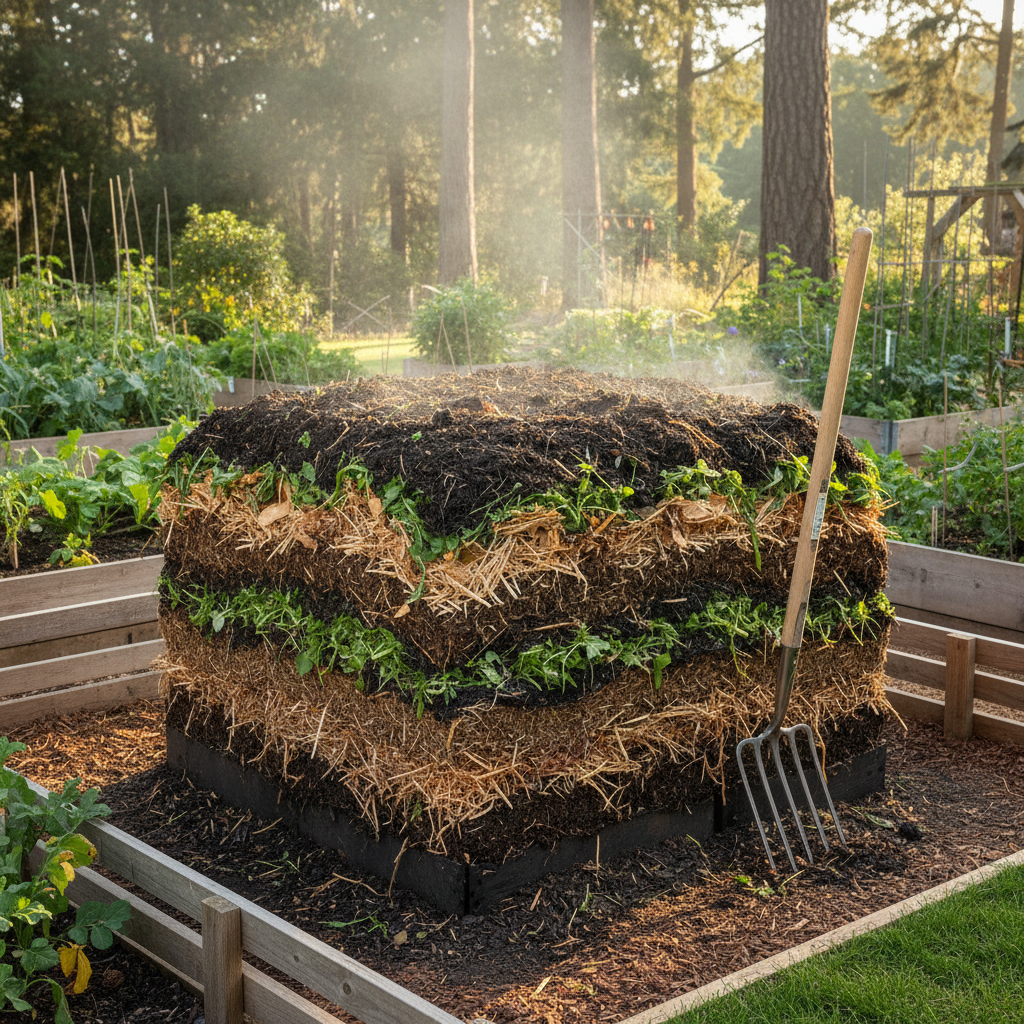
- Begin with a 4-6 inch layer of coarse brown materials (like small branches or straw) at the bottom to ensure good air circulation. This prevents the bottom from becoming too dense and anaerobic.
- Alternate layers: place a 6-8 inch layer of browns, followed by a 3-4 inch layer of greens. Sprinkle a small amount of garden soil or finished compost between layers to introduce beneficial microbes.
- Lightly moisten each layer as you add it. The goal is uniformly damp, not soaking wet.
4. Maintain Moisture Levels – Keep it damp, like a wrung-out sponge.
- Regularly check the moisture level of your compost pile. Squeeze a handful of material; a few drops of water should emerge. If it's too dry, add water with a hose or watering can while turning.
- If too wet and smelly, add more brown materials like shredded newspaper or dry leaves to absorb excess moisture and create more air pockets.
5. Turn for Aeration – Introduce oxygen for faster decomposition.
- Turn your compost pile regularly, ideally every 1-2 weeks, using a pitchfork or compost aerator. The more frequently you turn (up to once a week), the faster the decomposition, as long as the pile is actively heating.
- When turning, move the outer, drier materials into the center of the pile and bring the inner, more decomposed materials to the outside. This ensures even decomposition.
- If your pile is large and difficult to turn: Consider using a compost aerator tool which can be pushed into the pile and pulled out to create air channels, or build a two or three-bin system to make turning easier.
6. Monitor Temperature – Look for signs of microbial activity.
- A healthy, active compost pile will heat up in the center, potentially reaching 130°F–160°F (54°C–71°C). This heat indicates rapid microbial activity.
- You can use a compost thermometer to monitor the internal temperature. If the pile isn't heating up, it might need more greens (nitrogen) or more moisture, or it might be too small.
7. Identify Finished Compost – Know when it's ready to use.
- Finished compost will be dark brown, crumbly, and have an earthy smell. Most of the original materials will be unrecognizable.
- The temperature inside the pile will have dropped to ambient temperature and will stay cool, indicating that the active decomposition phase is complete.
8. Sift and Store – Prepare your compost for garden use.
- Optional: Sift your finished compost through a screen (1/2 to 1-inch mesh) to remove any large, undecomposed pieces. These can be added back to a new compost pile.
- Store finished compost in bags or a covered bin until ready to use. It can be mixed into garden beds, used as a top dressing, or added to potting soil mixes.
Common Causes
Several factors lead to common composting problems. The most frequent culprit is an imbalance of carbon to nitrogen, often manifesting as too many 'greens' (leading to odors and sliminess) or too many 'browns' (leading to a very slow or stalled decomposition). Insufficient moisture is another major cause; a dry pile simply won't decompose. Conversely, an overly wet pile can become anaerobic and stinky. Lack of aeration, often due to infrequent turning or an overly compacted pile, starves the beneficial aerobic bacteria of oxygen, causing decomposition to slow and foul odors to develop. Lastly, adding inappropriate materials like meat, dairy, or diseased plants can attract pests and introduce pathogens, disrupting the composting ecosystem.
Common Mistakes
- Ignoring the Green-Brown Ratio: Many homeowners simply throw everything in haphazardly. Too many greens lead to a smelly, slimy mess. Too many browns lead to a slow, inactive pile. Aim for roughly 2 parts brown to 1 part green by volume for a balanced C:N ratio.
- Lack of Aeration: A common error is not turning the pile frequently enough. This compacts materials, depleting oxygen and promoting anaerobic bacteria, resulting in unpleasant odors and slow decomposition. Turn at least weekly, or use an aerator.
- Wrong Moisture Level: A pile that's either too dry or too wet won't properly decompose. Too dry mimics desert conditions, halting microbial activity. Too wet creates a bog, drowning the good bacteria. Keep it consistently damp like a wrung-out sponge.
- Adding Inappropriate Materials: Including meat, dairy, bones, oily foods, or pet waste can attract rodents and other pests, produce foul odors, and introduce harmful pathogens. Stick to plant-based waste.
- Starting Too Small: Very small compost piles (under 3x3x3 feet) often struggle to generate enough heat to decompose effectively. Aim for a pile of at least 1 cubic yard to maintain warmth and microbial activity.
- Impatience: Composting takes time. Expect active piles to produce finished compost in 2-3 months, but passive piles can take a year or more. Don't expect instant results.
Cost & Time Breakdown
| Task | DIY cost | Pro cost | Time |
|---|---|---|---|
| Collecting Materials (free) | $0 | N/A | Ongoing |
| Composting Bin (optional) | $30–$200 | N/A | 1–3 hours |
| Initial Pile Setup | $0–$50 | N/A | 1–2 hours |
| Regular Turning/Moisture Check | $0 | N/A | 10–20 min/week |
| Finished Compost | N/A | N/A | 2–6 months |
Tips & Prevention
- Size Matters: Aim for a compost pile that is at least 3 feet wide, 3 feet deep, and 3 feet high (1 cubic yard). Smaller piles often struggle to heat up, slowing decomposition significantly. Larger piles can retain heat better, leading to faster composting.
- Chop It Up: The smaller your materials, the faster they will decompose. Chop up kitchen scraps, shred leaves, and break down larger garden trimmings into pieces no larger than 2 inches. This increases the surface area for microbes to work on.
- Maintain Diversity: A wide range of green and brown materials will result in a more nutrient-rich and balanced compost. Don't rely solely on one type of input.
- Consider a Compost Thermometer: While not strictly necessary, a long-stemmed compost thermometer can help you monitor the internal temperature of your pile, ensuring it's actively heating and breaking down material effectively (aim for 130°F–160°F).
- Regular Turning Schedule: Commit to turning your compost pile at least once a week, or whenever you add a significant amount of new material. This is crucial for aeration and even decomposition.
- Bury Food Scraps: When adding fresh kitchen scraps, bury them in the center of the pile. This helps prevent odors and deters pests, ensuring they are quickly covered by warmer, more active material.
When to Call a Professional
While starting a compost pile is a rewarding DIY project, there are no scenarios that truly necessitate calling a professional composter for a typical backyard operation. The process is designed to be manageable for homeowners. However, if you're dealing with a very large property producing vast amounts of organic waste, a landscaping or waste management professional might be consulted for advice on large-scale composting systems or commercial-grade grinders/shredders. Similarly, if you suspect an infestation of persistent pests uncontrollable by burying food scraps and proper pile management, a local pest control expert could provide guidance, though this is rare for properly maintained compost piles. Otherwise, troubleshooting a slow or smelly pile can almost always be resolved by adjusting the green-brown ratio, moisture, or aeration yourself.
Frequently asked questions
How do I make my compost pile break down faster?+
To speed up decomposition, ensure a balanced mix of greens and browns (2:1 browns to greens by volume), maintain consistent moisture levels (like a wrung-out sponge), and turn the pile frequently (weekly) to aerate it and distribute microbes. Chopping materials into smaller pieces also helps immensely.
Why does my compost pile smell bad?+
A foul smell usually indicates anaerobic conditions, meaning a lack of oxygen. This is often caused by too much 'green' material (nitrogen) or too much moisture, leading to a slimy, dense pile. To fix it, turn the pile thoroughly to introduce oxygen and add more 'brown' materials like dry leaves or shredded cardboard to absorb excess moisture and balance the carbon-nitrogen ratio.
Can I put diseased plants in my compost pile?+
It is generally not recommended to put diseased plants in a typical backyard compost pile. While hot piles can kill off some pathogens, most home compost piles don't consistently reach temperatures high enough to eliminate all disease spores. Composting diseased plants risks spreading the disease back into your garden. It's safer to dispose of diseased plant material in the trash.
Discussion
Loading comments…