Tools & materials you'll need
Affiliate linksAs an Amazon Associate FixlyGuide earns from qualifying purchases — at no extra cost to you. Prices and availability are accurate as of publication and subject to change.
Quick Answer
Crafting a bluebird house from a single 1x6 cedar board is an accessible and rewarding DIY project that offers crucial nesting habitat for native bluebirds. The design focuses on specific dimensions and an precisely sized entrance hole, typically 1 ½ inches in diameter, to attract bluebirds while excluding larger, more aggressive bird species and deterring predators. Cedar is an excellent material choice due to its natural resistance to rot, insects, and harsh weather, ensuring the birdhouse remains a safe and durable home for many nesting seasons.
The Problem
Bluebird populations have faced significant declines over the past century, largely due to habitat loss and competition from invasive species like house sparrows and European starlings. Traditional nesting sites, such as old tree cavities, are becoming scarcer, leaving bluebirds struggling to find safe places to raise their young. Many commercially available birdhouses, or houses not specifically designed for bluebirds, often feature entrance holes that are too large, allowing larger, more dominant birds to take over. They may also lack critical predator deterrent features, making nests vulnerable to snakes, raccoons, and cats. Homeowners who want to enjoy the beauty and song of bluebirds in their yards often discover that generic birdhouses simply don't provide the specific environment these sensitive birds need to thrive, leading to empty nests or failed broods.
How It Works
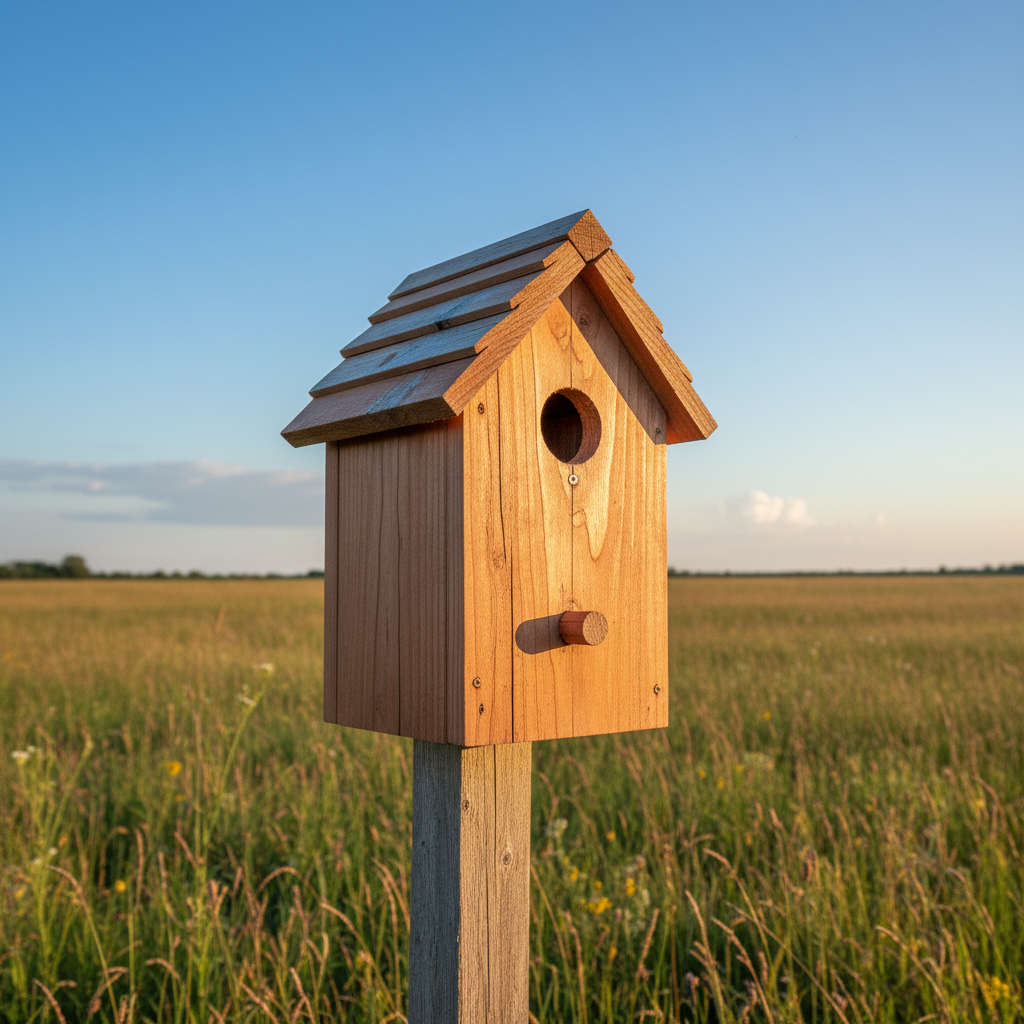
Bluebird houses are engineered with specific design elements that cater to the unique nesting habits and physical characteristics of Eastern, Western, and Mountain Bluebirds. The precise entrance hole diameter is perhaps the most critical feature. A 1 ½-inch diameter hole is small enough to exclude larger competitor birds like starlings, but perfectly sized for a bluebird. For Mountain Bluebirds, a 1 9/16-inch hole is sometimes preferred but 1 ½ inches works for most regions. The floor dimensions, typically around 4x4 inches, coupled with an interior height of about 8 to 12 inches from the floor to the bottom of the entrance hole, provide ample space for a nest and fledglings while keeping the hole at a safe distance from the bottom to prevent predators from reaching in. Key features also include a sloped roof to shed rain and an extended overhang to protect the entrance from direct downpours and aerial predators. Proper ventilation, often achieved with small gaps at the top sides, prevents overheating. A side panel that opens makes cleaning easy, a vital step between nesting seasons to prevent disease and parasitic infestations. The absence of a perch is intentional; bluebirds don't need one, and perches only serve to invite predators or competitor birds to land and harass the occupants. Cedar is the material of choice because its natural oils provide excellent resistance to rot and insect damage, ensuring the birdhouse provides a safe, chemical-free home for many years without needing paint or stains, which can be harmful to birds.
Step-by-Step Fix
Here’s how to transform a single cedar 1x6 into a sturdy, inviting home for bluebirds.
-
Safety First—Always wear safety glasses when operating power tools. Also, consider ear protection when using a saw. Ensure your workspace is clear and well-lit.
-
Measure and Mark Your Cuts—Precision is key for a functional bluebird house. Using a tape measure and pencil, mark your 1x6 cedar board for the following pieces:
- Side Panels (2): 11 ¼ inches long. Mark one end of each panel to be cut at a 15-degree angle from the outside edge down to 10 ¼ inches on the interior edge.
- Front Panel (1): 10 ¼ inches long. Mark the top edge to be cut at a 15-degree angle.
- Back Panel (1): 12 inches long. Mark the top edge to be cut at a 15-degree angle.
- Floor (1): 4 inches long. This will be a square 4x4 once cut.
- Roof (1): 7 inches long. This will extend past the front and sides.
-
Make Precise Cuts—Use a miter saw or circular saw for accurate, clean cuts. Carefully cut along your marked lines. Ensure all angles are correct, particularly the 15-degree bevels on the front, back, and side panels, which create the sloped roof. For the floor and roof, ensure they are perfectly square.
-
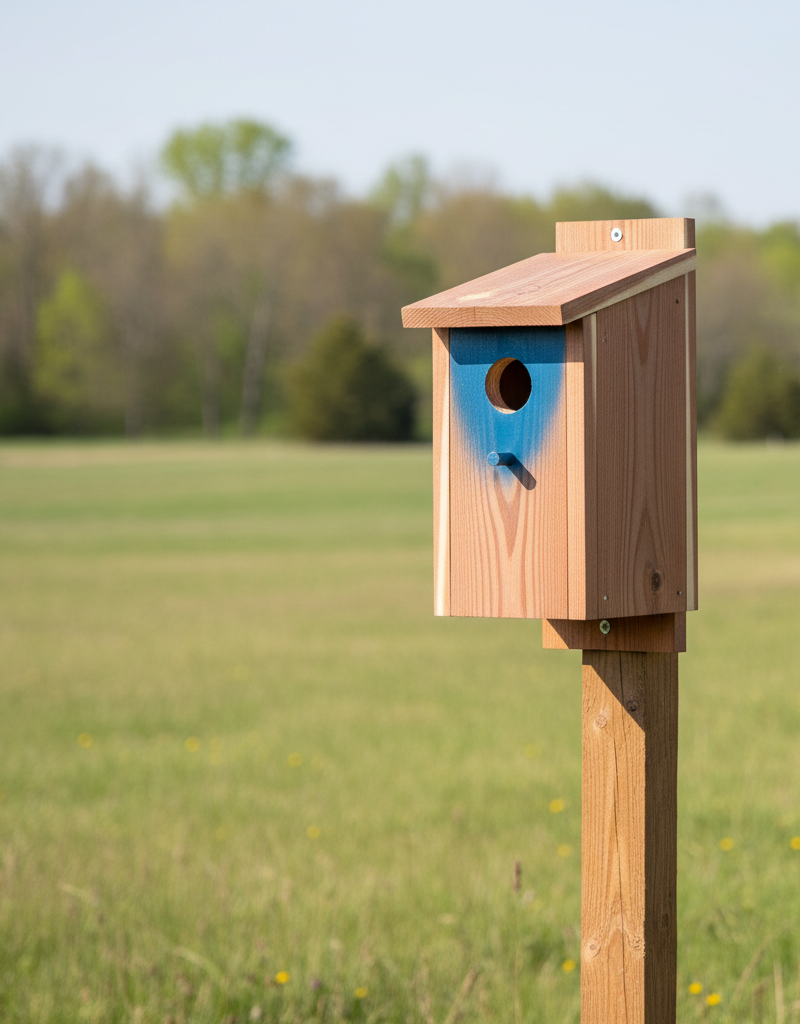
Drill the Entrance Hole—The right hole size is critical for bluebirds. On the front panel, measure 1 ½ inches down from the top (the shorter side of the sloped cut) and find the center width-wise. Using a 1 ½-inch (or 1 9/16-inch for Mountain Bluebirds) spade bit or hole saw, drill a clean, smooth entrance hole at this location. Sand the edges of the hole to remove any splinters.
-
Add Ventilation and Drainage—These details prevent overheating and moisture buildup. For ventilation, drill two ¼-inch holes near the top edge of each side panel, just below where the roof will sit. For drainage, drill two ¼-inch holes in opposite corners of the floor piece.
-
Assemble the Sides, Front, and Back—Start forming the box structure. Use exterior-grade screws (1 ¼-inch or 1 5/8-inch galvanized deck screws are ideal) to attach the side panels to the front panel, ensuring the 15-degree angles align at the top. Then attach the back panel, making sure the top edges are flush and the angled cuts create a consistent slope. Leave one side panel unattached for now, as it will be your clean-out door.
-
Attach the Floor—Secure the base of the nesting cavity. Insert the 4x4-inch floor piece into the bottom of the assembled three-sided box. It should fit snugly. Fasten it securely with screws through the bottom edges of the side, front, and back panels, ensuring it's level and flush.
-
Hinge the Clean-Out Side Panel—Easy access for seasonal cleaning. Place the remaining side panel into position. Attach it with two small exterior hinges at the bottom edge. On the opposite (top) edge, install a small latch, such as a hook and eye or a barrel bolt, to keep it securely closed during nesting season but easily opened for cleaning.
-
Attach the Roof—Provide vital protection from the elements. Position the 7-inch roof piece so it overhangs the front, back, and sides evenly, providing protection. Fasten it securely to the top edges of the front, back, and side panels using exterior-grade screws. Ensure the roof is centered and extends well beyond the entrance hole to keep rain out.
-
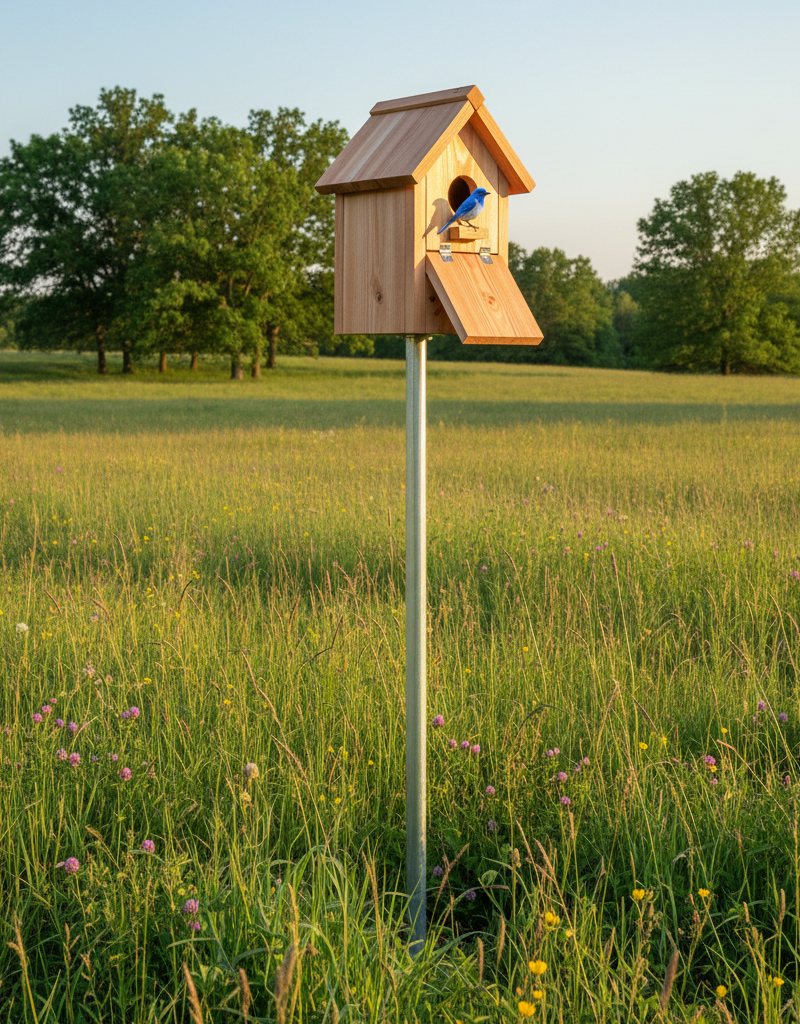
Mounting the Bluebird House—Proper placement is key to attracting bluebirds. Bluebird houses should be mounted on a sturdy pole (a ¾-inch galvanized pipe or 4x4 wooden post is common) 4 to 6 feet high in an open area, facing east or southeast to protect from prevailing winds and hot afternoon sun. Use a mounting bracket or galvanized pipe flange to attach the back panel of the birdhouse to the pole. Consider adding a predator guard (a stovepipe baffle or hardware cloth cone typically 24-36 inches long) to the pole below the house to deter snakes and raccoons.
Common Causes
- Lack of Suitable Nesting Cavities: Modern development often removes dead trees and snags, which bluebirds naturally use for nesting. This is the primary driver for bluebirds seeking artificial nest boxes.
- Competition from Invasive Species: House sparrows and European starlings aggressively compete with bluebirds for nesting sites, often evicting or killing bluebird adults and young. Correctly sized entrance holes and strategic placement can mitigate this.
- Predation: Snakes, raccoons, cats, and even larger birds can raid bluebird nests. The design features (no perch, proper depth) and mounting considerations (predator guard) are critical to success.
- Pesticide Use: Insecticides reduce the bluebird's primary food source – insects – impacting their ability to feed their young. Reducing or eliminating pesticide use in your yard can help support their diet.
- Improper Birdhouse Design: Generic birdhouses often have incorrect entrance hole sizes, lack ventilation, or include perches, making them unsuitable or even dangerous for bluebirds.
Common Mistakes
- Using the Wrong Entrance Hole Size: A hole too large invites starlings; too small, bluebirds can
Related Articles
Keep troubleshooting with these hand-picked guides from FixlyGuide:
- The Single Cedar Board Secret to Attracting Bluebirds to Your Yard — Discover how to construct an ideal bluebird nesting box using just one cedar board, providing a safe and inviting habitat for these cherish…
- The 4 Critical Dimensions of a Bluebird House (Most DIYers Miss One) — Discover the four often-overlooked dimensions crucial for a successful bluebird house, ensuring your avian residents thrive season after se…
- Is a Wall-Mounted Pressure Washer Right for Your Garage? The Unvarnished Truth — Discover if a wall-mounted pressure washer is the right cleaning solution for your home, offering a powerful and space-saving alternative t…
- 7 Hidden Equity Drains Costing You Thousands Annually — Your home is an asset, but silent problems like minor leaks, poor insulation, and deferred maintenance can drain its value. Discover the se…
- The Secret Power Tool Hiding in Your Garage for a Speedier Clean — Unlock the hidden potential of your cordless drill to tackle stubborn household grime, soap scum, and dirt with specialized cleaning attach…
- The Secret Culprit Behind Your Leaky Refrigerator (It’s Not Always the Water Line) — Discover the most common, often overlooked, reasons your refrigerator is leaking water and how to fix them with simple DIY steps.
Get the print-ready PDF of this guide
A clean, ad-free, printable version you can keep on your phone or pin to the workshop wall. We'll also send occasional weekly tips matched to your home situation.
- Print-optimized layout
- Tools, materials & every step included
- Unsubscribe anytime
This article was independently written by FixlyGuide based on the source topic.
Frequently asked questions
What is the best type of wood for a bluebird house?+
Cedar is the best choice for a bluebird house due to its natural resistance to rot, insects, and weather. It's durable and doesn't require paint or stains, which can be harmful to birds.
What size entrance hole do bluebirds need?+
Eastern and Western Bluebirds require a 1 ½-inch diameter entrance hole. Mountain Bluebirds can use a 1 9/16-inch hole, but 1 ½ inches generally works for all. This size deters larger, invasive species.
How high should a bluebird house be mounted?+
Bluebird houses should be mounted on a sturdy pole between 4 to 6 feet high. This height makes them accessible for monitoring and cleaning, while still offering protection from ground predators, especially with a predator baffle.
Do I need to clean a bluebird house?+
Yes, regular cleaning is crucial. After each brood fledges or at the end of the nesting season, open the clean-out panel, remove old nesting material, and brush out any debris. This prevents parasites and makes the house ready for the next occupants.
What direction should a bluebird house face?+
Mount the bluebird house to face east or southeast. This orientation protects the entrance from harsh prevailing winds and avoids the intense heat of the afternoon sun, keeping the nestlings comfortable.
Discussion
Loading comments…