Tools & materials you'll need
Affiliate linksAs an Amazon Associate FixlyGuide earns from qualifying purchases — at no extra cost to you. Prices and availability are accurate as of publication and subject to change.
Quick Answer
Warped deck boards are a common problem stemming from moisture imbalances, improper fastening, or insufficient airflow. Addressing them involves a multi-pronged approach: assessing the severity, re-securing or replacing affected boards, ensuring correct spacing, and applying a protective sealant. Early intervention can prevent further damage and extend your deck's lifespan.
The Problem
You step onto your deck, ready to enjoy a sunny afternoon, only to find sections of the boards lifting, bowing, or twisting like pretzels. This isn't just an aesthetic issue; warped deck boards create dangerous tripping hazards, allow water to pool and accelerate rot, and compromise the structural integrity of your entire deck. Left unaddressed, a few warped boards can lead to a domino effect of decay, making your deck unsafe and requiring a costly full replacement. Understanding why this happens and how to effectively intervene is crucial for maintaining a safe and beautiful outdoor living space. The typical homeowner sees a warped board and thinks, "bad wood," but the reality is usually more nuanced, often involving a combination of environmental factors and installation practices.
How It Works
Deck boards are organic materials, and wood naturally expands and contracts with changes in temperature and, more significantly, with moisture. Wood fibers act like tiny straws, absorbing water when damp and releasing it when dry. When one side of a board absorbs more moisture than the other, or dries out faster, the uneven stress causes the wood to bend, cup, twist, or bow – this is warping. For instance, a board exposed to direct sunlight on its top surface but constantly damp underneath will likely cup upwards. Conversely, a board that gets wet on top but dries quickly in the sun, while its underside remains somewhat protected from the elements, might cup downwards. Fasteners also play a critical role. If boards are nailed down with insufficient fasteners, or if the fasteners loosen over time, the wood is freer to move and warp. The type of wood also matters; softer woods tend to warp more easily than dense hardwoods. Finally, ventilation is key. A deck built too close to the ground without adequate airflow beneath prevents moisture from escaping, keeping the underside of the boards consistently damp and promoting warping.
Step-by-Step Fix
1. Assess the Damage — *Determine the type and severity of warp.
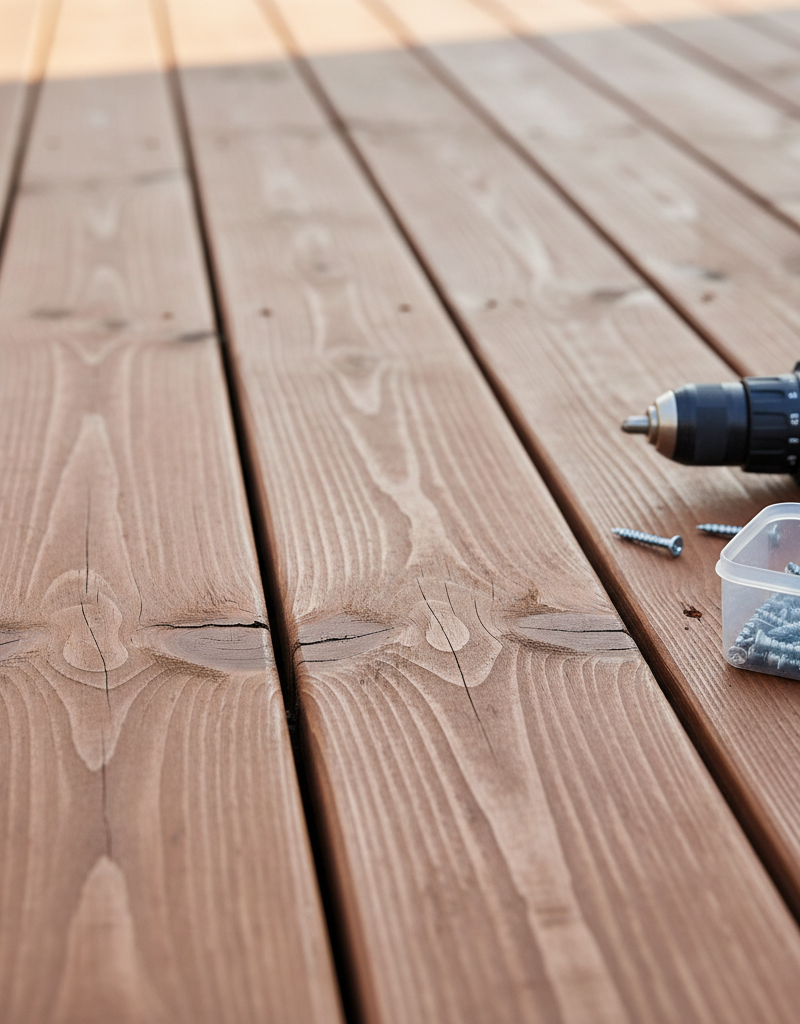
- Before you grab any tools, carefully examine each affected board. Is it cupping (edges higher than the center or vice versa), bowing (bending along its length), twisting (ends turning in opposite directions), or simply lifting at the fasteners? The severity will dictate your approach. Minor cupping might be fixed, while severe twisting often requires replacement. Note the direction of the grain – flat-sawn boards (common and more prone to cupping) look different from quarter-sawn (more stable).
2. Clean the Deck Surface — *Remove dirt and debris for a clear view.
- Use a stiff broom, deck cleaner, and a garden hose to thoroughly clean the deck surface. This will reveal the true extent of the warping and ensure a clean surface for any repairs or treatments. Allow the deck to dry completely before proceeding, which might take 24-48 hours depending on humidity.
3. Re-fasten Minor Cupping/Lifting — *Secure slightly warped boards.
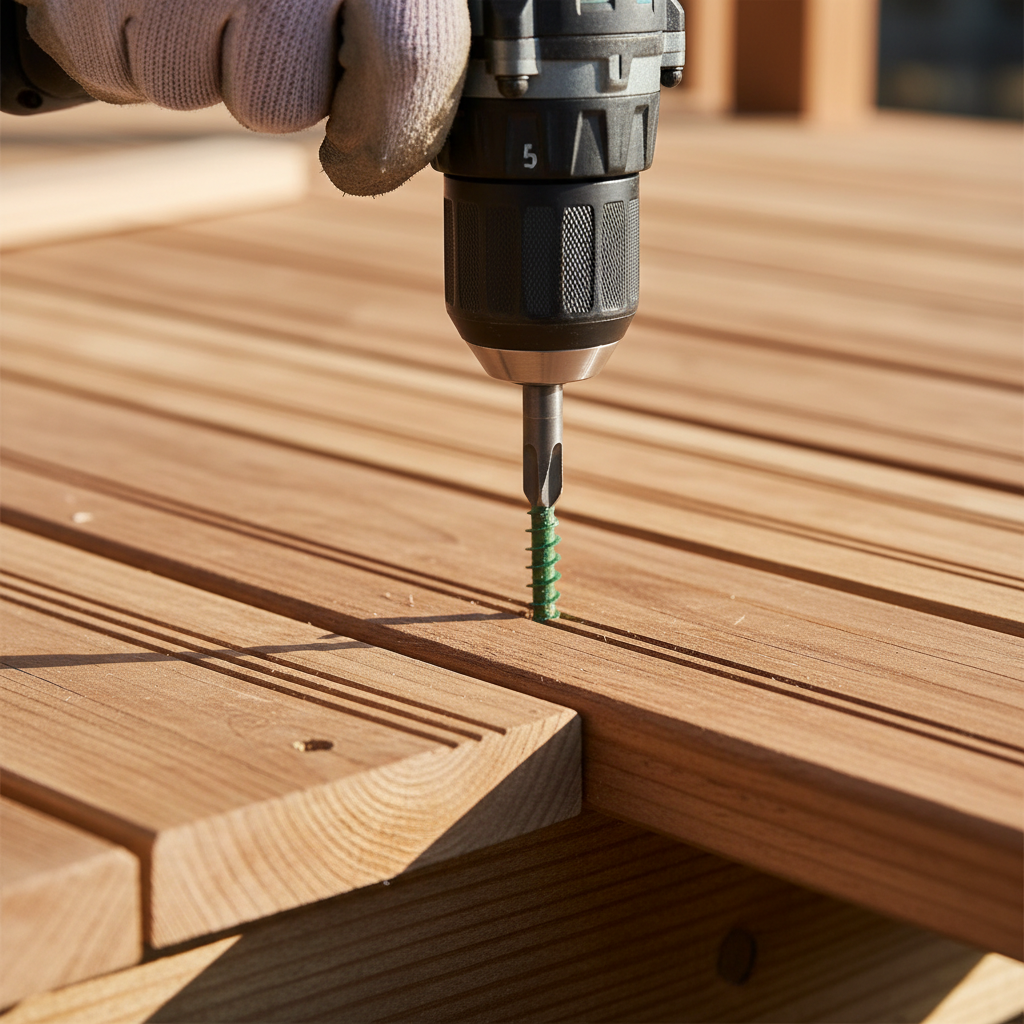
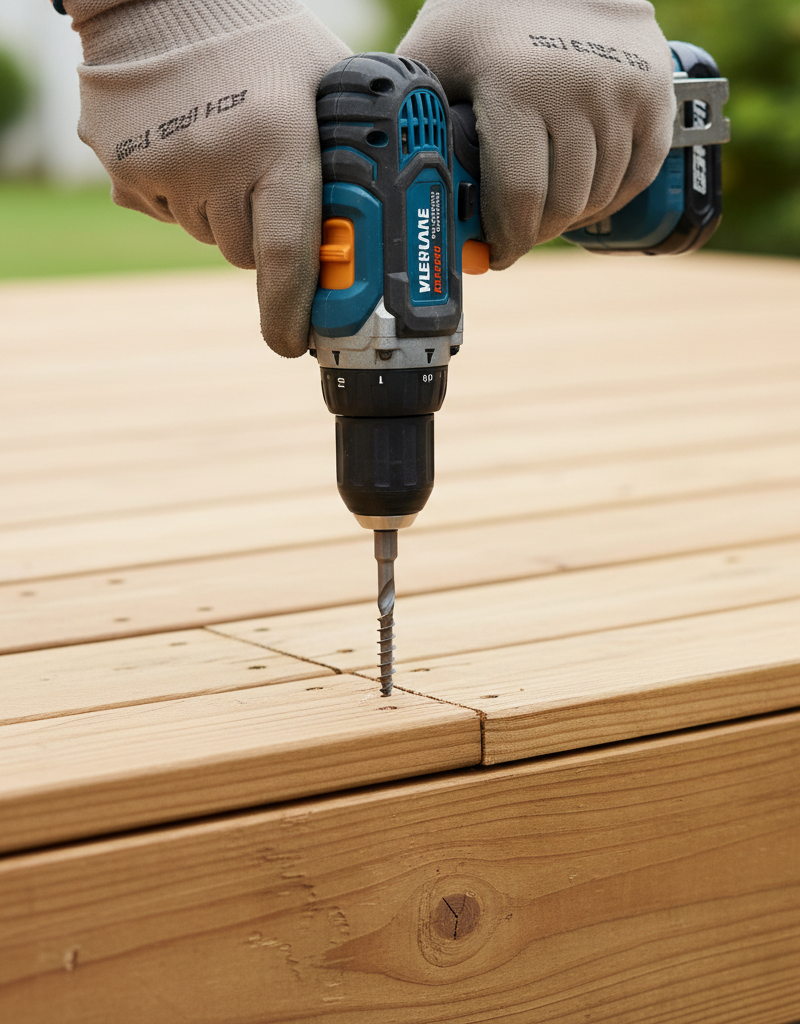
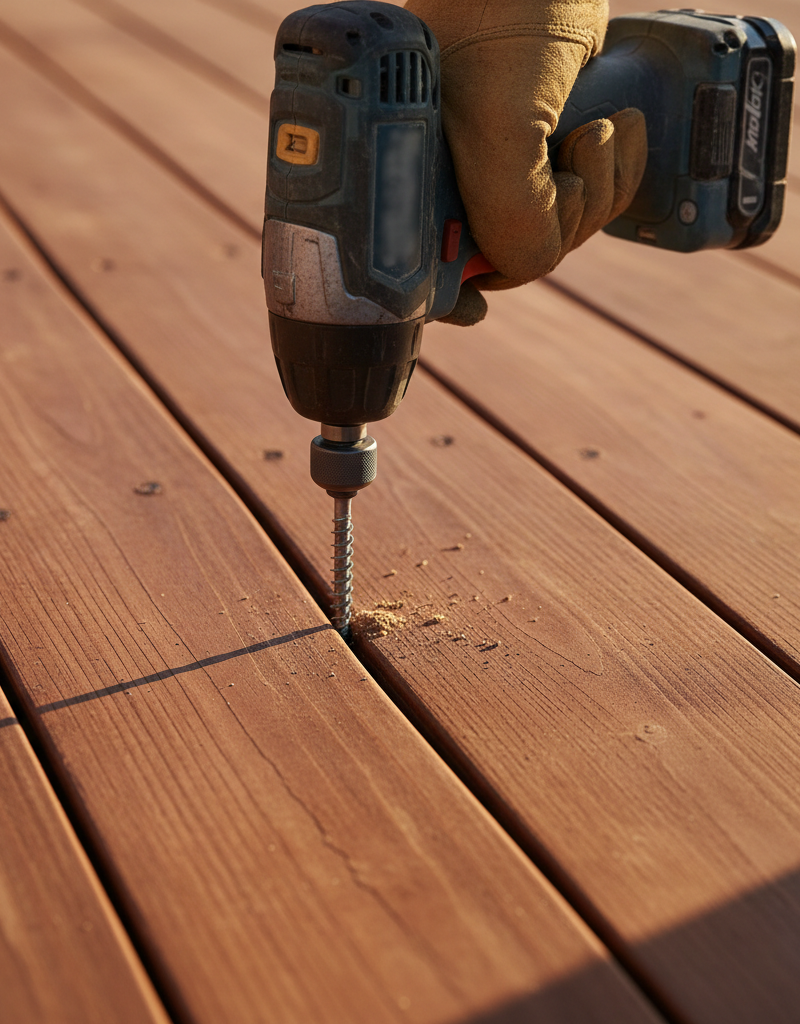
- For boards with minor cupping or ends lifting slightly, you can often re-secure them. Use deck screws (coated for exterior use) that are slightly longer than your existing fasteners. Pre-drill pilot holes to prevent splitting, especially near the ends of the board. Drive screws through the high points of the warp, drawing the board down to the joist. Aim for two screws per joist, about 1-inch from each edge. If the board is bowing slightly, you might be able to use a pipe clamp or a pry bar to temporarily straighten it while you drive new screws.
- Safety Note: Always wear eye protection when drilling or driving screws.
- If this doesn't work: If the board springs back up, it might be too severely warped for simple re-fastening and may need to be removed or replaced.
4. Consider Kerfing (for Cupping) — *A technique to relieve tension in cupped boards.
- Kerfing involves cutting shallow, parallel grooves on the underside of a cupped board to relieve tension and allow it to flatten. This is an advanced technique and should only be attempted if you are comfortable with woodworking and power tools. Use a circular saw set to a depth of about 1/4 to 1/3 of the board's thickness. Make several evenly spaced cuts parallel to the board's length, 1 to 2 inches apart. This strategy is most effective for moderately cupped boards that are otherwise sound. After kerfing, re-secure the board with deck screws.
- Tools: Circular saw with a sharp blade, Carpenter's square, measuring tape.
- Safety Note: Always wear eye and ear protection. Ensure the board is securely clamped before cutting.
5. Remove and Flip/Re-install (for Bowing/Twisting) — *For moderately warped boards, try flipping them.
- If a board is significantly bowed or twisted but otherwise in good condition, you might be able to remove it, flip it over, and re-install it. Carefully remove all existing fasteners. Use a pry bar to gently lift the board from the joists. Assess the underside: if it's flatter or the warp is less pronounced when flipped, try re-installing it. You may need to use a specialized deck board bending tool or a sturdy lever and shims to temporarily straighten the board while you drive new deck screws to secure it. Ensure proper spacing between boards using spacers.
- Tools: Pry bar, drill/driver, deck screws, board bending tool (optional).
- If this doesn't work: If the board is still severely warped when flipped or cannot be properly straightened, replacement is the next step.
6. Replace Severely Warped Boards — *The definitive solution for extreme warping.
- For boards that are excessively twisted, severely split, or cannot be flattened by other methods, replacement is the best option. Carefully remove the damaged board, including all fasteners. Measure and cut a new deck board to the exact length. Ensure the new board matches the existing deck material type and approximate thickness. Lay the new board in place, using spacers to maintain consistent gaps. Pre-drill pilot holes and secure the board with at least two coated deck screws at each joist.
- Material Match: Try to source a board that closely matches your existing deck for type (e.g., pressure-treated pine, cedar, composite) and thickness to ensure a uniform appearance and fit.
7. Ensure Proper Spacing — *Crucial for allowing expansion/contraction.
- Inadequate spacing is a common culprit for warping. Ensure a consistent gap of at least 1/8 to 1/4 inch between boards. This allows for proper drainage, airflow, and accommodates the natural expansion and contraction of wood. Use deck board spacers or even a large nail/screw as a guide when installing or re-installing boards.
8. Apply a High-Quality Deck Sealer/Stain — *Protect against future moisture damage.
- Once repairs are complete and the deck is clean and dry, apply a high-quality water-repellent deck sealer or stain. This creates a protective barrier against moisture absorption, UV damage, and mildew, which are major contributors to warping. Follow the manufacturer's instructions for application, typically applying two thin coats. Reapply every 1-3 years depending on product and exposure.
- Choose Wisely: Opt for a penetrating oil-based sealer for natural wood decks, as it offers better protection against moisture than film-forming stains.
Common Causes
- Uneven Moisture Absorption: This is the primary driver. If one side of a board consistently gets wet (e.g., from rain) and the other side stays dry (e.g., protected by joists or poor ventilation), the uneven expansion and contraction causes warping. Similarly, if boards are stored improperly on-site before installation, absorbing ground moisture on one side, they can warp before they're even laid down.
- Improper Fastening: Insufficient or improperly installed fasteners (nails instead of screws, too few fasteners, fasteners that aren't driven flush) allow boards to move freely and succumb to moisture-induced stress. Fasteners that rust or loosen over time also contribute.
- Lack of Ventilation: When a deck is built too low to the ground (less than 18 inches clearance) or is surrounded by dense landscaping, airflow beneath the deck is restricted. This traps moisture, keeping the undersides of the boards damp and prone to warping.
- Substandard Wood: While not always the case, lower-grade lumber with larger knots, inconsistent grain patterns, or that was improperly dried at the mill (high moisture content) is more susceptible to warping.
- No or Poor Sealing/Staining: Unprotected wood is highly vulnerable to moisture penetration and UV degradation. A good quality sealant repels water and minimizes the effects of the sun, drastically reducing the likelihood of warping.
- Incorrect Board Orientation: Though less common with modern deck boards, historically, carpenters would recommend installing boards
Related Articles
Keep troubleshooting with these hand-picked guides from FixlyGuide:
- The #1 Mistake Homeowners Make When Deck Boards Warp (and How to REALLY Fix It) — Deck boards warp when moisture imbalance or improper installation causes wood fibers to expand and contract unevenly; learn how to fix it t…
- Is Your Gutter Sagging After Every Storm? The Hidden Flaw Most Homeowners Miss — Discover the overlooked reason your gutters sag after every storm and learn the lasting fix that most homeowners miss.
- The 3 Hidden Mistakes That Make Your Deck Sealer Fail (And How to Fix Them) — Resealing your wood deck protects it from weather and extends its life. Learn how to avoid common mistakes for a long-lasting finish and vi…
- The #1 Mistake Homeowners Make After Finding Missing Shingles (And How to Fix It Right) — Discover the crucial steps to take after a storm rips shingles from your roof, ensuring a proper, lasting repair and preventing costly futu…
- The #1 Mistake Homeowners Make When Sealing a Deck (and How to Fix It) — Prevent costly damage and extend your deck's life by avoiding common sealing errors and following a simple, effective resealing process.
- The #1 Mistake When Fixing Baseboards That Pull Away From Walls — Discover the crucial mistake homeowners make when reattaching baseboards and how to properly secure them for a lasting fix.
Frequently asked questions
How do you flatten a warped deck board?+
For minor warping, you can try re-securing the board with longer deck screws, driving them through the high points into the joists. For more severe cupping, kerfing (cutting shallow grooves on the underside) can relieve tension. Moderately bowed boards might be removed, flipped, and re-secured, often with the aid of a board bending tool.
Can warped deck boards be saved?+
Yes, many warped deck boards can be saved, especially if the warping is minor to moderate. Techniques include re-fastening, kerfing, or flipping and re-installing. Severely twisted, split, or rotten boards are usually beyond saving and should be replaced for safety and aesthetics.
What causes deck boards to twist?+
Deck boards twist primarily due to uneven moisture absorption and drying, often coupled with improper fastening. When different areas of a board swell or shrink at varying rates, internal stresses build up, causing the wood to distort and twist. Poor quality lumber with irregular grain patterns can also be more prone to twisting.
How do you prevent deck boards from warping?+
Preventing warped deck boards involves several key steps: using high-quality lumber, ensuring proper spacing between boards for drainage and airflow, securing boards with appropriate deck screws, allowing adequate ventilation beneath the deck, and regularly applying a penetrating deck sealer or stain to protect against moisture and UV damage. Proper storage of lumber before installation is also crucial.
Discussion
Loading comments…