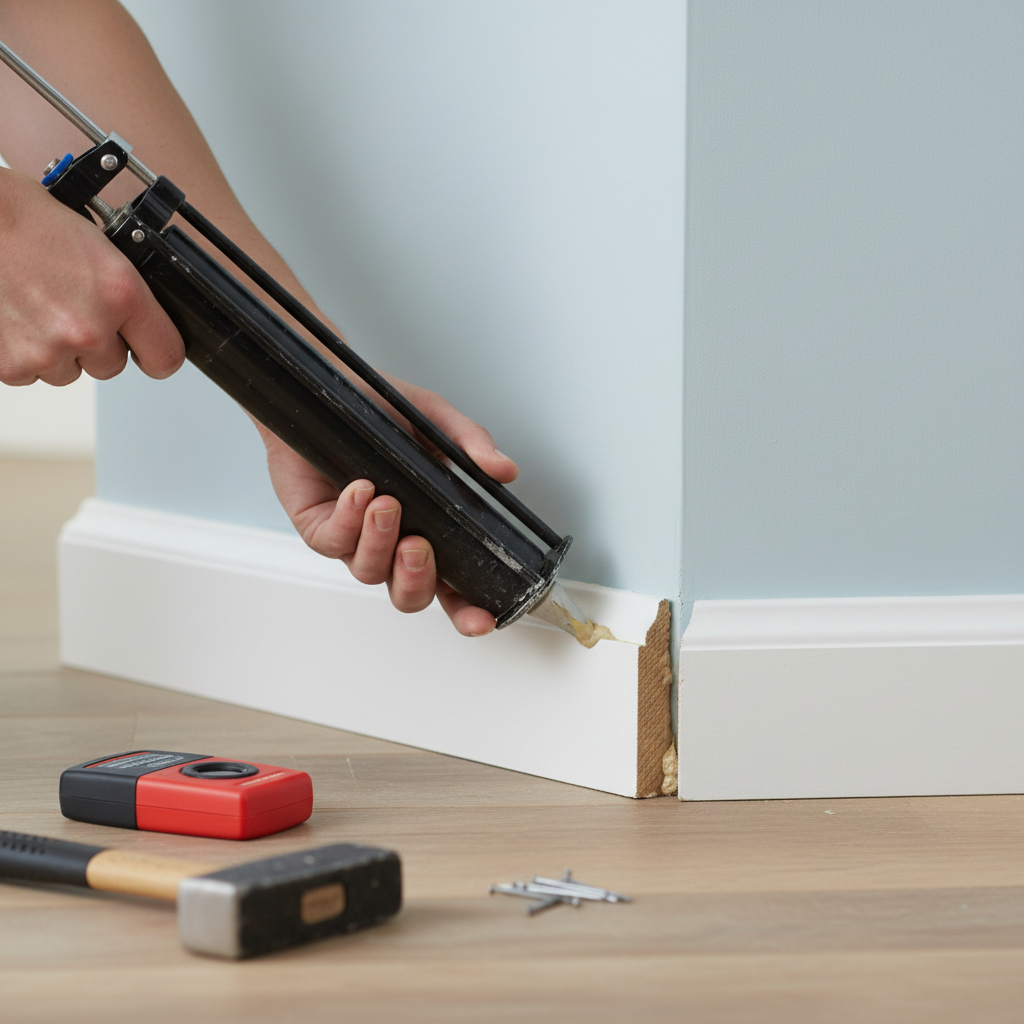
Tools & materials you'll need
Affiliate linksAs an Amazon Associate FixlyGuide earns from qualifying purchases — at no extra cost to you. Prices and availability are accurate as of publication and subject to change.
Quick Answer
Baseboards separating from walls often reveal underlying issues like house settling, significant humidity fluctuations, or a hurried original installation. The most robust repair involves carefully prying the baseboard away from the wall, meticulously removing any old, failing caulk or adhesive, and then resecuring it using a combination of strong construction adhesive and finish nails driven directly into the wall studs. This dual approach provides both a flexible and durable bond that can withstand minor structural shifts and environmental changes, ensuring your trim stays put for years.
The Problem
You walk into a room and notice a gap: your crisp, clean baseboard is no longer flush with the wall. Perhaps it's a small hairline crack, or maybe it's wide enough to slide a credit card into—or worse. This separation isn't just an aesthetic issue; it can allow dust, pests, and moisture to accumulate behind the trim, creating more significant problems down the line. It's a common homeowner's headache, manifesting in various ways from a corner pulling away to an entire length bowing outwards. Ignoring it can lead to bigger eyesores and potentially compromised indoor air quality or pest entry points, making a timely and correct fix essential.
How It Works
To understand why a baseboard separates, imagine your house as a living, breathing entity. Over time, all homes settle. This means microscopic (or sometimes macroscopic) shifts in the foundation and framing. When the framing behind the drywall subtly moves, the drywall itself can flex, and the baseboard—which is typically nailed into the wall studs—gets pulled along for the ride.
Another major culprit is wood’s hygroscopic nature. Wood, including the wood of your baseboards, absorbs and releases moisture from the air. In humid summer months, wood swells; in dry winter months, it contracts. This constant expansion and contraction puts stress on the fasteners holding the baseboard to the wall. If the nails aren’t sufficiently strong, placed incorrectly, or if the adhesive used was inadequate or applied improperly, this movement will eventually cause the baseboard to pull away.
Furthermore, the initial installation plays a critical role. Baseboards are typically attached by driving finish nails through the trim and into the wall studs. Studs are vertical framing members, usually spaced 16 or 24 inches on center. If installers miss the studs, or only use short nails, the baseboard is merely anchored to the drywall, which offers very little holding power. Over time, gravity, foot traffic vibrations, and the aforementioned environmental factors will inevitably cause these poorly secured baseboards to detach. Good installation also involves finding and nailing into the bottom plate, a horizontal piece of lumber that studs rest on. This provides a very secure anchoring point, especially for the lower edge of the baseboard.
Caulk is often used to seal the top edge of the baseboard against the wall and the lower edge against the flooring. While caulk provides a neat finish, it's not a primary fastener. If the baseboard moves significantly, the caulk will crack, tear, or pull away, further highlighting the separation.
Step-by-Step Fix
1. Assess the Damage and Prepare the Area — Carefully examine the extent of the separation. Is it a small section, or a whole length? Test how easily the baseboard pulls away. Clear the area of furniture and lay down a drop cloth to protect your flooring.
* **Tools:** Pry bar, utility knife, drop cloth.
2. Score and Remove Old Caulk/Adhesive — Use a utility knife to carefully score along the top and bottom edges of any existing caulk or paint lines. This prevents tearing the paint off the wall or flooring when you pry the baseboard. Use a putty knife or scraper to remove as much old caulk and adhesive as possible from the back of the baseboard and the wall. This ensures a clean surface for new adhesive to bond effectively.
*   **Safety:** Always cut away from your body when using a utility knife. Consider wearing cut-resistant gloves.
*   **If this doesn't work:** If the caulk is stubborn, a heat gun on a low setting can soften it, but be careful not to damage paint or drywall.
3. Gently Pry the Baseboard Away — For significant gaps or full separation, you'll need to slightly pull the baseboard away to apply new adhesive. Slide a thin pry bar behind the baseboard, placing a small scrap of wood or a putty knife against the wall to protect the drywall surface. Gently pry it out just enough to get access—no more than about an inch or two. Don't remove it entirely unless it's severely damaged or absolutely necessary.
* **Tools:** Putty knife, wood shim/scrap wood, pry bar.
4. Locate Wall Studs — Use a stud finder to locate the wall studs behind the baseboard. Mark their locations lightly with a pencil just above where the baseboard will sit. These are crucial for secure nailing. Studs are typically 16 or 24 inches on center.
* **Important:** Nailing into drywall alone will not hold the baseboard long-term. You must hit studs.
5. Apply Construction Adhesive — Apply a continuous bead of high-quality construction adhesive (e.g., PL Premium, Liquid Nails) in a wavy or zigzag pattern along the back of the baseboard. Focus on the areas that have visible gaps. Don't apply too much—a bead about 1/4 inch thick is sufficient to avoid squeeze-out.
* **Material:** Construction adhesive.
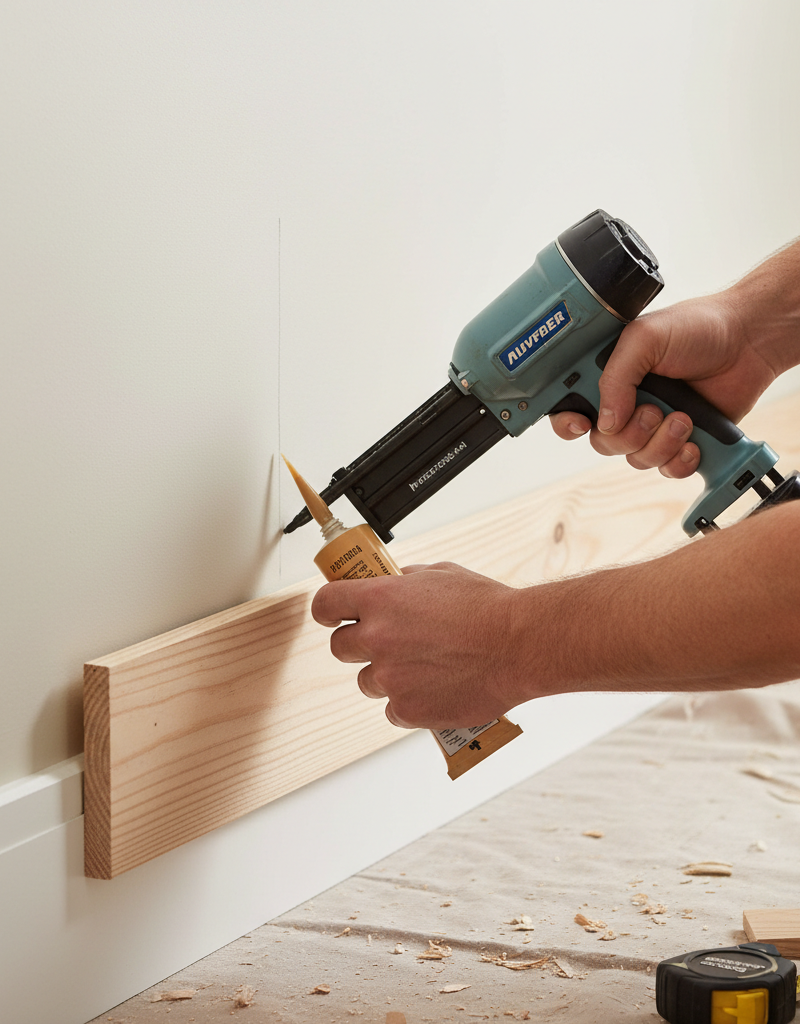
6. Reattach and Secure with Finish Nails — Press the baseboard firmly back into place against the wall. Now, using a nail gun or hammer and finish nails (1.5 to 2 inches long, 18-gauge or 16-gauge), drive nails through the baseboard into the center of each marked stud location. Aim for a nail every 16 to 24 inches. Also, drive a nail into the bottom plate of the wall (the horizontal wood member at the very bottom) every 16 to 24 inches for extra hold, especially if your baseboard is tall. Use a nail set to recess nail heads slightly below the surface of the wood.
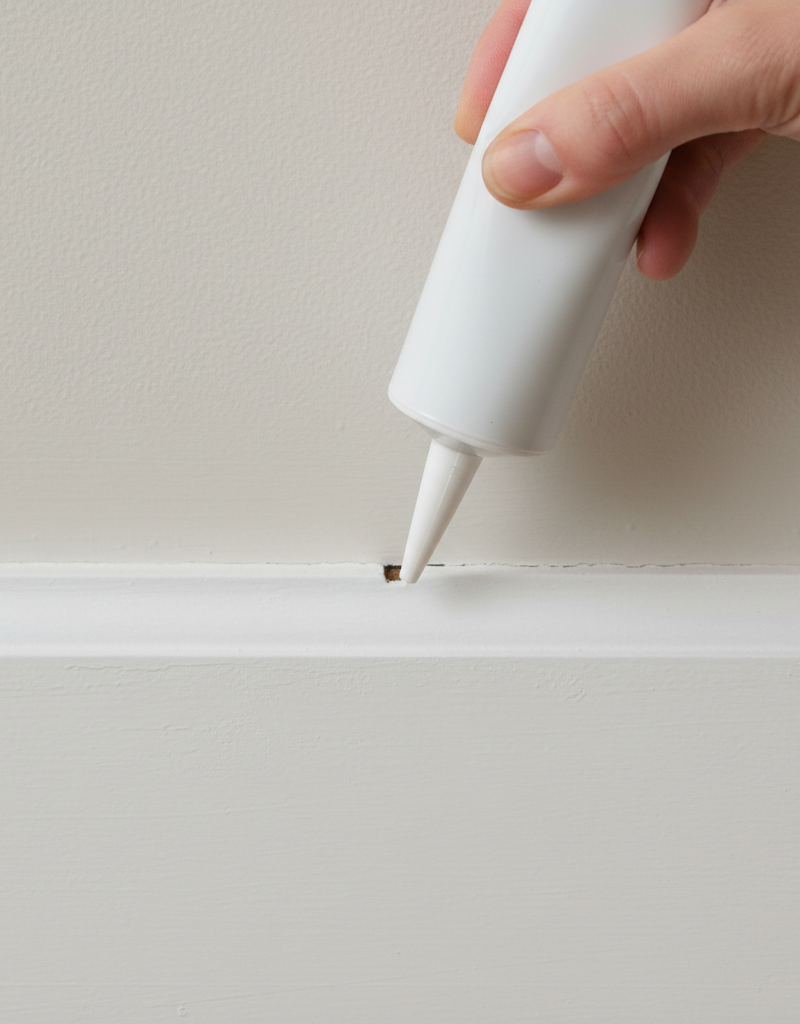
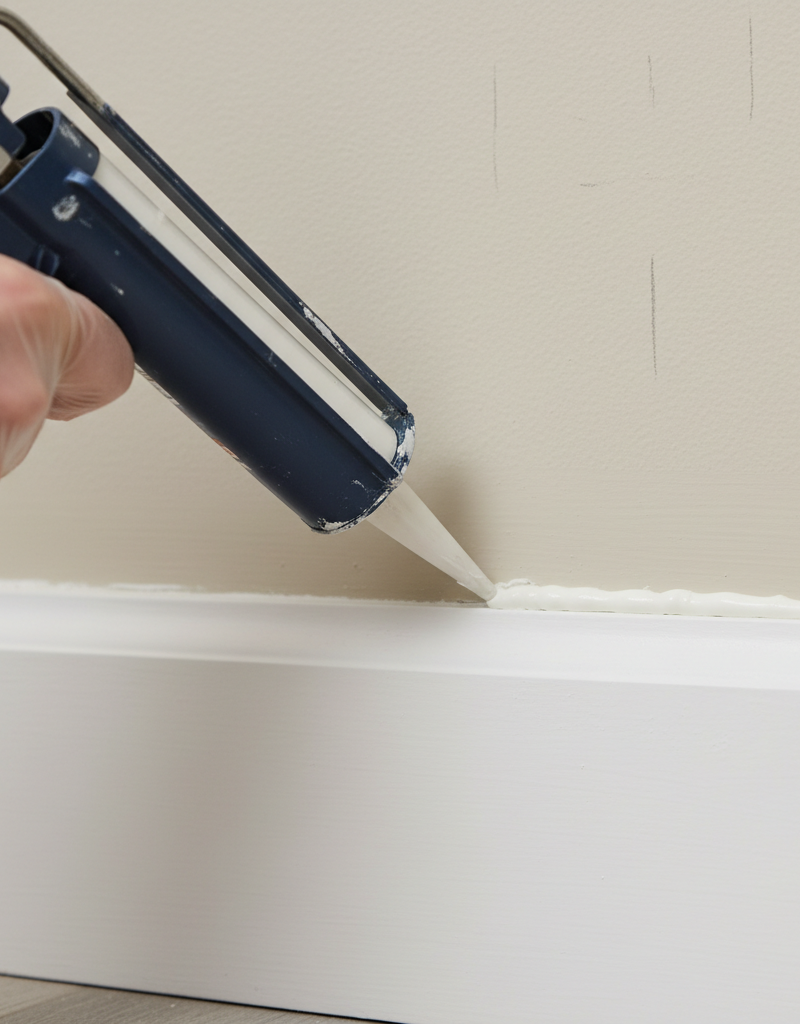
7. Fill Nail Holes and Gaps — Fill all nail holes with wood putty or spackle. Allow it to dry completely, then sand smooth with fine-grit sandpaper (180-220 grit). For any remaining hairline gaps between the baseboard and the wall or floor, apply a thin bead of paintable acrylic latex caulk. Smooth the caulk with a wet finger or a caulking tool for a seamless finish. Wet the tip of your finger and wipe away excess caulk immediately.
* **Tools:** Wood putty/spackle, putty knife, sandpaper, caulk gun, paintable caulk.
8. Clean Up and Paint — Wipe away any excess caulk or putty with a damp cloth. Once everything is dry, touch up the baseboard and wall paint as needed to match the existing finish. Step back and admire your perfectly reattached trim!
Common Causes
- House Settling: As a home ages, it naturally settles, causing slight shifts in the foundation and framing, which can pull trim away from walls.
- Humidity Fluctuations: Wood baseboards expand in high humidity and contract in low humidity. This constant movement can weaken fasteners over time.
- Improper Installation: The most frequent cause. If baseboards are nailed only into drywall (missing studs) or with inadequate fasteners, they will inevitably pull away.
- Poor Adhesion: Using too little adhesive, the wrong type of adhesive, or applying it to dusty/dirty surfaces at the time of installation.
- Foot Traffic/Impact: Constant vibrations from heavy foot traffic or accidental impacts can gradually loosen baseboards.
- Water Damage/Leaks: While less common for separation, chronic moisture can warp wood and weaken drywall, indirectly contributing to trim detachment.
Common Mistakes
- Only Using Caulk to Reattach: Caulk is a sealant, not an adhesive or fastener. It has minimal structural holding power and will quickly fail if used as the primary fix for a separating baseboard.
- Nailing into Drywall Only: Drywall provides almost no holding power for nails. If you don't hit a wall stud or the bottom plate, the baseboard will pull away again very quickly.
- Not Removing Old Caulk/Adhesive: Leaving old, dried caulk or adhesive can prevent new materials from bonding properly, creating an uneven surface and weakening the new bond.
- Using the Wrong Type of Fastener: Short nails or small brad nails (e.g., 23-gauge) are often insufficient for holding baseboards securely, especially if there's any tension.
- Applying Too Much Adhesive: Excessive adhesive can squeeze out, creating a messy cleanup and potentially damaging floors or walls, and doesn't improve adhesion.
- **Ignoring the
Related Articles
Keep troubleshooting with these hand-picked guides from FixlyGuide:
- The Tiny Gap That Destroys Your Bathtub's Structure (and How to Seal It) — Recaulking your bathtub correctly is crucial to prevent water damage, mold growth, and structural issues in your bathroom.
- The 3 Hidden Reasons Your Baseboards Are Pulling Away (And How to Fix It FAST) — Don't ignore separating baseboards—they’re not just an eyesore. Learn the surprising culprits behind the gaps and how to permanently fix th…
- The #1 Caulk Mistake That Leads to Mold (And How to Fix It Right) — Discover the most common caulk mistake that causes frustrating mold growth around your bathtub and learn the simple, effective way to recau…
- The Tiny Gap Behind Your Baseboards That Costs You $100s in Drafts — Discover why your baseboards are pulling away from the wall and the simple, inexpensive fixes that can seal drafts and improve your home's…
- Is Your Roofline Hiding a $10,000 Secret? 7 Warnings Your Soffit & Fascia Are Failing — Discover the critical signs of soffit and fascia damage that could indicate widespread problems and how to properly address them before the…
- Is Your Gutter Sagging After Every Storm? The Hidden Flaw Most Homeowners Miss — Discover the overlooked reason your gutters sag after every storm and learn the lasting fix that most homeowners miss.
Frequently asked questions
Why do my baseboards keep separating from the wall?+
Baseboards typically separate due to house settling, humidity changes causing wood to expand and contract, or improper initial installation where nails missed wall studs or inadequate adhesive was used.
Can I just caulk the gap behind my baseboard?+
While caulk can temporarily hide a small gap and seal it, it's not a strong adhesive. If the baseboard is actively pulling away, caulk alone will eventually fail because it lacks the structural support to hold the trim in place long-term.
What kind of nails should I use to reattach baseboards?+
For securing baseboards, use 1.5 to 2-inch long, 16-gauge or 18-gauge finish nails. These provide sufficient holding power and leave small holes that are easy to fill and conceal.
How do I find studs behind my baseboard?+
Use an electronic stud finder. Run it horizontally along the wall just above where the baseboard sits. Mark the detected stud locations with a pencil. Studs are typically spaced 16 or 24 inches on center.
When should I call a professional for loose baseboards?+
If you notice widespread baseboard separation throughout your home, suspect significant structural movement, or if attempts to reattach them repeatedly fail, it's wise to consult a general contractor or a finish carpentry professional. They can assess for deeper issues or provide a more robust, large-scale solution.
Discussion
Loading comments…