Tools & materials you'll need
Affiliate linksAs an Amazon Associate FixlyGuide earns from qualifying purchases — at no extra cost to you. Prices and availability are accurate as of publication and subject to change.
Quick Answer
If your door won't latch, the most common and quickest fix is to adjust the metal tab inside the strike plate. Use a flathead screwdriver to gently bend this tab slightly towards the door stop. This tightens the opening, allowing the latch bolt to catch securely and keep the door closed.
The Problem
You know the feeling. You push the bedroom door, bathroom door, or even your front door closed, hear a faint click, and walk away, only to have it swing open a moment later. It’s a frustrating and surprisingly common household issue. A door that won't latch properly is more than just an annoyance; it’s a breach of privacy and, in the case of an exterior door, a serious security vulnerability.
The typical symptoms are clear: the latch bolt on the edge of the door makes contact with the metal strike plate on the door jamb, but it fails to fully enter the hole (the mortise) and "catch." You might find yourself having to lift, push, or jiggle the handle to get it to stay shut. Often, the only way to secure the door is by throwing the deadbolt, which is a temporary workaround, not a real solution. This problem can happen gradually over time as a house settles, or it can appear suddenly after a change in seasons. It leaves you with a door that’s never truly closed, compromising soundproofing, climate control, and the basic expectation that a closed door stays closed.
How It Works
To understand the fix, you first need to appreciate the simple but precise mechanics of a door latching system. It’s a partnership between the latch assembly in the door and the strike plate on the frame. When you turn a doorknob, you’re retracting a spring-loaded, angled piece of metal called the latch bolt. When you release the knob or push the door closed, this spring pushes the bolt outward.
The magic happens at the meeting point: the strike plate. As the door closes, the angled face of the latch bolt hits the edge of the strike plate. This contact pushes the bolt back into the door, just enough to clear the plate. The moment it aligns with the hole in the strike plate, the spring snaps it forward and into the mortise—the recessed pocket in the door jamb behind the plate. That satisfying CLICK is the sound of the square side of the bolt catching behind the inside edge of the strike plate, holding the door shut.
This entire operation depends on sub-millimeter precision. If the door sags on its hinges, the house settles, or the wood swells with humidity, the latch bolt and the strike plate hole become misaligned. The bolt might hit the plate too high, too low, or too far in or out.
Here’s the secret component most people overlook: the small metal tab on the inside of the strike plate opening. This tab is not just part of the hole; it's an adjustable component. Its purpose is to control how tightly the door fits against the stop molding when latched. By bending this tab slightly in or out, you can change the effective position where the latch bolt "catches," correcting for minor misalignments without needing to move the entire strike plate. This is the key to the five-minute fix for a door that won't latch.
Step-by-Step Fix
This process targets the most common culprit—a misaligned strike plate tab. It requires only one tool and a few minutes of your time.
-
Observe the Latch and Plate — First, open the door and watch closely as you slowly close it again. Get your eye level with the latch. Does the bolt seem too high, too low, or is it hitting the strike plate dead-on but not going in? If it’s hitting the metal plate instead of entering the hole, this fix is for you.
-
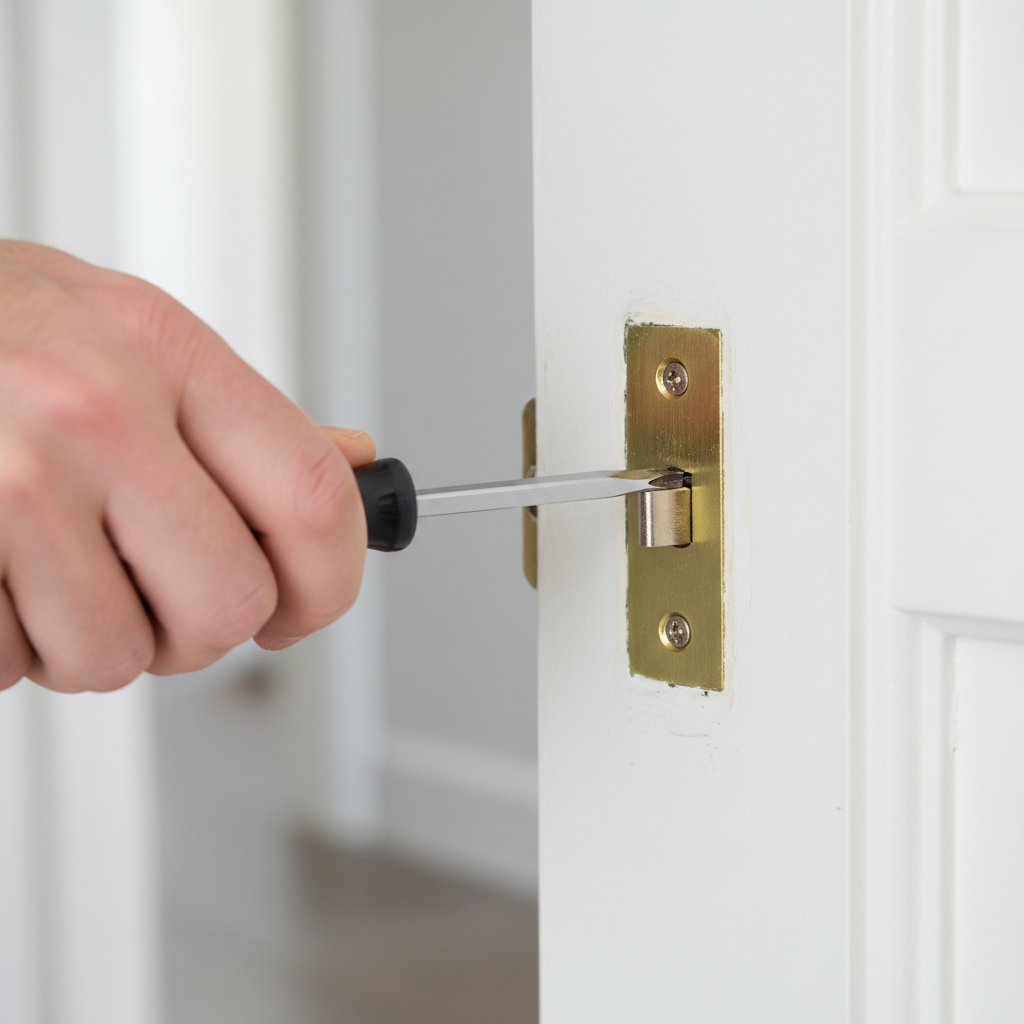
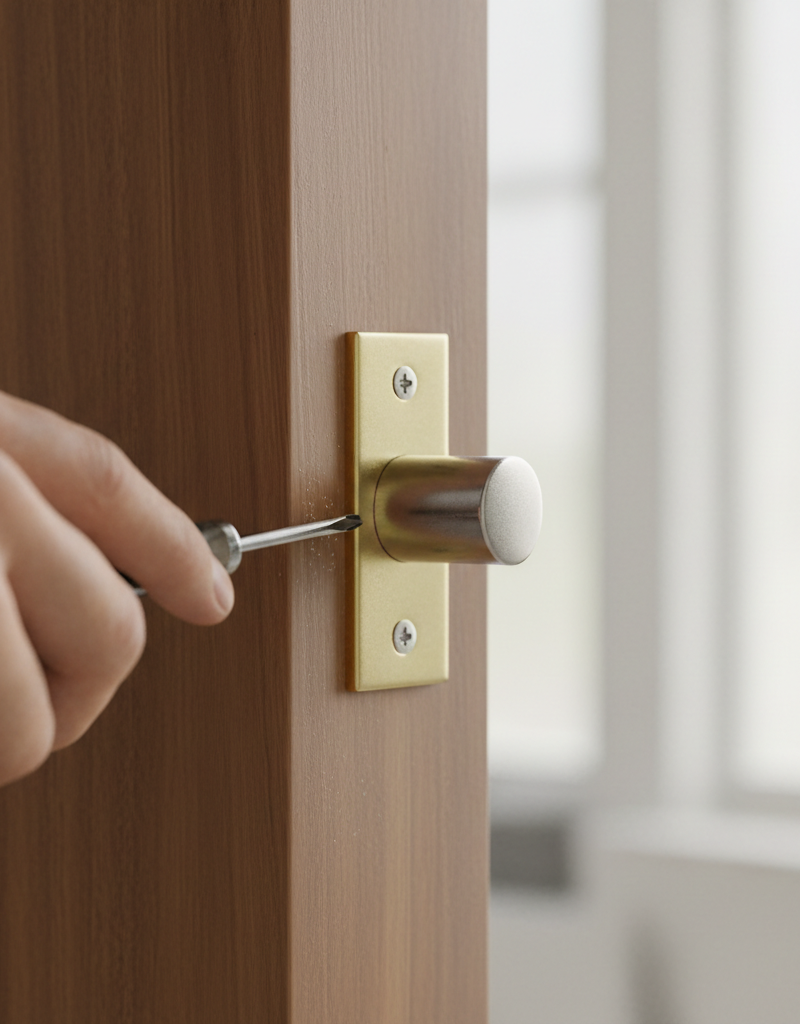
Inspect the Strike Plate Tab — Look inside the rectangular hole of the strike plate. You will see a small metal tab or tang that has been stamped and bent inward. This is your adjustment point. The goal is to bend this tab to better guide and secure the latch bolt.
-
Grab Your Tool — You only need a single, sturdy flathead screwdriver. A multi-bit driver with a flathead attachment works perfectly. Avoid using anything that will scratch the plate, like pliers.
-
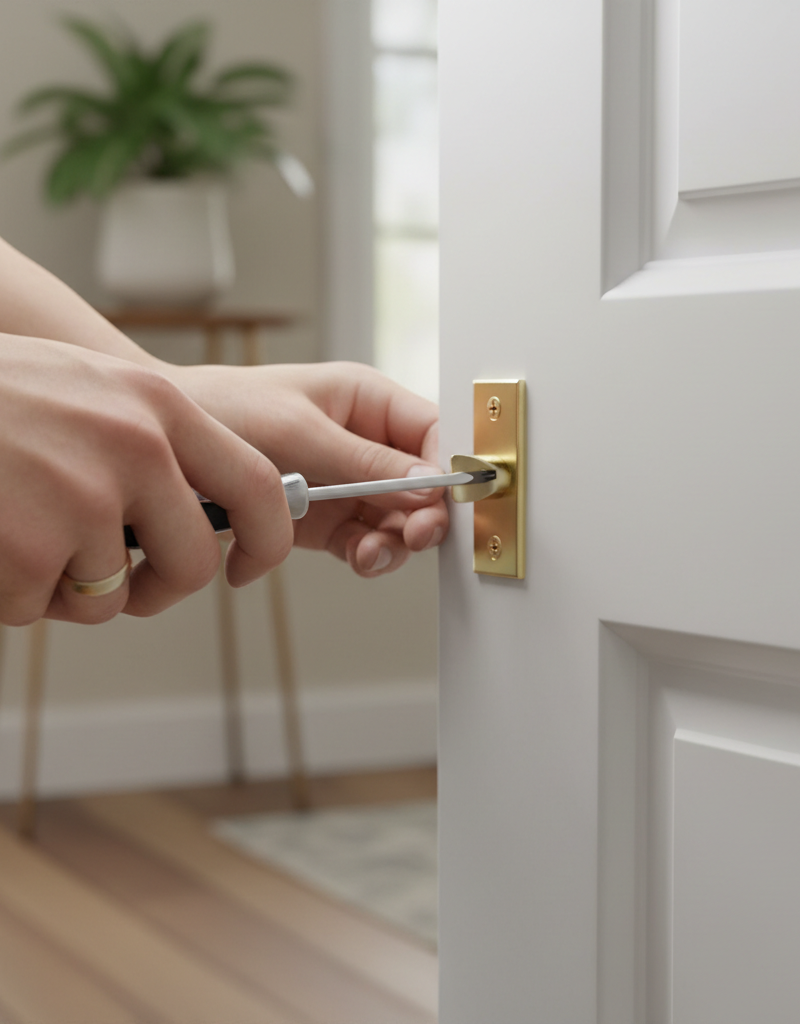
Insert the Screwdriver — With the door open, insert the tip of the flathead screwdriver into the strike plate hole, placing it behind the adjustable tab.
-
Gently Bend the Tab — This is the critical step. Pry the tab gently towards the center of the door jamb (towards the door stop). You are trying to narrow the gap slightly. The goal is to make the latch bolt catch a little sooner as it enters the hole. A movement of just 1/16 of an inch can make all the difference. Do not use excessive force.
-
Test the Door — Close the door normally. Does it click shut securely? If so, you’ve solved the problem. The door should close with a firm, positive click and stay shut.
-
Make Further Adjustments if Needed — If it’s better but still not latching perfectly, repeat step 5, bending the tab just a tiny bit more. Test again. The key is to make small, incremental adjustments.
-
Address a Rattling Door — What if your door closes but now rattles? This means you’ve bent the tab too far. Simply reverse the process. Hook the screwdriver on the front of the tab and gently pry it away from the door stop (towards the opening of the hole). This creates a tighter fit. Adjust it until the door is snug and secure when latched.
-
Check for Scrapes — After adjustment, check if the latch bolt is scraping the tab. You might see small metal shavings or hear a grinding sound. A tiny dab of lubricant, like graphite or a silicone spray, on the latch and strike plate can smooth the action.
-
Confirm the Fix — Give the door a few firm pushes and pulls while it's latched. It should remain securely in place. If it holds, you have successfully fixed your door that won't latch.
Common Causes
If the five-minute fix doesn't work, your door that won't latch likely has a deeper issue. Understanding these common causes is the key to a correct diagnosis.
-
Loose or Sagging Hinges (The #1 Culprit): This is the most frequent root cause. Over time, the screws holding the door's hinges to the jamb can loosen. The weight of the door causes it to sag, pulling the entire door down and away from the top corner. This makes the latch bolt drop below the strike plate opening. To diagnose, look at the gap between the top of the door and the frame; if it’s uneven and wider near the handle side, your hinges are likely sagging. Open the door slightly and try to lift it up and down from the handle. If there's play or movement, your hinges are loose.
-
Strike Plate Misalignment: The strike plate itself may have been installed incorrectly or has shifted over time. Screws can loosen, causing the plate to move vertically or horizontally. Look for witness marks or scrapes around the strike plate opening where the latch has been hitting. This is a clear sign the bolt and the hole aren't aligned. Sometimes, a previous owner may have moved it, leaving behind poorly filled old screw holes that offer no purchase for the current screws.
-
House Settling: All homes settle and shift over time. This movement can rack the door frame, pulling it out of square. A perfectly hung door can start to bind or fail to latch as the frame distorts. This often manifests as a vertical misalignment—the latch is now too high or too low. You can check for this using a level on the top of your door frame. If the frame is no longer plumb and level, settling is a likely factor.
-
Wood Swelling from Humidity: Wood is a hygroscopic material, meaning it absorbs and releases moisture from the air. In humid summer months, a wooden door and its frame can swell, sometimes by as much as 1/8th of an inch. This expansion can eliminate the necessary gap between the door and the jamb, causing the latch to bind against the strike plate before it can even enter the hole. This is especially common for bathroom doors or homes in damp climates.
-
Worn-Out Latch Mechanism: The internal spring mechanism of the doorknob or handle can wear out after thousands of cycles. When this happens, the spring is no longer strong enough to push the latch bolt out with sufficient force or to its full extension. The bolt may only partially emerge, preventing it from properly engaging with the strike plate. If your latch bolt feels mushy or doesn't fully extend when you release the knob, the mechanism is likely failing and needs replacement.
-
Excessive Paint Buildup: It may sound trivial, but multiple layers of paint can cause this problem. Thick paint can build up inside the strike plate mortise or on the face of the plate itself, reducing the clearance for the latch bolt and preventing it from seating correctly.
Common Mistakes
Avoid these common errors that can turn a simple fix into a bigger problem.
- Bending the Tab Too Aggressively: The strike plate tab is meant for fine-tuning. Bending it too far or too fast can weaken the metal, causing it to break off. Always use gentle pressure and make small, incremental adjustments.
- Filing the Strike Plate: Resist the urge to grab a metal file and enlarge the hole in the strike plate. This is a destructive, irreversible action that often makes the problem worse, resulting in a sloppy, loose fit that rattles. It removes material permanently and should only be a last resort by a professional.
- Ignoring the Hinges: The strike plate adjustment is a great first step, but it often treats a symptom, not the cause. If your door is sagging on its hinges, adjusting the strike plate is only a temporary fix. The door will continue to sag, and the problem will return. Always check and tighten the hinges first.
- Using Short Hinge Screws: The standard 3/4-inch screws that come with hinge sets often only grip the soft pine of the door jamb. For the top hinge, which carries most of the door's weight, replace at least one screw with a 3-inch screw. This will anchor the hinge securely to the wall stud behind the jamb, providing a much more robust and lasting fix for a sagging door.
- Misdiagnosing the Problem: Don't assume every latching issue is the strike plate. If the door is physically binding against the frame (rubbing as it closes), the issue is wood swelling or hinge sag, and no amount of strike plate adjustment will solve it.
- Painting Over Hardware: When painting a door or frame, always remove the strike plate and hinges, or at the very least, carefully mask them off. Painting over them can gum up the works and cause latching problems down the line.
Cost & Time Breakdown
Here’s a realistic look at what it takes to fix a door that won't latch, both in time and money.
| Task | DIY Cost | Pro Cost | Time |
|---|---|---|---|
| Adjust Strike Plate Tab | $0 | $75 - $125 | 5 Minutes |
| Tighten Hinge Screws | $0 - $5 (for new screws) | $75 - $125 | 15 Minutes |
| Reposition Strike Plate | $5 - $10 (wood filler, drill) | $100 - $175 | 30-60 Minutes |
| Plane Door Edge (for swelling) | $25 (for a hand plane) | $150 - $250 | 1-2 Hours |
| Replace Door Latch/Knob | $20 - $60 | $120 - $200 | 30 Minutes |
| Re-hang Door in Crooked Frame | $100+ (shims, tools) | $250 - $500+ | 2-4 Hours |
Tips & Prevention
Keep your doors latching smoothly with these preventative measures.
- Annual Hinge Check: Once a year, go around your house with a screwdriver and check all the hinge screws on your doors. Tighten any that are loose. This 10-minute task can prevent most sagging issues.
- The 3-Inch Screw Trick: For any heavy or high-traffic door, proactively replace one of the top hinge screws with a 3-inch construction screw. This anchors the door to the house's framing, not just the trim.
- Lubricate Moving Parts: Lightly lubricate your latch bolt and the internal mechanism through the keyhole with a dry lubricant like graphite powder once every couple of years. This reduces wear and tear on the spring and moving parts.
- Manage Indoor Humidity: In very humid climates or damp areas like basements, use a dehumidifier to keep wood swelling to a minimum. This helps maintain stable clearances around your doors.
- Clean, Don't Paint: When repainting, take the time to remove and clean your strike plates. Scrape out any old paint or wood filler from the mortise behind the plate to ensure a clear path for the latch bolt.
- Close Doors Gently: Avoid letting doors slam shut. The repeated impact can loosen hinge screws and damage the latch mechanism and frame over time.
When to Call a Professional
The five-minute fix and hinge tightening solve the vast majority of latching problems. However, there are times when you should put down the tools and call a carpenter or a handyman.
If you’ve tightened the hinges and tried adjusting the strike plate with no success, it's time for an expert eye. A significant misalignment, where the latch hits more than 1/4 inch away from where it should, often points to a problem with how the door was hung or a significant shift in the frame.
Look for more serious warning signs. Are there large, diagonal cracks in the drywall extending from the corners of the door frame? This can indicate a foundation issue that is warping the entire wall structure, a problem far beyond a simple door adjustment. Another clear sign is a warped door. If the door itself is twisted or bowed, it will be impossible to make it meet the jamb squarely. A professional may be able to plane it, but in severe cases, the door slab itself will need to be replaced.
If repositioning the strike plate seems necessary but you're not comfortable chiseling wood or drilling new holes, a pro can do it cleanly and correctly in minutes. For a secure and properly functioning door, especially an exterior one, the peace of mind is well worth the service call cost.
Frequently asked questions
Why did my door suddenly stop latching?+
A sudden failure to latch is often caused by a rapid change in humidity that makes the door or frame swell, or because hinge screws have finally become loose enough to let the door sag. Check the hinges first, as this is the most common and immediate cause.
The latch on my door is loose and rattles. How do I fix that?+
A rattling door means the fit is too loose. The tab inside the strike plate needs to be bent slightly *away* from the door stop, creating a tighter fit against the latch bolt. Make small adjustments until the door is held snugly without any play.
Can I just file the hole in the strike plate bigger?+
You should avoid filing the strike plate as a first step. It's a destructive method that can't be undone and often results in a sloppy fit. It's better to diagnose the root cause (hinges, alignment) or adjust the strike plate tab first. Filing should be considered a last resort.
Is it okay to just use the deadbolt to keep my door closed?+
While using the deadbolt works as a temporary measure, it doesn't solve the underlying problem. It puts extra strain on the deadbolt mechanism and means your door is never truly secure or sealed with a simple push. It's a sign that your main latch needs service.
Discussion
Loading comments…