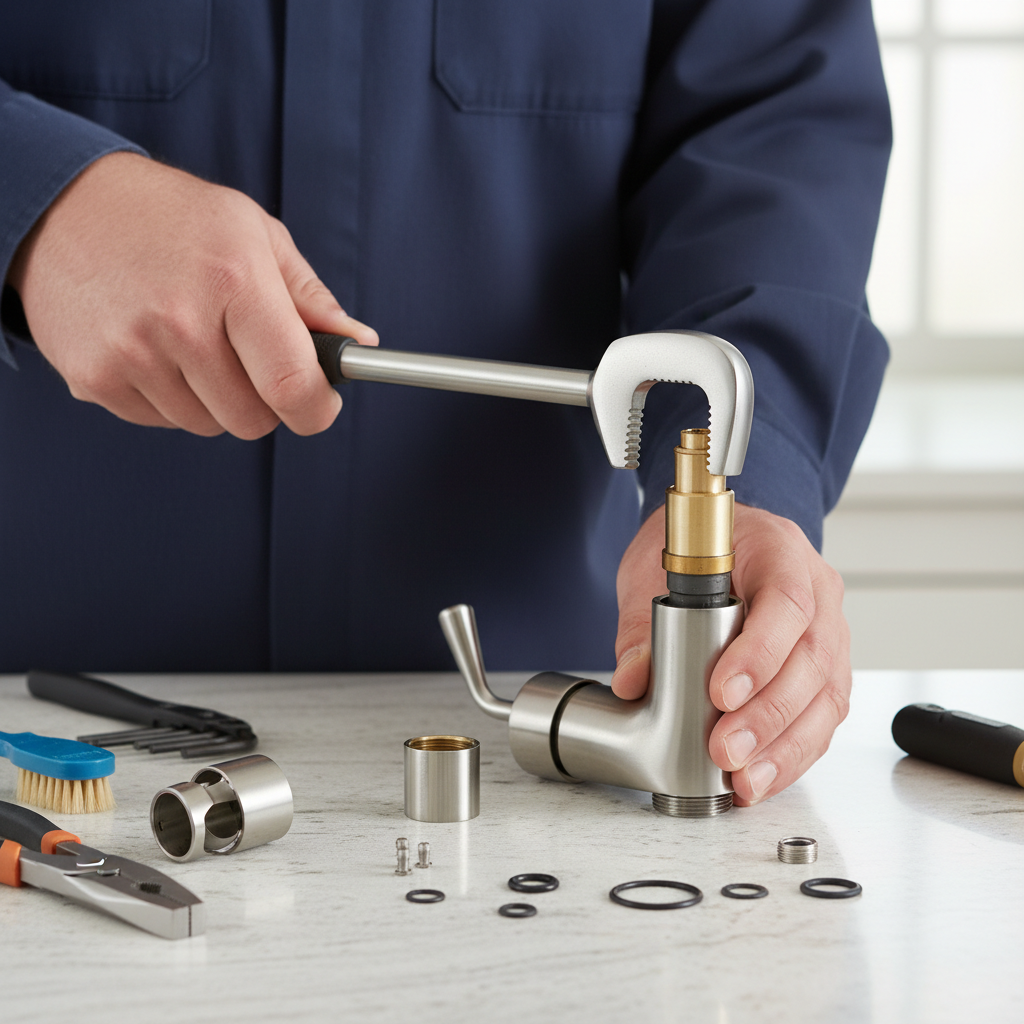
Tools & materials you'll need
Affiliate linksAs an Amazon Associate FixlyGuide earns from qualifying purchases — at no extra cost to you. Prices and availability are accurate as of publication and subject to change.
Quick Answer
A persistent drip from a single-handle faucet, especially when the handle is in the off position or set to a specific temperature, almost invariably points to a faulty cartridge. This critical component mixes hot and cold water and controls the flow. Replacing a worn-out cartridge is a straightforward DIY task that can save you from constant annoyance and wasted water, and it usually only takes about 30 minutes of hands-on time.
The Problem
That seemingly innocuous drip, drip, drip from your single-handle faucet isn't just annoying; it's wasting gallons of water every day and racking up your utility bills. A faucet that drips merely five times a minute wastes over 200 gallons per year. If it's a steady stream, that number escalates dramatically. Beyond water waste, a consistent leak can lead to mineral buildup on your sink basin, rust stains, and even potential damage to your cabinetry if not addressed promptly. The single-handle faucet, while convenient, relies on a precision-engineered cartridge to control water flow and temperature. When this cartridge fails, the faucet loses its ability to seal off water completely, resulting in that tell-tale drip or a constant trickle.
How It Works
Single-handle faucets, whether they’re ball, disc, or cartridge types, all operate on the principle of a central control mechanism that blends hot and cold water and regulates the flow. However, the cartridge-style faucet, which is exceedingly common in modern homes, uses a specially designed ceramic or plastic cartridge. Inside this cartridge are small holes and chambers that align or misalign to control the amount of hot and cold water passing through, and ultimately, the flow rate out of the spout.
When you lift the handle, you open a port allowing water to flow. When you move it left or right, you adjust the mix of hot and cold water passing through the cartridge. The magic happens within the internal seals and O-rings of the cartridge. These components create a watertight barrier when the faucet is off. Over time, due to normal wear and tear, mineral deposits from hard water, or manufacturing defects, these seals can degrade, crack, or become less pliable. When this happens, water finds a path around the intended barriers and escapes through the spout, resulting in a leak. Unlike older compression faucets that rely on washers, cartridge faucets need a fully functional cartridge to prevent leaks.
Step-by-Step Fix
1. Turn Off the Water Supply – Never skip this crucial first step.
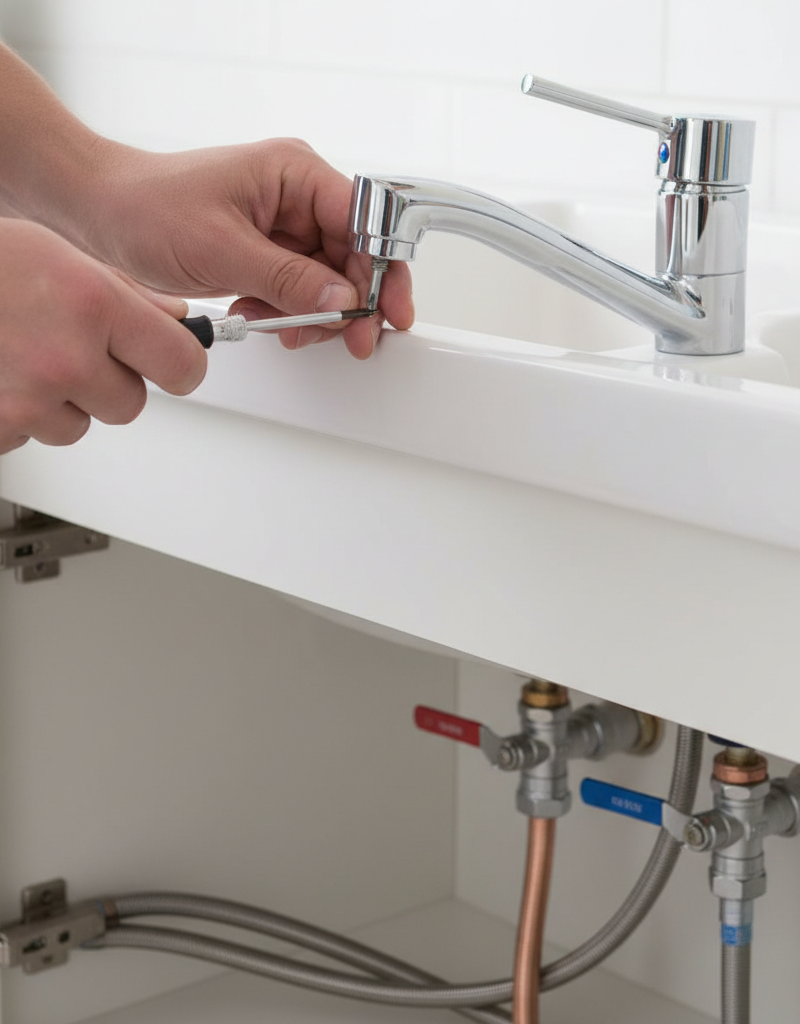
Locate the shut-off valves for your sink, usually beneath the sink basin. There should be two valves, one for hot water and one for cold. Turn both clockwise until they are completely closed. If you can't find individual shut-off valves or they don't seal properly, you may need to turn off the main water supply to your house. Open the faucet handle to drain any remaining water from the lines and ensure the water is completely off.
- Safety Note: Always confirm the water is off by opening the faucet before proceeding. This prevents unexpected sprays and potential flooding.
2. Cover the Drain – Prevent lost parts.
Before you start disassembling anything, place a rag or stopper over the sink drain. Small screws, O-rings, or other tiny components can easily fall down the drain, leading to frustration and delays. A simple rag is usually sufficient to catch anything that might slip.
3. Remove the Faucet Handle – Access the cartridge.
Most single-handle faucets have a decorative cap or plug on the front or top of the handle that conceals a set screw. Gently pry this cap off with a thin flathead screwdriver or your fingernail. Once exposed, use an Allen wrench (hex key) or a Phillips head screwdriver, depending on the screw type, to loosen and remove the set screw. With the screw removed, the handle should lift straight off. Some handles may require a slight wiggle or gentle prying with a screwdriver, but avoid excessive force as you could damage the finish or the handle itself.
4. Remove the Decorative Cap (Escutcheon) – Expose the cartridge assembly.
Once the handle is off, you'll usually see a larger decorative collar or cap that sits on top of the faucet body. This piece often just unscrews by hand by turning it counter-clockwise. If it's stubborn due to mineral buildup, you might need channel-lock pliers, but use a cloth between the pliers and the cap to protect the finish. Underneath this cap, you’ll find the cartridge secured by a retaining nut, clip, or screws.
5. Remove the Old Cartridge – The heart of the problem.
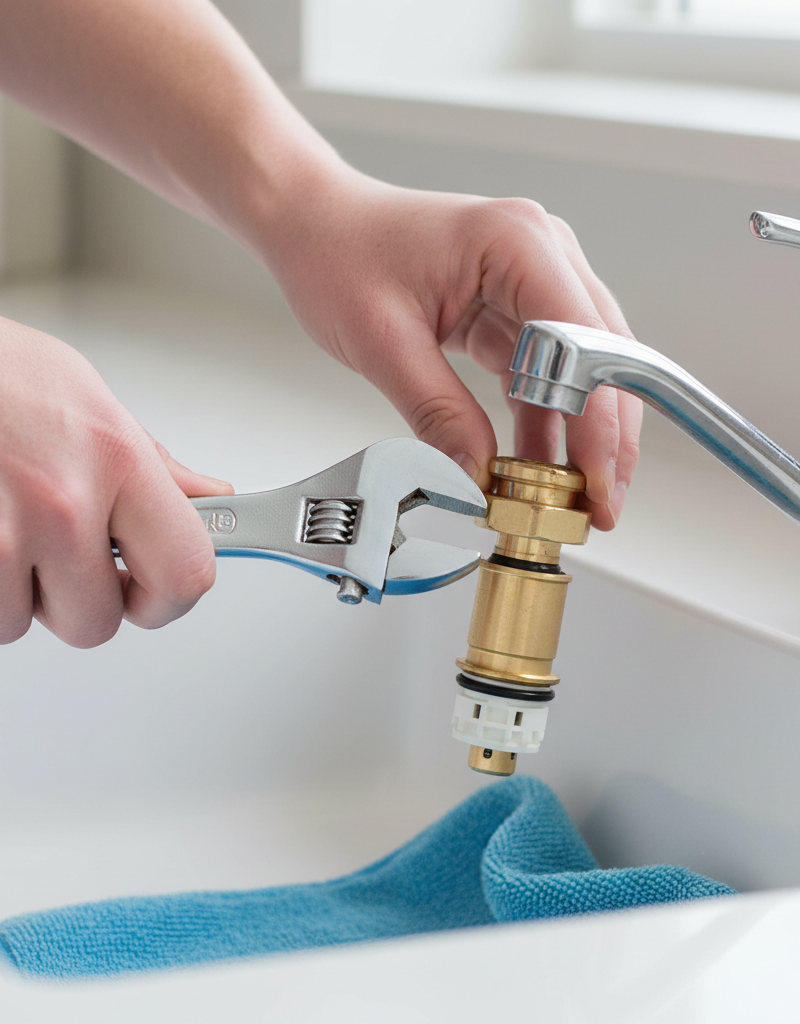
This is the critical step. The method for removing the cartridge varies slightly by faucet brand. Look for a retaining nut that holds the cartridge in place – this can usually be unscrewed with a pair of channel-lock pliers or a basin wrench. Some cartridges are secured by a crescent-shaped retaining clip; this clip can be carefully pulled out with needle-nose pliers or a small flathead screwdriver. Other designs might have two small screws holding a plate over the cartridge. Once the retaining mechanism is removed, the cartridge itself should be pulled straight up and out. You may need to use cartridge pliers or twist it gently with channel locks if it's stuck due to mineral deposits. Note its orientation—some cartridges have specific tabs or notches that need to align when installing the new one.
- If it doesn't budge: Apply a generous amount of white vinegar around the base of the cartridge and let it sit for 30 minutes to dissolve mineral buildup. Tap lightly with a rubber mallet if necessary.
- Take it with you: Once removed, take the old cartridge to your local hardware store or plumbing supply store to ensure you purchase an exact match. Faucet cartridges are brand and model-specific and typically are not interchangeable.
6. Install the New Cartridge – The solution.
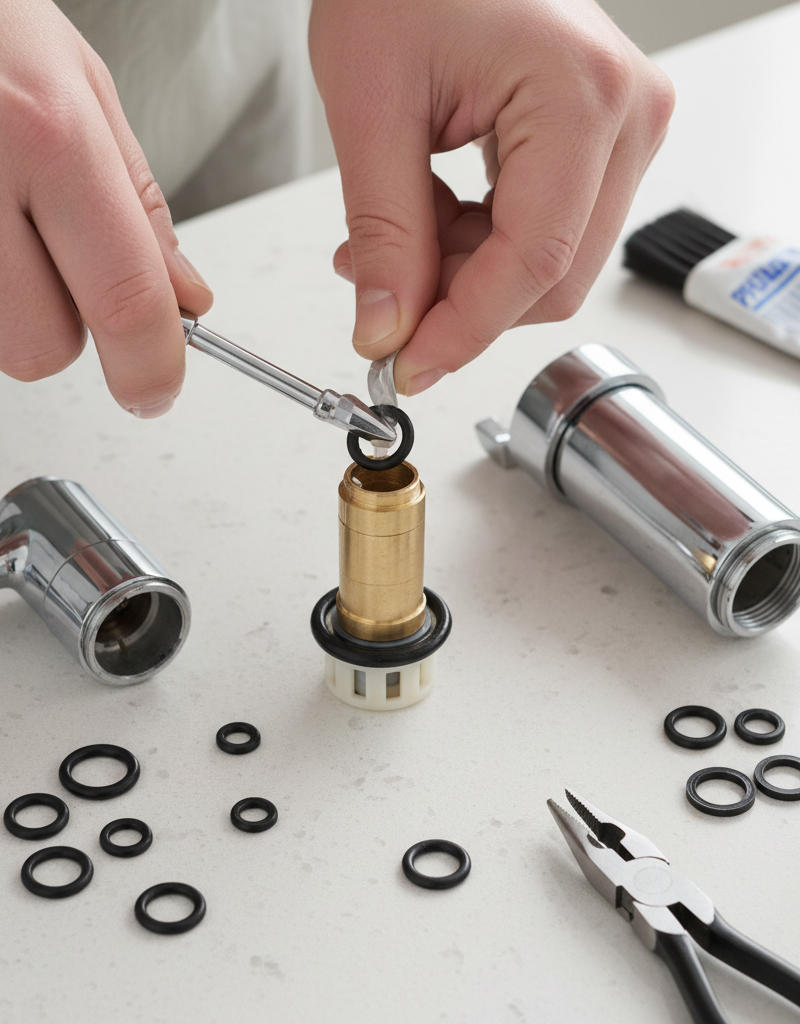
Before inserting the new cartridge, clean out any mineral deposits or debris inside the faucet body where the cartridge sits. A bottle brush or even an old toothbrush can work. Apply a thin layer of plumber's grease or silicone lubricant to the O-rings of the new cartridge. Carefully insert the new cartridge into the faucet body, ensuring it's oriented correctly (align any tabs or notches with the corresponding slots in the faucet body). Push it down firmly until it seats properly.
7. Reassemble the Faucet – Putting it all back together.
Reverse the disassembly steps. Secure the cartridge with its retaining nut, clip, or screws. Screw the decorative cap/escutcheon back on. Place the handle back onto the stem and secure it with the set screw, ensuring it’s snug but not overtightened. Replace any decorative caps.
8. Restore Water Supply and Test – Check your work.
Slowly turn on the hot and cold water supply valves under the sink. Turn them on gradually to allow air to escape from the lines. Once fully open, operate the faucet handle, checking for leaks around the base and from the spout. Test both hot and cold water, and all positions of the handle. If you notice any drips, recheck the tightness of the retaining nut or clips holding the cartridge. If the leak persists, you may have an incorrect cartridge or a more complex internal issue.
Common Causes
- Worn Cartridge: This is by far the most frequent cause. Over time, the internal seals and O-rings within the cartridge harden, crack, or lose their elasticity, preventing a complete seal when the faucet is off. Mineral deposits from hard water can accelerate this wear.
- Damaged O-Rings: Even if the cartridge itself is fine, specific O-rings (rubber rings that create seals) might be worn, torn, or dislodged. While often integrated into the cartridge, some faucet designs allow individual O-ring replacement.
- Loose Faucet Connections: Less common for a spout drip but possible. If the base of the faucet is leaking, the mounting nuts underneath the sink might be loose. However, a drip from the spout usually points to internal components.
- Mineral Buildup: Hard water can leave mineral deposits that interfere with the smooth operation of the cartridge or block its sealing surfaces, leading to leaks.
- Improper Cartridge Installation: If the faucet started leaking after a recent repair, the cartridge might not have been seated correctly, or the retaining clips/nuts weren
Related Articles
Keep troubleshooting with these hand-picked guides from FixlyGuide:
- The 5-Minute Trick to Stop a Dripping Single-Handle Faucet (No Plumber Needed) — A persistent drip from your single-handle faucet is usually caused by a worn-out cartridge, a repair you can typically complete yourself in…
- The $5 Secret to Fixing Your Drip: Why Single-Handle Faucets Leak (and the O-Ring Trick) — A persistent drip from your single-handle faucet is often caused by worn-out O-rings or seals, a common issue with a simple, inexpensive DI…
- The $5 Single-Handle Faucet Fix Plumbers Don't Want You to Know — Stop that annoying drip! Most single-handle faucet leaks are caused by worn-out O-rings or seals, a repair homeowners can easily tackle in…
- The $5 Single-Handle Faucet Fix Most Homeowners Ignore (And Pros Charge $200 For) — A single-handle leaky faucet can often be fixed with a simple, inexpensive DIY repair, saving you hundreds on a plumber.
- The #1 Overlooked Reason Your Chimney Leaks (It Rots Your Roof!) — Discover the surprising, often-missed culprit behind your leaky chimney and how this common issue can silently damage your home.
- Your New Faucet Leaks at the Base? The 50-Cent O-Ring Fix — That brand new kitchen faucet shouldn't be dripping at the base; here's the surprisingly common reason why it's happening and the specific…
Frequently asked questions
How do I know what type of cartridge my faucet uses?+
The best way to identify your cartridge is to remove the old one and take it to a plumbing supply store or a well-stocked hardware store. They can help you find an exact match. Many manufacturers also have diagrams on their websites if you know the faucet's brand and model number.
Can I replace just the O-rings instead of the whole cartridge?+
In some older or simpler single-handle designs, individual O-rings can be replaced. However, in most modern cartridge-style faucets, the O-rings are an integral part of the cartridge assembly. Replacing the entire cartridge is usually the more effective and longer-lasting solution, as all sealing components are new.
What if my faucet still leaks after replacing the cartridge?+
If the leak persists after installing a new cartridge, ensure the new cartridge is an exact match and properly seated. Check for any debris in the faucet body. If the leak continues, the issue might be with the faucet body itself (e.g., a crack), or damage to the valve seats below the cartridge. At this point, it's often more practical to call a professional or consider replacing the entire faucet.
Discussion
Loading comments…