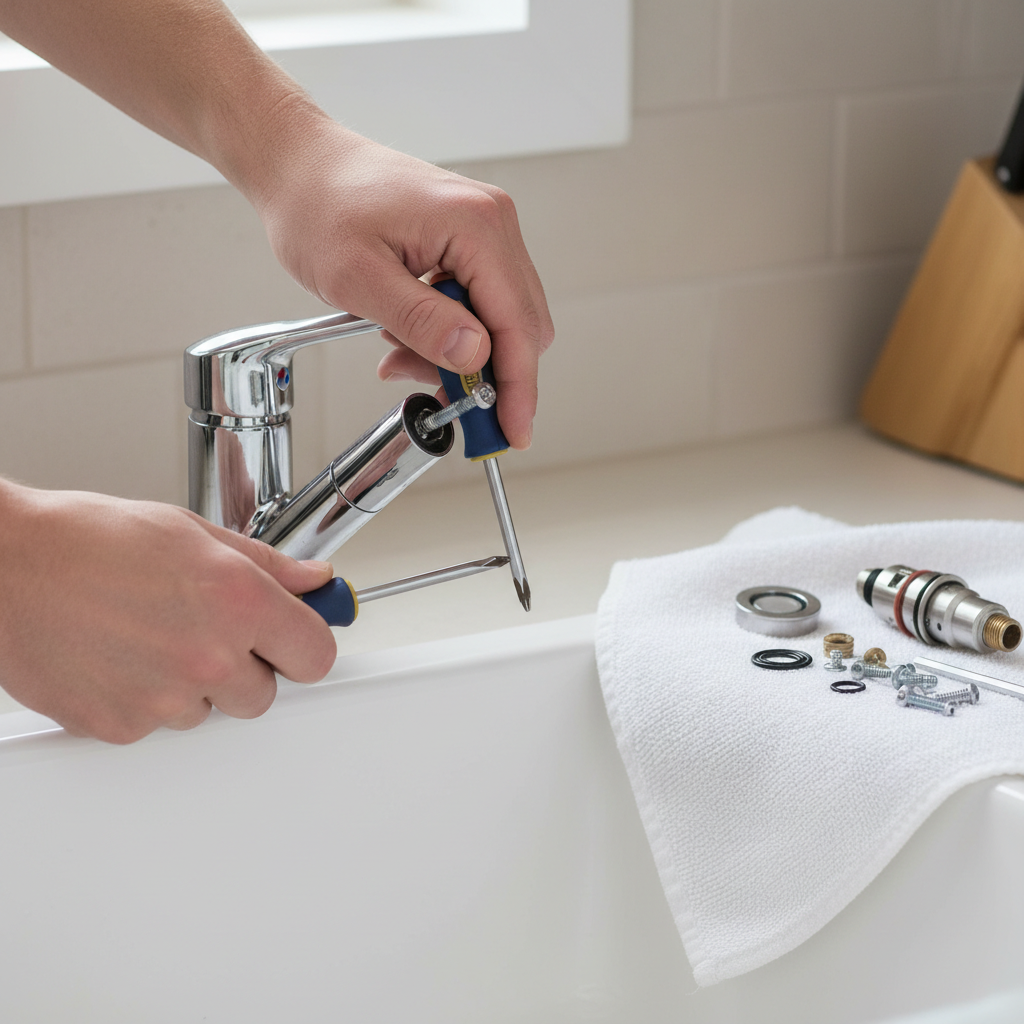
Tools & materials you'll need
Affiliate links- AmazonPlumber's silicone grease
- AmazonFaucet repair kit (O-rings/springs/seals)Specific to faucet brand/type, or generic assortment
- AmazonReplacement faucet cartridgeIf O-rings don't fix the leak, ensure it matches your faucet model
- AmazonWhite vinegar or mild descaling solution
- AmazonClean rags or towels
As an Amazon Associate FixlyGuide earns from qualifying purchases — at no extra cost to you. Prices and availability are accurate as of publication and subject to change.
Quick Answer
Most single-handle faucet leaks, whether a persistent drip from the spout or a puddle around the base, are caused by degraded rubber O-rings or seals within the faucet cartridge. These inexpensive parts wear down over time due to mineral deposits in the water and normal use. By carefully disassembling the faucet, replacing the specific worn O-rings or the entire cartridge, and reassembling correctly, homeowners can effectively stop the leak in under an hour and prevent further water waste and potential cabinet damage.
The Problem
You hear it, you see it – the relentless drip, drip, drip from your single-handle kitchen or bathroom faucet, or perhaps a slow seep of water forming a puddle around the faucet's base. It's more than just an annoyance; a dripping faucet can waste hundreds of gallons of water per year, leading to higher utility bills and potential damage to your sink, countertop, and even the cabinet beneath. The culprit is almost always inside the faucet body: worn-out rubber seals, O-rings, or a faulty cartridge that can no longer create a watertight seal when the faucet is closed or directs water properly when open. Ignoring the problem won't make it go away; in fact, it often worsens, leading to more significant leaks and potential water damage.
How It Works
Single-handle faucets, whether they control hot and cold water with a ball, disc, or ceramic cartridge, operate on a relatively simple principle. When you lift or turn the handle, it manipulates an internal mechanism (the cartridge) designed to mix hot and cold water and control its flow.
Ball faucets use a rotating ball joint with slots and spring-loaded rubber seats. When the handle moves the ball, it aligns the slots with the hot and cold water inlets, allowing water to flow. The rubber seats compress against the ball to create a seal, preventing leaks when the faucet is off. Over time, these rubber seats and accompanying O-rings can harden, crack, or become encrusted with mineral deposits, losing their ability to seal effectively.
Disc faucets (also known as ceramic disc faucets) contain two ceramic discs, one stationary and one movable. These discs have precisely cut holes. When the handle moves the upper disc, the holes align to allow water flow and mix hot and cold water. When the faucet is off, the discs press tightly together, preventing any water from escaping. Their design makes them very durable, but the seals supporting the ceramic discs can still wear out.
Cartridge faucets use a cylindrical cartridge that houses a series of ports and rubber seals. Pushing or pulling the handle up and down controls water volume, while rotating it left or right controls temperature. The seals within and around the cartridge are crucial for directing water flow and preventing leaks. When these rubber seals or the internal components of the cartridge degrade, water can seep past them, resulting in a drip from the spout or a leak from the base of the handle. Mineral buildup is a common enemy here, gradually eroding the rubber or plastic components. Understanding which type of faucet you have can help you identify the specific parts you'll need, but the disassembly process is often similar enough that a homeowner can diagnose and repair most single-handle leaks.
Step-by-Step Fix
Safety Note: Always shut off the water supply to the faucet before beginning any repairs. This typically involves turning the valves under the sink clockwise until snug. Cover the drain with a cloth or stopper to prevent small parts from falling in.
-
Turn Off the Water Supply — Locate and close the shut-off valves.
- Reach under the sink and find the hot and cold water supply lines connected to the faucet. There should be a small valve on each line. Turn both valves clockwise until they are completely closed. Test the faucet to ensure the water is off. If there are no shut-off valves, you'll need to turn off the main water supply to your house.
- Pro Tip: Open the faucet to drain any residual water from the lines after turning off the supply to avoid unexpected splashes.
-
Remove the Decorative Cap and Handle — Access the handle screw.
- Most single-handle faucets have a small decorative cap or plug, often color-coded red for hot and blue for cold, on the top or front of the handle. Gently pry this off with a small flathead screwdriver or fingernail. Underneath, you'll find a Philips or Allen head screw. Unscrew it and carefully lift the handle off. Set the screw and cap aside in a safe place.
- If the handle is stuck: Use a penetrating oil (like WD-40) and let it sit for 15-20 minutes. Apply gentle upward pressure while wiggling the handle.
-
Remove Trim, Retaining Nut/Collar, and Cartridge/Ball Assembly — Expose the internal components.
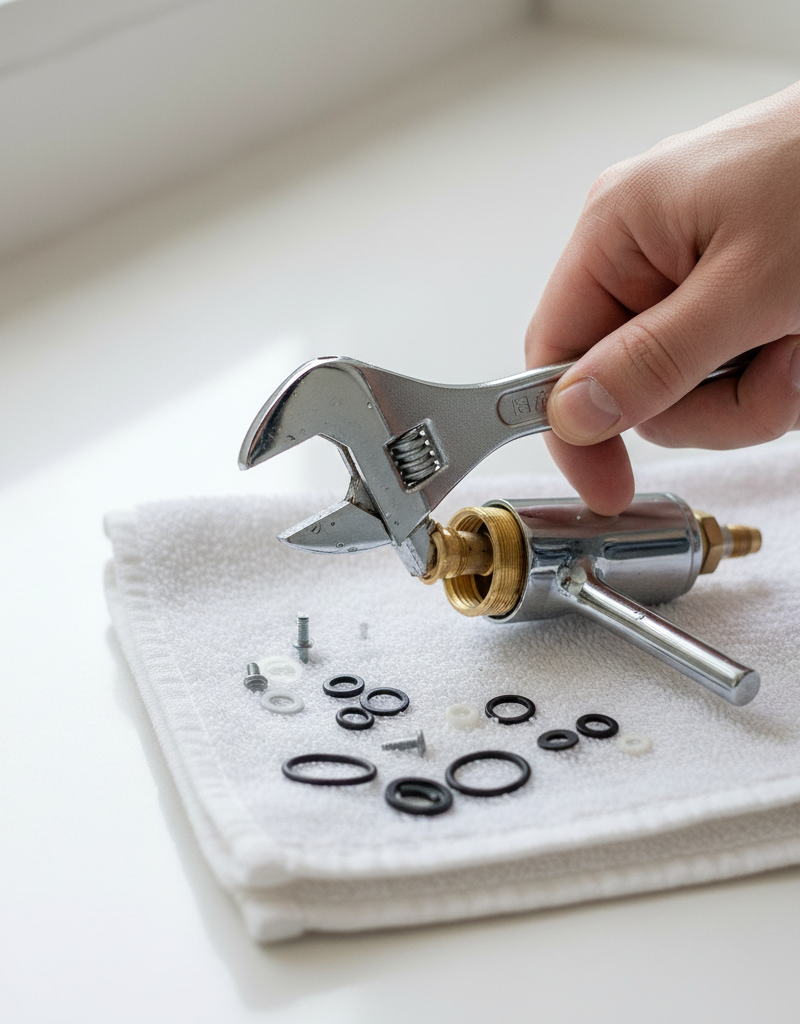
- Once the handle is off, you'll likely see a decorative temperature limit stop (a plastic ring) and a spout retaining nut or decorative collar that holds the main body of the faucet or the cartridge in place. Unscrew these by hand or with an adjustable wrench/pliers. Be gentle to avoid scratching chrome finishes.
- Depending on your faucet type:
- Ball Faucet: Lift out the cam, sealing washers, and the ball assembly. Note the order of removal. Below these, you'll find the spring-loaded rubber seats and springs. These are common culprits for leaks.
- Cartridge Faucet: After removing the retaining nut/clip (often a small horseshoe clip or a threaded plastic nut), gently pull the cartridge straight up and out. You might need to use pliers to get a good grip, often wiggling it slightly. Note its orientation for reinstallation.
- Disc Faucet: Remove the screws holding the ceramic disc cylinder in place. Lift out the cylinder. The rubber seals may be visible at the bottom of the cylinder or in the faucet body.
-
Inspect and Replace Worn Parts — The core of the repair.
- Examine all rubber O-rings, gaskets, and springs for wear, cracking, calcification, or flattening. These are usually the inexpensive parts causing the leak. For ball faucets, replace the rubber seats and springs. For cartridge and disc faucets, inspect the O-rings on the cartridge or around the disc assembly.
- Replacement Strategy: It's often best to replace all the small rubber components (O-rings, springs, seats) as a set. Most hardware stores sell universal faucet repair kits for specific brands (e.g., Moen, Delta) or generic kits containing common O-ring sizes. If your cartridge is visibly cracked, stiff, or heavily corroded, replace the entire cartridge. Take the old parts to the store to ensure you get exact matches.
- Lubrication: Apply a thin coat of plumber's silicone grease to new O-rings and seals before installation. This helps them seat properly and prolongs their life.
-
Clean Internal Components — Remove mineral buildup.
- Thoroughly clean any mineral deposits or gunk from the inside of the faucet body, the spout, and the handle housing using a cloth, an old toothbrush, and white vinegar or a mild descaling solution. Mineral buildup can prevent new seals from working effectively.
- Avoid: Harsh abrasive cleaners or tools that could scratch polished surfaces.
-
Reassemble the Faucet — Reverse the disassembly process.
- Carefully insert the new O-rings, springs, and seats in their correct positions. If replacing the cartridge, ensure it's oriented correctly (there's often a key or alignment marks). For disc faucets, reseat the seals and the ceramic disc cylinder.
- Tighten the retaining nut/collar by hand first, then a quarter turn more with a wrench if needed, but do not overtighten, as this can crush the new seals. Replace the handle, screw, and decorative cap.
- Important: Ensure all components are seated flush and no parts are pinched or misaligned.
-
Restore Water Supply and Test for Leaks — *The moment of truth.
- Slowly turn the hot and cold water shut-off valves back on, turning them counter-clockwise. Don't rush this step, as a sudden surge of water can dislodge newly seated parts or create water hammer.
- Once the water is fully on, visually inspect for leaks around the base of the faucet and beneath the sink. Operate the faucet through its full range (hot, cold, mixed, high flow, low flow) to check for drips from the spout. If a slight drip persists, it might just need the new seals to settle; recheck after an hour. If a significant leak occurs, turn off the water immediately and re-examine your work.
Common Causes
- Worn O-rings and Gaskets: These rubber components lose their elasticity, crack, or flatten over time due to constant friction and exposure to water and chemicals. This is by far the most common cause of drips from the spout or leaks around the handle.
- Mineral Buildup: Hard water leaves behind mineral deposits (limescale) that can accumulate on critical sealing surfaces, preventing O-rings and cartridges from forming a watertight seal.
- Damaged Faucet Cartridge: The entire internal cartridge, especially in single-handle designs, can wear out. Internal plastic parts might crack, or internal seals can fail, leading to leaks.
- Loose Packing Nuts: While more common in two-handle faucets, sometimes a packing nut on the stem holding the handle can loosen, causing minor leaks around the handle base.
- Poor Installation: Less common for an existing leak, but if a new faucet is installed incorrectly, it can develop leaks sooner.
Common Mistakes
- Forgetting to Turn Off the Water: This is the most common and potentially messy mistake, leading to a flooded cabinet and frustration. Always double-check by turning on the faucet after closing the shut-off valves.
- Overtightening Components: While it seems logical to tighten things securely, overtightening screws, nuts, or retaining rings can crush or deform new rubber seals, leading to immediate or future leaks. It can also strip threads or crack plastic components.
- Using the Wrong Replacement Parts: Faucet parts aren't always universal. Using O-rings or a cartridge that isn't an exact match for your faucet brand and model can prevent a proper seal and cause the leak to persist or worsen. Always take old parts to the store for comparison.
- Skipping Lubrication of New Seals: Neglecting to apply a thin coat of plumber's silicone grease to new O-rings and seals can make installation difficult, cause them to bind, or shorten their lifespan.
- Losing Small Parts Down the Drain: Tiny screws, springs, and O-rings are easy to drop. Not covering the drain before disassembling the faucet is a recipe for frustration.
- Ignoring Mineral Buildup: Cleaning away old crusty mineral deposits is crucial. If left in place, they can compromise the seal of new components.
Cost & Time Breakdown
| Task | DIY cost | Pro cost | Time |
|---|---|---|---|
| Diagnosing the leak | $0 | $75–$150 | 5–10 min |
| Parts (O-rings/seals/springs) | $5–$20 | Included | 10–20 min |
| Replacement cartridge | $20–$60 | Included | 10–30 min |
| Labor (Pro only) | N/A | $150–$300+ | 30–60 min |
| Total DIY | $5–$60 | N/A | 30–60 min |
| Total Pro | N/A | $150–$450+ | 30–60 min |
Tips & Prevention
- Regular Cleaning: Periodically clean the faucet spout and aerator to remove mineral buildup, which can sometimes impact flow and the longevity of internal parts.
- Gentle Operation: Avoid forcing the faucet handle or turning it excessively hard. Gentle operation reduces wear and tear on internal components and seals.
- Know Your Faucet Brand/Model: If you know the brand (e.g., Delta, Moen, Pfister) and model number of your faucet, finding replacement parts will be much easier. Keep the manual or look for identifying marks on the faucet itself.
- Consider a Whole-House Water Softener: If you have exceptionally hard water, a water softener can significantly reduce mineral buildup in all your plumbing fixtures, extending their lifespan and reducing the frequency of repairs.
- Don't Ignore Small Drips: A small drip almost always becomes a larger leak. Addressing it early saves water, money, and prevents potential damage.
- Use Plumber's Silicone Grease: Always have a small tube of plumber's silicone grease on hand for any faucet repair. It's inexpensive and essential for lubricating O-rings and seals.
When to Call a Professional
While most single-handle faucet leaks are a straightforward DIY fix, there are times when calling a licensed plumber is the wiser choice. You should opt for professional help if, after following the repair steps, the leak persists or worsens. If you encounter seized components that won't budge even with penetrating oil and reasonable force, a plumber has specialized tools to handle them without damaging the fixture. Leaks that originate deep within the wall or directly from the water supply lines behind the cabinet (not the faucet itself) require immediate professional attention, as they could indicate more severe plumbing issues or potential structural damage. Furthermore, if you're uncomfortable working with small parts, dealing with potential water issues, or simply do not have the time, a professional can complete the repair quickly and correctly, ensuring peace of mind and preventing further water damage.
Frequently asked questions
Why is my single-handle faucet leaking?+
The most common reason for a single-handle faucet leak is worn-out rubber O-rings, gaskets, or a damaged internal cartridge. These components degrade over time due to normal use and mineral deposits in the water, preventing a watertight seal.
Can I fix a leaky single-handle faucet myself?+
Yes, most single-handle faucet leaks are an easy DIY repair. By turning off the water, disassembling the handle, and replacing inexpensive O-rings, seals, or the cartridge, homeowners can often stop the leak in under an hour.
What tools do I need to fix a leaky single-handle faucet?+
You'll typically need a small flathead screwdriver, a Philips head screwdriver, or an Allen wrench (depending on your faucet), an adjustable wrench or pliers, and a small amount of plumber's silicone grease. New O-rings, seals, or a replacement cartridge will also be necessary.
How do I know if I need new O-rings or a new cartridge?+
Inspect the O-rings and seals first; if they appear cracked, flattened, or stiff, replace them. If the cartridge itself is visibly damaged, stiff, or if replacing the O-rings doesn't stop the leak, then a new cartridge is likely needed.
What if my faucet keeps leaking after the repair?+
If the faucet still leaks, double-check that all new parts are correctly seated and tightened (but not overtightened). Ensure you used the exact replacement parts for your faucet model. If the problem persists, it may indicate a more complex issue requiring a professional plumber.

Discussion
Loading comments…