Tools & materials you'll need
Affiliate linksAs an Amazon Associate FixlyGuide earns from qualifying purchases — at no extra cost to you. Prices and availability are accurate as of publication and subject to change.
A furnace blowing cold air on a 20° night is a special kind of awful. The good news: most causes are quick fixes you can handle without an HVAC tech. Work through this list in order — they're sequenced by likelihood.
1. Check the thermostat fan setting
This is the #1 false alarm. If the fan is set to ON instead of AUTO, the blower runs continuously — even when the furnace isn't actively heating. So between heat cycles, you feel cool air from the vents.
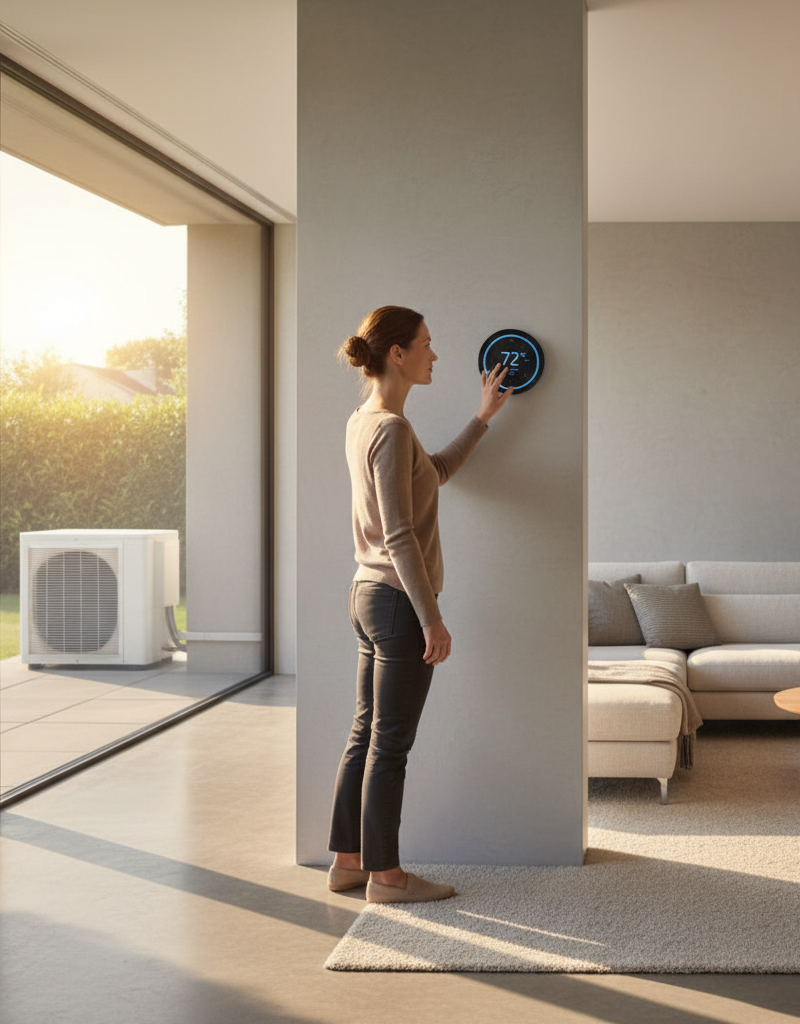
Fix: Set fan to AUTO. The blower will only run during heat calls.
2. Replace the air filter
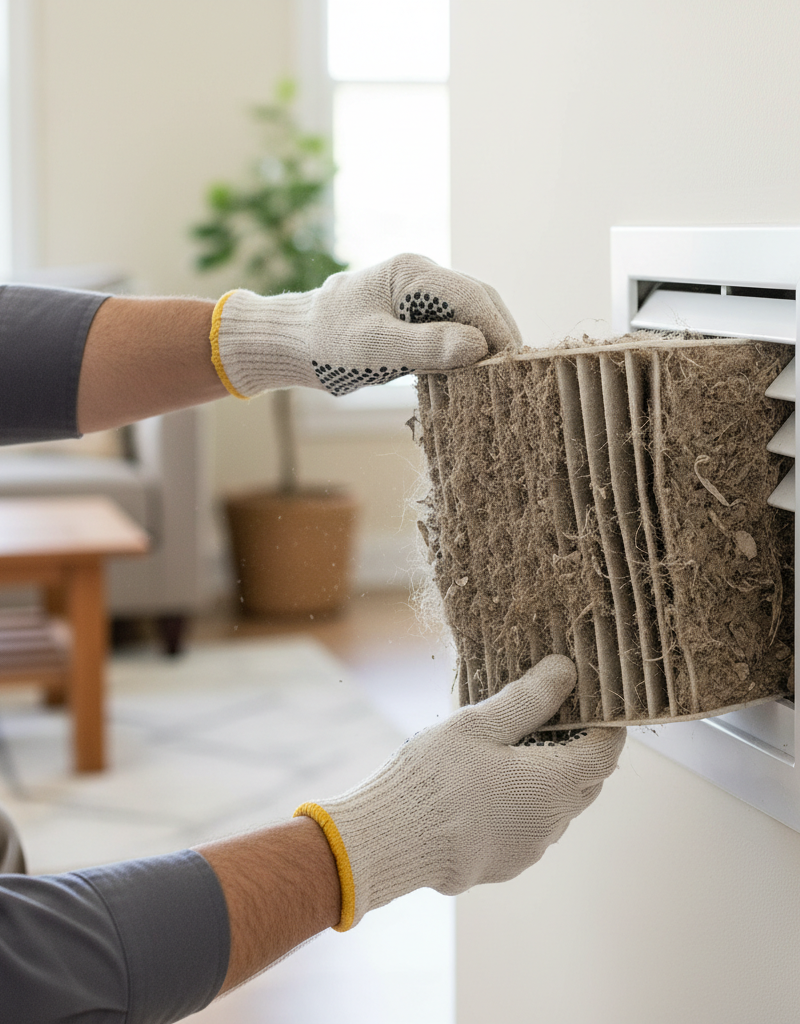
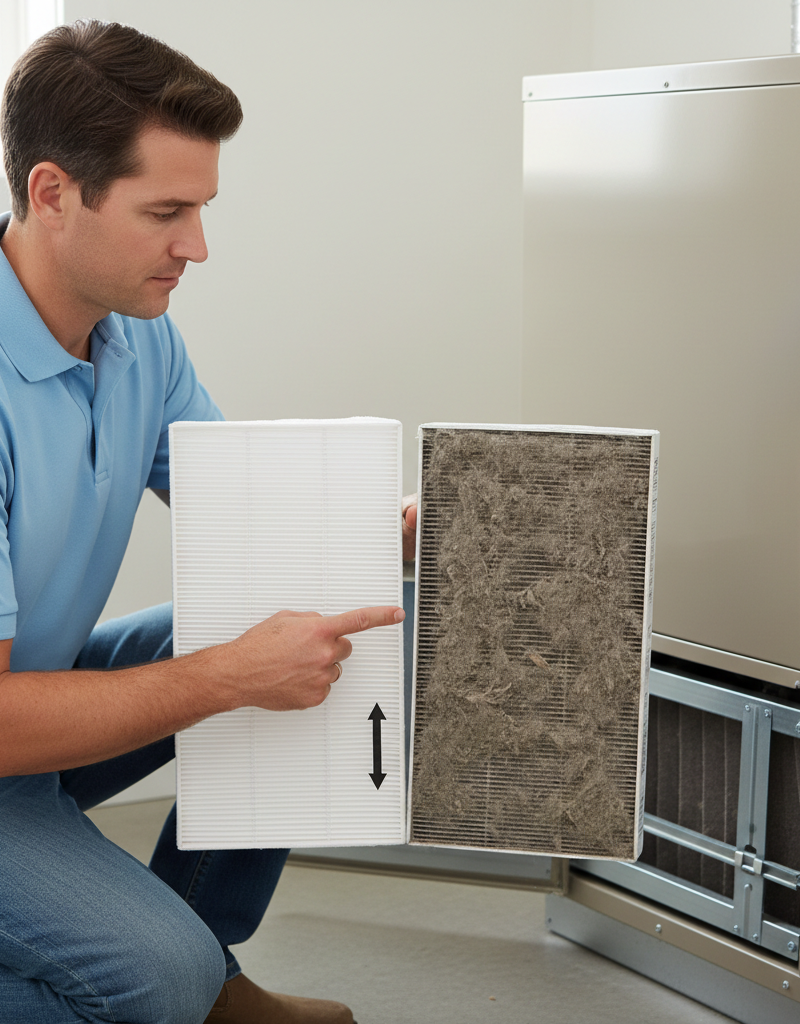
A clogged filter restricts airflow so badly that the furnace's high-limit safety switch trips, shutting off the burners but leaving the blower running. The result: lots of air, none of it warm.
Pull the filter. If you can't see light through it, swap it. Then wait 10 minutes for the system to fully reset and try a heat call again. A 1-inch filter needs replacement every 60–90 days during heating season.
3. Check the gas supply
If you have a gas furnace:
- Confirm the gas valve at the furnace is in the ON position (handle parallel to the pipe)
- Try a gas stove burner — does it light? If not, the gas is off at the meter or there's a utility outage
- For propane systems, check the tank gauge
4. Look for the blink code
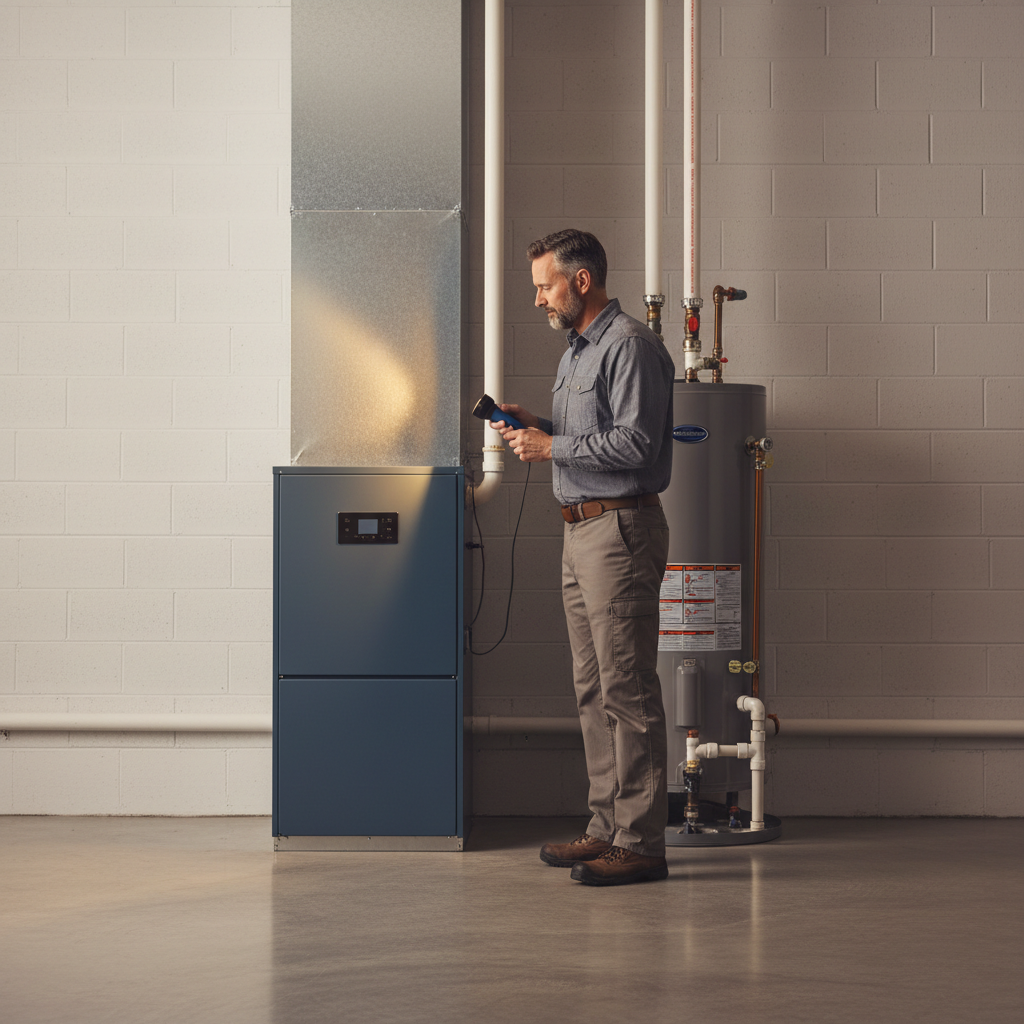
Open the furnace access panel. Look through the small viewing window or behind the panel for a small LED on the control board. It will be either solid, flashing slowly, or flashing in a specific pattern (e.g., 3 short, 1 long).
The legend is printed on the inside of the access panel. Common codes:
- Steady ON / 1 flash: Normal, no fault
- 2 flashes: Pressure switch stuck open (vent blockage)
- 3 flashes: Draft inducer fault
- 4 flashes: Open high-limit (overheat — usually airflow restriction)
- Rapid flashing: Flame sensor dirty (very common, see #5)
5. Clean the flame sensor
The flame sensor is a small metal rod that confirms the burners actually lit. When it gets coated with soot or oxidation, it tells the control board "no flame" — which shuts off the gas as a safety measure but leaves the blower running. This is the single most common DIY furnace fix.
- Turn off power at the furnace switch (looks like a light switch on the unit).
- Find the flame sensor: a thin metal rod about 4" long with a single wire, mounted near the burners.
- Unscrew the mounting screw, slide the sensor out.
- Gently rub the metal rod with fine sandpaper or a Scotch-Brite pad until shiny.
- Reinstall and turn power back on.
This 5-minute job fixes furnaces that have been intermittent for months.
6. Check the condensate drain (high-efficiency furnaces only)
If you have a 90%+ efficiency furnace, it produces condensate that drains through a small PVC line. When that line clogs (algae, sediment), a safety switch shuts off the burners. Look for a clear plastic line with a small float switch attached — clear any visible blockage with a wet/dry vac.
When to call a pro
- Cracked heat exchanger (you'll smell exhaust gases inside the house — get out and call the gas company AND an HVAC tech)
- Failed igniter (a hot-surface igniter is ~$50 part but installation requires confirming gas is properly shut off)
- Failed inducer motor (~$300–$500 repair)
- Repeated trip codes after you've done all of the above
Discussion
Loading comments…