Tools & materials you'll need
Affiliate links- AmazonElectronic Stud Finder1 · Essential for locating wood studs.
- AmazonPower Drill1 · For drilling pilot holes and anchor holes.
- AmazonDrill Bit Set1 · Must include sizes appropriate for your pilot holes and toggle bolts.
- Amazon4-Foot Level1 · Crucial for ensuring a perfectly horizontal shelf.
- AmazonTape Measure1
- AmazonPencil1
- AmazonScrewdriver or Socket Wrench1 · For tightening screws and bolts.
As an Amazon Associate FixlyGuide earns from qualifying purchases — at no extra cost to you. Prices and availability are accurate as of publication and subject to change.
Quick Answer
To hang heavy shelves on drywall securely, you must use high-capacity drywall anchors like toggle bolts or snap-toggles. These anchors expand behind the drywall, distributing the load over a larger surface area. For maximum security, always locate wall studs with a stud finder and fasten the shelf supports directly to them whenever possible, using anchors for any attachment points that fall between studs.
The Problem
It’s a scenario played out in countless homes: you spend a weekend installing beautiful new floating shelves. They look fantastic—clean, modern, and ready to be loaded with your favorite books, ceramic dishes, or heavy decorative objects. For a few weeks, everything is perfect. Then, one night, you’re startled by a catastrophic crash. You rush into the room to find your prized possessions shattered on the floor, and the shelf dangling from the wall at a sickening angle. Where the bracket used to be, there are now two massive, torn-out craters in the drywall. The tiny plastic anchors you used, the ones that came with the shelf, have pulled straight through the wall, taking chunks of gypsum and paper with them. This failure isn’t just frustrating and costly; it’s a structural surrender. The weight of the items, combined with the shelf's own weight, created a constant pulling-outward force that the weak, friction-based anchors simply couldn’t withstand in the brittle drywall.
How It Works
Understanding why shelves fail requires understanding drywall itself. A standard 1/2-inch sheet of drywall is essentially a soft, chalky gypsum core sandwiched between two layers of paper. It has excellent compressive strength (you can push on it) but very poor tensile strength (you can’t pull on it very hard). When you drive a screw into plain drywall, it’s only gripping that fragile gypsum core. Any significant outward force will cause the gypsum to crumble and the screw to pull out.
Standard, small plastic anchors work by expanding slightly as the screw is driven in, creating friction against the inside of the hole. This is adequate for very light loads like a small picture frame (under 10 pounds), where the force is mostly downward (shear load). However, a heavy shelf exerts a significant tensile load—it actively tries to pull the anchor straight out of the wall. For this, you need an anchor that distributes the load across a much larger surface area on the back of the drywall.
Enter the toggle bolt. This remarkable piece of hardware consists of a screw and a spring-loaded, wing-like toggle. After you drill a hole, the toggle is folded, pushed through the hole, and springs open in the hollow cavity behind the wall. As you tighten the screw, the toggle pulls tight against the back of the drywall, clamping it between the toggle and your shelf bracket. This distributes the weight over several square inches of solid drywall, not just the crumbling edges of the drilled hole, dramatically increasing its holding power. A heavy-duty toggle bolt can support 100 pounds or more in 1/2-inch drywall, making it the true secret to how to hang heavy shelves on drywall securely when a stud isn't available.
Step-by-Step Fix
-
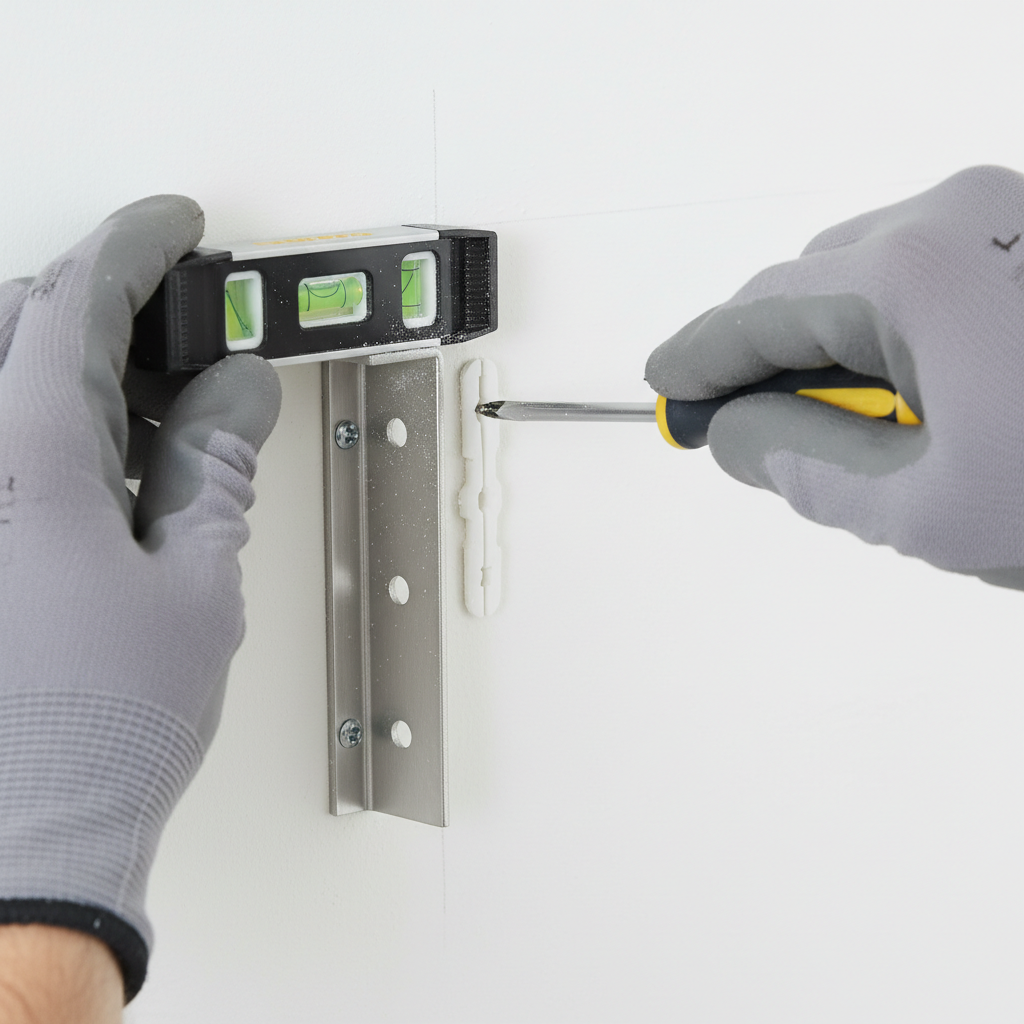
Plan Your Layout — First, decide exactly where you want your shelf. Hold the shelf or a template against the wall. Use a 4-foot level to ensure it's perfectly horizontal and make light pencil marks at the desired height and ends of the shelf.
-
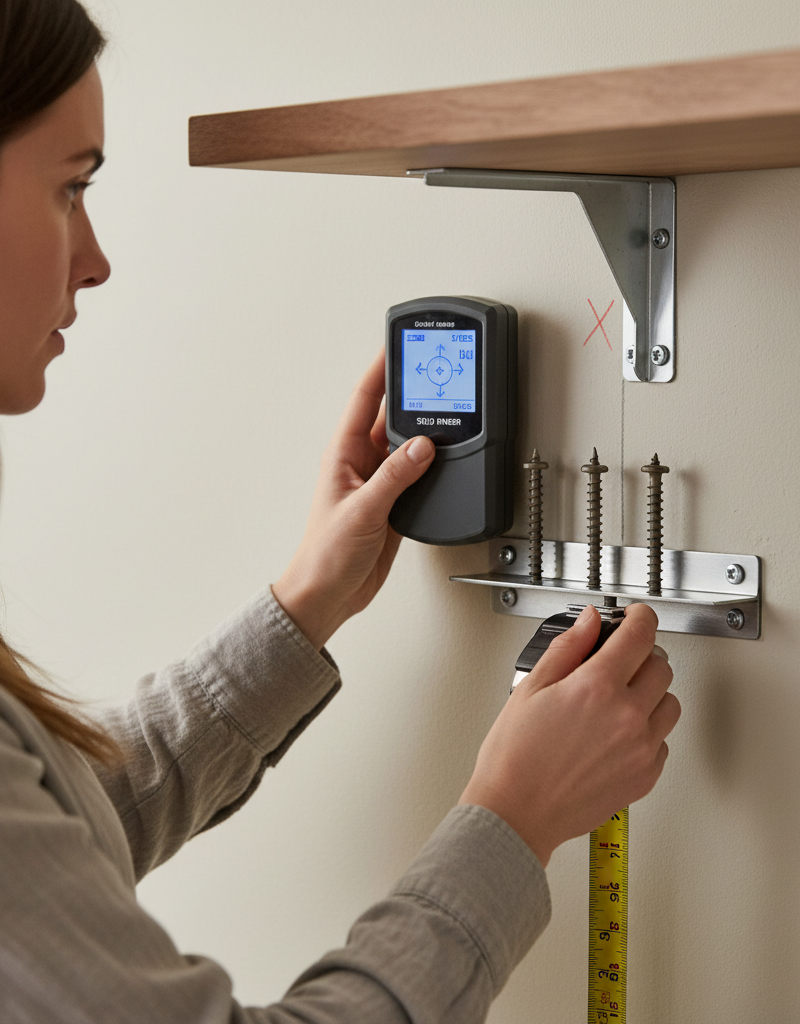
Locate Wall Studs — This is the most critical step. Turn on your electronic stud finder, calibrate it on a blank section of the wall, and slide it horizontally along your marked line. Mark the location of the left and right edges of every stud that falls behind your shelf. Studs are typically 1.5 inches wide and spaced 16 inches on-center.
-
Mark Your Fastening Points — Position your first shelf bracket on the wall so that its mounting hole aligns with the center of a stud you located. Mark the drill spot through the hole with a pencil. Now, measure and position your second bracket. If it also lands on a stud, great! Mark it. If it falls on a hollow section of drywall (which is common), mark its drill spot anyway. This is where you will use a heavy-duty toggle bolt. Ensure the brackets are spaced according to the shelf manufacturer's recommendations.
-
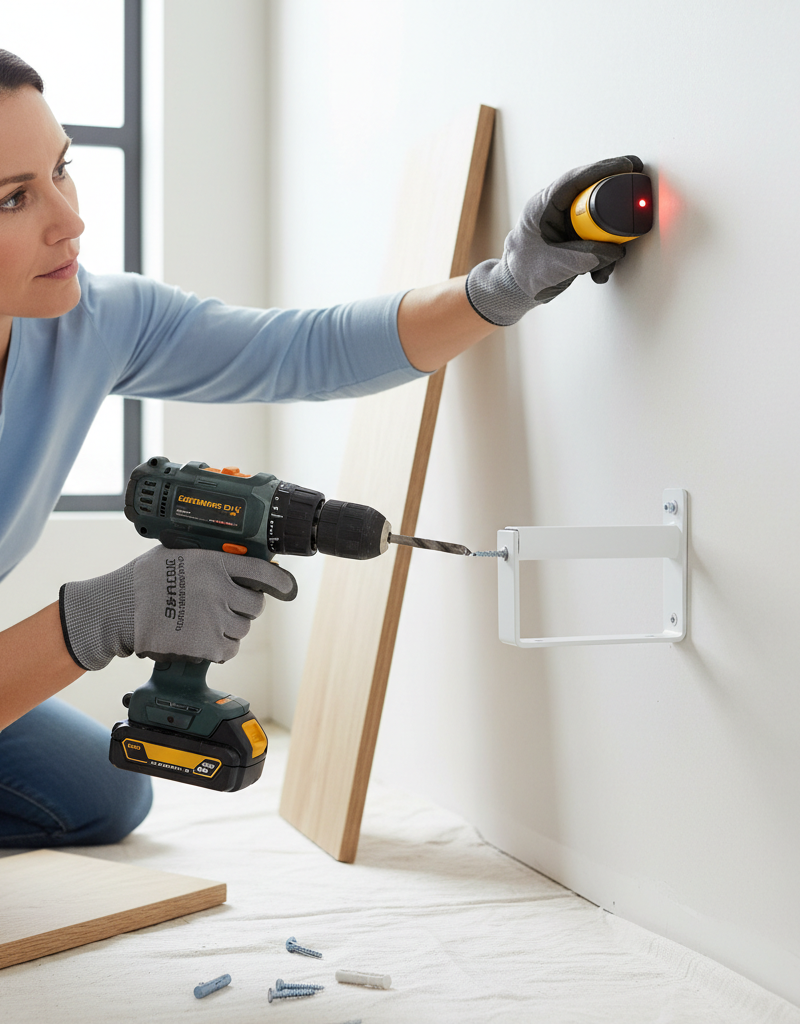
Drill Your Holes — For the bracket(s) on a stud, you'll drill a pilot hole. Use a drill bit that is slightly smaller in diameter than your lag screw (e.g., a 1/8" bit for a 1/4" lag screw). For the bracket(s) in hollow drywall, you need to drill a hole large enough for the folded toggle bolt to pass through. This size is critical and will be specified on the anchor packaging, often 1/2" or 5/8". Check the package before you drill.
-
Install the Stud-Side Bracket — Place the bracket over the pilot hole in the stud. Use a drill or socket wrench to drive a 2.5-inch or 3-inch lag screw through the bracket and deep into the stud. It should feel solid and tighten securely. Do not overtighten, as this can strip the wood or damage the bracket.
-
Prepare the Toggle Bolt — Take your toggle bolt screw and thread it through the mounting hole on your second bracket. Now, thread the spring-loaded toggle onto the end of the screw just a few turns, so it stays attached but has room to fold.
-
Install the Toggle-Side Bracket — Pinch the wings of the toggle together and push them through the large hole you drilled in the drywall. You will hear and feel a distinct "snap" as the wings spring open inside the wall cavity. Gently pull back on the bracket to ensure the wings have engaged the back of the drywall.
-
Level and Tighten — While holding the toggle-side bracket away from the wall to keep the toggle engaged, place your level across from the top of the already-installed bracket to the top of this one. Adjust its height until it's perfectly level. Now, begin tightening the screw with a screwdriver. Keep a slight outward pull on the bracket so the toggle doesn't just spin in the wall. Tighten until the bracket is completely flush and firm against the wall. It should feel incredibly solid.
-
Attach the Shelf — With both brackets securely mounted and perfectly level, you can now place your shelf board on top of them. Most shelving systems have a way to secure the board to the brackets, usually with small screws from underneath. Install these now.
-
Test the Installation — Before loading up your shelf, give it a firm but careful downward push and upward pull near each bracket. There should be no movement, wiggling, or creaking sounds from the wall. This confirms you have a secure installation, ready to be loaded.
Common Causes
Understanding why shelf installations fail can prevent future disasters. Here are the most frequent culprits:
- Using Included Hardware: The small, tapered plastic anchors included with most consumer-grade shelves are designed for the lightest possible duty and are unfit for anything beyond a 5-10 pound decorative shelf. They are the number one cause of shelf failure.
- Ignoring Weight Ratings: Every anchor, from the smallest plastic plug to the largest toggle bolt, has a specific weight rating for both shear (downward) and tensile (pull-out) force. Homeowners often fail to check these ratings or misunderstand them, leading to overloading.
- Failing to Find Studs: The absolute strongest anchor point is always a wood stud. Relying exclusively on drywall anchors when a perfectly good stud is available within the span of the shelf is a missed opportunity for maximum security.
- Incorrect Pilot Hole Size: For toggle bolts, a hole that's too small prevents the toggle from passing through. A hole that is too large gives the toggle less surface area to clamp against, reducing its strength. For screws into studs, a pilot hole that's too big won't allow the screw threads to bite securely.
- Compromised Drywall: Drywall that has been previously damaged by water, has had multiple old holes patched nearby, or is older and more brittle (common in homes pre-1980s) has significantly reduced structural integrity. Anchors placed in such areas are far more likely to fail.
- Dynamic Loading: A shelf's load isn't always static. Tossing heavy books onto it, or a cat jumping on and off, creates dynamic forces that can slowly work an inadequate anchor loose over time.
Common Mistakes
- Trusting a "Knock Test": Knocking on the wall to find a stud is notoriously unreliable. Always use a quality electronic stud finder to locate both edges of the stud for a centered, secure attachment.
- Losing the Toggle in the Wall: A classic blunder. If you unscrew a toggle bolt completely after it has been deployed, the toggle wing will fall off the screw and be lost forever inside your wall cavity. Always pass the screw through your bracket first, then thread on the toggle.
- -Forgetting Bracket Thickness: When buying screws or bolts, you must account for the thickness of the item being mounted. A 1.5-inch screw is not long enough to go through a 1/4-inch bracket, 1/2-inch drywall, and securely into a stud. You need at least 1 inch of screw penetration into the stud itself.
- Using Self-Drilling or "E-Z" Anchors for Heavy Loads: While convenient for hanging pictures, these wide-threaded plastic or metal anchors are still fundamentally friction-based and are not suitable for the high tensile loads of a heavy shelf. They can seem strong at first but will fail under sustained weight.
- Assuming All Anchors Are Equal: There is a vast difference in capability between a light-duty plastic anchor, a molly bolt, and a heavy-duty toggle bolt. Choosing the right anchor for the job is paramount, and it's essential to hang heavy shelves on drywall with the correct hardware.
Cost & Time Breakdown
Installing heavy shelves is an accessible DIY project with a significant cost saving over hiring a pro. The main investment is in the right anchors and a few basic tools.
| Task | DIY Cost | Pro Cost | Time |
|---|---|---|---|
| Materials (Anchors, Screws) | $15 - $40 | (Included) | 30 mins (shopping) |
| Stud Finder & Basic Tools | $20 - $75 (if not owned) | (Included) | - |
| Installing One 4ft Shelf | $35 - $115 | $125 - $250 | 1 - 2 hours |
| Installing Multiple Shelves | $50 - $150+ | $200 - $450+ | 2 - 4 hours |
| Repairing Failed Anchor Holes | $10 - $25 (patch kit) | $75 - $150 (as add-on) | 1 - 3 hours (inc. drying) |
Tips & Prevention
- Read the Anchor Box: The packaging for quality anchors provides a wealth of information, including the required drill bit size and the weight capacity in different wall materials. Trust this information over the instructions that came with your shelf.
- Embrace Overkill: When in doubt, use a stronger anchor than you think you need. The cost difference between a medium-duty and a heavy-duty anchor is often less than a dollar, which is cheap insurance against a total failure.
- Distribute Weight Wisely: When loading your newly installed shelf, place the heaviest items closer to the brackets and lighter items in the middle of the span. This minimizes the bending force on the shelf and the tensile load on the anchors.
- Create a Solid Wood Mount: For ultimate strength without studs, you can first mount a piece of 1x4 poplar or oak horizontally on the wall, securing it into studs that might be far apart. Then, you can attach your shelf brackets anywhere along this solid wood mounting plate. After painting the wood to match the wall, it creates a seamless, incredibly strong support system.
- Pre-Drill the Toggle Nut: If you have trouble pushing the spring-loaded toggle through the drywall hole, try slightly pre-drilling the entry point with a countersink bit. This small chamfer can help guide the folded wings through without catching.
When to Call a Professional
While this is a manageable DIY task for many, there are situations where calling a professional handyman or contractor is the wisest choice. If the items you plan to store are extremely heavy (like a full set of encyclopedias or a microwave) or irreplaceable and valuable, the cost of a professional is well worth the guaranteed peace of mind. You should also consider a pro if you're mounting to a wall that isn't standard drywall, such as old plaster and lath, brick, concrete, or walls with metal studs, all of which require specialized techniques and fasteners. Finally, if you simply lack the tools (especially a quality stud finder and drill) or the confidence to do the job safely, a pro can complete the work quickly, efficiently, and securely. They are insured against accidents and have the experience to spot and solve potential problems, like discovering plumbing or electrical lines in the wall, before they become disasters. Properly and securely mounting a shelf is the final step in a safe installation, and a professional ensures it's done right.
Frequently asked questions
What is the strongest drywall anchor?+
The strongest type of drywall anchor for heavy loads is a toggle bolt or a strap-toggle (like a Snaptoggle). These work by bracing against the back of the drywall, distributing the load over a wide area. They can often hold 100-200 pounds or more, depending on the specific model and the thickness of the drywall.
Can you hang a heavy shelf without a stud?+
Yes, you can absolutely hang a heavy shelf without a stud, provided you use the correct type of high-capacity drywall anchors, such as toggle bolts. While fastening to a stud is always preferred for maximum strength, a properly installed toggle bolt can provide more than enough support for heavy bookshelves, kitchenware, and more.
How much weight can a toggle bolt hold in drywall?+
A typical 1/4-inch toggle bolt can hold around 70-100 pounds in 1/2-inch drywall, while a larger 3/8-inch toggle can often support over 150 pounds. However, you must always check the manufacturer's listed capacity on the packaging, as it can vary by brand and design.
What happens if I drill the hole for a toggle bolt too big?+
Drilling the hole too large is a common mistake. It reduces the surface area that the toggle has to clamp against on the back of the wall. This significantly weakens the anchor's holding power and increases the risk of it pulling through the drywall under load. If the hole is only slightly too big, a large washer under the screw head may help, but the best solution is to patch the hole and drill a new one of the correct size nearby.
Discussion
Loading comments…