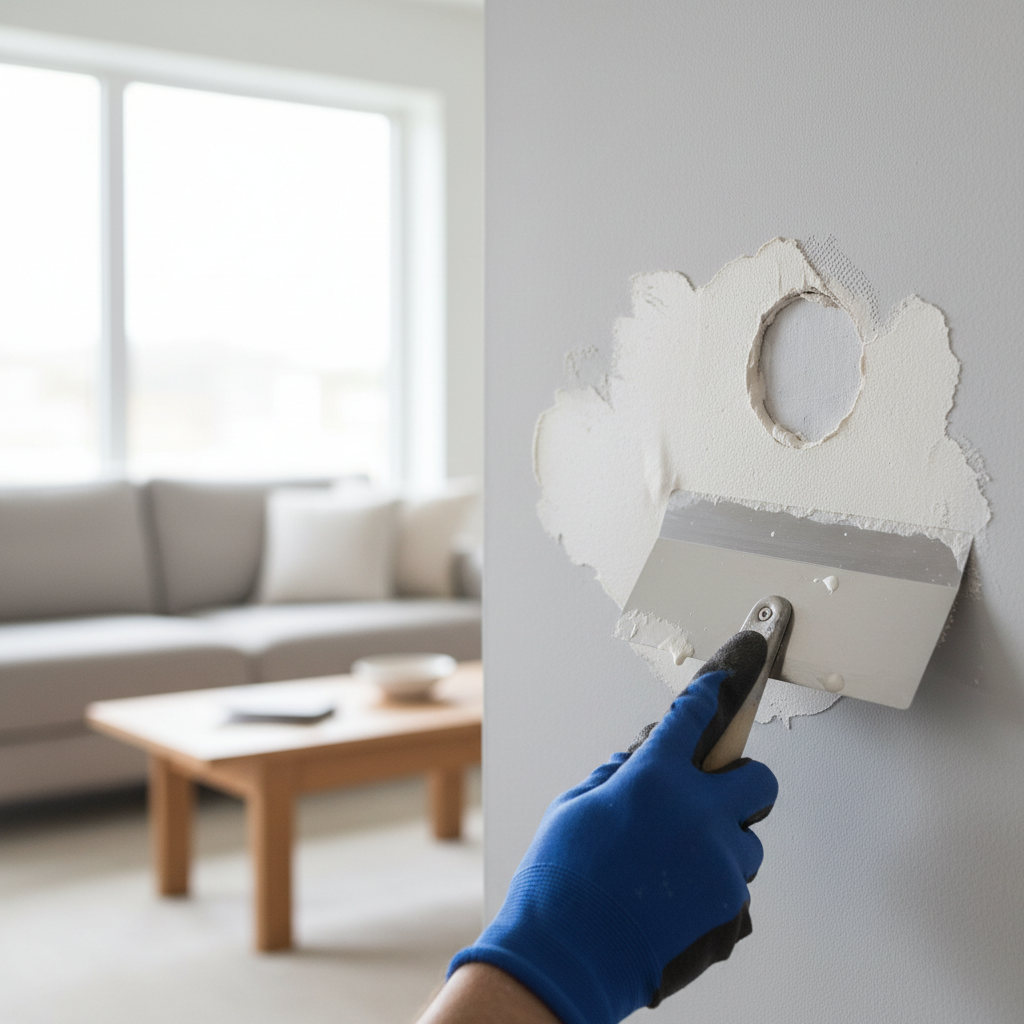
Tools & materials you'll need
Affiliate links- AmazonUtility Knife1 · For cleaning the edges of the hole.
- AmazonDrywall Saw1 · A keyhole or jab saw works best.
- AmazonDrywall Square1 · For marking a straight, square cutting line.
- AmazonTape Measure1
- AmazonDrill/Driver1
- AmazonPutty Knives2 · 6-inch and 10 or 12-inch knives are recommended.
- AmazonSanding Sponge1 · Medium and fine grits.
- AmazonPaint Brush and Roller1
As an Amazon Associate FixlyGuide earns from qualifying purchases — at no extra cost to you. Prices and availability are accurate as of publication and subject to change.
Quick Answer
To patch a small hole in drywall (under 4 inches), use a self-adhesive mesh patch or California patch. For larger holes, you'll need to square the hole, add wood backing strips for support, and then cover it with a new piece of drywall before applying joint compound and tape. The key is to properly feather the edges with multiple thin coats of joint compound, sanding smoothly between each coat, and finishing with primer and paint that match the existing wall.
The Problem
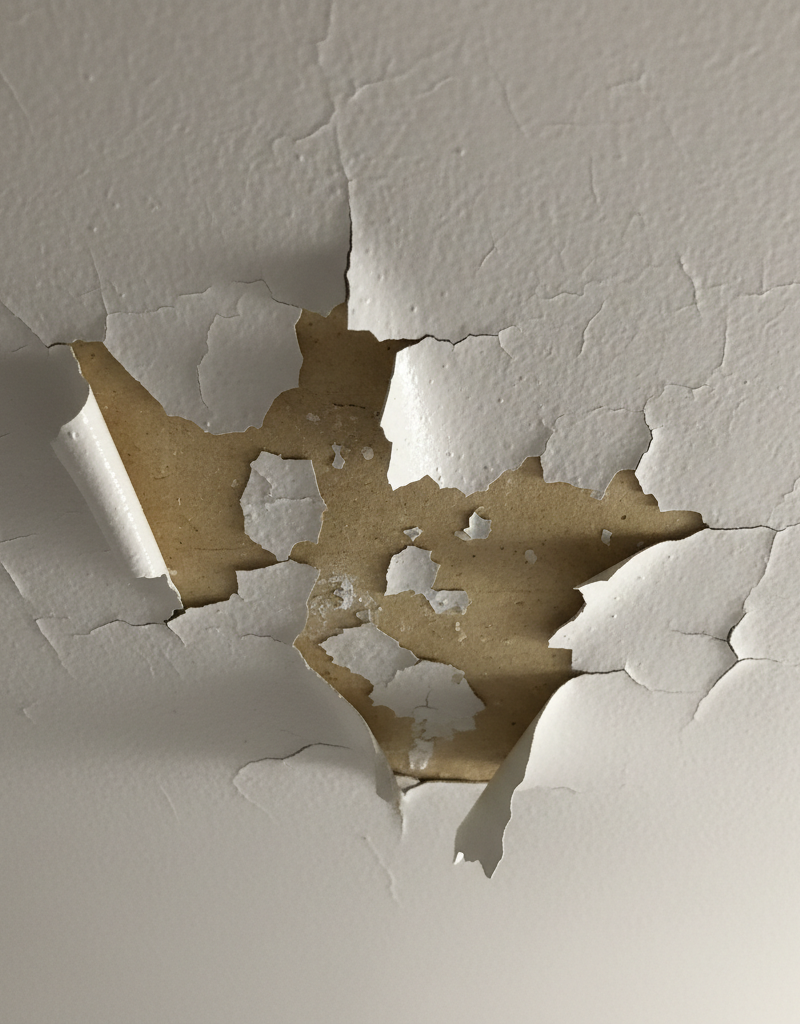
A hole in your drywall is more than just a cosmetic issue. It’s a glaring imperfection that draws the eye, making an otherwise beautiful room look neglected. Whether it’s from an accidental doorknob impact, a piece of furniture being moved carelessly, or a previous fixture removal, that gap disrupts the smooth, continuous surface of your wall. It can also be an entry point for pests, a source of drafts, and can even compromise the wall's fire resistance. A poorly done patch is often just as bad, creating a noticeable bulge or a different texture that screams "amateur repair." You might have tried to fix it before, only to have the patch crack, shrink, or simply look obvious. This guide is about doing it the right way, creating a patch so seamless that you'll forget the hole was ever there.
How It Works
Achieving an invisible drywall patch relies on two key principles: structural support and surface blending. Drywall, or gypsum board, is a relatively brittle material. When you have a hole, you can't just fill it with spackle and hope for the best, especially if the hole is larger than a nail hole. The filler material has no inherent strength and will eventually crack and fall out without a solid backer. This is where the science of the repair comes in. For small holes, a self-adhesive mesh patch provides a new substrate for the joint compound to adhere to. The mesh acts like rebar in concrete, giving the compound tensile strength and preventing it from cracking. For larger holes (over 4-6 inches), you need to re-establish the wall's structural integrity. This is done by cutting the damaged section into a clean square and adding wood backing strips (lath) behind the drywall. These strips are screwed into the surrounding stable drywall, creating a solid anchor point to which the new drywall patch can be fastened. The patch essentially becomes a new, integrated part of the wall structure.
The second principle, surface blending, is all about creating an illusion. Joint compound, often called "mud," is a gypsum-based paste designed to dry hard and sand smooth. The process of applying multiple, progressively wider, and thinner coats is called "feathering." The goal is to build up the patched area so it is perfectly level with the surrounding wall, and then extend the compound far beyond the actual repair. By feathering the edges out 10-12 inches, you create a very gradual transition that is imperceptible to the eye and to the touch once sanded and painted. The final step involves matching the texture. Most walls aren't perfectly smooth; they have a subtle texture from the roller used for painting. Replicating this, often with a specific texture spray or a carefully used roller during the priming stage, is the secret to making the repair truly disappear.
Step-by-Step Fix
This guide covers patching a medium-sized hole (4-8 inches). For smaller holes, you can often use a self-adhesive mesh patch (see Tips section).
-
Clean and Prep the Area: Remove any loose debris, paper, or crumbling gypsum from the edges of the hole. Use a utility knife to carefully carve away any material that is pushed inward or is unstable. The goal is a clean, solid edge.
-
Square the Hole: Use a drywall square and a pencil to draw a neat rectangle or square around the hole. Make the lines straight and the corners 90 degrees. This will make it much easier to cut a patch that fits perfectly.
-
Cut the Opening: Following your pencil lines, carefully cut out the square section using a drywall saw. A keyhole saw works best. Take your time to make the cuts as clean and straight as possible. Once cut, remove the damaged piece.
-
Install Backing Supports: You need to create a solid surface to attach your new patch to. Cut two pieces of 1x3 wood furring strips so they are about 4 inches longer than the height of your square opening. Insert one piece of wood into the hole, holding it flat against the inside of the drywall on one side. It should overlap the top and bottom of the opening by about 2 inches. Drive two 1 1/4-inch drywall screws through the existing drywall (above and below the hole) and into the wood strip to secure it firmly in place. Repeat this process for the other side of the opening.
-
Cut the Drywall Patch: Measure the dimensions of the square opening you cut. Cut a new piece of drywall to these exact dimensions. It should fit snugly into the opening without being forced. Test the fit before proceeding.
-
Secure the Patch: Place the new drywall patch into the opening. It should rest on the wood backing strips you installed. Secure the patch by driving four drywall screws (one in each corner) through the patch and into the wood backing strips. The screw heads should be driven slightly below the surface of the paper (a "dimple") without tearing it.
-
Apply Tape and First Coat: Using a 6-inch putty knife, apply a layer of joint compound over the seams of the patch, making sure to fill the gaps and the screw dimples. Center your drywall paper or fiberglass mesh tape over the seams and press it firmly into the compound. Immediately apply another thin coat of compound over the tape, smoothing it out. This is called the "bedding coat."
-
Apply Feather Coats: Let the first coat dry completely (typically 24 hours). Lightly sand it with a medium-grit sanding sponge to knock down any high spots. Now, using a 10-inch or 12-inch drywall knife, apply a second, wider coat of joint compound, extending it several inches beyond the edges of the tape. The goal is to build out the area gradually. Let it dry.
-
Final Coat and Sanding: Once the second coat is dry, apply a final, very thin coat, feathering it even further out onto the wall surface. This final coat should be very light, filling any remaining imperfections. Let it dry completely. Now, sand the entire area gently with a fine-grit sanding sponge until it is perfectly smooth and level with the surrounding wall. Be careful not to sand through the compound to the tape. Run your hand over the area to feel for any bumps or ridges.
-
Wipe and Prime: Wipe away all sanding dust with a damp cloth or a tack cloth. Dust is the enemy of a good paint finish. Apply a coat of high-quality drywall primer over the entire patched area. This is a critical step, as it seals the porous joint compound and ensures the final paint coat has a uniform sheen.
-
Texture (If Needed): If your wall has a noticeable texture, now is the time to replicate it. You can use an aerosol spray-on texture, matching the existing pattern as closely as possible. Practice on a piece of cardboard first. Let the texture dry according to the manufacturer's instructions.
-
Paint to Match: Once the primer (and texture, if applied) is dry, apply two coats of your wall paint. Use the same application method (roller or brush) as the rest of the wall to ensure the texture and sheen match perfectly. Extend the paint slightly beyond the patched area to blend it in.
Common Causes
- Doorknob Impacts: The most common cause of medium-sized, round holes. Occurs when a door is thrown open without a doorstop.
- Furniture Mishaps: Bumping walls while moving sofas, tables, or other heavy items can easily cause dents, scrapes, and punctures.
- Accidents and Horseplay: From kids playing indoors to a misplaced step on a ladder, accidental impacts are a frequent culprit.
- Fixture Removal: Removing old towel bars, shelves, wall anchors, or electrical boxes often leaves behind holes of various sizes.
- Plumbing or Electrical Access: Sometimes, a plumber or electrician needs to cut an access hole in the wall to perform a repair. These are typically neat, square holes that are easy to patch.
Common Mistakes
- Using Spackle for Large Holes: Spackle is for filling nail holes, not patching. It has no structural strength, shrinks as it dries, and will crack and fail in a larger hole.
- Skipping the Backing: For any hole larger than a couple of inches, you need to add wood or metal backing. Without it, the patch will be weak and can be easily pushed in.
- Not Taping the Seams: Drywall tape (paper or mesh) is essential for bridging the gap between the patch and the existing wall. Without it, a crack will inevitably form along the seam.
- Applying Compound Too Thickly: This leads to long drying times, cracking (alligatoring), and difficult sanding. It's always better to apply multiple thin coats than one thick one.
- Not Feathering Far Enough: The secret to an invisible repair is blending it into the surrounding wall. If you only apply compound over the tape, you'll be left with a visible ridge.
- Skipping Primer: Joint compound and drywall paper are very porous. If you paint directly over them, the paint will soak in and create a dull, blotchy spot called "flashing." Primer seals the surface for a uniform finish.
Cost & Time Breakdown
| Item | Cost (DIY) | Labor Cost (Pro) | Time (DIY) | Time (Pro) |
|---|---|---|---|---|
| Small Patch (<4") | $15 - $30 | $75 - $150 | 2-3 hours (over 2 days) | 1-2 hours |
| Medium Patch (4-8") | $25 - $50 | $150 - $300 | 3-5 hours (over 3 days) | 2-3 hours |
| Large Patch (>8") | $50 - $100 | $300 - $600+ | 4-8 hours (over 3 days) | 3-5 hours |
Note: Costs are estimates and can vary based on location and the complexity of the repair (e.g., ceiling work, extensive texture matching). DIY costs are for materials only.
Tips & Prevention
- Install Door Stops: The best way to prevent doorknob holes is to install door stops on every door. Hinge-pin or baseboard stops are cheap and easy to install.
- Use Furniture Pads: Apply felt or rubber pads to the corners of furniture that are placed near walls.
- Keep a Drywall Repair Kit: For about $20, you can have a kit with everything you need for small repairs: a patch, compound, putty knife, and sandpaper. It's great to have on hand for quick fixes.
- The "California Patch": For small to medium holes where you don't want to use backing, this is a clever pro trick. Cut a piece of new drywall about 4 inches wider and taller than the hole. On the back side, score a line 2 inches from each edge, and snap the gypsum core, but leave the front paper intact. You'll be left with a patch the size of the hole with a 2-inch paper "wing" around it. Apply compound around the hole, press the paper wings into it, and smooth it over like regular tape. It’s a self-supporting patch.
- Over-Sanding: A common mistake is being too aggressive with the sandpaper, creating grooves or exposing the tape. Use a light touch, and let the sandpaper do the work. A bright light held at a low angle to the wall will reveal any imperfections.
When to Call a Professional
While patching a single hole is a very manageable DIY project, there are times when calling a pro is the better choice:
- Widespread Damage: If you have multiple large holes or extensive cracking (e.g., from a settling foundation), a professional can assess the underlying cause and ensure a comprehensive repair.
- Water Damage: If the hole is the result of a leak, you must address the moisture source first. A pro can replace the damaged, potentially moldy drywall and ensure the wall cavity is properly dried out.
- Complex Texture Matching: If your walls have a complex or custom plaster texture (like a skip trowel or knockdown), matching it perfectly is an art form. Drywall professionals have the tools and experience to blend the patch seamlessly.
- Ceiling Repairs: Working overhead is awkward, messy, and more difficult. A pro can handle ceiling patches much more efficiently and with a better finish.
- If You Value Your Time: While not expensive, a proper drywall repair is a multi-day process due to drying times. If you don't have the patience or time to do it right, hiring a handyman or drywall specialist will get it done quickly and correctly.
Frequently asked questions
Can I use spackle instead of joint compound?+
Spackle is only suitable for very small holes, like from a nail or screw. For anything larger than 1/4 inch, you should use joint compound. Spackle shrinks, has poor strength, and will crack in a larger repair.
What is the difference between paper and fiberglass mesh tape?+
Fiberglass mesh tape is self-adhesive and easier for beginners, but it is not as strong as paper tape. Paper tape, when properly embedded in joint compound, creates a stronger, more crack-resistant seam. Most professionals prefer paper tape for flat seams.
How long does joint compound take to dry?+
Drying time depends on the thickness of the application, humidity, and temperature. A thin coat may dry in a few hours, but a thick coat or bedding coat can take up to 24 hours. Always ensure the compound is completely dry and hard before sanding or applying the next coat.
My patch is still visible after painting. What did I do wrong?+
This is usually due to one of two things: not feathering the joint compound out far enough, creating a visible hump, or skipping the priming step. Primer seals the porous compound, so the paint has a uniform sheen. Without it, the patched area appears dull or 'flashes'.

Discussion
Loading comments…