Tools & materials you'll need
Affiliate linksAs an Amazon Associate FixlyGuide earns from qualifying purchases — at no extra cost to you. Prices and availability are accurate as of publication and subject to change.
Quick Answer
To effectively remove stubborn hard water stains from a glass shower door, you need an acidic cleaner to dissolve the mineral buildup. Create a solution of equal parts white vinegar and water in a spray bottle, adding a teaspoon of a grease-cutting dish soap like Dawn. Spray the solution generously onto the glass, let it dwell for at least 15-30 minutes, then scrub in circular motions with a non-scratch pad before rinsing thoroughly and drying completely with a squeegee and microfiber towel.
Why This Works
That frustrating, cloudy film on your shower door isn't just soap scum; it's a stubborn wall of mineral deposits. If you live in an area with hard water, your tap water is rich in dissolved minerals, primarily calcium and magnesium carbonate. When water droplets evaporate on your shower door, these minerals are left behind, creating a chalky, white residue that builds up in layers. This buildup is alkaline on the pH scale.
To defeat an alkaline problem, you need an acid. This is where basic chemistry becomes your most powerful cleaning tool. The acetic acid in white vinegar reacts with the calcium and magnesium carbonates, breaking them down and dissolving them into a form that can be easily wiped away. The science is simple: the acid neutralizes the alkaline minerals. This is why all-purpose, pH-neutral, or alkaline-based cleaners barely make a dent in true hard water stains.
For an extra boost, adding a surfactant—a key ingredient in dish soap like Dawn—helps to tackle the other part of the problem: soap scum. Soap scum is a combination of soap residue, body oils, and minerals. The surfactant breaks down the greasy, oily components, allowing the acid to get to work on the mineral deposits underneath. For extremely tough, layered buildup, you may need a stronger acid, such as the oxalic acid found in Bar Keepers Friend or the blend of acids in commercial products like CLR, which accelerate this chemical reaction.
What You Need
Tools
- Spray Bottle (at least 16 oz)
- Non-Scratch Scrubbing Sponges (like a Scotch-Brite Non-Scratch or Dobie Pad)
- High-Quality Squeegee
- Microfiber Towels (at least 2-3)
- Small Bucket or Bowl (optional, for making a paste)
- Protective Gloves (Nitrile or rubber)
Materials
- Distilled White Vinegar (5% acidity): The primary acidic cleaner for the DIY method.
- Dawn Dish Soap: Acts as a surfactant to cut through soap scum and oils.
- Bar Keepers Friend (Cleanser or Soft Cleanser): A stronger option containing oxalic acid for very tough stains. This is a mild abrasive, so it must be used with care.
- Water
Step-by-Step Method
-
Safety First & Ventilation — Before you begin, put on your protective gloves to shield your hands from the acidic cleaner. Open a window or turn on the bathroom's exhaust fan. Good ventilation is crucial when working with any cleaning product, especially vinegar, which has a strong odor.
-
Clear the Area — Remove shampoo bottles, soap, razors, and loofahs from your shower area. This gives you a clear workspace and protects these items from being sprayed with the cleaning solution.
-
Perform a Quick Pre-Rinse — Use your shower head to rinse the glass door with hot water. This helps to wash away any loose debris and soap scum, allowing your cleaning solution to directly target the hard water minerals.
-
Mix Your Acidic Cleaner — You have two primary options here:
- Standard DIY Solution: For most common hard water stains, fill your spray bottle with one part distilled white vinegar and one part water. Add one teaspoon of Dawn dish soap. Close the bottle and gently tilt it back and forth to mix; shaking vigorously will create too many suds.
- Heavy-Duty Commercial Option: If you know your stains are severe, you might opt for a product like CLR (Calcium, Lime, Rust Remover) or Krud Kutter. Read the product's instructions carefully; many require dilution.
-
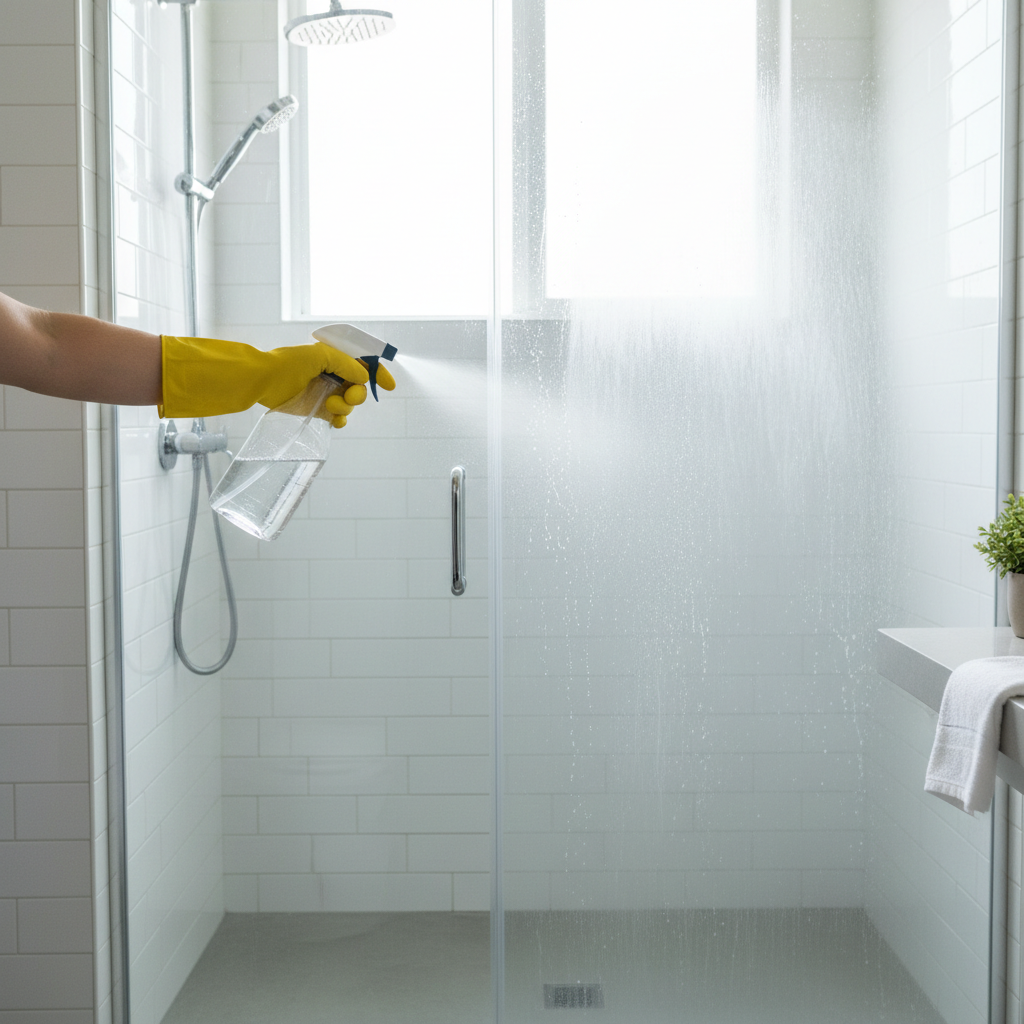
Saturate the Glass Door — Starting from the top and working your way down, spray the glass door generously with your chosen solution. The goal is to have the entire surface wet and dripping, ensuring the cleaner is in contact with all the stains.
-
Let It Dwell (The Most Important Step) — This is where the magic happens. Do not start scrubbing immediately. You must give the acid time to work. Let the solution sit on the glass for a minimum of 15 minutes. For very heavy buildup, extend this dwell time to 30 minutes or even an hour. If the solution starts to dry, simply re-spray the area to keep it wet.
-
Scrub with Gentle Pressure — Take your non-scratch scrub sponge, dip it in water, and begin scrubbing the glass in small, circular motions. You should feel the gritty mineral deposits breaking down. Apply firm but gentle pressure. Do not use steel wool or the green side of a standard scouring pad, as this will permanently scratch your glass.
- For Extremely Stubborn Spots: If a section refuses to come clean, create a paste using Bar Keepers Friend and a small amount of water. Apply this paste directly to the spot, let it sit for no more than 5 minutes, and then scrub gently with your non-scratch sponge. This combination of chemical cleaning and mild abrasion is highly effective.
-
Rinse Thoroughly from Top to Bottom — Use your shower sprayer to rinse the entire glass door, as well as the shower floor and any surrounding tile where the cleaner may have dripped. Start at the top and work your way down. A complete rinse is critical to remove all loosened mineral particles and cleaning residue, which can cause streaks if left behind.
-
Squeegee to Perfection — Grab your squeegee. Starting at a top corner, pull the blade down in a single, smooth stroke. Overlap each stroke by an inch. After each pass, wipe the squeegee blade with a microfiber towel to prevent re-depositing water and grime.
-
Dry Completely with Microfiber — A squeegee removes most of the water, but not all. Use a clean, dry microfiber towel to buff the glass and wipe down the edges, handle, and frame. This final drying step is your insurance against new water spots forming immediately.
-
Inspect Your Work — Step back and look at the glass from different angles. If you still see faint cloudy patches, the area may require a second, more targeted application. Repeat steps 5-10 on those specific areas, perhaps using the Bar Keepers Friend paste method.
Common Mistakes to Avoid
- Mixing Bleach with Acids. NEVER mix bleach with vinegar, Bar Keepers Friend, or CLR. This combination creates highly toxic chlorine gas, which is a severe respiratory irritant and can be deadly. Similarly, never mix bleach and ammonia, which creates toxic chloramine gas.
- Using Abrasive Scrubbers. Steel wool, green scouring pads, or abrasive powders like traditional comet will permanently scratch and etch your glass, making it look even cloudier in the long run.
- Scrubbing Immediately. The biggest mistake is not respecting dwell time. Spraying and immediately wiping gives the acid no time to dissolve the minerals. Patience is key.
- Using the Wrong pH Cleaner. Grabbing a general-purpose cleaner won't work. These are typically pH-neutral or slightly alkaline and are not formulated to break down mineral scale.
- Forgetting to Rinse and Dry. Skipping the final rinse and dry step will leave behind cleaner residue and water droplets, which are the building blocks of the very stains you just worked so hard to remove.
- Neglecting Ventilation & Gloves. Vinegar fumes can be irritating in an enclosed space, and direct contact with acidic cleaners can dry out and irritate your skin. Always protect yourself.
Cost & Time Breakdown
| Task | DIY Cost (Approx.) | Professional Cost (Approx.) | Time Commitment |
|---|---|---|---|
| Initial Deep Clean | $5 - $20 (Vinegar, soap, sponges) | $150 - $250 | 1 - 2 hours |
| Purchase of Quality Tools | $25 (Good squeegee, microfiber towels) | Included in service | N/A |
| Weekly Maintenance | <$1 | N/A | 5 minutes/week |
| Daily Prevention | Pennies | N/A | 30 seconds/day |
Prevention & Maintenance
Once your glass is sparkling, keeping it that way is far easier than another deep clean.
- The 30-Second Squeegee: The single most effective habit. After the last shower of the day, squeegee the water off the glass. This removes the water before it can evaporate and leave minerals behind.
- Keep a Microfiber Towel Handy: After squeegeeing, do a quick final wipe-down of any remaining drips or edges. Hang the towel to dry in the bathroom for the next day.
- Use a Daily Shower Spray: Either buy a commercial product (like Method Daily Shower or Tilex Daily Shower) or make your own. A simple DIY version is a 32oz spray bottle with 1/2 cup of vinegar, a few drops of dish soap, and filled with water. Mist the door down after your final squeegee.
- Weekly Upkeep: Once a week, spray the door with your DIY vinegar/water solution, let it sit for a minute while you clean the sink, and then squeegee it off. This prevents any significant buildup from starting.
- Consider a Water Softener: If you live in a very hard water area, a whole-house water softener is the ultimate solution. While a significant investment ($1,000 - $4,000), it prevents mineral buildup in your pipes, on your fixtures, and in appliances, not just on your shower door.
When to Call a Professional
Sometimes, the cloudiness isn't just on the glass; it's in the glass. Over many years, the alkaline nature of heavy mineral deposits can physically etch the surface of the glass, creating microscopic pits and valleys. At this stage, no amount of chemical cleaning will restore perfect clarity because the surface itself is damaged. A professional cleaning service with specialized tools, like a low-speed orbital polisher and glass-safe polishing compounds, may be able to significantly improve or even restore the surface. You should also consider calling a pro if the buildup is so thick and old that it forms a crusty, opaque layer. Tackling this level of buildup can take hours of manual labor and may require stronger, professional-grade chemicals that are best handled by a trained and insured technician.
Get the print-ready PDF of this guide
A clean, ad-free, printable version you can keep on your phone or pin to the workshop wall. We'll also send occasional weekly tips matched to your home situation.
- Print-optimized layout
- Tools, materials & every step included
- Unsubscribe anytime
Frequently asked questions
Can I use steel wool or a razor blade on very tough spots?+
It is highly recommended to avoid both. Steel wool, even fine grade #0000, can leave behind micro-scratches that will make the glass appear dull over time. A razor blade can be used with extreme caution on completely flat glass (never on textured glass) to remove things like sticker residue, but it can easily scratch the glass if not held at the perfect, low angle. For tough mineral spots, a chemical approach like a Bar Keepers Friend paste is much safer and more effective.
Will vinegar or CLR damage my shower frame or floor?+
It depends on the material. Anodized aluminum and chrome frames are generally safe with short-term exposure to diluted vinegar, but you should rinse them thoroughly. Avoid letting acidic cleaners dwell on natural stone like marble, travertine, or limestone, as the acid can etch and dull the surface. Always rinse your shower floor completely after cleaning the glass.
How often should I deep clean my shower glass?+
If you follow a daily prevention routine (squeegee and/or daily mist), you may only need to do a full deep clean once or twice a year. If you don't do any daily maintenance, you may find yourself needing to do it every 1-2 months to keep buildup from becoming severe.
Why did my glass look clean when wet but cloudy again when it dried?+
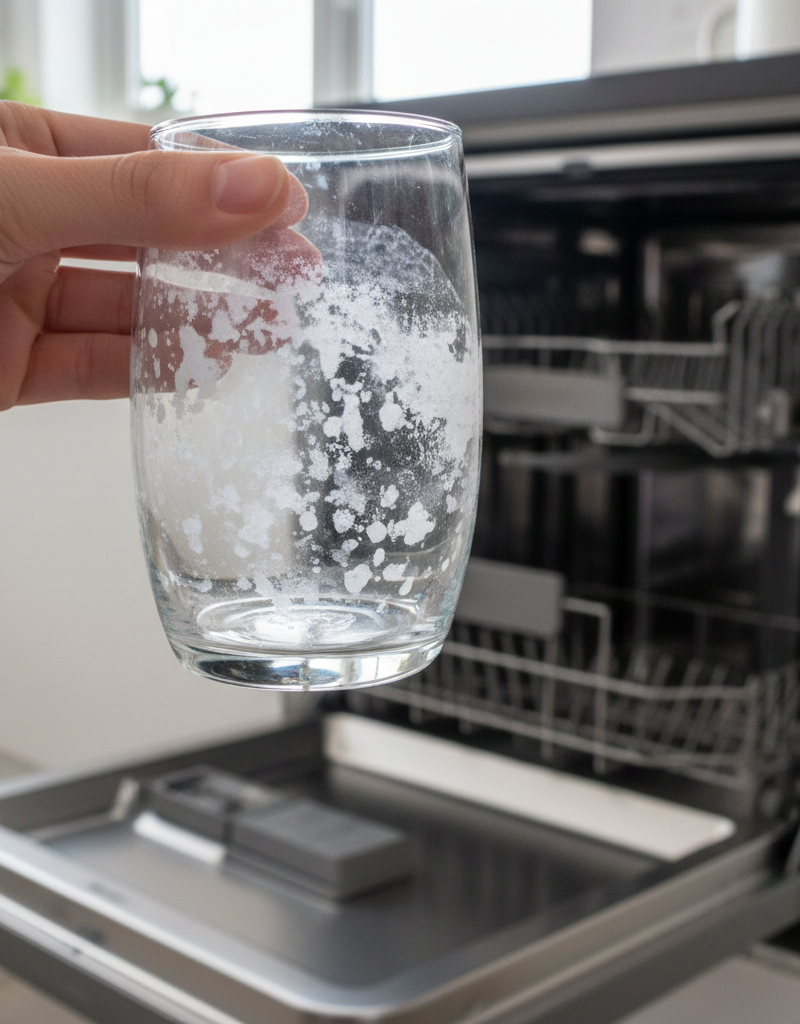
This is a classic sign that there is still a thin layer of mineral residue on the glass. Water fills in the microscopic texture of the residue, making it appear transparent. When the water evaporates, the chalky texture of the minerals reappears. This means you need to repeat the cleaning process, possibly with a longer dwell time or by switching to a stronger cleaning paste like Bar Keepers Friend.
Discussion
Loading comments…