Tools & materials you'll need
Affiliate links- AmazonTowels
As an Amazon Associate FixlyGuide earns from qualifying purchases — at no extra cost to you. Prices and availability are accurate as of publication and subject to change.
Quick Answer
If you discover a frozen pipe, immediately turn off the main water supply to your home to minimize potential water damage if the pipe bursts. Open a faucet connected to the frozen pipe to relieve pressure and allow water to flow once the pipe thaws. Using a hairdryer, heat gun (on its lowest setting), or warm towels, apply gentle heat to the frozen section of the pipe, moving back and forth to ensure even thawing. Never use an open flame.
The Problem
Frozen pipes are a common winter problem that can lead to significant water damage if not addressed quickly and safely. As water freezes, it expands, creating immense pressure within the pipe. This pressure can cause the pipe to rupture, leading to costly leaks and extensive property damage once the ice melts. Identifying and safely thawing a frozen pipe before it bursts is critical for every homeowner.
Step-by-Step Fix
Safety Note: Always wear appropriate protective gear, such as gloves, and ensure good ventilation when using heating tools. Never use an open flame to thaw pipes.
- Shut Off Water Supply: Immediately turn off the main water shut-off valve to your house. This is crucial to prevent flooding if the pipe has already burst or bursts during the thawing process.
- Open Faucets: Open all faucets connected to the frozen pipe. This relieves pressure within the system and allows water to flow out as the ice melts, accelerating the thawing process.
- Locate the Frozen Section: Look for visible frost on pipes, bulges, or listen for gurgling sounds from partially frozen pipes. Common locations include pipes running against exterior walls, in unheated basements, crawl spaces, attics, or under sinks.
- Apply Gentle Heat:
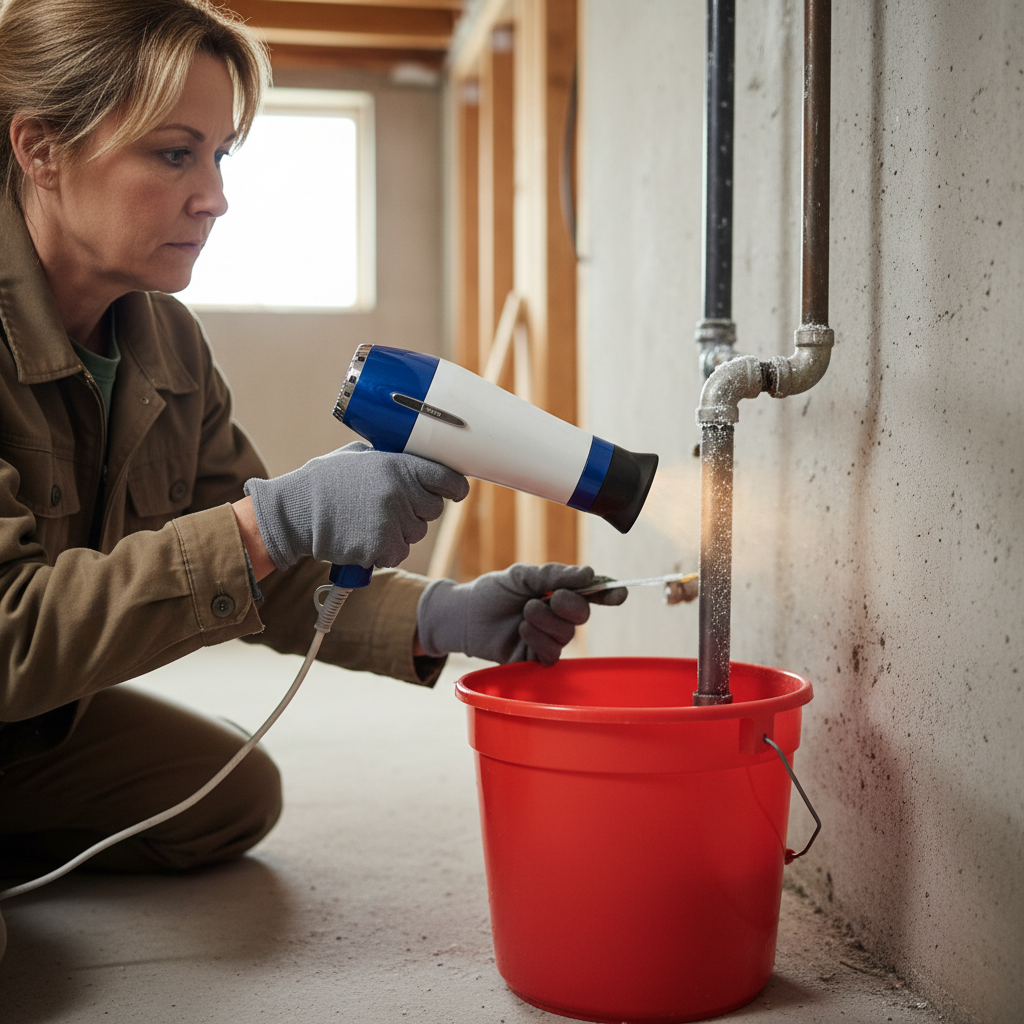
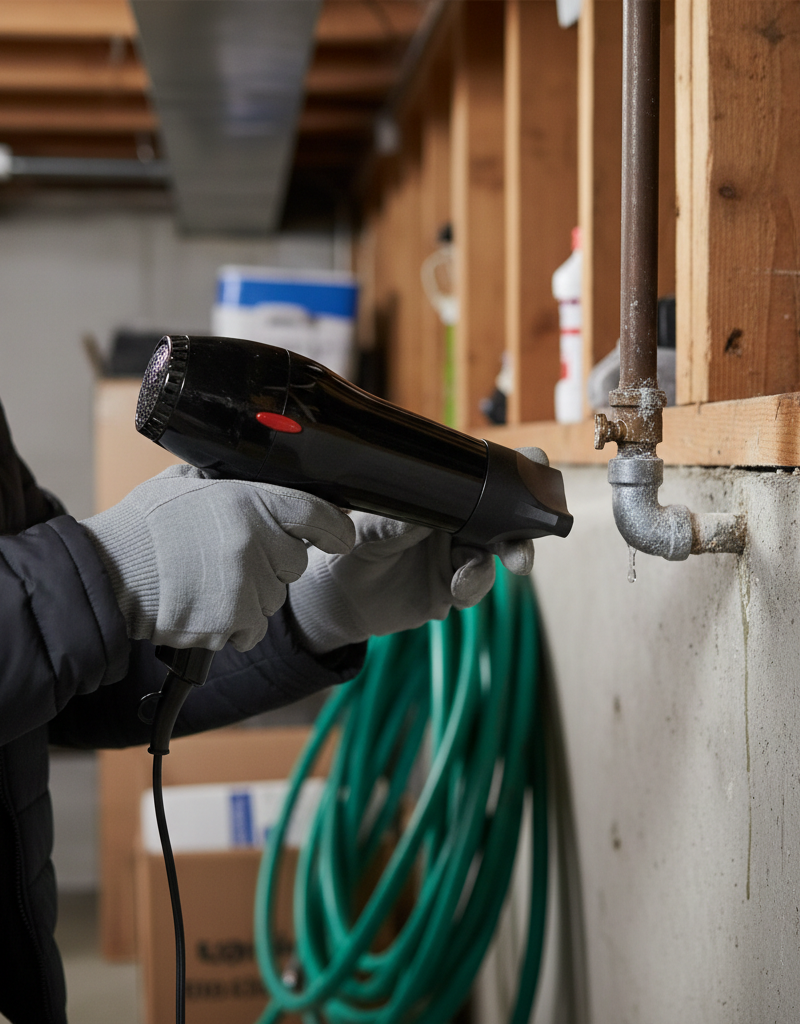
- Hairdryer: The safest and most common method. Set it to a medium or high setting and move it back and forth along the frozen section. Keep the hairdryer moving to prevent overheating a single spot, which could damage the pipe.
- Heat Gun: Use with extreme caution and only on a low setting. Hold the heat gun several inches away from the pipe and keep it moving constantly. This method is faster but carries a higher risk of overheating the pipe.
- Warm Towels: Soak towels in hot water, wring them out, and wrap them around the frozen pipe. Replace with fresh hot towels as they cool. This is a slower but very safe method, especially for pipes close to flammable materials.
- Space Heater/Infrared Lamp: Position a space heater (avoiding direct contact with pipes or other materials) or an infrared lamp a safe distance away to warm the general area where the pipe is frozen. This works well for longer sections or hard-to-reach areas.
- Monitor for Leaks: As the pipe thaws and water begins to flow, carefully inspect the entire length of the pipe for any cracks or leaks. Even small drips can indicate a weak spot.
- Restore Water Supply Gradually: Once you're confident the pipe is fully thawed and there are no leaks, slowly turn the main water supply back on. Keep an eye on the thawed pipe for several minutes to ensure no new leaks appear.
Common Causes
- Poor Insulation: Pipes located in unheated areas or near exterior walls without proper insulation are highly susceptible to freezing.
- Sudden Temperature Drops: A rapid drop in outdoor temperature, especially when combined with inadequate insulation, can quickly freeze water in pipes.
- Thermostat Set Too Low: If the indoor thermostat is set too low or turned off during cold weather, the ambient temperature may fall below freezing in certain parts of the house.
- Open Vents/Windows: Leaving windows or vents open in unheated areas during winter can expose pipes to freezing air.
Tips & Prevention
- Insulate Pipes: Wrap pipes in unheated areas (basements, crawl spaces, attics, garages) with foam pipe insulation or heat tape.
- Seal Air Leaks: Seal cracks and openings in your home's foundation and exterior walls to prevent cold air from reaching pipes.
- Keep Garage Doors Closed: If you have water supply lines in your garage, keep the garage door closed, especially overnight.
- Open Cabinets: During severe cold, open kitchen and bathroom cabinet doors under sinks to allow warmer air to circulate around the pipes.
- Let Faucets Drip: In extremely cold weather, allow a slow drip from a faucet connected to pipes that are vulnerable to freezing. The moving water (even a trickle) makes it harder for ice to form.
- Maintain Indoor Temperature: Keep your thermostat set to at least 55°F (13°C), even when you're away from home for an extended period.
When to Call a Professional
When dealing with frozen pipes, call a licensed plumber if you suspect a pipe has burst or if you cannot locate or thaw the frozen section yourself. If you see significant water leakage, or if the frozen pipe is inaccessible (e.g., inside a wall), a professional has the tools and expertise to address the issue safely and efficiently.
Frequently asked questions
How do I know if a pipe is frozen?+
The most common signs are no water coming out of a faucet, or only a trickle. You might also see visible frost on an exposed pipe, or a slight bulge in the pipe. Sometimes, a gurgling sound can indicate a partial freeze.
Can a frozen pipe burst immediately?+
A frozen pipe doesn't typically burst the instant it freezes. The pressure builds as the ice expands, and the burst often occurs at a point away from the actual ice blockage. The risk of bursting increases the longer the pipe remains frozen.
Is it safe to use a heat gun on a frozen pipe?+
Yes, but with extreme caution and only on a low setting. A heat gun can rapidly overheat a pipe, potentially damaging it or nearby materials. Keep it moving constantly and at a safe distance from the pipe.
What if I can't find the frozen part of the pipe?+
If you can't locate the frozen section, or if it's behind a wall or in an inaccessible area, it's best to call a licensed plumber. They have specialized tools to detect and thaw hidden frozen pipes safely.
Should I turn off my main water supply if a pipe is frozen?+
Absolutely. Turning off the main water supply immediately is crucial. If the pipe bursts while it's thawing, this action will prevent significant water damage to your home.
Discussion
Loading comments…