Tools & materials you'll need
Affiliate linksAs an Amazon Associate FixlyGuide earns from qualifying purchases — at no extra cost to you. Prices and availability are accurate as of publication and subject to change.
Quick Answer
Safely removing ice dams involves creating channels through the ice to allow meltwater to drain, typically using calcium chloride ice melt in pantyhose or a commercial steamer. This prevents water from backing up under shingles and damaging your roof structure and interior.
The Problem
Ice dams are one of winter's most insidious threats to a home. They form when heat escapes from your attic, melting the snow on your roof. This water then runs down to the colder eaves, where it refreezes, creating a ridge of ice. As more snow melts, the water becomes trapped behind this icy barrier, pooling on the roof. This trapped water can then seep under your shingles, rotting roof decking, damaging insulation, creating mold, and staining ceilings and walls inside your home. In severe cases, it can even cause gutters to tear away or lead to structural damage as the sheer weight of the ice increases. The key danger isn't the ice itself, but the water it holds back, which can cause thousands of dollars in damage if not addressed promptly and safely.
How It Works
Understanding how an ice dam forms is crucial to preventing and removing it successfully. The process begins with heat loss from your home's living space, through the ceiling, and into the attic. A properly ventilated and insulated attic should be close to the outdoor temperature. However, if insulation is insufficient, or if there are air leaks (from recessed lighting, attic hatches, or unsealed vents), warm air rises into the attic space. This warm air heats the roof deck from below.
Snow on the warmer parts of the roof (typically near the peak, or mid-slope) melts and flows downhill. When this meltwater reaches the colder eaves, which extend beyond the heated living space and attic, it refreezes. This creates a barrier of ice – the ice dam. As more snow melts, the water pools behind this growing dam. Because shingles are designed to shed water, not withstand standing water, this trapped liquid finds its way underneath them, driven by gravity and capillary action. Once under the shingles, it can saturate the roof sheathing, trickle down into wall cavities, and manifest as water stains, peeling paint, or even structural compromise. The cycle of melting, refreezing, and pooling continues as long as there's snow on the roof and a temperature differential across the roof surface.
Step-by-Step Fix
Safety First – *Always prioritize safety when working on your roof.
- If you are uncomfortable with heights, the roof pitch is steep, or conditions are icy, call a professional.
- Use a sturdy ladder, ensuring it's on level ground and secured.
- Wear non-slip footwear and a safety harness if working on a second story or a steep roof.
- Never use a hatchet, chisel, or power tools like chainsaws—these can severely damage your roof and cause injury.
- Never use rock salt (sodium chloride) directly on your roof, as it can be corrosive to metal flashing and harmful to plants below.
Gather Your Gear – *Assemble all necessary tools and materials before climbing the ladder.
- This minimizes trips up and down and ensures you have everything at hand.
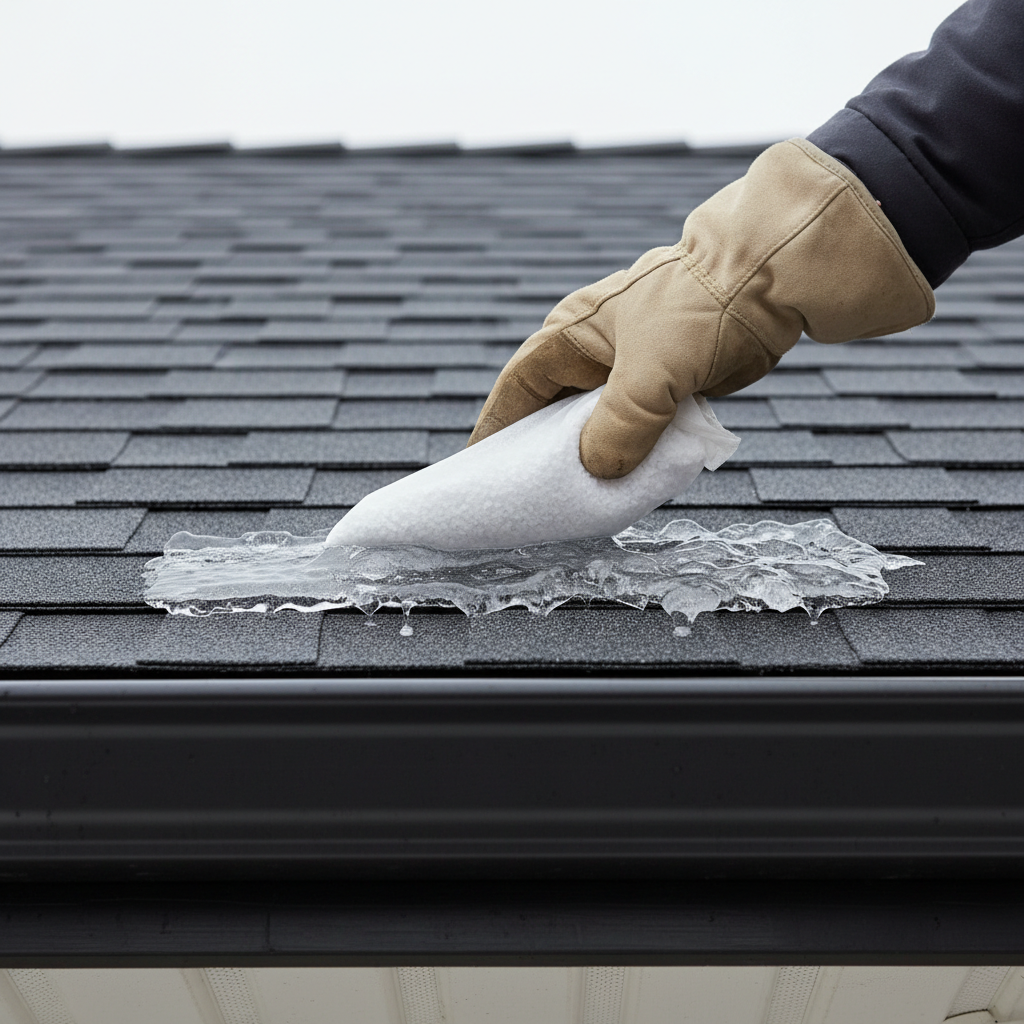
Create Ice Melt Socks – *Fill old pantyhose with calcium chloride ice melt.
- Pour granulated calcium chloride into the leg of a pair of old pantyhose. Tie off the end.
- The pantyhose act as a porous container, allowing the ice melt to slowly dissolve and create channels without direct contact with the roof or rapid runoff.
- Safety note: Calcium chloride can irritate skin and eyes. Wear gloves and eye protection.
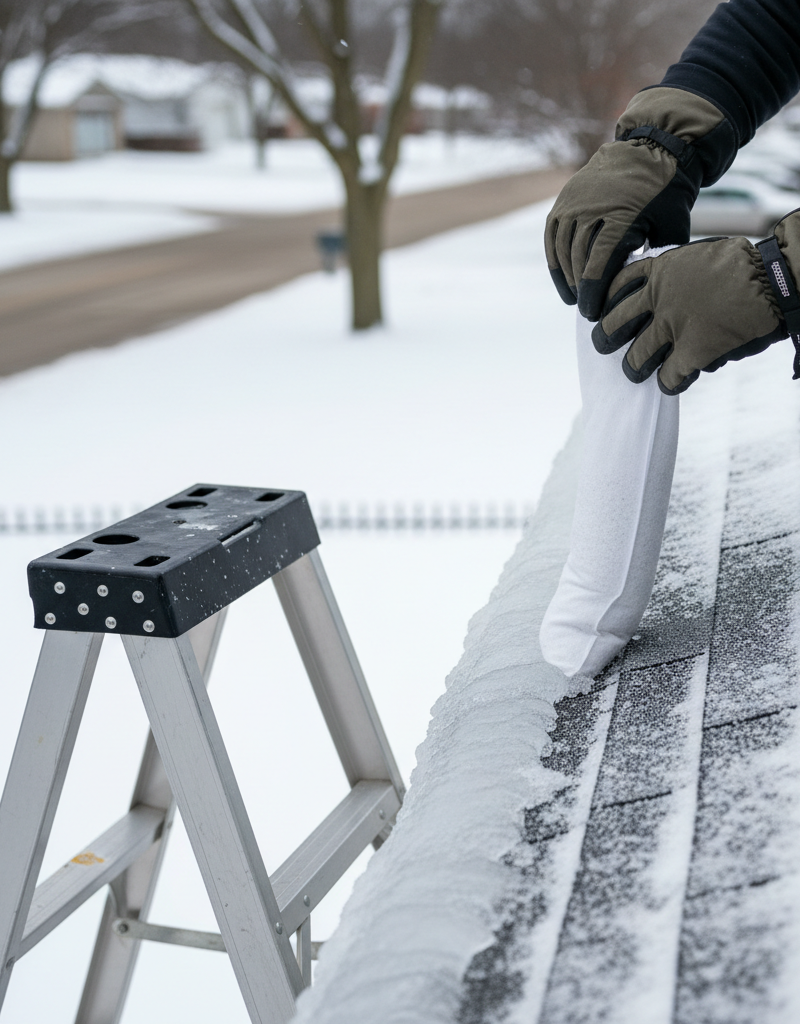
Position the Ice Melt – *Carefully place the ice melt socks across the ice dam.
- From your ladder (or a safe vantage point using a roof rake with an attachment), lay the pantyhose filled with calcium chloride perpendicular to the ice dam.
- Place them so they bridge the dam, extending onto the shingle area above the dam and slightly over the dam towards the gutter.
- The goal is to create several distinct channels (typically 18-24 inches apart) for the trapped water to escape.
Allow Time to Work – *Be patient; melting takes time.
- Depending on the thickness of the ice dam and the ambient temperature, it can take several hours for the calcium chloride to melt through the ice and create drainage channels.
- Check periodically from the ground, but avoid climbing back on the roof until the channels are clearly visible and water is flowing.
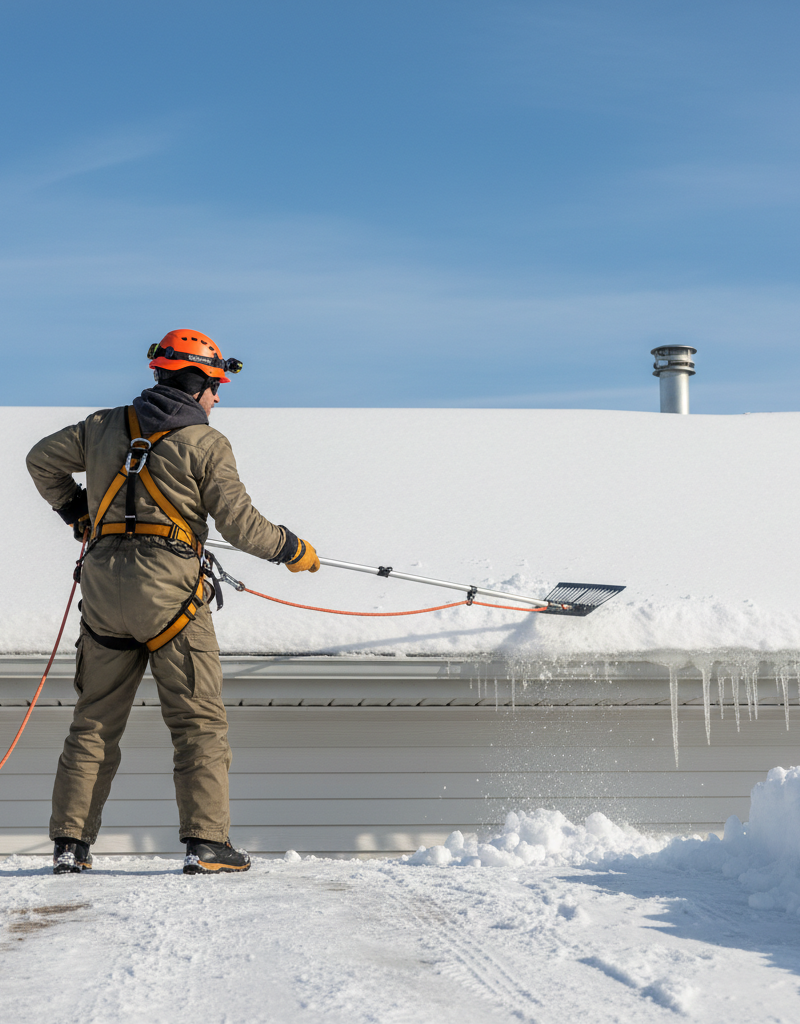
Clear Minor Snow Obstructions – *Carefully remove new snow that impedes drainage.
- Once channels are formed, if additional snow falls and partially covers them, use a roof rake from the ground to gently pull the fresh snow clear of the channels.
- Avoid hitting the roof rake against the roof or gutters, as this can cause damage.
Consider a Steamer (Pro Method) – *For thick, stubborn dams, a commercial steamer is ideal.
- If the ice dam is particularly large, persistent, or if you prefer a faster method, a commercial low-pressure steam generator is highly effective.
- These units melt the ice without damaging shingles. You can rent these from some equipment rental stores.
- Never use a pressure washer, as the high-pressure water can damage shingles and force water into your home.
- If this doesn't work: If after 24 hours the channels haven't formed or are not effectively draining the water, repeat the ice melt sock application or consider renting a steam cleaner. Thick, dense ice may require more concentrated or prolonged treatment.
Clean Up Discharged Water – *Ensure meltwater drains away from your foundation.
- As the ice dam melts, the water will run off the roof, often in concentrated streams.
- Ensure your downspouts are clear and extenders are in place to direct water safely away from your home's foundation.
- Puddles near the foundation can lead to other issues, such as basement leaks or foundation damage.
Common Causes
- Poor Attic Insulation: The most common culprit. Inadequate insulation allows heat from the living spaces below to rise into the attic, warming the roof deck. The more heat that escapes, the more significant the temperature difference across the roof, leading to rapid melting and refreezing.
- Inadequate Attic Ventilation: A poorly ventilated attic traps warm air, preventing it from escaping. Proper ventilation (soffit and ridge vents) creates airflow that keeps the attic and roof deck cold, preventing snow from melting prematurely. Without this airflow, hot spots form.
- Air Leaks: Gaps around recessed lights, attic hatches, plumbing vents, electrical conduits, and exhaust fans (e.g., bathroom, kitchen) can allow significant amounts of warm, moist air directly into the attic, accelerating roof melting.
- Insufficient Roof Overhang (Eaves): Shorter eaves mean the coolest part of the roof (where water refreezes) is closer to the heated interior, reducing the natural extent of the cold zone. This makes ice dam formation more likely.
- Clogged Gutters: While not a direct cause, gutters full of leaves and debris can worsen ice dams by providing a perfect starting point for ice to accumulate and block proper drainage, exacerbating dam formation.
- South-Facing Roof Sections: These sections receive more direct sunlight, leading to more frequent melting and refreezing cycles, especially on days with fluctuating temperatures.
Common Mistakes
- Hacking at Ice with Tools: Attempting to chip away at ice dams with axes, shovels, or chisels is extremely dangerous and almost guarantees shingle damage, punctures, or even structural harm to your roof. This can also void your roof warranty.
- Using Rock Salt: While it melts ice, common rock salt (sodium chloride) can corrode metal flashing, fasteners, and gutters. It's also highly detrimental to landscaping and plants below when it drains off the roof.
- Applying Heat with Torches or Heat Guns: Directing intense, open flame or high heat at an ice dam is a significant fire hazard, especially near wood, asphalt shingles, and insulation. It can also cause localized melting that refreezes quickly, making the problem worse.
- Ignoring the Root Cause: Simply removing an ice dam without addressing why it formed (e.g., poor insulation or ventilation) means the problem will likely recur with the next snowfall. Treating symptoms, not the disease, is a costly mistake.
- Walking on Icy Roofs Without Safety Gear: An icy roof is incredibly slippery. Falls from roofs are a leading cause of serious injury and fatalities among homeowners. Without proper safety harnesses, non-slip footwear, and a secure ladder, you're putting your life at risk.
- Pressure Washing: High-pressure water will lift and damage shingles, forcing water underneath them and directly into your attic and home, creating leaks and aggravating existing water damage.
Cost & Time Breakdown
| Task | DIY Cost | Pro Cost | Time |
|---|---|---|---|
| Ice Melt Socks (Calcium Chloride) | $20–$30 | N/A | 2–4 hours |
| Roof Rake Snow Removal | $0–$50 (if purchasing) | N/A | 30–60 min |
| Steamer Rental | $100–$200/day | $500–$1,000+ | 1–3 hours |
| Insulation & Ventilation Audit | N/A | $200–$500 | 1–2 hours |
| Ice Dam Prevention (long-term) | $500–$5,000+ | $1,500–$10,000+ | Days to weeks |
Tips & Prevention
- Improve Attic Insulation: Ensure your attic has adequate insulation (typically R-38 to R-60, depending on your climate zone). This is the single most effective long-term prevention strategy, keeping heat in your living space and out of your attic.
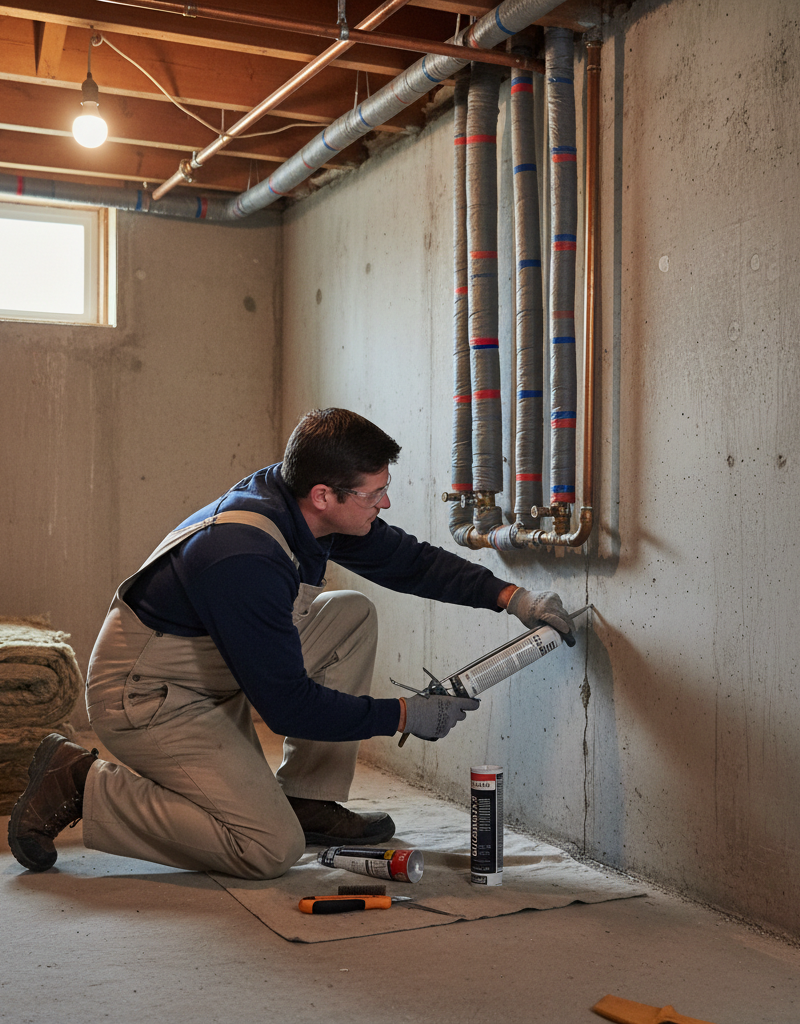
- Seal Air Leaks in the Attic: Caulk and weatherstrip around all penetrations from the living space into the attic (e.g., plumbing stacks, electrical wires, recessed lights, attic hatches). Even small leaks add up to significant heat loss.
- Ensure Proper Attic Ventilation: A continuous flow of cold outdoor air through soffit vents and out through ridge or gable vents keeps the attic temperature consistent with the outside, preventing premature snow melt. Clear soffit vents of insulation.
- Regular Gutter Cleaning: Keep gutters free of leaves and debris, especially before winter. Clogged gutters can worsen ice dam formation by obstructing proper drainage from the roof.
- Use a Roof Rake: Gently remove the first few feet of snow from your roof eaves (the part overhanging the house) after each snowfall. This prevents the initial buildup that leads to ice dam formation. Do this from the ground, not on the roof.
- Consider Heat Cables: For persistent problem areas, apply self-regulating heat cables along the eaves and in gutters. These can prevent ice dams from forming by keeping these areas just above freezing, but they consume electricity and don't address the root cause.
When to Call a Professional
You should call a professional for ice dam removal if the ice dams are extensive, exceptionally thick, or if you notice water actively leaking into your home. If you have a multi-story home, a steep roof pitch, or find yourself uncomfortable working on a ladder in winter conditions, it's also best to defer to the experts. Professionals have specialized steaming equipment that safely melts ice without damaging your roof, along with the proper safety gear and training for working at heights in winter. Furthermore, if you suspect the ice dams are a recurring symptom of deeper issues like insufficient attic insulation or ventilation, a professional home energy auditor or roofing contractor can diagnose the root cause and recommend long-term solutions, which DIY ice dam removal merely postpones. Don't risk serious injury or further damage to your home; know when to call in the pros.
Related Articles
Keep troubleshooting with these hand-picked guides from FixlyGuide:
- The $30 Secret to Banishing Ice Dams Without Damaging Your Roof — Discover how a simple, inexpensive trick can safely eliminate dangerous ice dams from your roof and prevent costly damage to your home.
- That melting ice could cost you $20,000 in water damage — Safely removing ice dams protects your roof and prevents costly water damage to your home.
- The #1 Mistake Homeowners Make with Ice Dams (and How to Fix It SAFELY) — Most homeowners approach ice dam removal incorrectly, creating more damage or safety risks. Learn the right, safe methods to protect your r…
- The 7 Critical Home Inspection Mistakes Most Homeowners Make (and How to Spot Them) — Discover the crucial home inspection mistakes homeowners commonly overlook and learn how to identify potential problems before they become…
- The 7 Fall Chores Most Homeowners SKIP (And Why They'll Cost You Thousands) — Don't let autumn's beauty distract you from these critical home maintenance tasks that can prevent costly damage and ensure a cozy winter.
- The Tiny Stain That Betrays a $10,000 Roof Leak (And 5 Ways to Find It) — Discover how to identify subtle signs of a roof leak early, saving your home from extensive and costly water damage before it escalates.
Frequently asked questions
What causes ice dams to form on a roof?+
Ice dams form when heat escapes from your attic, melting snow on the upper parts of the roof. This meltwater then flows down to the colder eaves and refreezes, creating a barrier that traps more melting snow, allowing water to back up under shingles.
Is it safe to chip away at ice dams?+
No, it is highly unsafe to chip away at ice dams with tools like axes, shovels, or chisels. This can severely damage your roof, puncture shingles, and pose a significant risk of personal injury.
What is the best way to safely remove an ice dam?+
The safest DIY method is to use calcium chloride ice melt in pantyhose, laid perpendicular to the ice dam to create drainage channels. For larger or more stubborn dams, a professional low-pressure steam generator is the most effective and safest method.
Can I use rock salt (sodium chloride) to melt ice dams?+
You should not use rock salt (sodium chloride) on your roof. It can be corrosive to metal flashing and gutters, and harmful to your landscaping and plants below once the meltwater drains off.
How can I prevent ice dams from forming in the first place?+
The most effective long-term prevention involves improving attic insulation, sealing air leaks from your living space into the attic, and ensuring proper attic ventilation to keep the roof deck uniformly cold.
Discussion
Loading comments…