Tools & materials you'll need
Affiliate linksAs an Amazon Associate FixlyGuide earns from qualifying purchases — at no extra cost to you. Prices and availability are accurate as of publication and subject to change.
The key to a one-day paint job isn't rushing, but rather a methodical system that pros use to maximize efficiency and quality. This guide breaks down that exact system.
Quick Answer
The secret to painting a room in one day is a systematic, pro-level approach. It involves meticulous preparation, painting in the correct order (ceiling, then trim, then walls), and using the 'wet edge' technique. This means you immediately roll a wall section right after 'cutting in' the edges, ensuring the brushed and rolled paint merge seamlessly without leaving 'picture frame' lap marks.
The Problem
For most homeowners, painting is a multi-day ordeal. The process starts on a Saturday morning filled with optimism, but by Sunday night, you're exhausted, the room is still in chaos, and the results are... mediocre. You see faint, glossy outlines around the ceiling and corners where your brushwork dried differently than your roller work—a phenomenon called "picture framing" or "lap marks." You might find drips on your trim, uneven color on the walls, and tiny specks of paint on surfaces you thought were covered. The typical amateur approach—cutting in the entire room's trim, taking a break, and then rolling the walls—is the primary source of these issues. This start-stop method guarantees the cut-in paint will dry before you roll, creating a visible seam between the two textures that even a second coat can't hide. It feels inefficient because it is. You spend more time waiting for things to dry and correcting mistakes than actually painting.
How It Works
The professional one-day painting system is built around a single core principle: maintaining a "wet edge." To understand this, let's define the two main painting actions: "cutting in" and "rolling." Cutting in is the careful brushwork done along trim, corners, and ceilings where a roller can't reach. Rolling is using a paint roller to cover the large, open areas of a wall. The problem arises because brushed paint and rolled paint have different textures and dry at different rates. When you cut in an entire room and let it dry, you create a "frame" of dried paint. When you later roll the wall, the new wet paint overlaps this dry edge, but it doesn't blend perfectly. The result is a visible difference in sheen and texture, the dreaded lap mark.
The "wet edge" technique solves this. Instead of breaking the job into two separate tasks (all cutting, then all rolling), you treat each wall as a mini-project. You cut in the edges of just one wall, and then, while that brushed paint is still wet, you immediately begin rolling that same wall. The wet roller paint blends seamlessly into the wet cut-in paint, melting together to create a single, uniform finish. This method eliminates lap marks entirely. By combining this technique with a strict order of operations—ceiling first, trim second, and walls last—you create an assembly line of efficiency that moves you through the room logically and quickly, making it possible to paint a room in one day with superior results.
Step-by-Step Fix: The One-Day Pro Painting System
1. Complete Room Preparation — Before a single can of paint is opened, prepare the entire room. Move all furniture to the center and cover it with a single large plastic sheet. Remove all outlet and switch plate covers (don't tape them—it's faster and cleaner to remove them). Cover the entire floor with drop cloths, overlapping them so no floor is exposed. This comprehensive prep prevents the need to stop and move things later, which is a major time-waster.
2. Surface Cleaning & Patching — Clean the walls using a rag dampened with a TSP (trisodium phosphate) substitute cleaner or a simple mixture of dish soap and water to remove dust, grease, and grime. Use a putty knife to fill any nail holes or dings with lightweight spackling compound. Once dry (usually in 15-30 minutes), lightly sand the patches smooth with a 220-grit sanding sponge. Wipe away the sanding dust with a clean, dry cloth. A clean, smooth surface is essential for paint adhesion and a flawless finish.
3. Strategic Taping — Professionals don't tape everything. Taping is time-consuming. Instead, they rely on a steady hand. However, for a one-day DIY project, smart taping is a good compromise. Use high-quality painter's tape (like FrogTape or 3M ScotchBlue) and apply it only where necessary. A good place is along the top of your baseboards. Burnish the edge of the tape with a putty knife to ensure a tight seal and prevent bleeding.
4. Prime Where Necessary — You don't need to prime the whole room if you're using a quality paint-and-primer-in-one product. However, you must spot-prime. Use a mini roller or brush to apply a quick coat of a dedicated primer like Zinsser 1-2-3 or KILZ 2 over any spackled patches and any dark or glossy stains. This prevents "flashing," where the patched spots absorb paint differently and appear as dull spots in the final finish.
5. Paint the Ceiling First — Always start with the ceiling. This way, any drips or splatters that land on the walls or trim below don't matter, as you'll be painting over them. Use a roller on an extension pole. Cut in the ceiling edge against the wall, then immediately roll the ceiling, working in 5x5 foot sections. Use a "W" or "N" pattern to spread the paint, then back-roll over the section in parallel strokes to even it out.
6. Paint the Trim Second — After the ceiling is dry to the touch, paint all the trim: window casings, door frames, and baseboards. Don't worry about getting a little paint on the adjacent walls; you'll be cutting in with the wall color later, which will create a perfectly crisp line. This is a huge time-saver compared to painstakingly trying not to touch the wall. Use a high-quality 2.5-inch angled brush for this work.
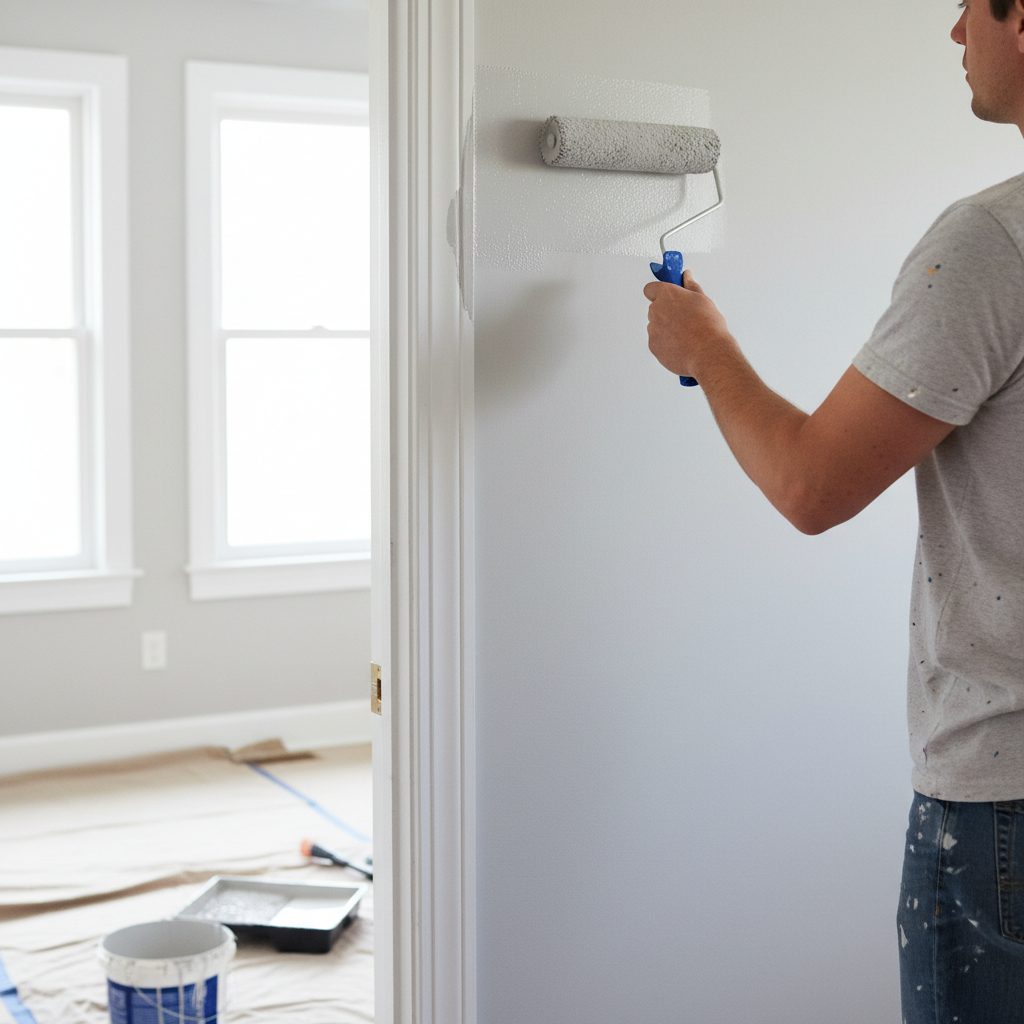
7. Cut In AND Roll Wall #1 (The Wet Edge Method) — This is the core of the system. Choose a starting wall. Use your angled brush to "cut in" a 2-3 inch band of paint along the ceiling line, in the corners, and along the baseboards/trim for that wall only. Then, without delay, pick up your roller (pre-loaded with paint) and begin rolling the main body of the wall, overlapping the still-wet brushed paint. This seamless blending is the key to a professional, lap-mark-free finish.
8. Repeat for Remaining Walls — Move methodically around the room, repeating Step 7 for each wall. Cut in one wall, then immediately roll it. Move to the next wall, cut it in, and roll it. This assembly-line process is far more efficient than batching tasks and is the fastest way to paint a room in one day.
9. Assess and Apply the Second Coat — High-quality paints with good coverage may only need one coat, especially for similar color changes. However, for drastic color changes or if the first coat appears uneven, a second coat is necessary. Wait the manufacturer's recommended time (typically 2-4 hours). The second coat will go on much faster. Repeat the same one-wall-at-a-time, "wet edge" process.
10. Final Touches & Cleanup — While the second coat is still slightly tacky (not fully dry), carefully remove the painter's tape. Pull it at a 45-degree angle away from the wall to get a clean line without peeling the fresh paint. Once the paint is fully dry (check the can for cure times), reinstall your outlet and switch plate covers. Clean your brushes and rollers thoroughly so they're ready for your next project.
Common Causes of Slow, Flawed Painting
The dream of painting a room in a single day often dies because of a few common, preventable issues. Understanding these root causes is the first step toward adopting a professional pace and achieving a better result.
- The "Batching" Mistake: The number one amateur mistake is cutting in the entire room, taking a lunch break, and then starting to roll. This guarantees the brushed edges will be dry, creating visible lap marks and a "picture frame" effect. It feels organized, but it's the most common cause of a flawed finish.
- Inadequate Preparation: Rushing the prep phase is a classic blunder. If you have to stop mid-painting to move a bookcase, hunt for spackle, or clean a dusty wall section, you lose momentum and precious time. Poor prep also leads to a poor finish, like paint peeling from greasy spots or bumps showing through from un-filled nail holes.
- Painting in the Wrong Order: Many DIYers paint the walls first, then painstakingly try to cut in the trim and ceiling with perfect precision. This is incredibly slow and stressful. Painting the ceiling first, then the trim, and finally the walls is a far more logical and forgiving sequence.
- Using Cheap Tools and Paint: Bargain bin brushes shed bristles into your finish. Cheap rollers leave a linty, uneven texture. Low-quality paint has poor coverage, requiring three or even four coats, completely wrecking your one-day timeline. The time you save with fewer coats makes quality paint a worthwhile investment for anyone wanting to paint a room in one day.
- Over-reliance on Taping: Taping every single edge seems like a foolproof way to get clean lines, but it consumes a massive amount of time. Applying it perfectly, burnishing the edge, and then painstakingly removing it can add hours to a project. Pros learn to cut in by hand because it’s faster.
- Ignoring Dry Times: Impatience is the enemy. Painting a second coat before the first has adequately dried can re-wet the first layer, causing it to peel off onto the roller. This ruins the finish and forces you to stop, sand, and restart the section.
Common Mistakes
- Forgetting to "Box" Your Paint. When using multiple gallons of the same color, their shades can vary slightly. Pros "box" their paint by pouring all gallons into a single 5-gallon bucket and mixing them to ensure perfect color consistency throughout the room.
- Painting Directly from the Gallon Can. Dipping your brush directly into the main paint can introduces dust and contaminants. It also makes it hard to load the brush properly. Pour a manageable amount into a smaller paint pail for cutting in.
- Loading the Brush Incorrectly. Don't dunk the entire brush. Dip it only one-third of the way into the paint. This gives you plenty of paint to work with while keeping the handle and the ferrule (the metal part) clean, offering better control.
- Starting with a Dry Roller Cover. Before you ever dip your roller in paint, you should lightly dampen it with water (for latex paint) and blot it with a paper towel. A slightly damp roller absorbs paint more evenly and prevents the cover from pulling paint off the wall.
- Removing Painters Tape When Paint is Fully Cured. If you wait for the paint to completely dry and harden, the paint film can bridge over the tape. When you pull the tape off, it often tears the paint, taking chunks of your new finish with it. Pull it when it's just tacky.
- Neglecting to Use an Extension Pole. Hunching over to roll the lower parts of a wall or straining on a ladder for the upper parts is exhausting and slow. An extension pole for your roller is a non-negotiable tool for speed and ergonomics. It allows you to use your whole body, not just your arms.
Cost & Time Breakdown
This breakdown is for a standard 12x12 foot room. Costs are estimates and can vary by location and brand.
| Task / Item | DIY Cost | Pro Cost (Labor) | Time Estimate |
|---|---|---|---|
| Paint & Primer | $70 - $150 | (Included in total) | N/A |
| Prep Supplies (Tape, Spackle, etc.) | $30 - $60 | (Included in total) | 1.5 - 2.5 hours |
| Quality Tools (Brushes, Rollers, etc.) | $50 - $100 | (Pros own their tools) | N/A |
| Painting Labor | $0 | $400 - $800 | 4 - 6 hours |
| Total | $150 - $310 | $500 - $1,000+ | 6 - 9 hours |
Tips & Prevention
- Use a 5-Gallon Bucket and Grid. Ditch the flimsy roller tray. A 5-gallon bucket can hold a full gallon of "boxed" paint, and a paint grid hooks onto the side, allowing you to roll off excess paint for the perfect load every time. It’s faster and less messy.
- Wrap Your Tools. If you take a lunch break, you don't have to wash your tools. Tightly wrap your brush and roller in plastic wrap or a plastic bag and put them in the refrigerator. They'll stay fresh for hours.
- Feather Your Cut-In Edge. When brushing your cut-in lines, use light pressure to "feather" the edge furthest from the trim. This creates a thinner, less defined line that blends more easily when you roll over it with the wet edge.
- Invest in a Quality Angled Brush. A high-quality 2.5-inch angled sash brush is a painter's best friend. It holds more paint, releases it more smoothly, and its angled shape gives you pinpoint control for cutting in sharp lines.
- Work from Top to Bottom. This applies to the whole room (ceiling first) and to each individual wall. Start rolling near the top and work your way down to control runs and drips more effectively.
- Use Proper Lighting. Good lighting is crucial for spotting mistakes and ensuring even coverage. If the room's lighting is dim, bring in a portable work light. You can't fix what you can't see.
When to Call a Professional
While the one-day system makes most standard rooms manageable for a dedicated DIYer, there are clear situations where calling a professional painter is the smarter choice. If you have ceilings higher than 10-12 feet, the work becomes significantly slower and more dangerous, requiring specialized ladders or scaffolding that pros are equipped to handle safely. Extensive drywall damage that goes beyond simple nail holes—such as large cracks, water stains, or crumbling plaster—requires expert repair to ensure the final paint job doesn't fail. Homes built before 1978 may contain lead paint, which requires certified professionals for safe handling and abatement to avoid severe health risks.
Furthermore, consider the complexity and scale. A large open-concept living area or a room with intricate crown molding, wainscoting, and multiple windows can turn a one-day project into a week-long nightmare for an amateur. Professionals can execute this complex trim work with a speed and precision that's difficult to replicate. If you value a guaranteed, flawless finish and your time is more valuable than the cost of labor, hiring a pro is a wise investment.
Frequently asked questions
What is the best order to paint a room for speed?+
Always paint in this order: ceiling first, trim second (windows, doors, baseboards), and walls last. This allows you to be less precise with the first two steps, as the final wall paint will cover any minor mistakes on the edges of the trim.
How long should I really wait between coats of paint?+
Always check the paint can for the manufacturer's specific recommendation. Generally, for latex paint, the recoat time is between 2 to 4 hours. Rushing this can cause the first coat to peel off onto your roller.
Do I really need two coats of paint to paint a room in one day?+
It depends. If you are using a high-quality paint-and-primer-in-one and not making a drastic color change (e.g., light color over another light color), you may achieve full coverage in one coat. However, for a richer, more durable finish, two coats are always recommended.
Is it faster to spray or roll a room?+
For a single, standard-sized room, rolling is almost always faster for a DIYer. Paint sprayers require extensive masking of every single surface you don't want painted (floors, windows, trim), which can take hours. The cleanup for a sprayer is also far more intensive than washing a roller and brush.
Discussion
Loading comments…