Tools & materials you'll need
Affiliate linksAs an Amazon Associate FixlyGuide earns from qualifying purchases — at no extra cost to you. Prices and availability are accurate as of publication and subject to change.
Quick Answer
Patching small drywall holes doesn't have to be a dusty, time-consuming ordeal. By utilizing a self-adhesive mesh patch and the right technique for applying joint compound, you can achieve a seamless repair without the usual sanding mess. This method is perfect for nail holes, screw holes, or minor dings, leaving your walls ready for paint in surprisingly little time.
The Problem
You've moved a picture, taken down a shelf, or perhaps a doorknob found its mark – and now you're left with an unsightly hole in your drywall. While small, these imperfections can be a nagging eyesore, detracting from the overall appearance of your home. Traditional patching methods often involve cutting out sections, adding backing, and then dealing with multiple layers of mud and extensive sanding, which can be intimidating and messy for a homeowner just looking for a quick fix. The challenge is finding a repair method that is both effective and efficient, minimizing disruption and cleanup.
How It Works
Drywall, made of gypsum plaster pressed between two sheets of thick paper, forms the interior walls of most modern homes. Its relative softness makes it prone to small punctures and dings. When a hole appears, the structural integrity of the immediate area is compromised, and the aesthetic appeal is lost. The goal of patching is to restore both. Our chosen method leverages a self-adhesive fiberglass mesh patch, which provides instant backing and reinforcement over the hole. This patch creates a stable surface for the joint compound, preventing it from pushing through the hole. Joint compound, often called 'mud,' is a gypsum-based product designed to fill gaps and smooth surfaces. It dries hard and can be sanded (though we'll minimize that). The fiberglass mesh, embedded within the compound, acts as an invisible scaffold, distributing stress across a wider area and preventing cracking. By applying the compound in thin, feathered layers, we build up the surface gradually. The key is to overfill slightly and then use a wider knife to carefully scrape away the excess, creating a smooth transition to the existing wall without a noticeable hump. This careful application, combined with the structural support of the mesh, allows for a minimal, or even no-sanding approach, provided the layers are thin and accurately applied. The entire process relies on the patch providing the initial stability, and the joint compound creating the final, blendable surface.
Step-by-Step Fix
- Prepare the Area — Gently clean around the hole with a damp cloth to remove any dust, debris, or loose paper. Use a utility knife to carefully trim any ragged edges of drywall paper or plaster protruding from the hole. This ensures a clean, flat surface for the patch to adhere to and for the compound to spread smoothly. Safety Note: Always cut away from yourself when using a utility knife.
- Apply the Mesh Patch — Peel the backing off the self-adhesive fiberglass mesh patch. Center the patch over the hole, ensuring it completely covers the damaged area, and press it firmly onto the wall. Smooth it out with your hand to remove any air bubbles and ensure full adhesion. The mesh provides the necessary structural support for the compound.
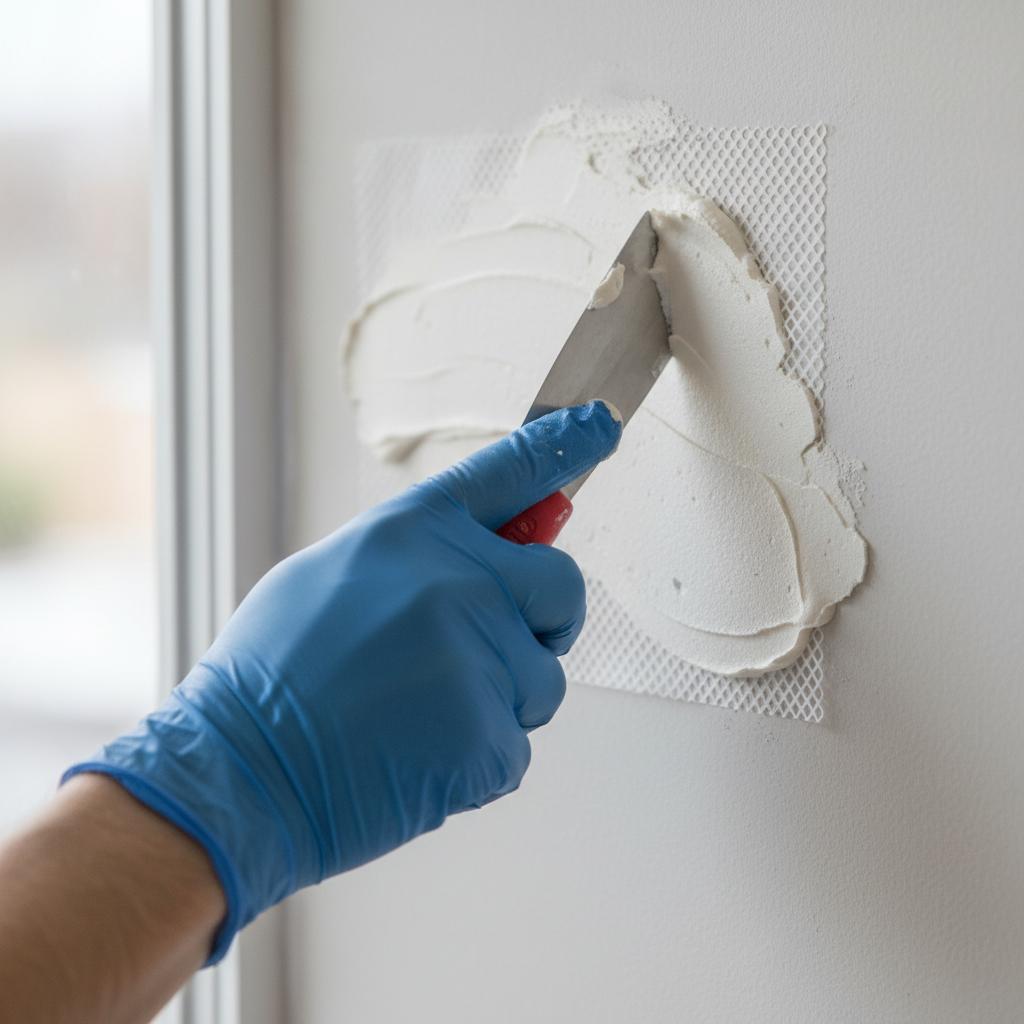
- Apply First Coat of Joint Compound — Using a 4-inch putty knife, scoop a small amount of all-purpose joint compound. Starting from the center of the patch, spread a thin, even layer of compound over the entire mesh, extending about an inch beyond its edges. Apply gentle pressure to ensure the compound pushes through the mesh and creates a good bond with the wall. Tip: For smaller holes, use lightweight joint compound as it's easier to work with and sands more easily if needed.
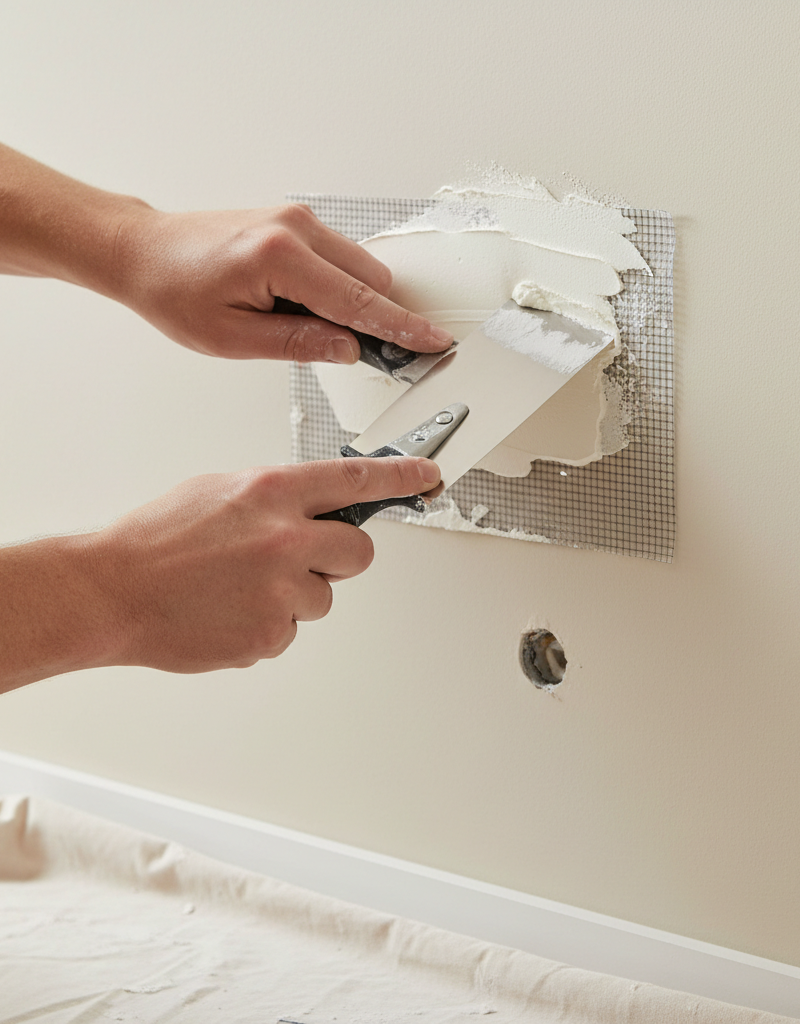
- Feather the Edges — With the same putty knife, immediately go back over the applied compound, holding the knife at a slight angle (around 30 degrees) to scrape away excess material and feather the edges. The goal is to make the compound as flush as possible with the surrounding wall, creating a gradual transition. This reduces the need for sanding later.
- Let it Dry Completely — Allow the first coat of joint compound to dry thoroughly. Drying time can vary greatly depending on humidity and the thickness of the application, typically 1–4 hours. It should change color (usually from off-white to bright white) and feel firm and dry to the touch. Rushing this step will lead to cracks and poor adhesion.
- Apply Second Coat (if needed) — If the first coat isn't perfectly flush or if the mesh is still slightly visible, apply a second, even thinner layer of joint compound. Focus on filling any remaining depressions and feathering the edges out even further, extending the compound slightly wider than the first coat. Pay close attention to making the edges disappear seamlessly into the wall.
- Final Feathering and Inspection — After applying the second coat, use a larger 6-inch or 8-inch drywall knife to make final passes, carefully blending the edges into the existing wall. Hold the knife almost flat to gently scrape away any high spots. Run your hand over the patched area and the surrounding wall to feel for any ridges or depressions. The goal is a perfectly smooth surface. If there are any minor imperfections, a very light pass with 220-grit sandpaper once completely dry may be necessary, but aim to avoid it.
- Prime and Paint — Once the compound is completely dry and smooth to the touch, apply a coat of drywall primer over the patched area. This seals the compound and ensures that the new paint will have a uniform finish, preventing
Frequently asked questions
Can I really patch a drywall hole without sanding?+
Yes, for small holes using a mesh patch, careful application of thin, feathered coats of joint compound can often eliminate the need for sanding entirely. The key is to apply the compound gradually and blend the edges seamlessly.
Discussion
Loading comments…