Tools & materials you'll need
Affiliate links- AmazonBleach or mold cleanerHousehold bleach or dedicated mold cleaner
- AmazonDenatured alcohol or mineral spiritsFor residue removal
- AmazonClean rags/clothsMultiple, lint-free
- AmazonPainter's tape1 roll · Optional, for clean lines
- Amazon100% silicone caulk (bathroom rated)1-2 tubes · Mildew resistant, choose color
As an Amazon Associate FixlyGuide earns from qualifying purchases — at no extra cost to you. Prices and availability are accurate as of publication and subject to change.
Quick Answer
Many homeowners struggle with bathtub caulk that quickly molds or peels, often due to a fundamental mistake: not fully removing the old caulk and adequately preparing the surface before applying new material. Simply caulking over existing caulk creates a weak, porous seal prone to water infiltration and unsightly mold. The proper fix involves a complete stripping of old caulk, meticulous cleaning and drying, and a careful, consistent application of new, high-quality silicone caulk to ensure a watertight, long-lasting, and mold-resistant barrier.
The Problem
Every homeowner knows the frustration: you recaulk your bathtub, hoping for a fresh, clean look, only for unsightly black mold to reappear within weeks or months. Or worse, the caulk starts peeling, cracking, or shrinking, allowing water to sneak behind tiles, causing hidden damage and persistent mildew smells. This isn't just an aesthetic issue; compromised caulk is a direct pathway for water to penetrate walls and subfloors, leading to rot, structural damage, and costly repairs down the line. The root cause for many of these failures is often a rushed or incomplete initial effort, overlooking critical steps that ensure proper adhesion and longevity.
How It Works
Bathtub caulk serves as an essential expansion joint and waterproof barrier between dissimilar materials – typically the tub or shower base and the surrounding wall tiles. Homes are dynamic environments, and different materials expand and contract at different rates due to temperature changes, humidity fluctuations, and even subtle building shifts. Caulk, especially flexible silicone, is designed to accommodate these movements while maintaining an impermeable seal.
When water gets behind a hairline crack or a poorly adhered section of caulk, it can sit stagnant, providing a perfect breeding ground for mold and mildew. This water also slowly degrades the caulk's bond and can wick into porous grout or wallboard. The substrate (the surface beneath the caulk) must be perfectly clean, dry, and free of any old caulk residue, soap scum, or oils. If not, the new caulk cannot form a strong mechanical bond, leading to premature failure. Silicone caulk, in particular, requires a pristine surface for its adhesive properties to fully activate. It cures by reacting with moisture in the air, slowly cross-linking its polymer chains to form a flexible, durable, and waterproof seal. Proper application ensures a consistent bead that can flex without breaking, effectively shedding water and preventing infiltration into the wall cavity or subfloor.
Step-by-Step Fix
1. Clear the Deck – Safely empty the tub, clear out toiletries, and prepare your workspace.
Before you touch the caulk, remove all bath mats, soaps, bottles, and anything else around the tub or shower. Ensure good ventilation by opening a window or turning on the bathroom fan. This creates a clear, safe space to work.
2. Slice and Dice the Old Caulk – Use a utility knife and caulk removal tool to break the seal.
Carefully score along both edges of the old caulk bead with a sharp utility knife or a specialized caulk removal tool. Angle the blade slightly to cut beneath the caulk. Be precise and avoid scratching the tub or tile.
- Safety Note: Always cut away from your body. Wear gloves to protect your hands.
- Tip: For stubborn caulk, try heating it gently with a hairdryer to soften it before cutting.
3. Peel and Pull – Remove the bulk of the old caulk.
Once scored, try to peel away the old caulk in long strips. Pliers or needle-nose tweezers can help grab stubborn pieces. The goal here is to remove as much as possible mechanically.
4. Scrape and Scour – Eliminate every last bit of residue.
This is the most critical step often skipped. Use a plastic scraper, a specialized caulk remover tool, or even a stiff nylon brush to physically scrape off any remaining caulk fragments, soap scum, or mildew. For really tough spots, a commercial caulk remover solvent (apply according to product directions) can help, but ensure thorough rinsing afterward. Denatured alcohol or mineral spirits can also dissolve residues.
- If this doesn't work: For extremely difficult, embedded caulk or mold stains in grout, a grout saw might be necessary to carefully remove the affected grout lines near the tub, followed by re-grouting.
5. Clean the Canvas – Deep clean and disinfect the joint.
After all old caulk is gone, thoroughly clean the entire area. Use a household cleaner to remove soap scum, then a bleach solution (1 part bleach to 10 parts water) or a dedicated mold and mildew remover to kill any lingering spores. Scrub well with a brush. Rinse multiple times with clean water to remove all cleaning product residue.
6. Dry, Dry, Dry (for 24 hours!) – Ensure the surface is completely bone-dry.
This step is non-negotiable for proper adhesion. Use a clean cloth to wipe the area dry. Then, allow the joint to air dry completely for at least 6-12 hours, ideally 24 hours. A fan can help accelerate drying. Any residual moisture will prevent the new caulk from bonding properly and encourage mold regrowth. Do NOT apply new caulk to a damp surface.
7. Prep for Perfection (Optional but Recommended) – Tape off the caulk line for a crisp finish.
For a perfectly straight bead, apply painter's tape above and below the joint, leaving a consistent gap the width of your desired caulk bead (usually 1/4 to 3/8 inch). Press the tape down firmly to prevent caulk from seeping underneath.
8. Load and Cut the Caulk Tube – Prepare your silicone caulk for application.
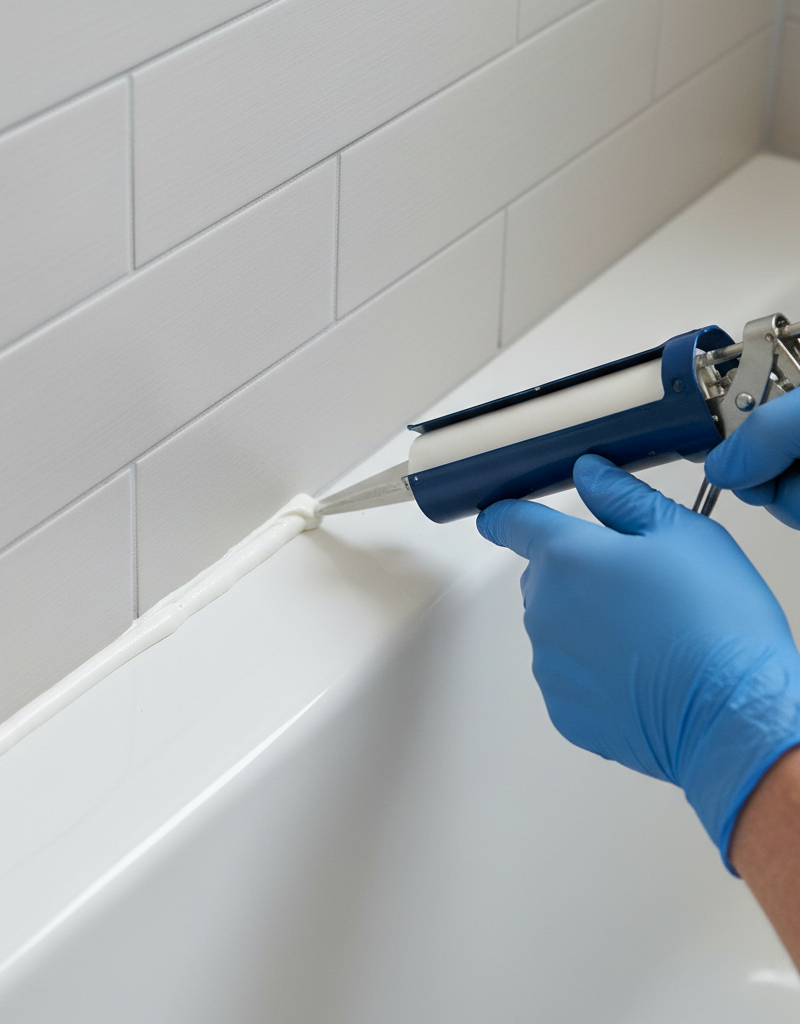
Cut the tip of the caulk tube at a 45-degree angle, making an opening slightly smaller than the bead you want to apply. Aim for an opening about 1/4 inch in diameter. Puncture the inner seal with a long nail or the rod on your caulk gun. Insert the tube into a high-quality caulk gun.
9. Apply the Bead – Smooth, steady pressure is key.
Apply a consistent, continuous bead of caulk along the joint. Push the caulk into the joint (don't drag it). Maintain even pressure on the caulk gun trigger and move at a steady pace. Try to complete each seam in a single pass.
10. Tool it Smooth – Create a professional, watertight finish.
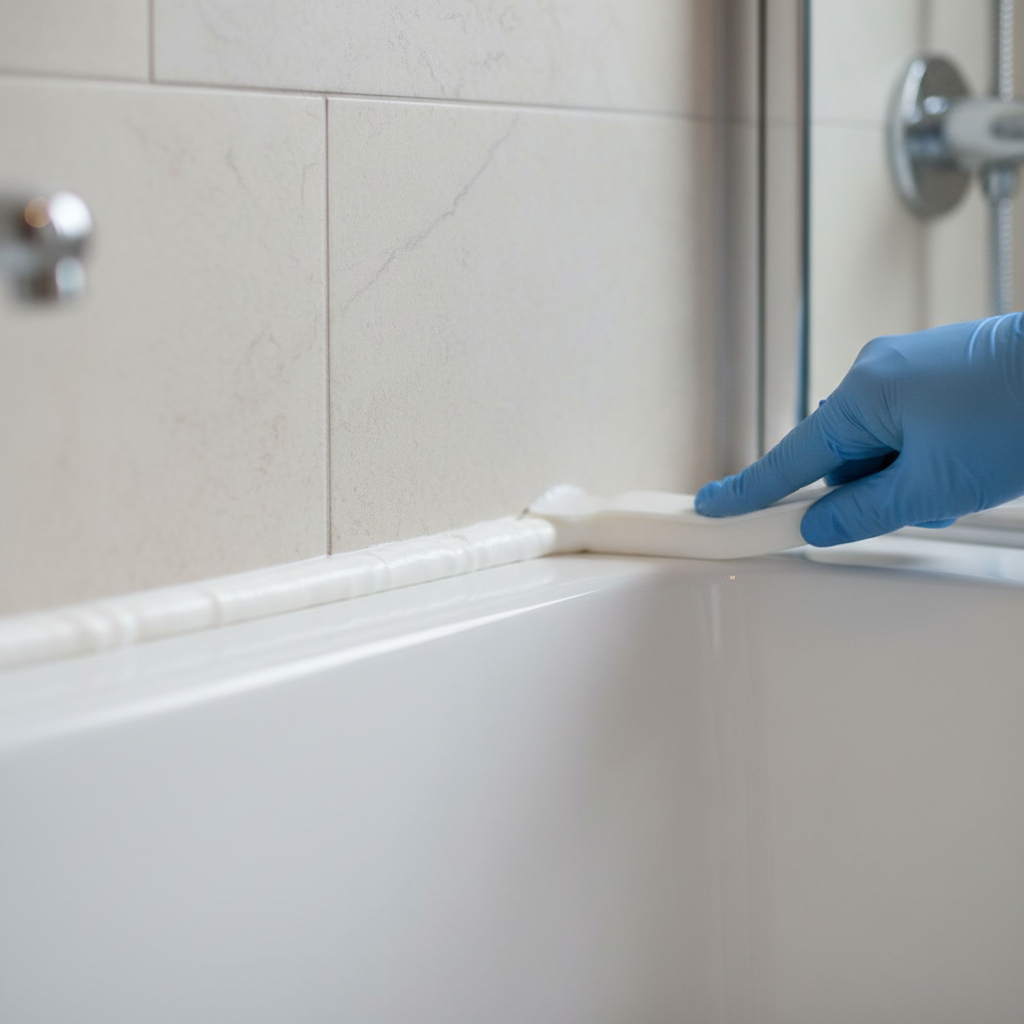
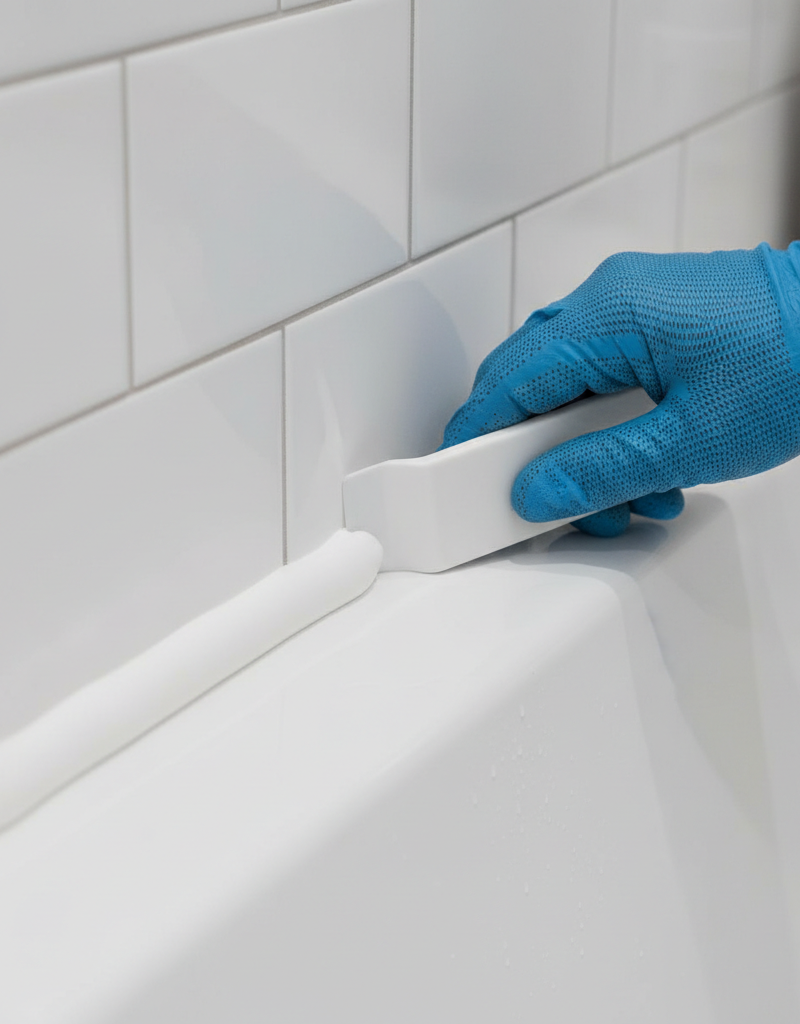
Immediately after applying the caulk, wet your finger (or a specialized caulk tool) and smoothly run it over the bead to create a concave, professional finish. This forces the caulk deeper into the joint and removes excess. Work quickly, as silicone caulk begins to skin over relatively fast. Have a damp cloth ready to wipe away any excess from your finger or tools.
11. Peel the Tape (If Used) – Remove tape for sharp lines.
If you used painter's tape, remove it immediately after tooling the caulk, before it starts to fully cure. Pull the tape slowly at a 45-degree angle away from the freshly applied caulk bead.
12. Cure Time is Crucial – Allow ample time for the caulk to set completely.
Follow the manufacturer's directions for cure time; typically, this is 12-24 hours before exposing to water, but some heavy-duty silicones may require 48 hours. Avoid using the tub or shower during this period. Premature water exposure can degrade the caulk's integrity and lead to early failure.
Common Causes
- Incomplete Removal of Old Caulk: This is by far the biggest culprit. Old caulk, soap scum, and mold residue prevent new caulk from forming a strong adhesive bond, leading to peeling and gaps.
- Damp Surfaces: Applying caulk to a wet or even slightly damp surface inhibits proper adhesion and curing, leading to premature failure and mold growth.
- Wrong Type of Caulk: Using acrylic latex caulk in a high-moisture area like a bathtub is a common mistake. These caulks are less flexible and prone to cracking and mold than 100% silicone or siliconized acrylics meant for bathrooms.
- Poor Application Technique: Inconsistent bead thickness, too much or too little caulk, or failure to properly tool the bead can create weak spots that allow water penetration.
- Lack of Ventilation: High humidity in bathrooms without proper ventilation encourages mold and mildew growth on caulk over time.
- Movement in the Joint: If the tub or surrounding tile moves significantly, even the best caulk can eventually fail. While caulk accommodates some movement, excessive flexing can overpower its elasticity.
Common Mistakes
Frequently asked questions
How long does bathtub caulk last?+
High-quality 100% silicone caulk, properly applied, can last 5-10 years or even longer. Lower-quality acrylic latex caulks may only last 1-3 years before needing replacement.
What kind of caulk should I use for a bathtub?+
Always use 100% silicone caulk designed for bathrooms and kitchens, labeled as mildew-resistant. Silicone offers superior flexibility, adhesion, and waterproofing compared to acrylic latex.
Can I caulk over existing caulk?+
No, never caulk over existing caulk. This is the surest way to guarantee a premature failure. New caulk will not properly adhere to old caulk, leading to peeling, cracking, and trapped moisture.
Why does my bathtub caulk keep getting moldy?+
Moldy caulk is usually due to moisture trapped underneath poorly adhered caulk, using the wrong type of caulk (not mildew-resistant), or insufficient ventilation in the bathroom allowing humidity to linger.

Discussion
Loading comments…