Tools & materials you'll need
Affiliate linksAs an Amazon Associate FixlyGuide earns from qualifying purchases — at no extra cost to you. Prices and availability are accurate as of publication and subject to change.
Quick Answer
Ice dams are a common winter nuisance that can cause significant damage to your roof, gutters, and even the interior of your home. They form when heat from your home escapes through the roof, melting the snow directly above. This melted water then runs down the roof until it reaches the colder eaves, where it refreezes, creating a barrier of ice. The best DIY approach to remove an existing ice dam is to use a safe, roof-friendly ice melt like calcium chloride, strategically placed to create drainage channels. This method avoids harsh chemicals, dangerous tools, and precarious ladder climbs, protecting both your roof and yourself.
The Problem
Imagine a thick, icy wall forming along the edge of your roof, trapping a growing pool of water behind it. That's an ice dam. This trapped water has nowhere to go but under your shingles, where it can penetrate your roof decking, insulation, and even trickle down into your walls and ceilings, causing water stains, mold growth, and structural damage. The weight of heavy ice dams can also pull gutters away from your house, damage fascia boards, and even create a hazard for pedestrians below if chunks break off. While a picturesque winter wonderland is lovely, an ice-dammed roof is a ticking time bomb for expensive repairs.
How It Works
Understanding how an ice dam forms is key to preventing and mitigating them. It all starts with uneven roof temperatures. Your attic and roof deck should ideally be as close to the outdoor temperature as possible. However, if your attic insulation is insufficient or poorly sealed, warm air from your living space rises into the attic and heats the roof deck from below. This heat transfers through the shingles, melting the snow directly above the warmer parts of your roof.
As this melted water flows downhill, it eventually reaches the colder sections of the roof, typically the overhangs or eaves, which are not directly heated by the attic. When this water hits the freezing temperatures at the eaves, it refreezes, forming a barrier. More and more melted snow then backs up behind this barrier, adding to the ice dam. The cycle continues as long as there's snow on the warmer parts of the roof and freezing temperatures at the edges. This trapped water, with nowhere to go, then begins its destructive journey under your shingles through capillary action and gravity, often refreezing and expanding as it infiltrates your roof structure.
Step-by-Step Fix
1. Gather Your Supplies — Assemble everything you need at ground level before starting.
*   **Safety First:** Choose calcium chloride ice melt, which is less corrosive to roofing materials than rock salt (sodium chloride). Wear gloves and eye protection.
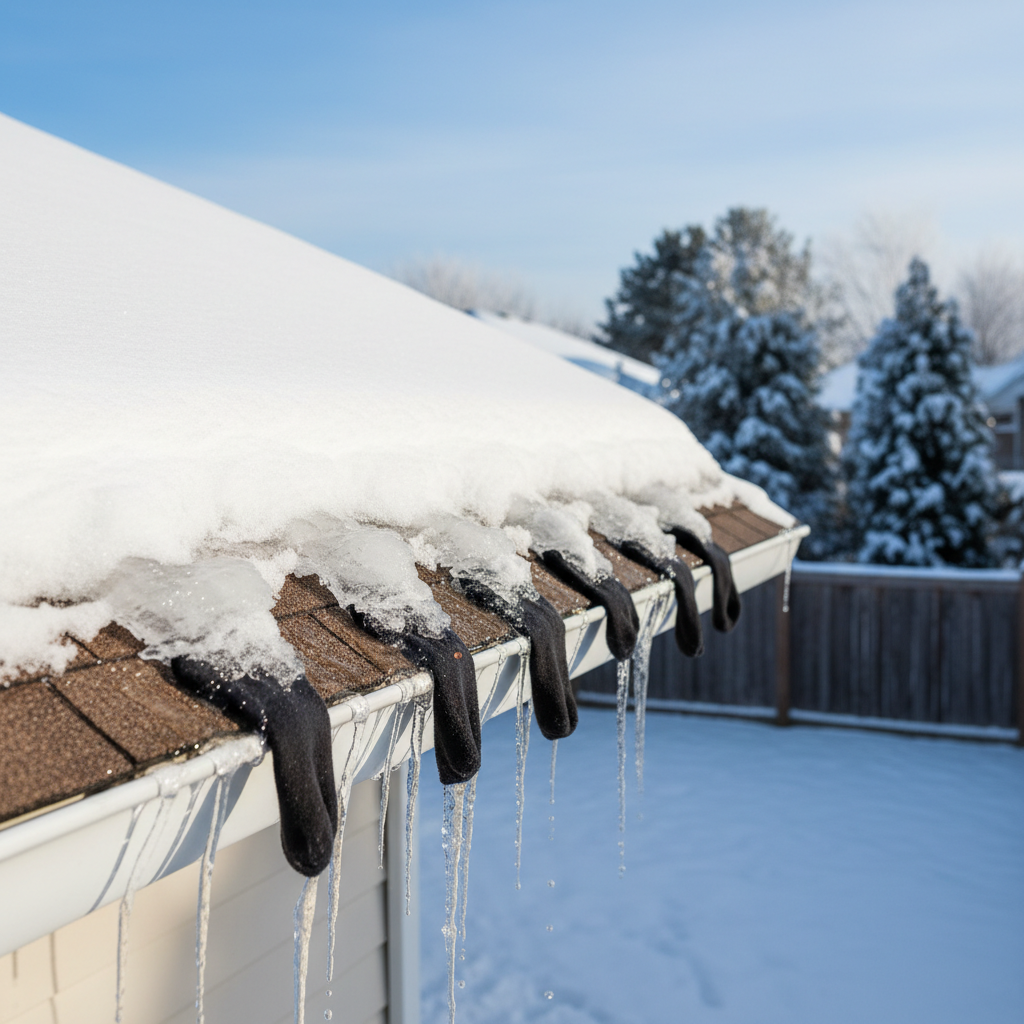
*   **Prepare Your Delivery System:** You'll need several old cotton socks, nylon pantyhose, or even old pillowcases. These will hold the ice melt.
2. Fill Your Socks/Hoses — Distribute the ice melt evenly for gradual release.
*   Carefully pour about 1 cup of calcium chloride ice melt into each sock/hosiery. Tie a secure knot at the end to prevent spillage.
*   **Pro Tip:** Don't overfill. You want a consistent, elongated shape, not a bulky ball, so it can rest in the trough of the ice dam.
3. Position from the Ground — Use a rake or pole to place the socks in the ice dam.
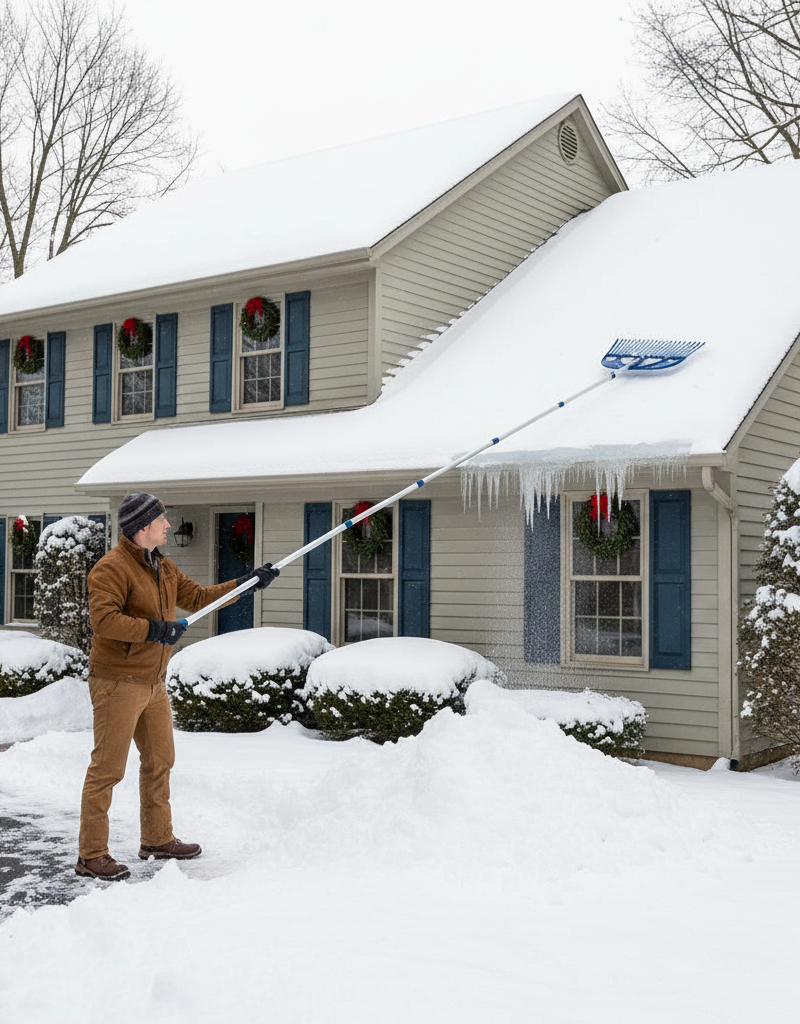
*   Extend a sturdy, extendable pole or a roof rake (if you have one) to gently place the filled socks directly on top of the ice dam. Aim for a spot where the ice dam is pooling water.
*   **Create Channels:** Place the socks perpendicular to the roof edge, bridging the ice dam from the shingle surface to the gutter, or just over the thickest part of the dam to melt a channel.
*   **Safety Note:** *Never* climb onto a snow-covered or icy roof. Always work from a secure ladder or from the ground using extension tools. Keep others clear from the area below where ice may fall.
4. Let It Work — Allow the calcium chloride time to melt through the ice.
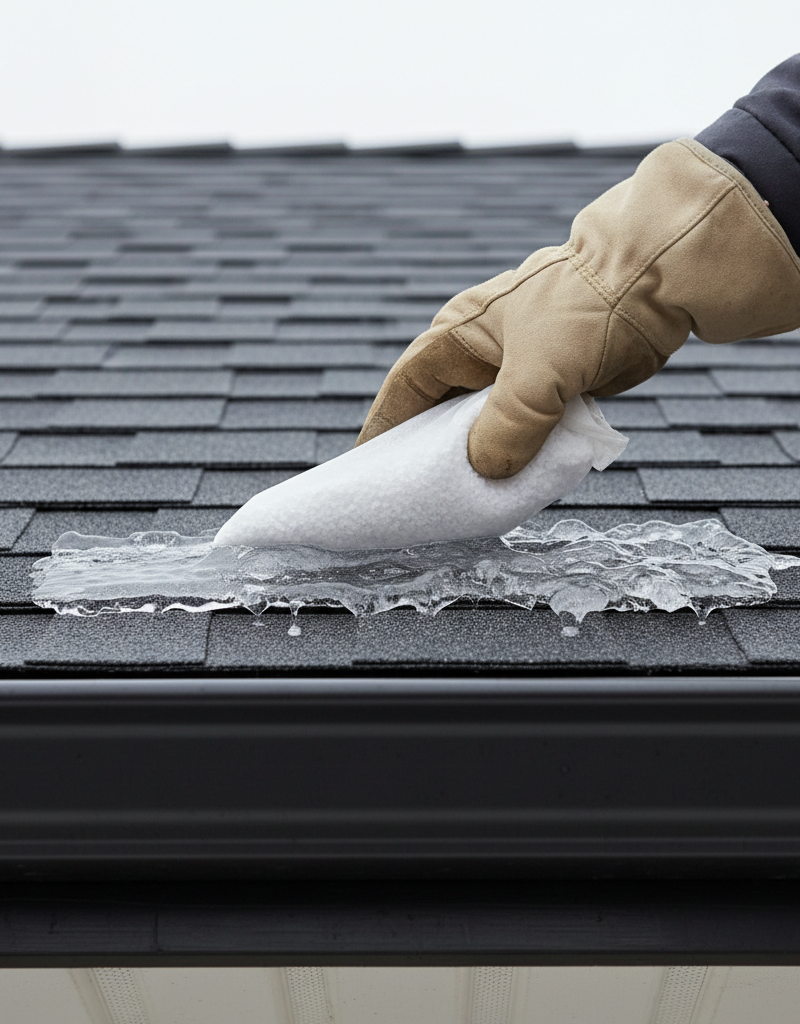
*   Calcium chloride works by lowering the freezing point of water. It will slowly melt a channel through the ice dam. This can take several hours, depending on the temperature and the thickness of the ice.
*   **Check Progress:** Periodically, from a safe vantage point, check if a channel has formed and water is draining.
5. Reposition if Needed — If the channel isn't complete or new ones are needed, re-place socks.
*   If a channel only partially melts, or if the ice dam is particularly long, you may need to reposition the socks or add more to create additional drainage paths.
*   **Avoid Poking:** Resist the urge to poke or chip at the ice with tools, as this can easily damage shingles.
6. Clear Melted Ice (If Accessible Safely) — Once channels are established, you can gently remove loose ice.
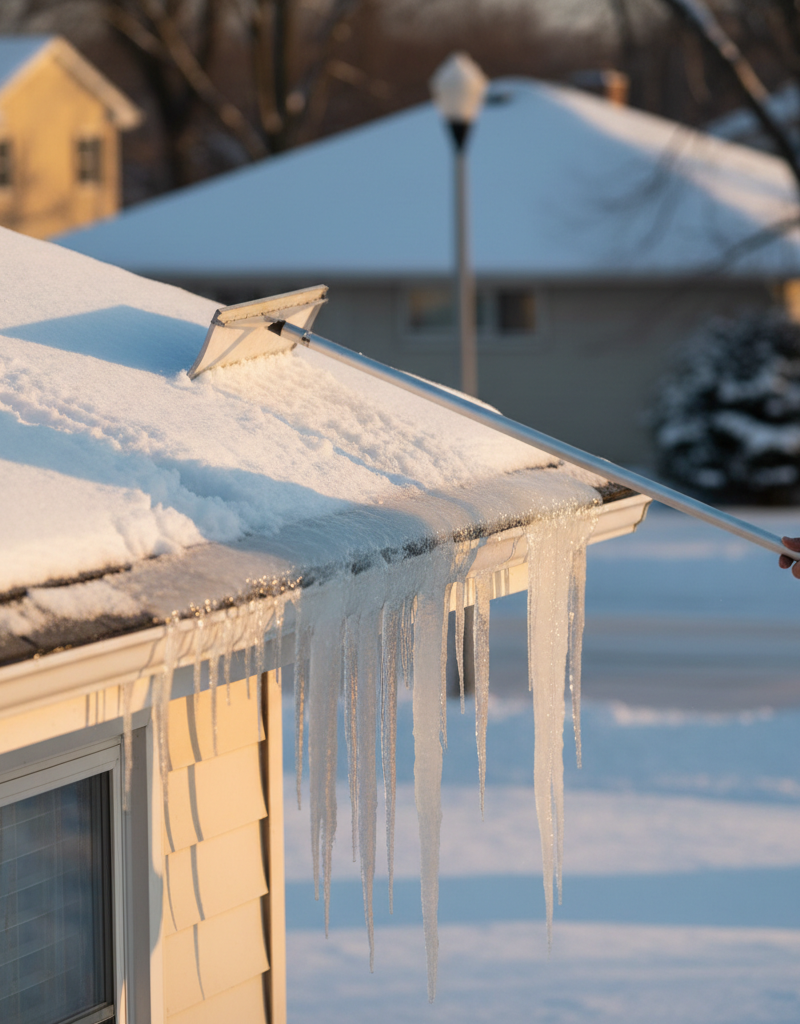
*   After significant melting, if large, loose chunks of ice remain that are *not* frozen to the roof, you can gently pull them off with a roof rake from the ground.
*   **Caution:** Only remove ice that is clearly detached and poses no risk of damaging shingles or falling on anyone.
7. Address Root Causes — Plan for long-term prevention.
*   Once the immediate danger is addressed, start planning to improve your attic ventilation and insulation. This is the only true long-term fix for ice dams.
*   **Inspect:** In warmer weather, inspect your attic for adequate insulation (R-49 to R-60 is often recommended for cold climates) and proper soffit and ridge ventilation.
Common Causes
- Poor Attic Insulation: The most significant culprit. Inadequate insulation allows warm air from the living space to readily transfer to the attic and then to the roof deck, melting snow from below.
- Lack of Attic Ventilation: Proper ventilation creates a continuous airflow that keeps the attic space cold, matching the outdoor temperature, and removes moisture. Without it, warm air gets trapped.
- Heat Leaks into Attic: Unsealed penetrations like light fixtures, exhaust fan ducts blowing into the attic (a major fire hazard and moisture problem), unsealed access hatches, and gaps around plumbing stacks can allow significant amounts of warm air to bypass insulation and directly heat the roof.
- Uneven Snow Cover: After a snowfall, if some parts of your roof clear faster than others, it often indicates heat loss patterns. The areas with persistent snow cover that suddenly clear are likely the warmest spots contributing to melting.
- Clogged or Frozen Gutters: While not a root cause of the formation, clogged gutters can exacerbate ice dam problems by preventing melted water from draining away, creating a larger platform for ice to build upon.
- Shallow Roof Pitch: Roofs with very low pitches can be more prone to ice dams simply because water drains slower, giving it more time to freeze. However, even steep roofs can develop dams with poor insulation/ventilation.
Common Mistakes
- Using Rock Salt (Sodium Chloride): Regular rock salt is corrosive and can damage roofing materials, gutters, and landscaping. It can also leave white stains on your roof. Always opt for calcium chloride or potassium chloride if using ice melt.
- Chipping or Prying at Ice with Tools: Using hammers, chisels, or shovels to break up ice dams is a surefire way to damage shingles, puncture the roof membrane, and potentially void your roof warranty. This can lead to costly leaks when the weather warms.
- Using a Pressure Washer or Hot Water: While seemingly effective, a pressure washer can blast water under shingles, damaging the roof and causing immediate leaks. Hot water will quickly refreeze, making the problem worse or creating treacherous ice patches.
- Climbing on an Icy Roof: This is extremely dangerous and accounts for numerous winter injuries. Always work from solid ground or a securely anchored ladder with proper fall protection if using steam equipment (which should be left to pros).
- Ignoring the Root Cause: Simply removing ice dams without addressing the attic insulation and ventilation issues is like bailing out a leaky boat without patching the hole. The problem will return with every significant snowfall.
- Not Clearing Gutters: Allowing gutters to fill with leaves and debris before winter ensures that even if water melts off your roof, it has nowhere to go, creating an ideal environment for ice formation.
Cost & Time Breakdown
| Task | DIY Cost | Pro Cost | Time |
|---|---|---|---|
| Calcium Chloride Ice Melt | $15–$30 | N/A | N/A |
| Old Socks/Hosiery | $0 | N/A | N/A |
| Roof Rake (optional) | $40–$80 | N/A | N/A |
| Total for DIY Removal | $15–$110 | $500–$2,000+ | 1–4 hours |
| Attic Inspection & Sealing | $0 (DIY) | $150–$300 (pro) | 1–3 hours |
| Add Attic Insulation (DIY) | $0.50–$1.50/sqft | $1.50–$3.00/sqft | 8–16 hours |
| Improve Attic Ventilation | $100–$500 (DIY) | $500–$2,000+ (pro) | 4–12 hours |
Tips & Prevention
- Clear Snow Promptly: After a heavy snowfall, use a roof rake from the ground to carefully remove the bottom 3-4 feet of snow from your roof. This removes the "fuel" for ice dams and keeps the eaves clear.
- Ensure Proper Insulation: Check your attic insulation levels. In cold climates, aim for an R-value of R-49 to R-60. Ensure insulation is evenly distributed and doesn't block soffit vents.
- Seal Attic Air Leaks: Carefully inspect your attic for any gaps or cracks where warm air can escape from your living space below. Seal around light fixtures, plumbing vents, exhaust fans, and attic hatches with caulk or expanding foam.
- Improve Attic Ventilation: Make sure your attic has a balanced ventilation system with adequate intake (soffit vents) and exhaust (ridge or gable vents). This keeps the attic cold and allows moisture to escape.
- Clean Gutters Regularly: Ensure your gutters are free of leaves, twigs, and debris before winter. Clogged gutters can prevent melted water from draining, contributing to ice dam formation.
- Maintain Consistent Indoor Temperature: Avoid drastically lowering your thermostat at night, as this can lead to warmer periods during the day causing melting, and colder periods at night causing refreezing.
When to Call a Professional
While the sock method is effective for smaller, manageable ice dams, there are clear signs when professional intervention is necessary. If your ice dam is extensively large, spans the entire length of your roof, or is several inches thick, attempting DIY removal can be unfeasible and dangerous. Critically, if you notice water stains, drips, or actual leaks inside your home (especially in ceilings or walls), the ice dam has already caused interior damage, and immediate professional assessment is required. Professionals have specialized steam equipment designed to melt ice dams safely and efficiently without damaging your roof, along with the training and safety gear to work on icy surfaces. They can also assess the root cause of repeated ice dams, such as inadequate insulation or ventilation, and offer permanent solutions. For major ice dams or any signs of internal water damage, a licensed roofing contractor is your safest and smartest call to mitigate further damage and prevent future occurrences. If you're uncomfortable working outdoors in frigid temperatures or reaching your roof from the ground, a pro is always the best solution to ensure your safety and the integrity of your home.","meta_title="Melt Ice Dams: The $20 Trick That Saves Your Roof", meta_description="Protect your roof from winter damage! Learn a simple, safe, and budget-friendly DIY method to remove ice dams using calcium chloride and old socks. Prevent costly repairs.", keywords=["ice dam removal", "remove ice dams safely", "ice dam prevention", "calcium chloride ice melt", "roof maintenance winter", "prevent roof leaks", "diy ice dam repair", "how to get rid of ice dams"], faq=[default_api.CreateArticleFaq(question="Why do ice dams form on roofs?", answer="Ice dams form when heat from inside your home escapes into the attic, warming the roof deck and melting snow. This melted water then runs down to the colder eaves (the unheated overhangs), where it refreezes, creating a barrier of ice that traps more water behind it."), default_api.CreateArticleFaq(question="Is rock salt safe to use on ice dams?", answer="No, regular rock salt (sodium chloride) can be corrosive and damaging to roofing materials, gutters, and landscaping. Always use calcium chloride or potassium chloride ice melt, which are less harmful to your home's exterior."), default_api.CreateArticleFaq(question="Can ice dams cause damage to my house?", answer="Absolutely. Trapped water behind an ice dam can back up under your shingles, penetrate the roof decking, insulation, and eventually leak into your walls and ceilings, leading to water stains, mold, and structural rot."), default_api.CreateArticleFaq(question="When should I call a professional for ice dam removal?", answer="Call a professional if the ice dam is very large, covers most of your roof, or if you already see water leaking inside your home. Professionals use specialized steam equipment and have the safety training to remove extensive ice dams without damaging your roof.")], hero_image_prompt="A close-up, ground-level shot of a residential roof in winter with a moderate ice dam forming, showing a few cotton socks filled with ice melt strategically placed within the dam, melting channels. Icy, snowy background, clear sky. Realistic, instructional focus.", hero_image_alt="Calcium chloride ice melt in socks creating channels in a roof ice dam", reading_time_minutes=10.0, cost_estimate="$15–$110", time_estimate="1–4 hours", difficulty="moderate", tools_materials=[default_api.CreateArticleToolsMaterials(name="Calcium Chloride Ice Melt", type="material", qty="1-5 lbs"), default_api.CreateArticleToolsMaterials(name="Old cotton socks or nylon pantyhose", type="material", qty="3-6 pairs"), default_api.CreateArticleToolsMaterials(name="Gloves", type="tool"), default_api.CreateArticleToolsMaterials(name="Eye protection", type="tool"), default_api.CreateArticleToolsMaterials(name="Extendable pole or roof rake", type="tool", note="For safer placement from the ground")], pro_callout="If you have extensive, thick ice dams, significant water leaking into your home, or are uncomfortable working safely from the ground, call a licensed roofing professional immediately. They have specialized tools and safety training for large-scale ice dam removal.")) wrappers.create_article(title="The $20 Trick That Melts Ice Dams (and Saves Your Roof)", slug="remove-ice-dams-safely", excerpt="Discover a surprisingly simple, budget-friendly method to safely remove ice dams and prevent costly roof damage to your home.", quick_answer="Ice dams form when heat escapes through your roof, melting snow that then refreezes at the colder eaves. The safest and most effective DIY method for removing existing ice dams involves using calcium chloride ice melt in cotton socks or pantyhose to create channels for water to drain. This carefully applied approach minimizes roof damage and avoids dangerous ladder work.", body_markdown=
Related Articles
Keep troubleshooting with these hand-picked guides from FixlyGuide:
- The $30 Trick to Melting Ice Dams (Before They Destroy Your Roof) — Discover how to safely remove ice dams from your roof instantly with common household items, preventing costly damage. Stay safe while tack…
- The #1 Mistake Homeowners Make with Ice Dams (and How to Fix It SAFELY) — Most homeowners approach ice dam removal incorrectly, creating more damage or safety risks. Learn the right, safe methods to protect your r…
- The $30 Secret to Banishing Ice Dams Without Damaging Your Roof — Discover how a simple, inexpensive trick can safely eliminate dangerous ice dams from your roof and prevent costly damage to your home.
- The $30 Secret to Banishing Ice Dams From Your Roof (Before They Destroy It) — Learn safe and effective methods to remove ice dams from your roof and prevent costly damage to your home's structure and interior.
- Is Your Roofline Hiding a $10,000 Secret? 7 Warnings Your Soffit & Fascia Are Failing — Discover the critical signs of soffit and fascia damage that could indicate widespread problems and how to properly address them before the…
- The #1 Mistake Homeowners Make After Finding Missing Shingles (And How to Fix It Right) — Discover the crucial steps to take after a storm rips shingles from your roof, ensuring a proper, lasting repair and preventing costly futu…
Frequently asked questions
Why do ice dams form on roofs?+
Ice dams form when heat from inside your home escapes into the attic, warming the roof deck and melting snow. This melted water then runs down to the colder eaves (the unheated overhangs), where it refreezes, creating a barrier of ice that traps more water behind it.
Is rock salt safe to use on ice dams?+
No, regular rock salt (sodium chloride) can be corrosive and damaging to roofing materials, gutters, and landscaping. Always use calcium chloride or potassium chloride ice melt, which are less harmful to your home\'s exterior.
Can ice dams cause damage to my house?+
Absolutely. Trapped water behind an ice dam can back up under your shingles, penetrate the roof decking, insulation, and eventually leak into your walls and ceilings, leading to water stains, mold, and structural rot.
When should I call a professional for ice dam removal?+
Call a professional if the ice dam is very large, covers most of your roof, or if you already see water leaking inside your home. Professionals use specialized steam equipment and have the safety training to remove extensive ice dams without damaging your roof.
Discussion
Loading comments…