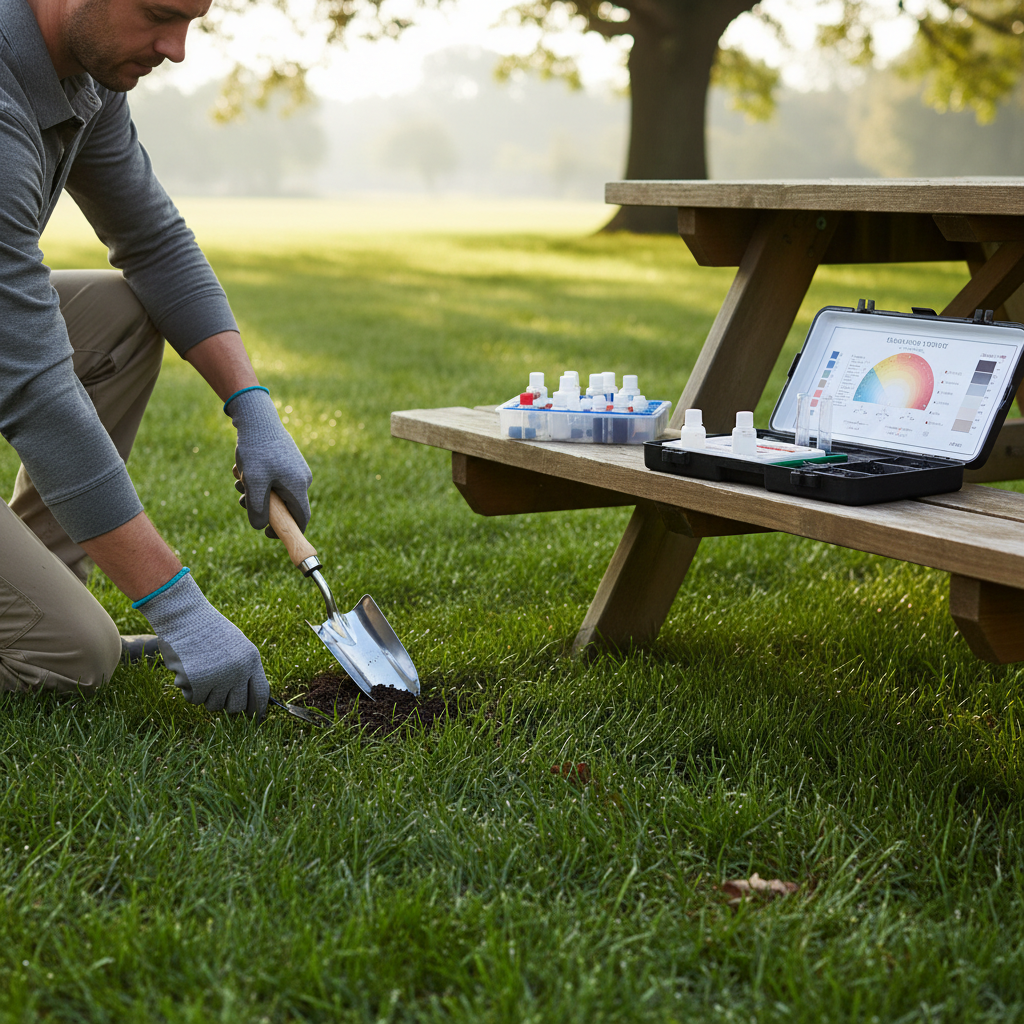
Tools & materials you'll need
Affiliate links- AmazonClean trowel or soil probe
As an Amazon Associate FixlyGuide earns from qualifying purchases — at no extra cost to you. Prices and availability are accurate as of publication and subject to change.
Quick Answer
Testing your lawn's soil pH at home is a simple yet crucial step to diagnose why your grass might be struggling, even with proper watering and fertilization. By collecting a few soil samples and using an inexpensive over-the-counter kit, you can quickly determine your soil's acidity or alkalinity. This information is vital because an imbalanced pH prevents your lawn from absorbing essential nutrients, leading to stunted growth, discoloration, and increased vulnerability to weeds and diseases. Correcting the pH with common amendments like lime or sulfur can transform your lawn's health and appearance.
The Problem
Many homeowners religiously water, mow, and fertilize their lawns, yet still struggle with patchy, yellowing, or thinning grass. Weeds seem to thrive where turf won't, and despite your best efforts, your lawn looks less than ideal. The hidden culprit often isn't a lack of effort or expensive treatments, but rather an invisible issue beneath the surface: an imbalanced soil pH. When your soil is too acidic or too alkaline, essential nutrients like nitrogen, phosphorus, and potassium become "locked" and unavailable to your grass roots. This nutrient lockout starves your lawn, causing the same symptoms you'd see from under-fertilization, pests, or disease. Understanding and correcting your soil pH is fundamental to achieving a vibrant, healthy lawn that can resist weeds and stress.
How It Works
Soil pH is a measure of its acidity or alkalinity, expressed on a scale from 0 to 14. A pH of 7.0 is neutral, values below 7.0 are acidic, and values above 7.0 are alkaline (or basic). Most turfgrasses, including common varieties like Kentucky Bluegrass, Fescue, and Ryegrass, thrive in a slightly acidic to neutral range, typically between 6.0 and 7.0. Within this optimal range, soil microbes are most active, and nutrients are most soluble and accessible to plant roots. Outside this range, even if nutrients are present in the soil, the chemical reactions that make them available are hindered. For example, in highly acidic soils (below 5.5), aluminum and manganese can become toxic to plants, while phosphorus availability decreases. In highly alkaline soils (above 7.5), iron and zinc can become deficient, leading to chlorosis (yellowing leaves).
Soil test kits typically work by using a chemical indicator that reacts with the soil sample to produce a color change. This color change corresponds to a specific pH value, which is then matched against a provided color chart. Some kits use a liquid reagent, where a small soil sample is mixed with water and the reagent, then allowed to settle before the color is observed. Others might use litmus paper or probes. While not as precise as a professional laboratory test, these home kits provide a sufficiently accurate reading for homeowners to make informed decisions about soil amendments and dramatically improve lawn health.
Step-by-Step Fix
Here’s how to uncover your lawn's hidden pH secrets and what to do with the information.
- Gather Your Tools & Samples – Collect several small soil samples from different areas of your lawn.
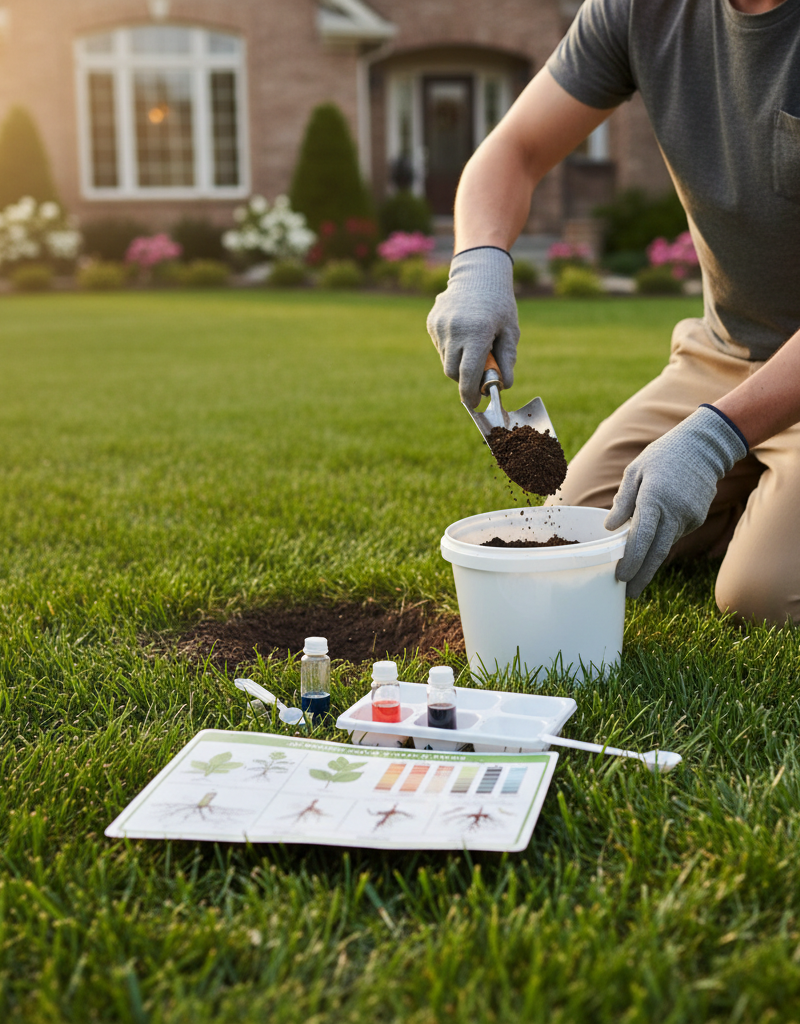
- Tools: A clean trowel or soil probe, a clean bucket or container, and your chosen soil test kit. Wear gloves to keep your hands clean.
- Method: Dig down 4-6 inches (10-15 cm) to get a true representation of the root zone. Avoid taking samples from areas directly next to concrete, driveways, or trees, as these can skew results. Take 5-10 samples from various spots across your lawn, especially from areas where grass is struggling and areas where it
Frequently asked questions
How often should I test my lawn's soil pH?+
It's recommended to test your lawn's soil pH every 2-3 years. If you've recently applied amendments to adjust the pH, retest after 6-12 months to see if further adjustments are needed.
What is the ideal pH range for most lawn grasses?+
Most common turfgrasses, such as Kentucky Bluegrass, Fescue, and Ryegrass, thrive in a slightly acidic to neutral pH range of 6.0 to 7.0. Some grasses, like Zoysia or Bermuda, tolerate slightly higher pH levels.
Can I use household items to test soil pH?+
While DIY tests using vinegar and baking soda can indicate extremely acidic or alkaline conditions (fizzing with vinegar means alkaline, fizzing with baking soda means acidic), they are not precise enough to give an accurate pH reading. An inexpensive purpose-built soil test kit is much more reliable for home use.
How long does it take for soil pH to change after applying amendments?+
Changes to soil pH are not instantaneous. It can take several months to a year for amendments like lime (to raise pH) or sulfur (to lower pH) to fully integrate and alter the soil's pH. Retesting after 6-12 months is important to monitor progress.
Discussion
Loading comments…