Tools & materials you'll need
Affiliate linksAs an Amazon Associate FixlyGuide earns from qualifying purchases — at no extra cost to you. Prices and availability are accurate as of publication and subject to change.
Quick Answer
When your sprinkler system fails to turn on, the immediate suspects are often a tripped circuit breaker, a malfunctioning rain sensor, or an incorrectly programmed controller. Start by inspecting your home's electrical panel for any tripped breakers corresponding to the irrigation system. Next, examine your rain sensor, checking for obstructions or moisture; try temporarily bypassing it to isolate the issue. Finally, confirm your sprinkler controller is not in 'Off' or 'Rain Delay' mode and that the master water valve is completely open.
The Problem
You wake up to a hot summer day, and your lawn is looking parched. You head to your sprinkler controller, press the 'Run' button, and... nothing. The sprinklers don't activate, no zones come on, and your precious landscape remains thirsty. This frustrating scenario is all too common for homeowners, leading to confusion and the fear of costly professional repairs. While a complete system failure can stem from complex issues, more often than not, the culprit is a surprisingly simple oversight or a minor component malfunction that any homeowner can diagnose and fix with a bit of guidance.
How It Works
To effectively troubleshoot a non-starting sprinkler system, it helps to understand its basic components and how they interact. At the heart of your irrigation system is the controller, which acts as the brain. It's a low-voltage electrical device (typically 24 volts AC) that sends signals to individual zone valves based on a pre-programmed schedule.
Each zone valve is essentially an electrically operated switch. When the controller sends power to a specific zone valve, an electromagnet (solenoid) inside the valve is energized. This pulls open a small diaphragm, allowing pressurized water to flow through that particular zone's pipes and out to the sprinkler heads. The main water supply for the entire system often has a master shut-off valve, usually a manual ball valve, located near the backflow preventer or main water line connection. This valve must be fully open for any water to reach the zone valves.
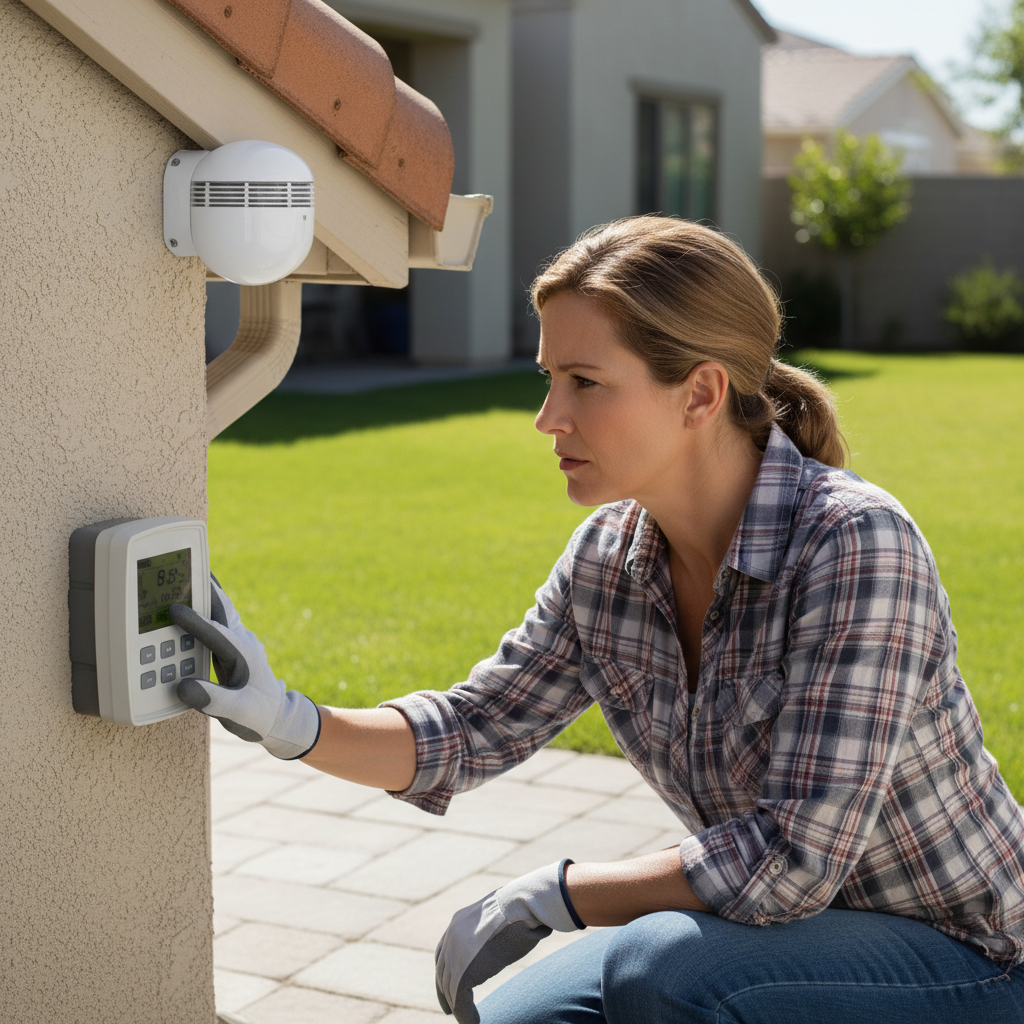
Another critical component is the rain sensor, which is designed to conserve water by preventing the system from running during or after rainfall. Most rain sensors are wired in series with the common wire or directly into a dedicated sensor port on the controller. When the sensor detects a predetermined amount of moisture, it breaks the electrical circuit, preventing the controller from sending power to the zone valves, thus interrupting the scheduled irrigation cycle. If any part of this chain—power supply, controller, rain sensor, master valve—fails or is improperly set, the entire system can appear
Frequently asked questions
How do I know if my rain sensor is bad?+
You can test your rain sensor by wetting it thoroughly, then trying to run the system manually. If the system still runs after the sensor is saturated, it might be faulty. Alternatively, temporarily bypass the sensor wires at the controller to see if the system operates normally without it. If it does, the sensor is likely the issue.
Why would only one zone on my sprinkler system not work?+
If only one zone isn't working, the problem is usually isolated to that specific zone valve. This could be due to a faulty solenoid, a broken wire leading to that valve, or debris obstructing the valve diaphragm. Manually activating the solenoid can help diagnose if it's an electrical or mechanical problem.
Can a power surge affect my sprinkler system?+
Yes, a power surge can damage your sprinkler controller, especially if it's not protected by a surge protector. Signs of surge damage include a blank display, unresponsive buttons, or zones not activating. If you suspect surge damage, you may need to replace the controller.
What if my sprinkler heads are just dribbling or have low pressure?+
Low pressure across all zones points to a master water supply issue, such as a partially closed main valve, a clogged backflow preventer, or a problem with your home's water pressure regulator. If only one zone has low pressure, check for clogs in the piping, debris in that zone's valve, or clogged sprinkler nozzles.

Discussion
Loading comments…