Tools & materials you'll need
Affiliate linksAs an Amazon Associate FixlyGuide earns from qualifying purchases — at no extra cost to you. Prices and availability are accurate as of publication and subject to change.
Liquid drain cleaners are bad for everything: they eat the rubber seals in your P-trap, corrode older galvanized pipes, burn skin and lungs, and pollute waterways. They also fail more than half the time on real clogs (hair, grease, food). Here are the methods professional plumbers actually use, ranked from gentlest to most aggressive.
Method 1: Boiling water + dish soap (slow drains)
This is the first thing to try on any kitchen sink that's draining slow but not fully blocked.
- Squirt 2 tablespoons of liquid dish soap directly into the drain.
- Boil 4 cups of water.
- Pour the water down the drain in a slow, steady stream from a height of about 12 inches (the pressure helps).
- Wait 5 minutes, then run hot tap water for 30 seconds.
The soap emulsifies grease; the boiling water melts and flushes it. Don't use boiling water on PVC pipes if you've poured chemical cleaner first — the heat can warp softened plastic.
Method 2: The flat-cup plunger (sinks and tubs)
You need a cup plunger (flat-bottom), not a flange plunger (the one with the extra rubber sleeve — that's for toilets only).
- Fill the sink with about 2 inches of water — you need water above the cup to create suction.
- If you have a double sink, hold a wet rag tightly over the other drain to seal it.
- Cover the overflow opening with a wet rag (in bathroom sinks).
- Plunge with firm vertical strokes for 20–30 seconds.
The trick is the pull, not the push. The suction is what dislodges the clog.
Method 3: The $5 plastic drain snake (hair clogs)
This is the single most useful tool for bathroom sinks and tubs. It's a thin flexible plastic strip with backward-facing barbs.
- Push it slowly down the drain until you feel resistance.
- Twist a quarter turn.
- Pull it out slowly and steadily.
What you'll retrieve is genuinely horrifying — it's months of hair, soap scum, and skin cells fused into a "drain snake monster." This single tool clears more bathroom clogs than any chemical product.
Method 4: Disassemble the P-trap (kitchen sinks)
If the clog is in the P-trap (the U-shaped pipe under the sink), nothing in the world will dissolve it — you have to physically remove it.
- Put a bucket under the trap.
- Loosen the two slip nuts by hand or with channel-lock pliers.
- Tip the trap into the bucket; the gunk inside is your clog.
- Rinse the trap clean, then reassemble. Hand-tight is enough — over-tightening cracks the plastic.
This takes 5 minutes, requires no tools you don't already own, and is the single best skill any homeowner can learn.
Method 5: A drum auger / drain auger (deeper clogs)
When the clog is past the P-trap and into the wall, you need a hand-crank drum auger (~$25). Feed the cable down the cleanout, crank to extend it until you hit resistance, then crank backward while pulling out. For toilets, use a toilet auger specifically — it has a protective rubber sleeve so you don't scratch the porcelain.
What about baking soda and vinegar?
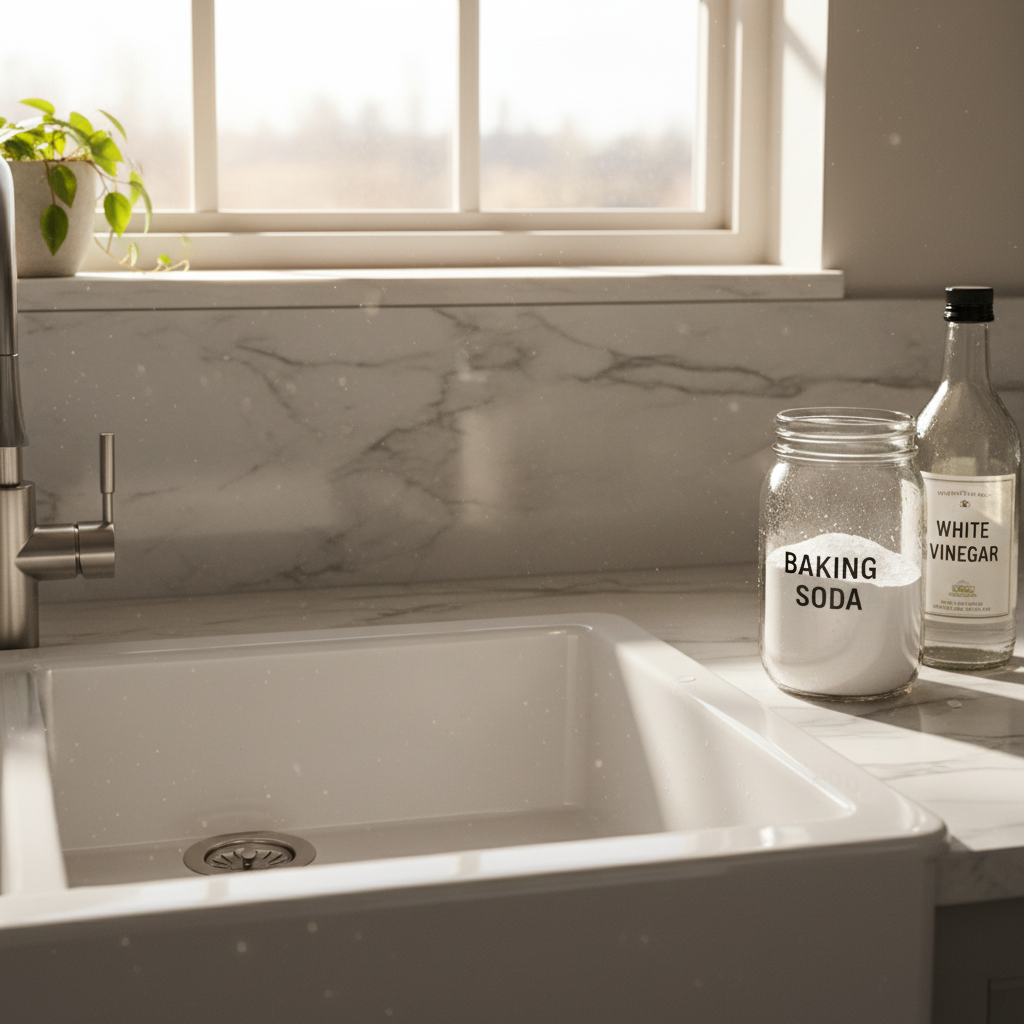
Sorry — it's a popular myth. The fizzing reaction is just CO2 and water; neither has any meaningful effect on hair or grease. Save your baking soda for actual baking.
Discussion
Loading comments…