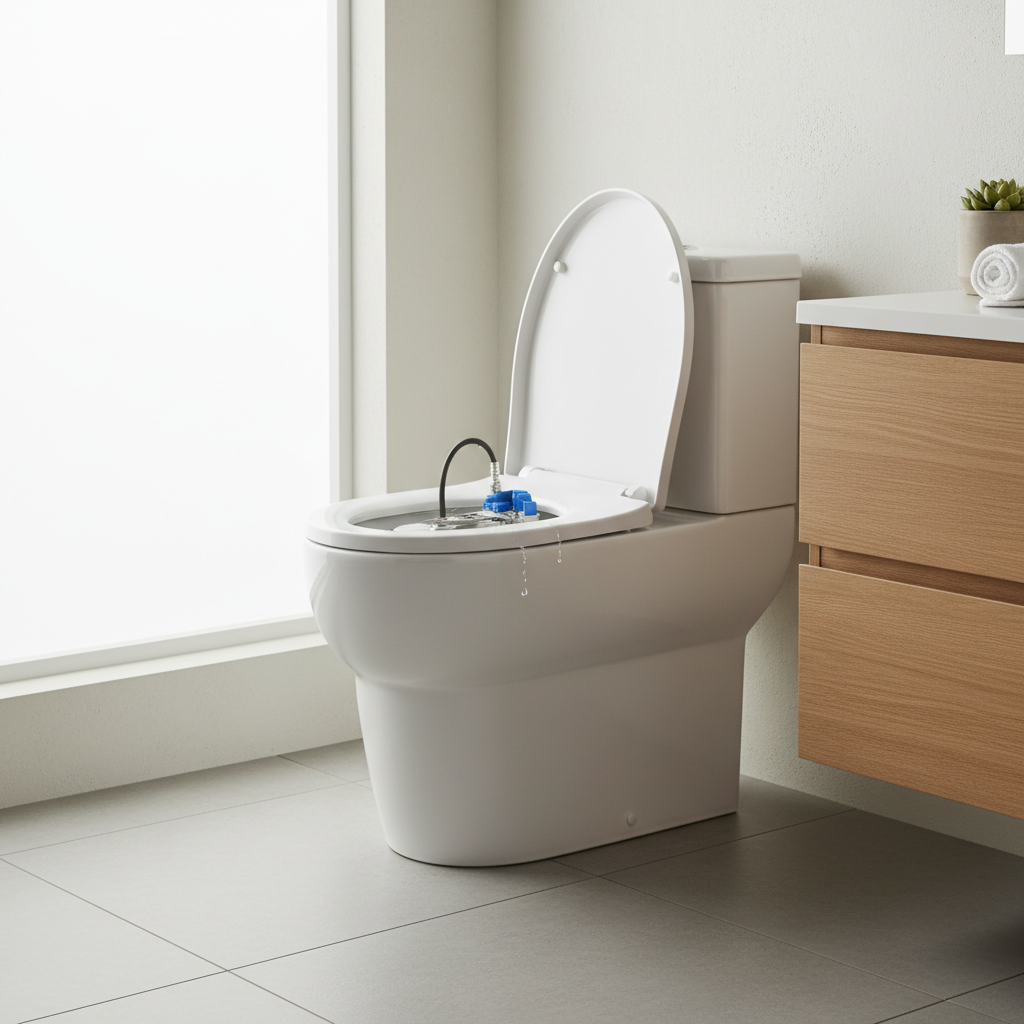
Tools & materials you'll need
Affiliate linksAs an Amazon Associate FixlyGuide earns from qualifying purchases — at no extra cost to you. Prices and availability are accurate as of publication and subject to change.
A running toilet is the single most common — and most expensive — silent leak in the average American home. The EPA estimates a faulty flapper alone can waste 200 gallons a day, adding $20–$30 to your monthly water bill. The good news: 9 out of 10 running toilets are fixed with a $5 part and 20 minutes of work. No plumber required.
Step 1: Confirm it's actually running
Open the tank lid and listen. If you hear a faint hiss or see water trickling into the bowl from the rim or the overflow tube, you have a leak. If the bowl water level keeps dropping and the tank refills every few minutes without anyone flushing, that's a "phantom flush" — same problem, different symptom.
Quick dye test: Drop 5 drops of food coloring into the tank. Wait 15 minutes without flushing. If color appears in the bowl, your flapper is leaking. This is the #1 cause and the easiest fix.
Step 2: Inspect the flapper (fixes ~60% of cases)
The flapper is the rubber disc at the bottom of the tank that lifts when you flush. Over time it warps, cracks, or gets coated with mineral deposits.
- Turn off the water supply at the shut-off valve behind the toilet.
- Flush to empty the tank.
- Unhook the flapper chain and slide the flapper off the overflow tube ears.
- Take the old flapper to the hardware store for an exact match — universal flappers are a coin flip.
- Install the new one, reattach the chain with about ½ inch of slack, and turn the water back on.
Step 3: Adjust the chain length
Too tight and the flapper can't seat fully — water keeps trickling. Too loose and it slips under the flapper, holding it open. Aim for ½ inch of slack when the flapper is closed.
Step 4: Check the float height
The float controls when the fill valve shuts off. If it's set too high, water spills into the overflow tube continuously.
- Ball float: bend the metal arm gently downward.
- Cup float (most modern toilets): pinch the spring clip on the side of the fill valve and slide the cup down about ½ inch.
The water level should sit ~1 inch below the top of the overflow tube.
Step 5: Replace the fill valve
If the tank fills, then immediately starts hissing again, the fill valve is shot. A Fluidmaster 400A is the universal replacement, runs about $12, and installs in 15 minutes with a single adjustable wrench.
Step 6: Clean the flush valve seat
Mineral deposits on the rim where the flapper seats prevent a watertight seal. Shut off water, drain the tank, and gently scrub the seat with a Scotch-Brite pad — never sandpaper or steel wool, which will gouge the plastic.
Step 7: Check the flush handle and lever
A sticky handle or a bent lift arm can hold the flapper partially open. Wiggle the handle — if it feels gummy, unscrew the retaining nut inside the tank (it's reverse-threaded), clean the threads, and reinstall.
When you've done all 7 and it's still running
You're looking at a cracked overflow tube, a hairline crack in the tank itself, or a failed flush valve assembly. At that point, replacing the entire flush valve (or the whole toilet, if it's older than 15 years) is more cost-effective than another patch.
Discussion
Loading comments…