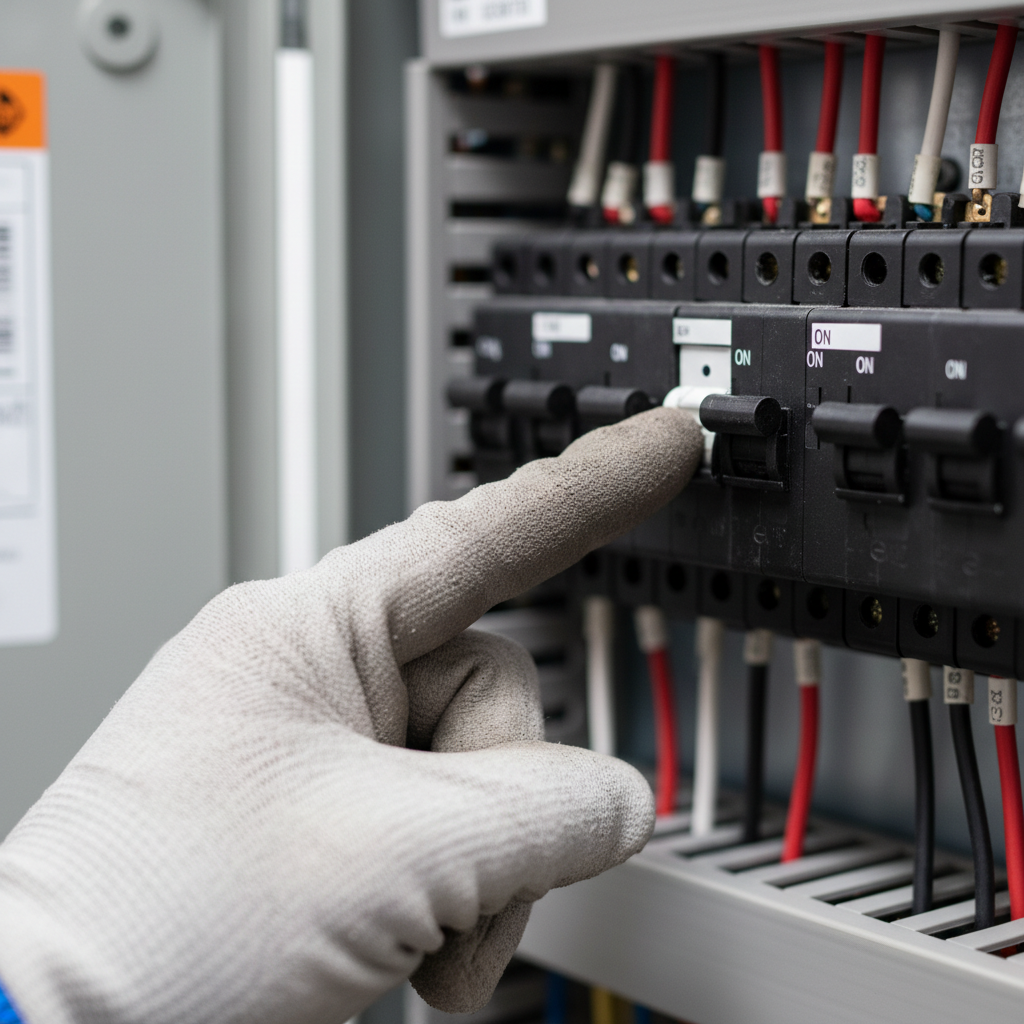
Tools & materials you'll need
Affiliate links- AmazonReplacement Circuit Breaker1 · PROFESSIONAL USE ONLY. Must match brand, type, and amperage.
As an Amazon Associate FixlyGuide earns from qualifying purchases — at no extra cost to you. Prices and availability are accurate as of publication and subject to change.
Quick Answer
A single circuit breaker in your panel that feels warm is a red flag. Unlike the other breakers that are cool to the touch, a warm one indicates a problem. This heat is typically generated by one of two things: either the circuit is consistently overloaded with too many appliances drawing power, or—more dangerously—the wire connected to the breaker has become loose. A loose connection creates high electrical resistance, which generates intense heat and can melt the breaker and start a fire. While a very slight warmth can occur under a heavy but acceptable load, anything more than barely perceptible heat warrants immediate attention.
! ! ! SAFETY NOTE: DANGER OF ELECTROCUTION ! ! ! Your home's main electrical panel contains live busbars carrying 240 volts of electricity, which is more than enough to cause serious injury or death. Never attempt to remove the front cover of your electrical panel. Do not attempt to tighten screws, remove or replace a breaker, or touch any wires or metal components inside the panel. The diagnostic steps in this guide are for external investigation only. Any work inside the panel must be performed by a licensed electrician.
The Problem
You’ve opened your electrical panel door, perhaps to reset a tripped breaker or just out of curiosity, and placed your hand across the rows of breaker switches. Most are cool, room temperature plastic. But one of them feels distinctly warm, maybe even hot. It hasn’t tripped, and the lights and outlets on that circuit seem to be working just fine. Why is this one breaker different?
This warmth is a direct symptom of a fundamental principle of electricity: resistance creates heat. While circuit breakers are designed to handle a specific amount of current and its associated heat, excessive or abnormal heat points to a malfunction. A warm breaker is an electrical system "fever"—it's telling you that something is wrong. Ignoring it is a common but dangerous mistake that can lead to a melted breaker, damaged wiring, and a potential house fire.
How It Works
To understand why a breaker gets warm, you first need to understand its job. A circuit breaker is a reusable, automatic safety switch designed to protect the wiring in your walls from carrying too much electrical current. It does this in two ways:
-
Thermal Protection (Overloads): Inside every standard breaker is a small, calibrated strip of two different metals bonded together (a bimetallic strip). As electricity flows through the circuit, it passes through this strip, generating a predictable amount of heat. When you plug in too many devices—say, a space heater and a vacuum cleaner on the same 15-amp circuit—the current draw exceeds the breaker's rating. This overcurrent causes the bimetallic strip to heat up more than usual. The two metals expand at different rates, causing the strip to bend. After a set period (which can be seconds or minutes, depending on the severity of the overload), the bending strip physically trips a latch, disconnecting the circuit with a distinct "click." This is a thermal trip. A circuit that is constantly running near its maximum rated load will cause the bimetallic strip to remain consistently warm, and this heat can be felt on the breaker's plastic casing.
-
Magnetic Protection (Short Circuits): The breaker also contains an electromagnet. In the event of a short circuit—for example, when a "hot" wire touches a neutral wire—a massive and instantaneous surge of current flows through the circuit. This surge creates a strong magnetic field in the electromagnet, which instantly snaps the latch open, shutting off the power much faster than the thermal strip could react. This is a magnetic trip.
The warmth you feel is generated a concept called Joule heating. The formula is P = I²R, where P is power (heat), I is current, and R is resistance. This means heat increases exponentially with current, but it also increases directly with resistance. A warm breaker is caused by an abnormality in one of these two variables: either the current (I) is too high (an overload) or the resistance (R) is too high (a bad connection or faulty breaker).
Step-by-Step Fix
These steps focus on safely diagnosing the cause of the warmth from outside the panel. You will not be opening the panel cover or touching any wiring.
-
Stop & Assess — First, do not touch the breaker again, especially if it felt hot rather than just warm. Note if you smell any melting plastic or ozone-like smells. If you do, call an electrician immediately.
-
Identify the Circuit — Look at your panel's directory legend. What room or appliances does the warm breaker control? Is it a general-purpose circuit for a bedroom, or is it dedicated to a specific appliance like a dishwasher?
-
Investigate the Load — Go to the area powered by the circuit. What is currently plugged in and turned on? Make a list. Be thorough: check for lamps, TVs, computers, chargers, and especially high-draw items like space heaters, hair dryers, treadmills, or window air conditioners.
-
Calculate the Total Load — For each device on your list, find its power consumption. This is listed on a sticker or plate on the device, usually in watts (W). Add up all the watts. Now, divide that total by 120 (the voltage in a standard US circuit) to find the total amps (Amps = Watts / 120 Volts).
-
Compare Load to Breaker Rating — Look at the number on the handle of the warm breaker (e.g., "15" or "20"). This is its amp rating. Is your calculated amperage from the previous step close to, at, or over this number? If a 15-amp circuit is drawing 14 amps, it's heavily loaded and the breaker will be warm. If it's drawing 16 amps, it's overloaded.
-
The Overload Action Plan — If you've confirmed an overload, the fix is to reduce the load. Unplug the highest-wattage devices and move them to outlets in rooms powered by different circuits. A permanent solution might involve having an electrician run a new, dedicated circuit for a power-hungry appliance.
-
The "No Overload" Scenario — If you did the math and the circuit is barely loaded (e.g., just an LED clock and a phone charger drawing less than 1 amp), but the breaker is still warm, the problem is more serious. This points to high resistance at the connection.
-
The Cooldown Test — Go to the circuit and unplug everything. Make sure nothing is drawing power. Wait for at least 30-60 minutes.
-
Re-Check the Breaker — After the waiting period, carefully feel the breaker again.
- If it has cooled down: Your problem is almost certainly a persistent overload from the devices on the circuit.
- If it is still warm: The problem is not the load. The issue is a high-resistance connection, most likely a loose screw where the wire attaches to the breaker, or an internal failure in the breaker itself. This requires a professional electrician immediately.
-
Cycle the Breaker — As a final diagnostic, you can try resetting the breaker. Push the switch firmly to the "OFF" position, then back to the "ON" position. This can sometimes help re-seat the internal contacts if they are slightly loose. If the breaker feels mushy, won't click firmly, or immediately feels warm again with no load, it is faulty.
-
Call a Professional — Based on your findings, it's time to make a decision. If you have an overload, you can manage it by moving appliances. If the breaker is warm with no load, if it smells hot, or if it trips repeatedly after you've reduced the load, you must call a licensed electrician to investigate inside the panel.
Common Causes
- Overloaded Circuit: This is the most frequent cause. Too many high-power devices are running on a single circuit, causing it to run constantly near its trip point, generating significant heat.
- Loose Terminal Screw: The most dangerous cause. The screw holding the circuit wire to the breaker has loosened over time due to vibration or thermal expansion/contraction. Electricity struggles to jump the tiny gap, creating a point of high resistance and intense heat, which can easily melt the breaker and ignite nearby materials.
- Bad Breaker: The internal components of the breaker itself can fail. The contacts can become corroded or the bimetallic strip can weaken, leading to increased internal resistance that generates heat even under a normal load.
- Undersized Wiring: A previous owner or unqualified person may have installed a 20-amp breaker on a circuit with 14-gauge wire, which is only rated for 15 amps. The wire itself overheats under load and conducts that heat back to the breaker. This is a serious code violation and fire hazard.
- Corroded Busbar: The metal rail (busbar) that the breaker clips onto can become corroded, creating a poor connection between the breaker and the panel's main electrical feed. This is common in older panels or those exposed to moisture.
- Heat from an Adjacent Breaker: If a breaker is hot due to a loose wire, it can transfer a significant amount of heat to the breakers next to it, making them feel warm as well. Identifying the primary source is key.
Common Mistakes
- Ignoring the Problem: Thinking a warm breaker is normal is the biggest mistake. Heat is the number one enemy of an electrical system. It breaks down wire insulation and can lead to fire.
- Simply Replacing the Breaker: If the problem is a chronic overload, a new breaker will also get warm and eventually fail. The root cause (too much demand) must be addressed.
- Overtightening the Terminal Screw: When an electrician replaces a breaker, they use a special torque screwdriver to tighten the screw to the manufacturer's specification (usually printed on the side of the breaker, e.g., "25 lb-in"). Overtightening can damage the wire or the breaker terminal, creating a new problem.
- "Upsizing" the Breaker: Never, ever replace a 15-amp breaker that keeps tripping with a 20-amp breaker to "fix" the problem. The breaker's job is to protect the wire in the wall. A 15A breaker protects 14-gauge wire. Installing a 20A breaker allows 20 amps of current to flow through wire that can only handle 15, essentially turning the wire inside your wall into a fuse. This is how fires start.
- DIY Panel Work: Homeowners should never work inside a live main panel. Even with the main breaker off, the main lugs where power enters the panel from the street are still live and deadly.
Cost & Time Breakdown
Diagnosing and fixing a warm breaker is a job for a pro. The costs primarily involve the electrician's time and the part itself.
| Task | DIY Cost | Pro Cost | Time Investment |
|---|---|---|---|
| Electrician Service Call (Diagnosis) | N/A | $75 - $150 | 30-60 Minutes |
| Replace Standard 1-Pole Breaker | $10 (Not Recommended) | $125 - $250 | 30 Minutes |
| Replace AFCI/GFCI Breaker | $50 (Not Recommended) | $150 - $350 | 30 Minutes |
| Tighten Loose Connection | N/A | $100 - $200 | 30 Minutes |
| Run New 15A or 20A Circuit | N/A | $400 - $1,200+ | 3 - 8 Hours |
Tips & Prevention
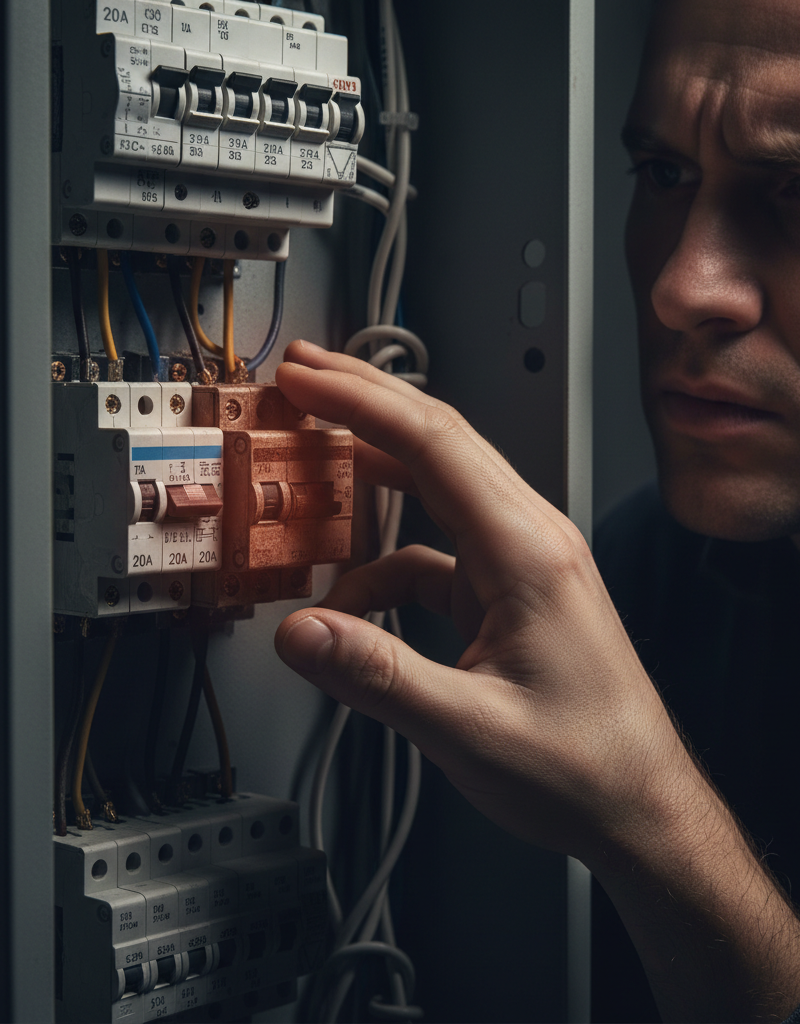
- Annual Panel Check: Once a year, open the small door to your panel and carefully sweep the back of your fingers across the breakers to check for warmth. This 10-second check can catch problems early.
- Map Your Circuits: Take a Saturday afternoon to map your electrical panel. Turn off one breaker at a time and go through the house to see exactly what turned off. Create a detailed, accurate directory. This is invaluable for troubleshooting.
- Practice Load Balancing: Consciously avoid plugging two high-draw appliances into outlets in the same room. For example, if your coffee maker is on, wait for it to finish before starting the microwave if they are on the same circuit.
- Check for Problematic Panels: If your home was built between 1950 and 1990, check if you have a Federal Pacific Electric (FPE) or Zinsco-GTE panel. These have known safety issues, including breakers that fail to trip, and should be replaced by a professional.
- Don't Treat Power Strips as New Circuits: A power strip only provides more outlets; it does not increase the electrical capacity of the circuit. Overloading a power strip can still overload the circuit breaker.
When to Call a Professional
While a homeowner can safely identify an overloaded circuit by adding up wattage, any step that involves removing the electrical panel's cover is strictly a job for a licensed electrician. The risk of electrocution is too high for a DIY approach.
You should call an electrician immediately if you observe any of the following:
- The breaker is hot to the touch, not just warm.
- The breaker continues to be warm even after you've unplugged everything from the circuit.
- You smell burning plastic, rubber, or an unusual acrid smell around the panel.
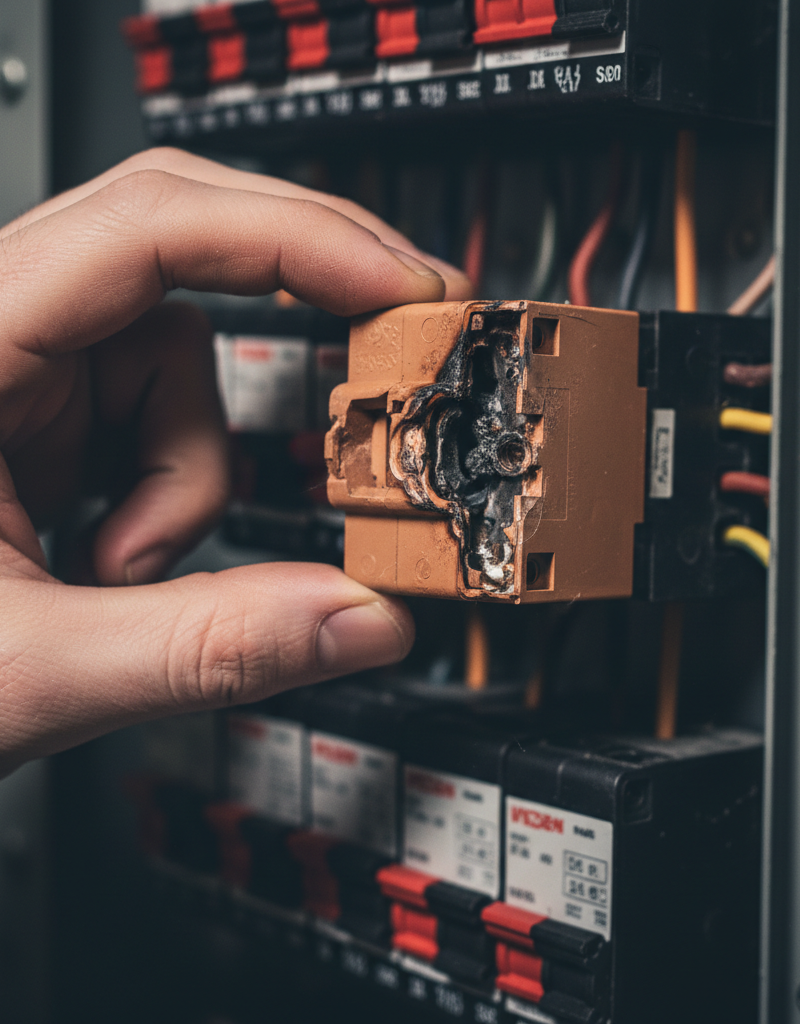
- The plastic casing of the breaker is discolored, charred, or melted.
- The breaker trips repeatedly even with a light load.
- You know you have a dangerous Zinsco or Federal Pacific panel.
A warm breaker is your electrical system’s cry for help. It’s one of the clearest indicators of a hidden danger, most often a loose connection that is generating intense heat. Paying for a professional diagnosis and repair is a small price to pay for fire safety and peace of mind.
Frequently asked questions
Is a warm circuit breaker an emergency?+
It can be. If the breaker is hot (not just warm), smells like burning plastic, or is discolored, it is an emergency and you should call an electrician immediately. If it's just warm, it's a serious issue that needs prompt investigation, but may not require a middle-of-the-night call.
Can a warm breaker cause a fire?+
Yes, absolutely. The heat itself can break down wire insulation and ignite nearby materials. A warm breaker is often caused by a loose wire, which is one of the leading causes of electrical fires.
Why would a breaker be warm with nothing turned on?+
If a breaker feels warm even when you're sure nothing is running on the circuit, it almost certainly signals a high-resistance connection either at the screw terminal or inside the breaker itself. This is a very dangerous situation that requires an electrician.
How much does it cost to fix a warm breaker?+
The cost typically ranges from $100 to $250. This usually covers the electrician's service call fee and the labor/parts to either tighten a loose connection or replace a standard faulty breaker.
Discussion
Loading comments…