Tools & materials you'll need
Affiliate links- AmazonReplacement Circuit BreakerOnly if a bad breaker is diagnosed. Must match brand, type, and amperage.
As an Amazon Associate FixlyGuide earns from qualifying purchases — at no extra cost to you. Prices and availability are accurate as of publication and subject to change.
Quick Answer
A circuit breaker that feels warm to the touch is never normal. It is a clear warning sign of a potential fire hazard. The warmth is generated by electrical resistance, which most often points to one of two problems: a loose wire connection at the breaker terminal or a circuit that is consistently overloaded. In either case, the excess heat can damage the breaker, melt wire insulation, and lead to an electrical fire. The correct immediate action is to switch the breaker to the "off" position to stop the flow of electricity and heat buildup. Then, you must diagnose the cause, which may involve safely tightening a connection or rebalancing your electrical loads.
SAFETY NOTE: DANGER OF ELECTRIC SHOCK
Working inside your home's main electrical panel is extremely dangerous and can be fatal. Even with the main breaker turned off, the large lugs where the utility service wires connect are always live and carry enough current to kill you instantly. This guide provides diagnostic steps, but if you have any hesitation or lack experience, do not open the panel. When in doubt, always call a licensed electrician.
The Problem
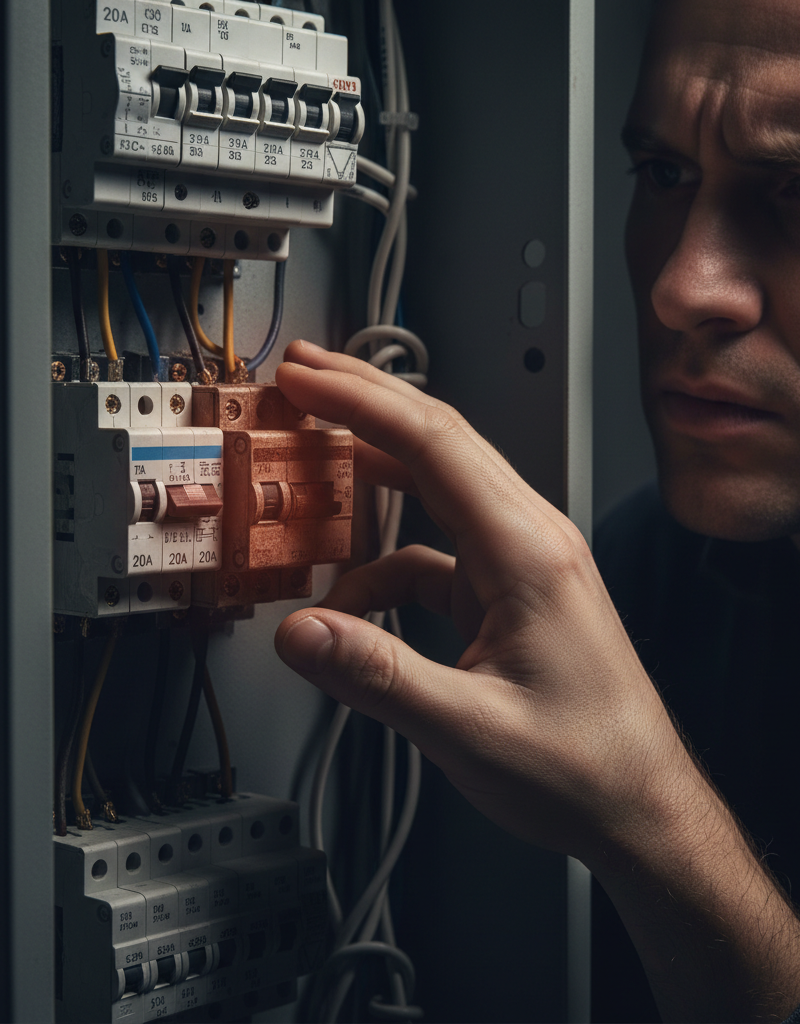
You casually brush your hand against the circuit breaker panel in your basement or garage and notice something odd: one of the breaker switches is distinctly warmer than the others. The others are cool to the touch, but this one has a noticeable, persistent warmth. It might not be hot enough to burn you, but it’s enough to make you pause.
This warmth is a symptom of a problem. Electrical energy is being converted into heat energy at a place where it shouldn't be. A circuit breaker's job is to get hot internally to trip during an overload, but the outer casing and switch should remain at ambient temperature. When the breaker body itself is warm, it signals that an abnormal amount of resistance is present either at its connection point or within the breaker itself. This is wasted electricity at best, and a serious fire hazard at worst. The heat can degrade the breaker's internal components, causing it to fail to trip when it should. Worse, the sustained heat can break down the wire's plastic insulation, exposing the conductor and creating the potential for a dangerous arc fault or short circuit inside the wall or the panel itself.
How It Works
To understand why a warm breaker is a red flag, you need to know how it functions. A standard circuit breaker is a brilliant thermal-magnetic safety device. Its purpose is to automatically interrupt—or "break"—the flow of an electrical circuit during an unsafe condition, specifically an overload or a short circuit.
-
Thermal Protection (Overloads): Inside every breaker is a small, bimetallic strip. This strip is made of two different metals bonded together that expand at different rates when heated. When a circuit is overloaded (e.g., you plug a powerful space heater into a circuit already running a TV and several lights), the current draw is higher than the breaker's rating. This excess current flows through the bimetallic strip, causing it to heat up and bend. If it bends far enough, it physically trips a latch, snapping the switch open and cutting off power. This is a relatively slow process, designed to allow for brief, harmless current spikes, like when a motor starts up.
-
Magnetic Protection (Short Circuits): The breaker also contains an electromagnet, which is a coil of wire. During a short circuit (e.g., a "hot" wire touches a "neutral" wire), there is a sudden, massive surge of current. This surge creates a powerful magnetic field in the coil, which instantly yanks a lever that trips the latch. This response is instantaneous, protecting against the extreme danger of a short.
So, why does a breaker get warm? The problem arises from abnormal resistance. According to Ohm's Law and the power formula (P = I²R), the heat (power) generated is proportional to the resistance (R) and the square of the current (I). A loose wire at the breaker's terminal screw doesn't make firm contact. This tiny gap or poor connection acts like a resistor. As the normal current for the circuit flows through this high-resistance point, it generates significant heat right at the terminal. This heat conducts directly into the body of the circuit breaker, making it feel warm. Similarly, if the spring-loaded clips that hold the breaker onto the panel's metal "bus bar" are weak, that connection also creates resistance and heat. In either case, the breaker is warming up not because of its intended safety function, but because of a faulty connection—a fire waiting to happen.
Step-by-Step Fix
This guide focuses on safely diagnosing the issue. The only DIY fix recommended is tightening a loose terminal screw, which is the most common culprit. If this does not resolve the issue or you find signs of damage, stop and call an electrician.
-
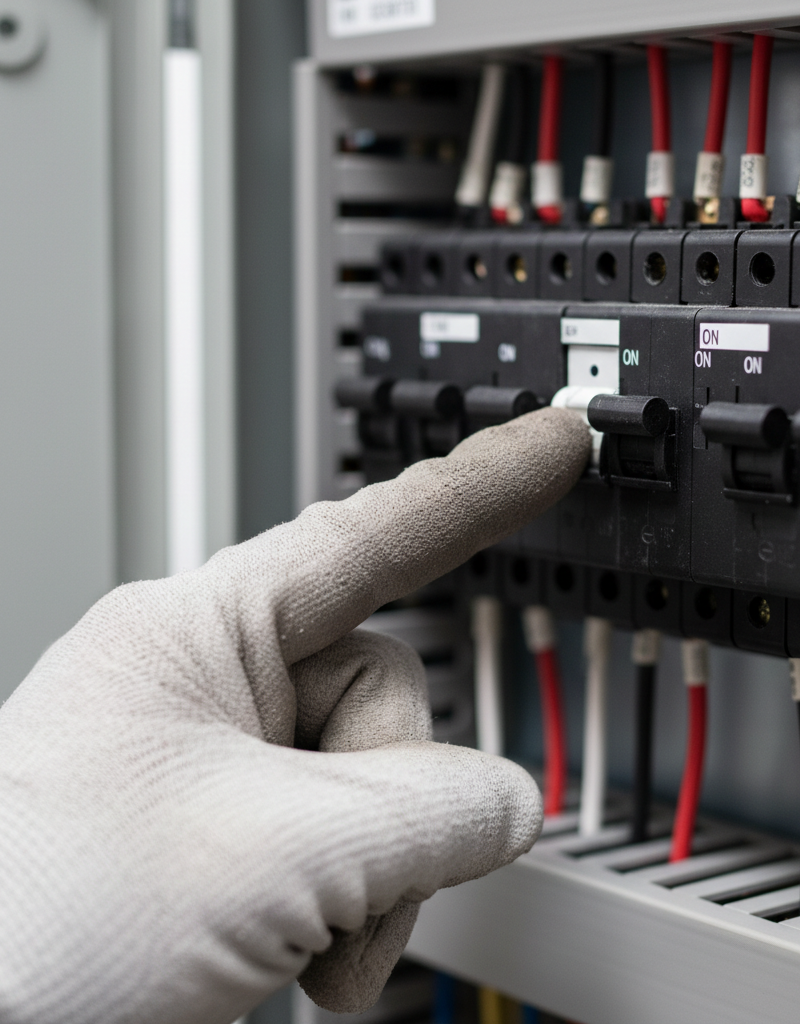
Safety First: Gear Up & Cut Main Power — This is the most critical step. Before opening the panel, turn off the main circuit breaker that controls all power to your home. This is usually the largest breaker at the top or bottom of the panel. Wear safety glasses and, for an added layer of safety, dry leather gloves. Use a voltage tester to confirm there is no power at the individual breakers before proceeding.
-
Remove the Panel Cover — The panel cover, or "dead front," is the metal plate that covers the wiring and breakers. It's typically held in place by 4 to 6 screws. Use an appropriate screwdriver to remove them. When pulling the cover away, be careful not to let it touch any of the components inside. Store the screws in a safe place.
-
Confirm the Warm Breaker — With the power off, the breaker will have started to cool. You should know which one it was from your initial check. If you're unsure, you may need to restore power briefly, identify it, and then shut off the main power again, waiting a few minutes for components to cool.
-
Visually Inspect the Connection — Look closely at the wire entering the warm breaker. Examine the screw terminal that holds the wire. Do you see any signs of discoloration on the wire's insulation? Is it brittle, cracked, or melted? Is the screw head itself discolored (bluish or brownish)? These are all signs of long-term overheating.
-
Diagnose for Overload — While the panel is open, think about what is on this circuit. Is it the kitchen, where a microwave, toaster, and coffee maker often run simultaneously? Is it a garage circuit with a freezer and power tools? A breaker that is constantly handling a load close to its maximum rating (e.g., 1800 watts on a 15-amp breaker) will run hotter and is more susceptible to connection issues.
-
Tighten the Terminal Screw — Using an insulated screwdriver, gently test the terminal screw on the suspect breaker. You may be surprised to find it's loose. Tighten it until it is snug. Do not apply excessive force, as you can strip the screw or damage the breaker housing. The ideal tool is a torque screwdriver, set to the manufacturer's specification (usually printed on the side of the breaker, e.g., 25 in-lbs).
-
Inspect the Breaker-to-Bus-Bar Connection — Gently wiggle the breaker itself. Does it feel loose on the metal bar it's clipped to? A solid connection should have very little play. If it feels loose or wobbly, the internal clips may be weak, which requires replacing the breaker.
-
Look for Other Damage — Scan the area around the breaker. Look for any black soot, evidence of arcing between components, or melted plastic on adjacent breakers. Any of these signs indicate a serious problem that requires a professional.
-
Carefully Replace the Panel Cover — Align the cover correctly and reinstall the screws. Ensure no wires are pinched between the cover and the panel box. The cover should sit flush and secure.
-
Restore Power and Monitor — First, turn on the main breaker. Then, flip the individual breaker you worked on to the "on" position. Leave the circuit under a normal load for 30-60 minutes. Carefully check the breaker again. If it remains cool, a loose wire was likely the culprit. If it still feels warm, there is another issue, and you should turn it off and call an electrician.
Common Causes
- Loose Wire Connection: By far the most common cause. Vibrations, temperature cycles (expansion/contraction), and improper initial installation can cause the terminal screw to become loose over time, creating resistance and heat.
- Sustained Overload: Even without tripping, a circuit running continuously at 90-95% of its rated capacity will cause the breaker's thermal element to heat up significantly, making the whole unit feel warm.
- Bad Circuit Breaker: The internal components of a breaker can fail. The contacts can become corroded or the bimetallic strip can lose its calibration, leading to internal resistance and heat. This is more common in older panels.
- Poor Bus Bar Connection: The spring-loaded clips on the back of the breaker that attach to the panel's bus bar can weaken over time. This poor connection creates resistance and generates heat at the rear of the breaker.
- Wire Not Sized Correctly: Though rare in modern construction, if a previous owner installed a 20-amp breaker on a circuit wired with 14-gauge wire (which is only rated for 15 amps), the wire itself can overheat, conducting that heat back to the breaker.
- High Ambient Temperature: If the electrical panel is in a very hot environment, like a poorly ventilated attic or boiler room, the ambient heat can contribute to a breaker feeling warm under a normal load.
Common Mistakes
- Ignoring the Problem: A warm breaker is a fire hazard in the making. Never assume it will fix itself.
- Not Turning Off the Main Breaker: Opening the panel cover without shutting off the main breaker is a fatal risk.
- Over-tightening the Terminal Screw: Cranking down on the screw with excessive force can strip the threads or crack the breaker casing, creating an even more dangerous situation.
- "Upgrading" to a Bigger Breaker: If a 15-amp breaker keeps tripping or getting warm, replacing it with a 20-amp breaker is a huge fire risk. The breaker is there to protect the wire; a larger breaker will allow the in-wall wiring to dangerously overheat.
- Using Hands Instead of a Tester: Never trust that a breaker is off. Always verify with a non-contact voltage tester before touching any wires.
- Focusing Only on the Breaker: The warmth is a symptom. If you tighten a wire and the breaker is still warm, the root cause might be an overloaded circuit that needs to be split or have its load reduced.
Cost & Time Breakdown
Fixing a warm breaker can be very cheap if it's a simple fix, but professional diagnosis is recommended.
| Task | DIY Cost | Pro Cost | Time Estimate |
|---|---|---|---|
| Visual Inspection & Safety Prep | $0 | $100-$150 (service call) | 20-30 minutes |
| Tightening a Loose Terminal | $0-$50 (for torque screwdriver) | Included in service call | 5 minutes |
| Replacing a Standard 15A/20A Breaker | $10-$20 (for part) | $125-$250 | 15 minutes |
| Diagnosing a Persistent Overload | $0 | $150-$400+ | 1-3 hours |
| Splitting a Circuit (Adding new breaker/wire) | N/A | $400-$800+ | 3-6 hours |
Tips & Prevention
- Annual Panel Check: Once a year, get in the habit of safely and carefully placing the back of your hand near your breakers to feel for any warmth.
- Map Your Circuit Panel: Create a detailed, accurate map of what each breaker controls. This is invaluable for troubleshooting and for balancing electrical loads. -a Balance Your Loads: Avoid plugging multiple high-draw appliances (space heaters, hair dryers, microwaves) into the same circuit. Spread them out across different circuits.
- Invest in a Torque Screwdriver: If you do any electrical work, this tool is essential for safety. It ensures every connection is tightened to the manufacturer's specification, preventing loose connections from the start.
- Professional Inspection: Every 5-10 years, it's wise to have an electrician do a full panel inspection and tune-up. They can torque all connections and spot potential issues before they become hazards.
When to Call a Professional
You should call a licensed electrician immediately if you encounter any of the following:
- The breaker is hot to the touch, not just warm.
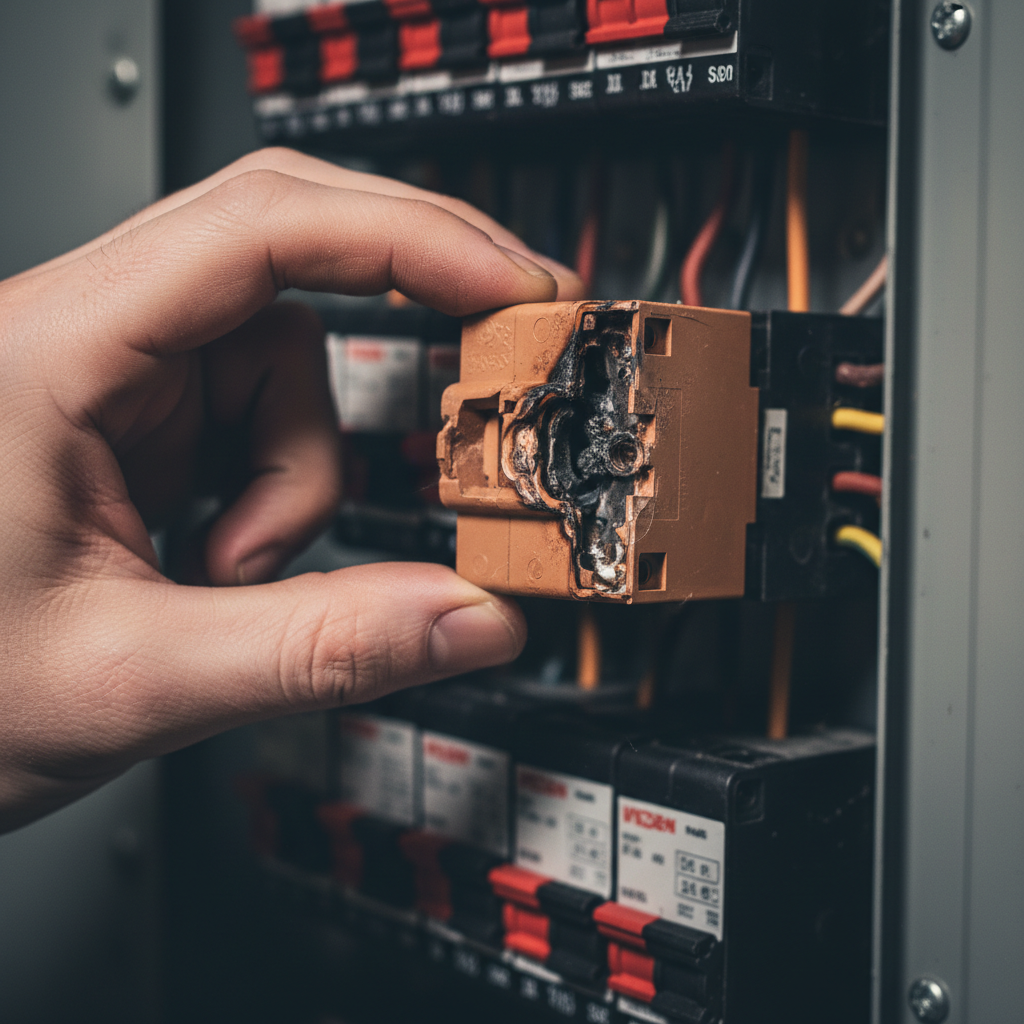
- You see any signs of melting plastic, black soot, or discoloration on the breaker or wires.
- You smell burning plastic or ozone (a sharp, acrid smell) near the panel.
- You hear a buzzing or sizzling sound coming from the breaker or panel.
- The problem persists after you have safely turned off the main power and tightened the terminal screw.
- The breaker feels loose or wobbly when you gently try to wiggle it.
- You are not 100% confident and comfortable performing the diagnostic steps safely.
An electrical panel is the heart of your home's electrical system, but it is an unforgiving environment for DIY mistakes. A professional electrician has the training, protective equipment, and diagnostic tools to safely identify and fix the root cause of the problem, ensuring your home is protected.
Frequently asked questions
Is it normal for a circuit breaker to be slightly warm?+
No, it is never normal for a circuit breaker to be warm or hot to the touch. A breaker should be at the same temperature as the surrounding air. Warmth is a sign of electrical resistance from a loose connection or overload, which is a potential fire hazard.
Can I just replace a warm breaker to fix the problem?+
Replacing the breaker might not solve the problem. If the cause is an overloaded circuit or a poor connection to the bus bar, a new breaker will also become warm. It's critical to diagnose the root cause before simply replacing parts.
How much does an electrician charge to fix a warm breaker?+
The cost can range from $125 to $400. A simple fix like tightening a loose wire during a service call will be on the lower end. If the breaker needs to be replaced or a more complex issue like a persistent overload needs to be diagnosed, the cost will be higher.
What does a buzzing sound from my breaker panel mean?+
A buzzing or sizzling sound from a breaker panel is a serious danger sign. It usually indicates that electricity is arcing—or jumping—across a gap, which creates intense heat and can start a fire almost instantly. If you hear buzzing, call an electrician immediately.
Discussion
Loading comments…