Tools & materials you'll need
Affiliate links- AmazonPropane tank1 · Standard BBQ grill size
As an Amazon Associate FixlyGuide earns from qualifying purchases — at no extra cost to you. Prices and availability are accurate as of publication and subject to change.
Quick Answer
A weed torch quickly eliminates unwanted plants by subjecting them to intense heat, causing their cellular structure to rupture without combustion. This rapid thermal shock makes weeds wilt and die, typically within 1-3 days, serving as an effective, chemical-free alternative for driveways, patios, and other hardscaped areas where weeds are prevalent.
The Problem
Unsightly weeds relentlessly sprout through cracks in driveways, between paving stones, and within gravel paths, marring the appearance of your home's hardscaping. These invasive plants not only detract from curb appeal but can also cause structural damage over time as their roots expand in crevices. Traditional weeding methods, like pulling by hand, are back-breaking and often leave root fragments behind, leading to rapid regrowth. Chemical herbicides, while effective, introduce toxins into the environment, posing risks to pets, children, and beneficial insects, and can contaminate groundwater. Many homeowners seek an efficient, environmentally conscious solution that tackles tough weeds without resorting to harsh chemicals or endless physical labor.
How It Works
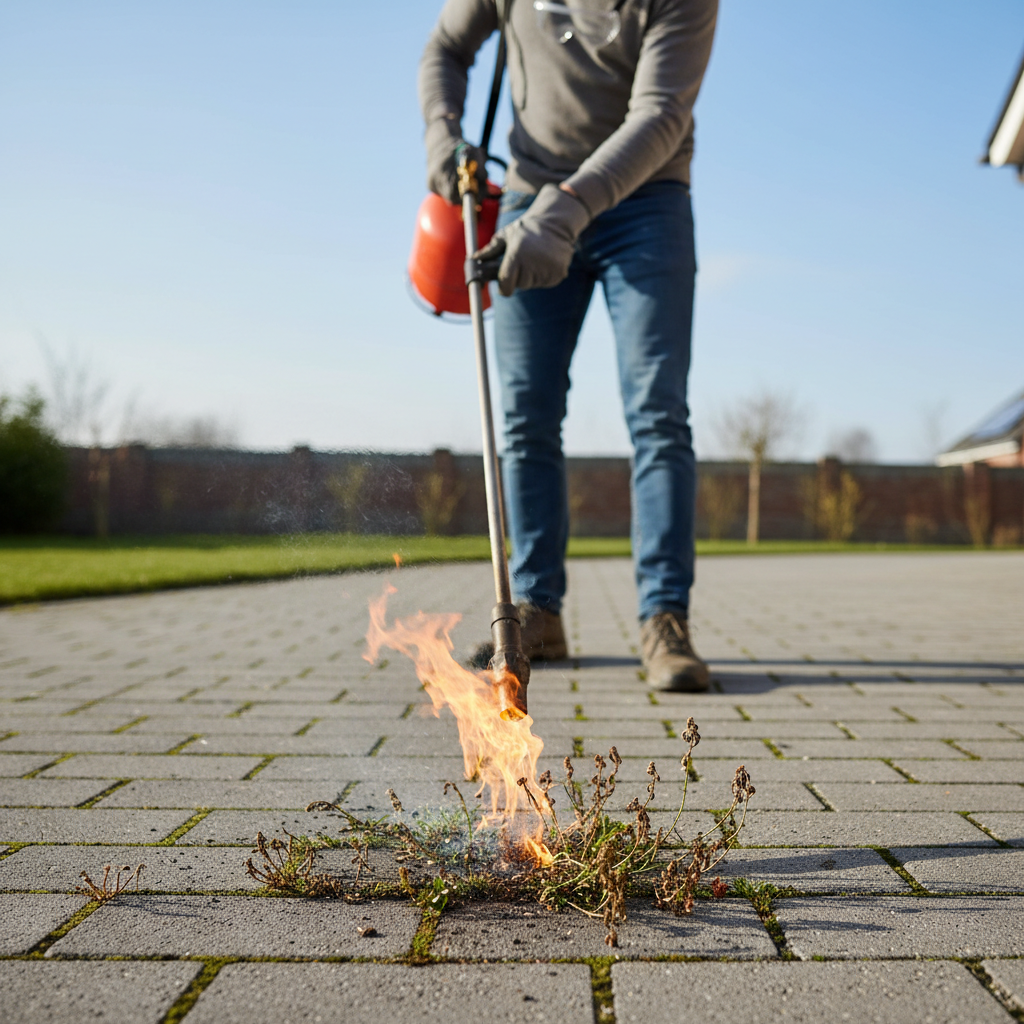
A weed torch operates on a simple yet highly effective principle: thermal shock. Unlike a flame thrower designed to incinerate, a weed torch aims to rapidly heat the water within a plant's cells to the point of expansion and rupture. The torch typically connects to a standard propane tank, similar to those used for BBQ grills, via a hose and regulator. When the torch is ignited, it produces a concentrated flame, often reaching temperatures in excess of 2,000°F (1,093°C).
To effectively kill a weed, you don't need to burn it to a crisp. Instead, a quick pass of the flame, just enough to visibly change the plant's color from vibrant green to a duller shade, or cause the leaves to droop slightly, is sufficient. This instantaneous exposure to extreme heat causes the water inside the plant cells to expand so rapidly that the cell walls burst. Without intact cell walls, the plant can no longer transport water and nutrients, effectively shutting down its biological processes. The weed will often appear unharmed immediately after treatment, but within minutes to hours, it will begin to wilt, eventually turning brown and dying over the next few days. This method is particularly effective on annual weeds and young perennial weeds. For mature perennial weeds with extensive root systems, repeat treatments might be necessary to exhaust the root reserves completely. The key advantage for hardscapes is that the heat does not disturb the soil, preventing new weed seeds from being brought to the surface to germinate, a common issue with mechanical weeding.
Step-by-Step Fix
1. Gather Your Gear — Collect all necessary tools and ensure your propane tank is full and connected securely. Double-check all hose connections for leaks before igniting. * Safety First: Always wear appropriate personal protective equipment, including work gloves, long pants, closed-toe shoes, and eye protection. Have a working garden hose or fire extinguisher nearby.
2. Survey Your Work Area — Check the weather forecast for wind conditions and ensure the area is clear of flammable materials like dry leaves, wood chips, or nearby structures. * Wind Advisory: Avoid using a weed torch on windy days, as flames can easily be blown onto unintended targets, increasing fire risk.
3. Connect and Inspect — Attach the weed torch to your propane tank. Slowly open the valve on the propane tank, listening for any hissing sounds that might indicate a leak. A soapy water solution can be sprayed on connections; bubbles indicate a leak.
4. Ignite the Torch — With the torch held away from your body and flammable objects, slowly open the gas valve on the torch handle. Use a spark lighter or striker to ignite the gas at the nozzle. Adjust the flame to a steady, blue cone with a small yellow tip. * Pro Tip: If you have trouble igniting, ensure the propane tank valve is fully open and the torch valve is open enough to allow sufficient gas flow.
5. Target the Weeds — Hold the flame directly over the weed for just 1-2 seconds. You don't need to char or incinerate the plant. Look for a slight color change, from vibrant green to duller green, or a noticeable wilting. This indicates the cell walls have ruptured. * Too Much Heat? Spending too long on one spot can damage surrounding surfaces like pavers or asphalt. A quick pass is all that's needed.
6. Move Methodically — Work in sections, systematically moving across your hardscaped area. Overlap your passes slightly to ensure complete coverage. This prevents missing small weeds that might later regrow.
7. Monitor Results — The weeds won't instantly vanish. They will typically wilt and begin to die over the next 1-3 days. Monitor the area and plan for follow-up treatments if necessary, especially for stubborn perennial weeds or new sprouts.
8. Shut Down Safely — When finished, first close the valve on the propane tank, then allow the flame on the torch to burn out completely. This purges any remaining gas from the hose. Once the flame is out, close the valve on the torch handle.
9. Store Properly — Disconnect the torch from the propane tank and store both components in a cool, dry, well-ventilated area, away from ignition sources and out of reach of children.
Common Causes
Weeds in hardscaped areas often appear due to several factors:
- Wind-Borne Seeds: Tiny weed seeds can travel long distances on the wind, landing in the smallest cracks and crevices of driveways, patios, and sidewalks.
- Existing Seed Bank: Patios and gravel areas, even when initially laid, can have dormant weed seeds in the underlying soil or brought in with aggregates. Rain and warmth trigger their germination.
- Foot Traffic and Equipment: Seeds can be transported to your hardscapes on shoes, vehicle tires, or gardening equipment from other parts of your yard or neighboring properties.
- Poor Drainage: Areas that retain moisture create an ideal environment for weed seeds to germinate and establish themselves.
- Organic Debris: Accumulations of leaves, dirt, and other organic matter in cracks provide a nutrient-rich growing medium for weeds, even on what seems like barren hardscaping.
Common Mistakes
- Holding the Flame Too Long: Many DIYers mistakenly try to burn weeds to ash. This wastes propane, can scorch pavers or asphalt, and isn't more effective than a quick pass. The goal is thermal shock, not incineration.
- Ignoring Surroundings: Failing to check for dry leaves, wooden fences, or other flammable materials nearby can lead to unintentional fires. Always clear the area first.
- Using on a Windy Day: Wind can redirect the flame, making it difficult to target weeds accurately and increasing the risk of igniting unintended objects. It also disperses heat, making the treatment less effective.
- Treating While Wet: Water on the plant surface or ground reduces the heat transfer efficiency, requiring longer exposure and more propane. For best results, treat weeds when they are dry.
- Forgetting Eye Protection: Even if you're not cutting or grinding, small embers or debris can be kicked up by the flame, posing a risk to your eyes. Always wear safety glasses.
- Not Purging the Line: Neglecting to close the tank valve first and let the torch burn out can leave propane in the hose under pressure, which is a significant safety hazard for storage.
Cost & Time Breakdown
| Task | DIY cost | Pro cost | Time |
|---|---|---|---|
| Weed torch kit (one-time) | $30–$70 | N/A | 10 min setup |
| Propane tank (refills) | $20–$30 per fill | N/A | 5 min refill |
| Protective eyewear/gloves | $10–$25 | N/A | 0 min (already owned) |
| Per application | $2–$5 | N/A | 30–60 min |
| Annual maintenance (multiple applications) | $15–$30 | N/A | 2–4 hours (total) |
Tips & Prevention
- Regular Patrols: Early intervention is key. Torch weeds when they are small and young for easier and more effective removal. Established weeds, especially perennials, may require multiple treatments.
- Improve Drainage: Addressing standing water or poor drainage in hardscaped areas can help reduce germination opportunities for many weed species.
- Fill Cracks: Seal cracks in driveways and patios with appropriate fillers to eliminate breeding grounds for weed seeds. This is a proactive step that can significantly reduce future weed growth.
- Barrier Maintenance: For gravel areas, ensure your weed barrier fabric is intact and properly installed beneath the gravel to prevent weeds from rooting from below. Replenish gravel as needed to maintain adequate depth.
- Monitor for Reseeders: Some weeds, like dandelions, aggressively reseed. Address them quickly with the torch before they go to seed to prevent future generations.
- Consider a Multi-Pronged Approach: While effective, the weed torch isn't a magic bullet for every situation. Combine it with good landscaping practices, such as proper mulch application in garden beds, for comprehensive weed control across your property.
When to Call a Professional
While a weed torch is a fantastic DIY tool, there are specific situations where professional help is warranted. If you are dealing with a property overrun by extremely dense, mature woody perennial weeds that would require excessive propane and time to treat manually, a landscaping professional might use more powerful equipment or specialized broad-spectrum organic treatments. Additionally, if the weeds are indicative of a larger issue, such as significant structural cracks in your driveway or patio that are allowing extensive vegetative growth, a structural engineer or concrete specialist should be consulted to address the underlying damage. Never attempt to use a weed torch near gas lines, utility boxes, or in areas with extremely dry, highly flammable vegetation (such as during wildfire season advisories), as the risk of fire or damage is too great for a DIY approach; in such cases, consult with a professional who can assess the risk and offer alternative, safer solutions.
This article was independently written by FixlyGuide based on the source topic.
Frequently asked questions
Is a weed torch safe for pavers and concrete?+
Yes, when used correctly by quickly passing the flame over the weed for 1-2 seconds, a weed torch is safe for most pavers and concrete. Prolonged exposure to intense heat in one spot can potentially cause discoloration or damage, so avoid lingering with the flame.
How long does it take for weeds to die after torching?+
Weeds typically begin to wilt within minutes to a few hours after torching, and they will usually appear completely dead and brown within 1 to 3 days. Stubborn perennial weeds might require follow-up treatments.
Do I need to burn the weeds to ash to kill them?+
No, you do not need to burn weeds to ash. The goal is to rapidly heat the plant cells to the point of rupture (thermal shock), which happens quickly. Just a slight color change or wilting indicates sufficient treatment.
Discussion
Loading comments…