Tools & materials you'll need
Affiliate links- AmazonDigital HygrometerEssential for measuring your home's relative humidity.
- AmazonPortable HumidifierA good starting point for adding moisture to a specific room or area.
- AmazonWhole-House HumidifierThe best long-term solution for maintaining stable humidity throughout your home.
- AmazonVacuum with Crevice ToolFor safely cleaning out debris from the gaps.
- AmazonSoft ClothsFor general cleaning and wiping down surfaces.
As an Amazon Associate FixlyGuide earns from qualifying purchases — at no extra cost to you. Prices and availability are accurate as of publication and subject to change.
Quick Answer
Gaps in your wood floor during winter are typically caused by low indoor humidity. Your home's heating system dries out the air, causing the wood planks to lose moisture and shrink. For most homes, this is a normal seasonal cycle, and the wood floor gaps will close as humidity rises in the spring and summer.
The Problem
You notice it first in January. A small, dark line between two planks of your beautiful hardwood floor that wasn’t there in the fall. Soon, there are more. These unsightly wood floor gaps can appear all over a room, making your once-seamless floor look striped and disjointed. You might worry that your house is settling, that the floor was installed incorrectly, or that you have a serious structural problem. The gaps can trap dirt, crumbs, and pet hair, making them difficult to clean. You might even feel a slight draft coming up from the crawlspace or basement below. For any homeowner who has invested thousands in hardwood flooring, seeing these gaps appear is a distressing sight that raises immediate questions about the floor's health and longevity. Is this a permanent problem? Will the gaps keep getting wider? Ignoring them feels wrong, but fixing them seems like a massive, expensive undertaking.
How It Works
To understand why wood floor gaps appear in winter, you have to think of your hardwood floor as a living, breathing object. Wood is a hygroscopic material, which means it naturally absorbs and releases moisture from the air to stay in balance with its surroundings. It acts much like a dense sponge. When the air is humid, the wood fibers absorb water vapor and swell. When the air is dry, the wood releases its internal moisture and shrinks. This process is the root cause of seasonal gapping.
During the humid summer months, your wood floors absorb moisture and swell to their largest size. The planks are tight against each other, creating a seamless surface. Then, winter arrives. You turn on your furnace, boiler, or space heaters to stay warm. This heating process super-dries the indoor air. The relative humidity (RH) in a heated home can easily plummet from a comfortable 45-55% to as low as 20%—drier than the Sahara Desert. Faced with this arid environment, your wood floors begin to release their stored moisture to try to find equilibrium. As the planks lose water, they shrink in width. This shrinkage pulls the planks apart from each other, revealing the gaps you see. A single 5-inch-wide plank can shrink by as much as 1/16th of an inch, which, when multiplied across an entire room, creates very noticeable gaps. The wider the plank, the more it will shrink and the more pronounced the gap will be. This is a completely normal, physical process and, in most cases, not a sign of a defective floor.
Step-by-Step Fix
Managing seasonal wood floor gaps isn't about a one-time "fix" but rather about controlling your home's environment. The goal is to stabilize the humidity and allow the wood to return to its ideal state naturally.
-
First, Don't Panic – Before you do anything, understand that seasonal gaps are normal. Rushing to fill them with a hard substance like wood putty is the single biggest mistake you can make, as the filler will crack and be squeezed out when the wood expands again in the summer.
-
Get a Digital Hygrometer – You can't manage what you can't measure. Purchase an inexpensive digital hygrometer (or several) and place it in the room with the gapping floor, away from direct sunlight or heat sources. This $15 tool is your most important asset. It will tell you the real-time relative humidity in your home.
-
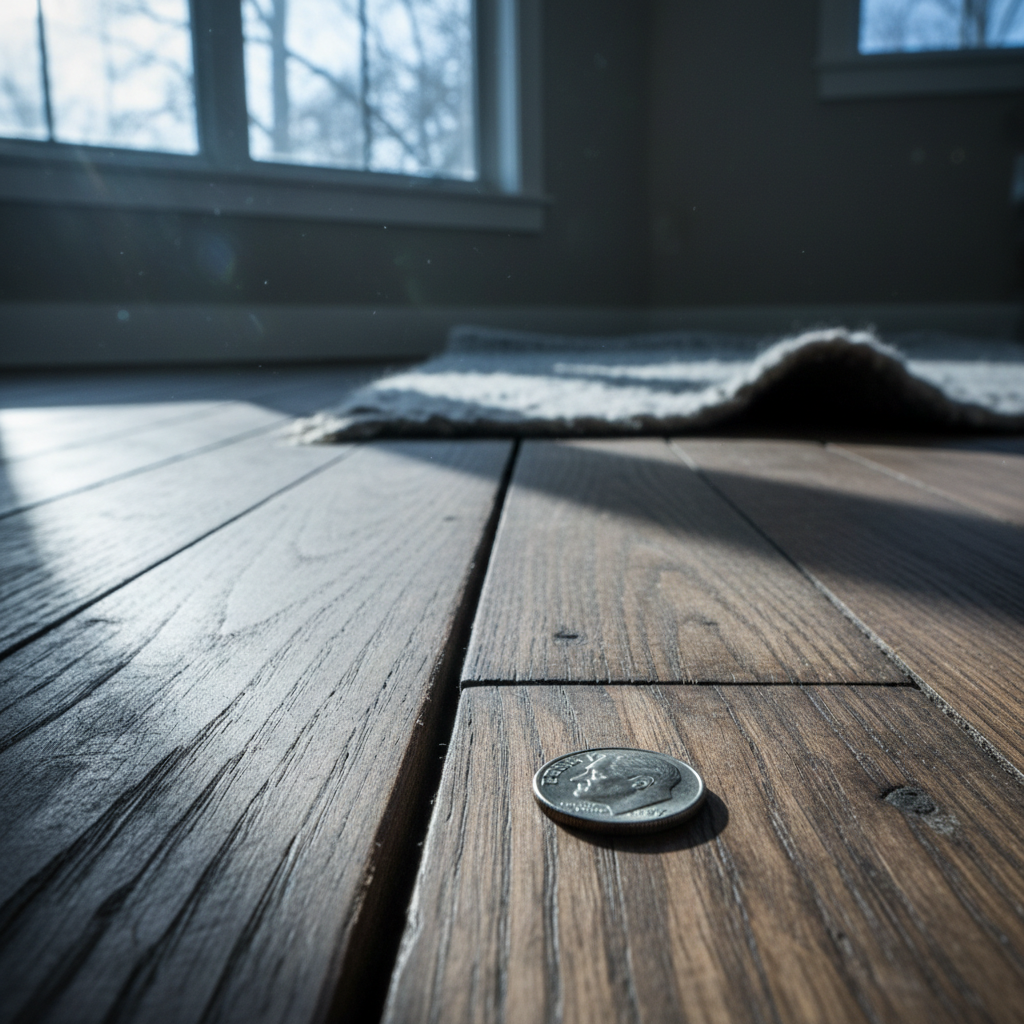
Assess the Gaps and Your Climate – Look at the gaps. Are they consistent across the floor? Are they roughly the thickness of a dime or credit card? This is typical for seasonal shrinkage. Note the reading on your hygrometer. If it’s below 35% RH, you’ve found your culprit: dry air.
-
Introduce Humidity – The solution to dry air is a humidifier. Start with a console or portable humidifier for the primary living space. These units can add gallons of water into the air over 24 hours. Set the target humidity on the unit to around 40-45%. This is the sweet spot for both your health and your wood floors.
-
Monitor and Be Patient – Don't expect the gaps to close overnight. It can take a week or more for the wood to slowly re-absorb moisture and swell back to its average size. Keep an eye on your hygrometer and refill the humidifier as needed. You should see a gradual, steady reduction in the gap size.
-
Consider a Whole-House Humidifier – If you live in a region with cold, dry winters, a whole-house humidifier is the best long-term solution. This unit integrates directly with your furnace and automatically maintains a set humidity level throughout your entire home. It’s a set-it-and-forget-it solution that protects not just your floors, but also wood furniture, cabinetry, and your own respiratory health.
-
Clean the Gaps Carefully – While the gaps are present, they will collect debris. Use a vacuum cleaner with a narrow crevice tool to gently remove any dirt or dust. Do not use water or wet mops, as moisture can get trapped and cause damage.
-
Re-evaluate in the Summer – The true test is what happens when the seasons change. As the weather warms up and you turn off your heat, the indoor humidity will naturally rise. Your wood floor gaps should disappear or become barely noticeable. If they do, your problem is purely seasonal.
-
Address Persistent Gaps – If significant gaps remain during the humid summer months, it may indicate a different problem, such as improper acclimation of the wood before installation or a more serious issue. At this point, it’s wise to consult a certified wood flooring inspector.
Common Causes
While low winter humidity is the primary driver, other factors can cause or exacerbate wood floor gaps.
- Low Indoor Humidity: The number one cause. Winter heating systems dry the air, pulling moisture from wood floors and causing them to shrink.
- Improper Acclimation: Before installation, wood flooring must sit in the home for several days (or weeks) to acclimate to the home's unique temperature and humidity. If wood acclimated in a humid summer is installed immediately, it will shrink dramatically in its first winter, creating large gaps.
- Type of Wood and Cut: Some wood species are more dimensionally stable than others. For example, American Cherry and Maple tend to shrink more than American Oak or Brazilian Walnut. Quartersawn planks are also more stable and less prone to gapping than more common plainsawn planks.
- Plank Width: Wider planks show more dramatic gaps. A 1/32-inch shrinkage in a 2-inch plank is barely noticeable, but the same percentage of shrinkage in a 7-inch plank results in a much larger, more obvious gap.
- Proximity to Heat Sources: Floors directly over uninsulated HVAC ducts, near heat vents, or next to radiators will dry out faster and shrink more than the rest of the floor, causing localized gapping.
- New Construction: Newly built homes contain a lot of moisture in their construction materials (concrete, drywall mud, paint). As the home dries out over its first year, the humidity level can drop significantly, causing wood floors to shrink.
Common Mistakes
Homeowners trying to address wood floor gaps often make these critical errors.
- Filling Gaps with Hard Putty: This is the most common and damaging mistake. Applying a non-flexible wood filler or putty into a seasonal gap in winter is a recipe for disaster. When the wood expands in summer, it will either crush the putty, squeeze it out, or damage the edges of the planks, creating a bigger problem than the original gap.
- Ignoring the Problem: While seasonal gapping is normal, extremely low humidity (below 25%) is not. Letting your home’s air stay that dry for months on end can cause permanent damage, like splits and cracks in the wood grain itself, which will not resolve when humidity returns.
- Using Too Much Water to Clean: Attempting to "rehydrate" the floor by wet-mopping or using excessive water is ineffective and dangerous. This can lead to surface damage, staining, and cupping of the planks.
- Sanding and Refinishing in Winter: A floor with winter gaps is not stable. If you sand and refinish a shrunken floor, the gaps will be sealed. When the floor expands in the summer, the tremendous pressure can cause planks to cup, crack, or buckle.
- Assuming All Gaps are Benign: While most winter gaps are seasonal, they can sometimes be a symptom of a bigger issue like foundation settlement or a crawlspace moisture problem causing the subfloor to move. If you see corresponding cracks in drywall, you should investigate further.
Cost & Time Breakdown
Here’s a look at the typical costs and time involved in managing wood floor gaps.
| Task | DIY Cost | Pro Cost | Time Investment |
|---|---|---|---|
| Humidity Monitoring | $15 - $30 for a hygrometer | N/A | Immediate & Ongoing |
| Portable Humidification | $50 - $200 per unit | N/A | Ongoing refills (daily) |
| Whole-House Humidifier | $200 - $400 (DIY install kit) | $600 - $2,500+ (installed) | 4-8 hours (DIY) / 1 day (Pro) |
| Professional Assessment | N/A | $100 - $250 for a flooring inspector | 1-2 hours |
| Professional Gap Filling | $10 - $20 (Not recommended for seasonal) | $200 - $500+ (for stable floors) | 2-4 hours |
| Full Floor Refinishing | $1.50 - $4.00 / sq ft | $4.00 - $8.00 / sq ft | 3-5 days |
Tips & Prevention
The best way to deal with wood floor gaps is to prevent them from becoming extreme.
- Maintain Stable Humidity: The single most effective strategy. Keep your home’s relative humidity between 35% and 50% all year long. Use a humidifier in the winter and a dehumidifier or air conditioning in the summer.
- Choose Flooring Wisely: If you are installing new floors in a climate with dramatic seasonal shifts, consider more dimensionally stable wood species or high-quality engineered hardwood, which is less susceptible to changes in humidity.
- Insist on Proper Acclimation: For new installations, make absolutely certain your contractor acclimates the flooring inside your home for at least 7-10 days before installation so it can reach its equilibrium moisture content.
- Manage Airflow: In winter, partially closing floor vents can reduce the amount of super-dry, hot air blasting directly onto your flooring, though be careful not to completely block airflow.
- Use Area Rugs: Large area rugs can act as a buffer, slowing the rate of moisture loss from the floors beneath them during the winter months.
When to Call a Professional
While managing humidity is a DIY-friendly task, there are clear signs that you need to contact a professional from the National Wood Flooring Association or a certified inspector.
Call a pro if you observe any of the following: the wood floor gaps are exceptionally large—significantly wider than a quarter—and do not shrink in the summer. This could signal an installation or acclimation failure. Another red flag is if the planks themselves are no longer flat. This includes "cupping," where the edges of a plank are higher than its center, or "crowning," where the center is bowed upward. These distortions, along with buckling (where the floor lifts dramatically off the subfloor), indicate a serious moisture imbalance or installation issue that a humidifier cannot fix. If gaps appear alongside other structural warning signs like sticking doors or new cracks in your drywall, it’s worth consulting both a flooring expert and a structural engineer. Finally, if you have persistent gaps in a stable season and want them filled permanently before a full refinishing, a flooring professional can do this properly by adding new strips of wood or using specialized flexible fillers that a DIYer can't typically access.
Frequently asked questions
How big of a gap is normal in wood floors?+
Seasonal gaps up to the thickness of a dime or credit card are common and usually not a cause for concern. Gaps that are wider, or those that don't close up in the humid summer months, may indicate a more significant problem with installation or acclimation.
Will the gaps in my wood floor go away?+
If your gaps are caused by normal seasonal shrinkage from winter dryness, then yes, they should shrink or disappear completely as the relative humidity naturally rises in the spring and summer. This is the key indicator of seasonal vs. problematic gapping.
Is it a good idea to fill gaps in hardwood floors?+
You should almost never use hard-setting fillers like wood putty on seasonal gaps. As the wood expands in the summer, the filler will be compressed, cracking and potentially damaging the edges of your floorboards. The correct approach is to manage humidity. For gaps that persist on a stable floor, a professional can use appropriate methods.
Can I prevent wood floor gaps from happening every year?+
Yes, you can prevent or significantly minimize wood floor gaps by maintaining a stable indoor environment. The most effective way to do this is to keep the relative humidity between 35% and 50% year-round, which typically requires using a whole-house or portable humidifier during the dry winter heating season.
Discussion
Loading comments…