Tools & materials you'll need
Affiliate linksAs an Amazon Associate FixlyGuide earns from qualifying purchases — at no extra cost to you. Prices and availability are accurate as of publication and subject to change.
Quick Answer
When your dishwasher leaves dishes dirty, the most frequent culprit is a blockage in the spray arms or the filter system. Stubborn food particles, mineral deposits, or even broken glass can impede water flow, preventing proper washing. A quick, hands-on cleaning of these components can often solve the problem without needing a professional.
The Problem
You load your dishwasher, run a cycle, and when you open the door, your plates are still caked with food, glassware is cloudy, and cutlery retains stubbornly stuck-on grime. This frustrating issue doesn't necessarily mean your expensive appliance is broken beyond repair. More often than not, the problem lies in a simple obstruction or a lack of proper maintenance that prevents the dishwasher from doing its job – forcefully spraying hot, soapy water onto every surface.
How It Works
A dishwasher operates by circulating hot water mixed with detergent through a series of spray arms, which are essentially revolving nozzles. These arms rely on water pressure to spin and project powerful jets of water onto your dishes. The water then drains through a filter system at the bottom of the tub, which catches food debris and prevents it from recirculating and redepositing on your dishes or clogging the drain pump. Both the lower and upper spray arms receive water from a pump located beneath the dishwasher tub. The pump rapidly forces water up through a manifold, pressurizing it to create the spray. If the holes in the spray arms become blocked, the water pressure weakens or is misdirected. Similarly, if the filter system is clogged, the water either doesn't drain effectively, leading to dirty water pooling, or the pump struggles to draw clean water, reducing the overall cleaning power. Many dishwashers also have a food chopper or grinder that reduces larger food particles before they reach the main filter, but even these can become overwhelmed or jammed over time. Proper water temperature (ideally 120-150°F or 49-66°C) and sufficient water pressure from your home's supply are also critical for the detergent to activate and for the spray arms to function optimally.
Step-by-Step Fix
Safety First – Always unplug your dishwasher or turn off its circuit breaker at the main electrical panel before performing any maintenance. This prevents accidental startup and electrical hazards.
1. Clear the Dishwasher – Empty all dishes and cutlery from both racks.
- Visually inspect the bottom of the tub for any large food particles or foreign objects that might be immediately obvious.
2. Remove the Lower Spray Arm – Access the main cleaning component.
- Locate: The lower spray arm is typically found in the center of the bottom rack area.
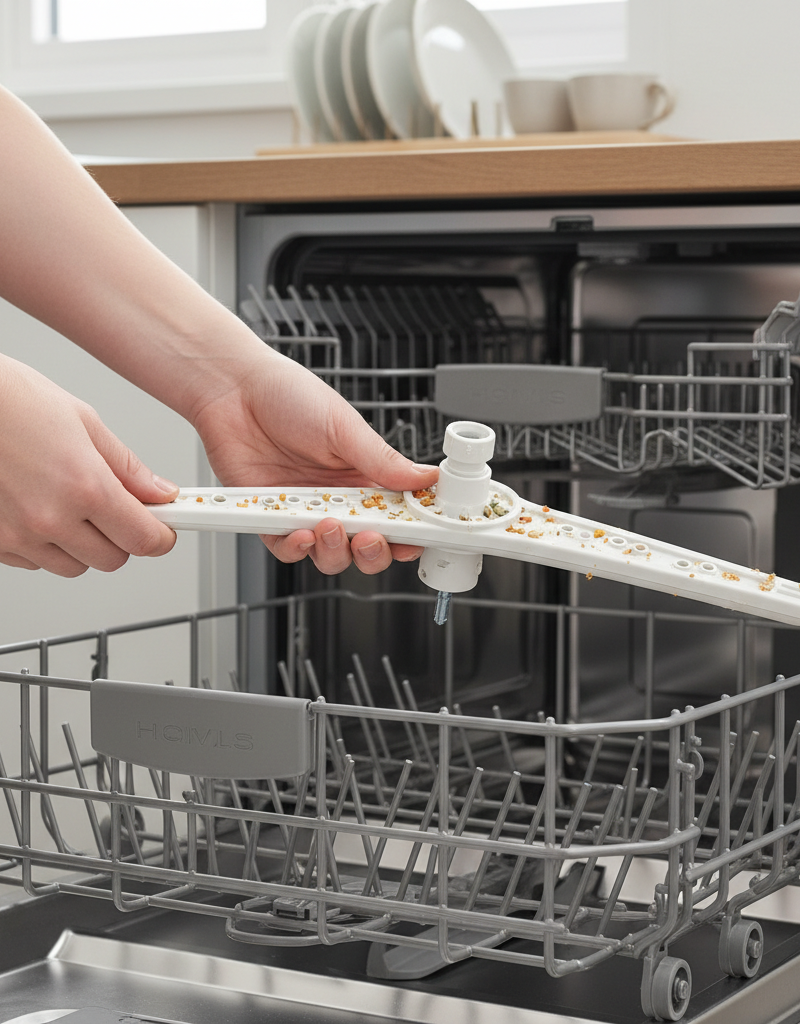
- Detach: It usually unscrews or lifts straight up from a central hub. Turn it counter-clockwise if it's threaded, or gently pull up if it's held by tension. If it feels stuck, consult your dishwasher's manual for specific removal instructions.
3. Inspect and Clean the Lower Spray Arm – Clear any blockages.
- Examine: Hold the spray arm up to a light source. Look for clogged holes – small bits of food, labels, or mineral deposits.
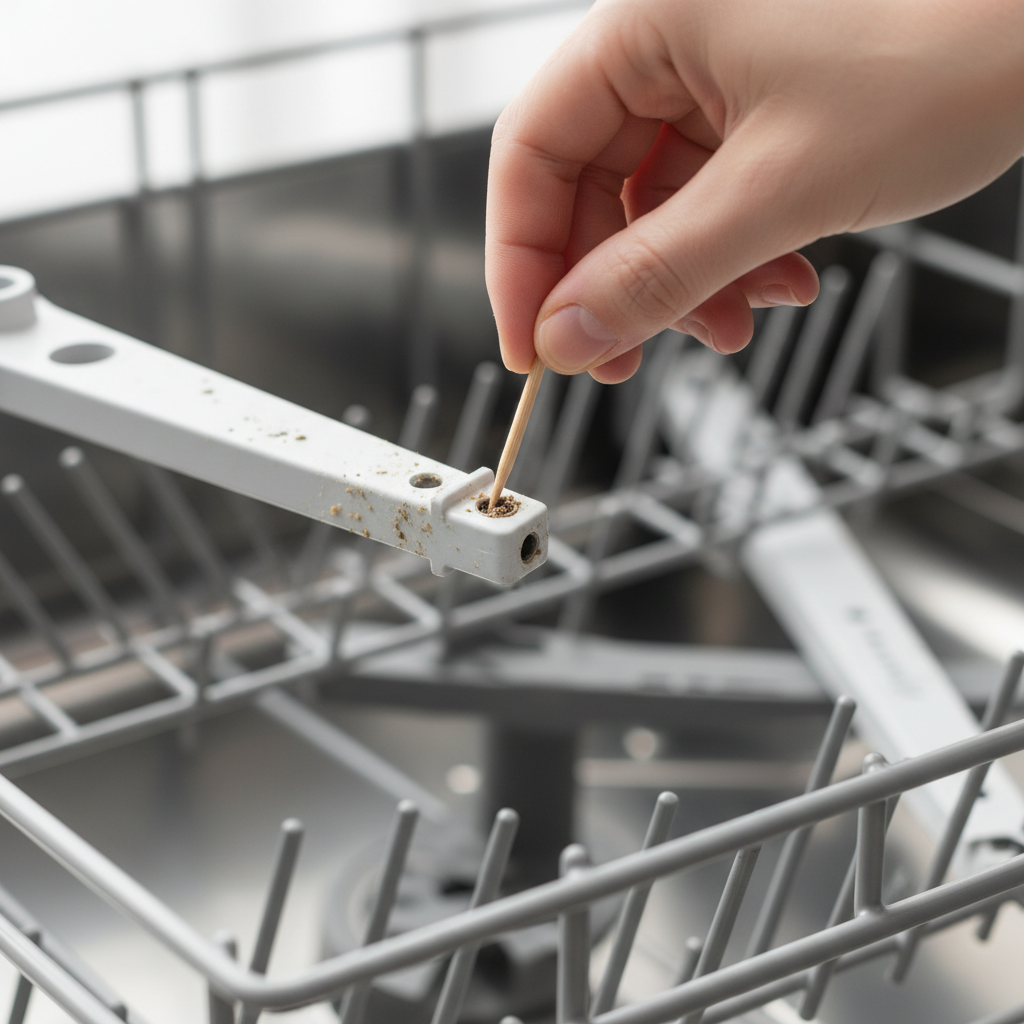
- Clear: Use a toothpick, a straightened paperclip, or a thin piece of wire to poke through each hole. Rinse the arm under a sink faucet to flush out loosened debris. Ensure water sprays freely from all holes.
4. Remove and Clean the Upper Spray Arm (if applicable) – Don't forget the top.
- Locate: The upper spray arm is often attached to the underside of the upper rack or to a water supply tube extending from the back of the tub.
- Detach: It might unscrew, clip on, or have a retaining nut. Again, consult your manual if unsure.
- Clean: Repeat the inspection and clearing process as with the lower spray arm.
5. Clean the Dishwasher Filter System – A crucial step for proper drainage.
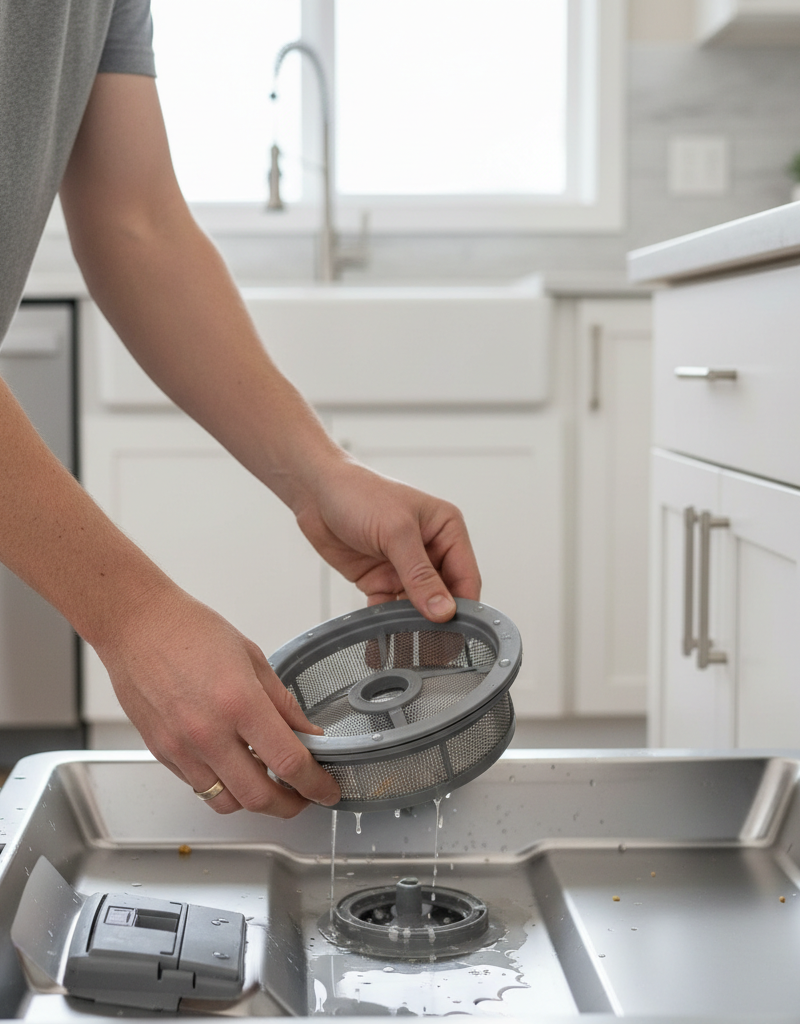
- Locate: The filter assembly is usually at the bottom of the dishwasher tub, often under the lower spray arm. It might be a cylindrical screen or a flat mesh screen.
- Remove: Twist or lift the filter components out. There might be multiple layers (a coarse filter, a fine filter, and sometimes a screen).
- Clean: Rinse all filter parts thoroughly under hot, running water. Use an old toothbrush or a stiff-bristled brush to scrub away caked-on food, grease, and mineral deposits. For stubborn grime, soak the filters in a mixture of hot water and white vinegar for 15-30 minutes before scrubbing.
- Reinstall: Ensure all filter components are properly seated and secured to prevent food from bypassing the filter.
6. Inspect the Detergent Dispenser – Ensure soap is releasing properly.
- Check for Residue: Open the dispenser after a cycle. Is there undissolved detergent? This could indicate low water temperature or a faulty dispenser.
- Clean: Use a damp cloth to wipe away any old, hardened detergent that might be preventing the door from opening fully or trapping new detergent.
7. Check Water Temperature and Pressure – Essential for cleaning power.
- Temperature: Run your kitchen sink hot water for a minute. Fill a cup and measure the temperature with a thermometer. It should be at least 120°F (49°C). If it's too low, adjust your water heater thermostat or run sink water before starting the dishwasher.
- Pressure: The dishwasher needs adequate water pressure. If other faucets in your home also have low pressure, you might have a different plumbing issue that requires a professional.
8. Run a Cleaning Cycle – Test your work.
- Restore Power: Plug the dishwasher back in or flip the circuit breaker on.
- Detergent: Add a dishwasher cleaning tablet or a cup of white vinegar to an empty dishwasher.
- Cycle: Run a hot, empty cycle to flush out any remaining debris and descale the interior.
Common Causes
- Clogged Spray Arm Jets: Food particles (especially rice, small seeds, or labels) block the tiny holes, preventing water from reaching dishes effectively.
- Dirty Dishwasher Filter: Accumulated food debris, grease, and mineral deposits prevent proper drainage and lead to recirculation of dirty water.
- Improper Detergent Use: Using too little detergent, using the wrong type of detergent (e.g., dish soap), or using old, clumpy detergent can hinder cleaning.
- Incorrect Loading: Overloading the dishwasher or blocking the spray arms with tall items prevents water from reaching all surfaces.
- Low Water Temperature: Water that isn't hot enough (below 120°F / 49°C) doesn't activate the detergent properly and struggles to dissolve grease and food.
- Hard Water Buildup: Mineral deposits (limescale) from hard water can clog spray arm jets and coat the inside of the dishwasher, reducing efficiency.
- Faulty Wash Pump: While less common for intermittent problems, a failing wash pump won't circulate water with enough force.
Common Mistakes
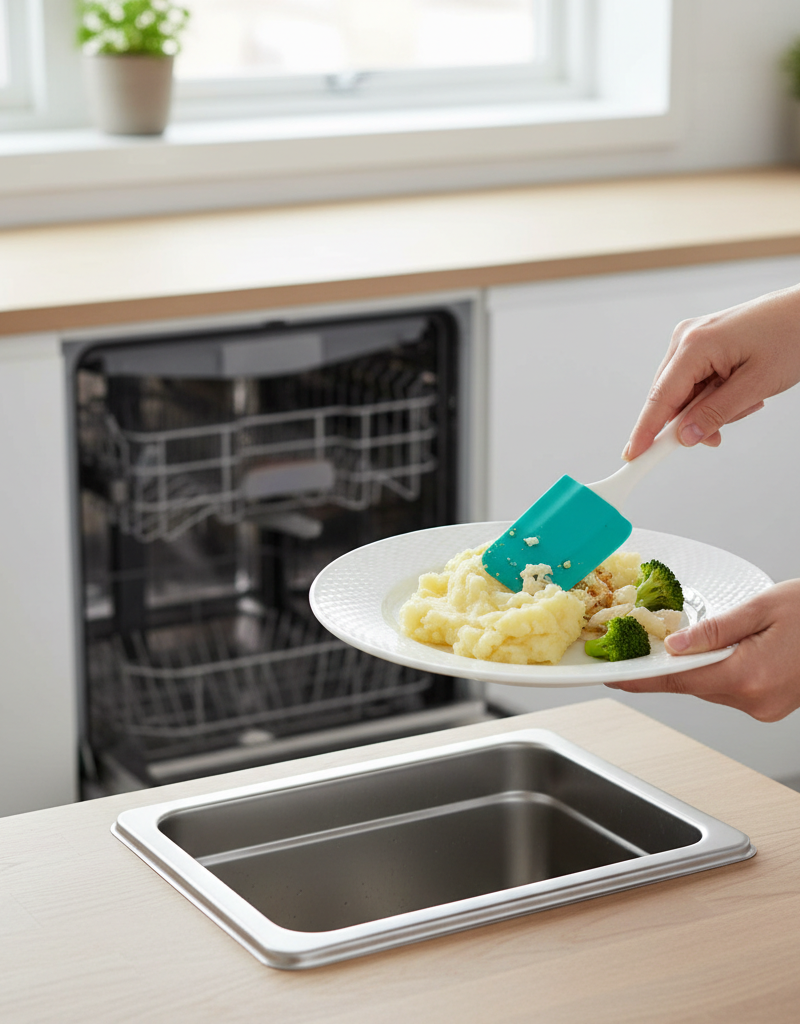
- Pre-Rinsing Too Much: Modern detergents need some food particles to
Frequently asked questions
Why are my dishes still dirty after running the dishwasher?+
The most common reason for dirty dishes after a dishwasher cycle is clogged spray arms or a dirty filter. Food particles accumulate, blocking water jets or preventing proper drainage. Regularly cleaning these components usually solves the problem.
How do I clean my dishwasher's spray arms?+
Remove the spray arms (they usually unscrew or pull off) and hold them up to a light. Use a toothpick or straightened paperclip to clear any clogged holes. Rinse thoroughly under running water to flush out debris.
How often should I clean my dishwasher filter?+
It's recommended to clean your dishwasher filter every one to three months, or more frequently if you notice food debris build-up or poor cleaning performance. A quick rinse with hot water and a brush is usually sufficient.
Discussion
Loading comments…