Tools & materials you'll need
Affiliate linksAs an Amazon Associate FixlyGuide earns from qualifying purchases — at no extra cost to you. Prices and availability are accurate as of publication and subject to change.
Quick Answer
Ignoring key aspects of fall yard cleanup does more than just make your yard look messy; it can actively create prime overwintering sites for rodents, insects, and other pests seeking shelter from the cold. Addressing common mistakes like neglecting leaf removal, failing to prune correctly, or leaving debris near your foundation can drastically reduce the likelihood of pests invading your home or garden over winter.
The Problem
As autumn leaves fall and temperatures drop, many homeowners focus on aesthetic tidiness. However, a truly effective fall cleanup is about prevention—specifically, preventing pests from taking root in your yard and finding their way into your home. Decaying organic matter, unkempt shrubbery, and clogged drainage systems aren't just eyesores; they're five-star hotels for mice, rats, voles, spiders, carpenter ants, and a host of other unwelcome guests. These pests seek warmth, shelter, and food sources, and a poorly maintained yard offers all three in abundance. The consequences range from damaged plants and contaminated stored items to chewed electrical wires and structural damage, often only discovered when the spring thaw arrives.
How It Works
Understanding how pests exploit your yard during winter is key to preventing infestations. Many insects, like box elder bugs and stink bugs, don't die with the first frost; they seek sheltered nooks and crannies to overwinter. Leaf piles, thick mulch beds, and overgrown shrubs offer insulation and protection from predators. Rodents, on the other hand, are looking for stable, accessible shelter and a food supply. A woodpile stacked against the house, an unsealed shed, or even debris near your foundation presents an easy entry point. Gutters filled with leaves and debris create standing water, an ideal breeding ground for mosquitoes (whose eggs can survive winter) and a water source for other pests. Overhanging branches offer low bridges for squirrels and raccoons to access your roof and attic. When a yard isn't properly cleared, it effectively lays out a welcome mat for these creatures, allowing them to establish populations that can quickly move from the yard into your home as winter intensifies. Their presence not only causes damage but can also introduce allergens and pathogens.
Step-by-Step Fix
1. Clear All Leaf Debris — Eliminate primary pest shelters.
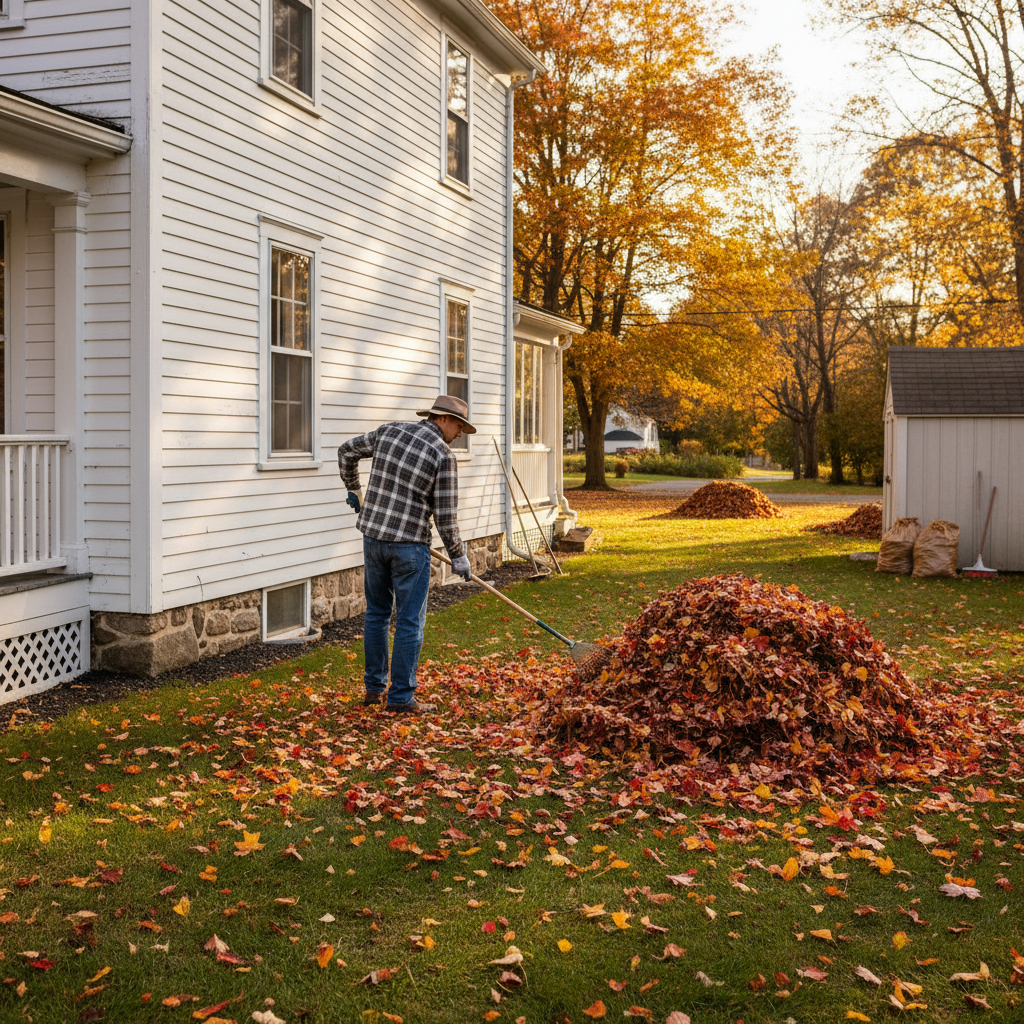
Thoroughly rake or blow all leaves from your lawn, garden beds, and especially away from your home's foundation. Piles of wet leaves are perfect overwintering spots for slugs, snails, spiders, and even rodent nests. Don't bag them and leave them close to the house; remove them from the property or compost them far away.
- Safety Note: Wear gloves to protect against unseen hazards like sharp sticks or animal droppings. Consider a leaf blower with a vacuum function for efficiency.
- If this doesn't work: If you still find pest activity after clearing, check for compacted leaf litter under dense shrubs or in hard-to-reach corners. You may need to use a hand rake for these tighter spots.
2. Prune Overgrown Shrubs and Trees — Remove pathways to your home.
Trim branches that touch your house, roof, or power lines. Overhanging limbs act as bridges for squirrels, rats, and even raccoons to access your attic or eaves. Also, thin out dense shrubs near the foundation to improve air circulation and reduce hiding spots for rodents and insects.
- Tools: Use sharp pruning shears for small branches and loppers for thicker ones. For high branches, consider a pole saw or call a professional.
- Rule of Thumb: Aim for at least 12–18 inches of clear space between your house and any vegetation.
3. Clean and Repair Gutters and Downspouts — Prevent water build-up and nesting sites.
Remove all leaves, twigs, and sediment from your gutters. Clogged gutters not only cause water damage to your home's foundation but also provide moist, sheltered environments ideal for insects (like carpenter ants) and even small rodents. Ensure downspouts direct water at least 5 feet away from the foundation.
- Safety Note: Use a stable ladder and have a spotter. Never overreach. Wear gloves to handle potentially sharp debris.
- Check for damage: While cleaning, inspect gutters for cracks, loose hangers, or gaps that could allow pests access.
4. Seal Entry Points Around Your Home — Block direct access for pests.
Inspect your home's exterior for cracks in the foundation, gaps around utility pipes, vents, windows, and doors. Seal small openings with silicone caulk. For larger holes (greater than 1/4 inch), use steel wool or copper mesh packed tightly, then seal over with caulk or expanding foam. Pay close attention to areas where pipes or wires enter the house.
- Materials: Keep a variety of sealants on hand, including exterior-grade caulk, steel wool, and possibly expanding foam for larger voids.
- Common Culprits: Check weep holes in brick veneer, attic vents, and dryer vents – consider fine mesh screens for these.
5. Store Firewood and Debris Properly — Eliminate harborage close to home.
If you store firewood, stack it at least 20 feet away from your house and off the ground (e.g., on a rack). Firewood piles are notorious havens for spiders, centipedes, and rodents. Similarly, move any other debris like old lumber, tires, or garden pots away from the immediate perimeter of your home.
- Tip: Elevate woodpiles on concrete blocks or a dedicated firewood rack to reduce moisture and make it less appealing to pests.
Common Causes
- Negligent Leaf Removal: Leaving extensive leaf litter provides insulation and cover for a wide array of insects and small mammals, creating ideal overwintering habitats. This is arguably the most common and impactful mistake.
- Overgrown Landscaping: Shrubs and bushes that touch the house create direct bridges for pests to access your siding, roof, and eventually, your interior. Dense plantings also offer sheltered areas for rodents to nest undisturbed.
- Clogged Gutters and Drainage Issues: Standing water and decaying organic matter in gutters are magnets for mosquitoes and provide essential moisture and shelter for other insects and even small animals seeking water.
- Unsealed Entry Points: Even small cracks in the foundation, gaps around utility lines, or loosely screened vents act as clear invitations and easy access points for rodents and insects trying to escape cold weather.
- Improper Storage of Materials: Firewood, lumber, garden tools, and other stored items stacked directly against the house or on the ground create perfect, undisturbed nesting and hiding spots for a variety of pests.
Common Mistakes
- Mistake #1: Only Raking the Lawn – Many homeowners only rake the open lawn, leaving leaves in garden beds or under shrubs. Instead: Systematically clear all areas, including under and around dense plantings, and rake back mulch from the foundation for a few inches.
- Mistake #2: Stacking Firewood Against the House – This provides a direct, insulated pathway for pests to your home's warmth. Instead: Stack firewood at least 20 feet away from your home, elevated off the ground by at least 6 inches on a rack.
- Mistake #3: Neglecting Gutter Cleaning Until Winter – Clogged gutters cause ice dams and water damage, but they also offer sheltered, damp nesting sites. Instead: Clean gutters thoroughly after most leaves have fallen, and then check them again before the first hard freeze.
- Mistake #4: Using Only Caulk for Large Gaps – Caulk alone is insufficient for larger holes and can be chewed through. Instead: For gaps over ¼ inch, stuff them tightly with steel wool or copper mesh first, then seal over with caulk or expanding foam for a durable barrier.
- Mistake #5: Pruning Without Purpose – Random pruning doesn't address pest entry. Instead: Focus pruning efforts on creating clear space (12-18 inches) between all vegetation and your home's exterior, specifically targeting branches that touch the roof or siding.
- Mistake #6: Leaving Open Compost Piles Too Close – An open, active compost pile too near the house is an attractive food source for rodents. Instead: Ensure compost bins are fully enclosed and positioned as far from the house as possible, ideally 50 feet or more.
Cost & Time Breakdown
| Task | DIY cost | Pro cost | Time |
|---|---|---|---|
| Leaf Removal & Disposal | $0–$50 | $150–$400 | 1–4 hours |
| Gutter Cleaning | $0–$20 | $75–$250 | 30–90 min |
| Pruning Shrubs & Small Trees | $0–$30 | $100–$500 | 1–3 hours |
| Sealing Entry Points | $10–$50 | $100–$300 | 1–2 hours |
| Debris/Woodpile Relocation | $0 | $50–$150 | 30–60 min |
| Total Estimate | $10–$150 | $475–$1600 | 3.5–10.5 hours |
Tips & Prevention
- Regular Gutter Checks: Inspect and clear gutters monthly during fall, especially after heavy winds, to prevent build-up.
- Foundation Perimeter Walk-through: Annually, ideally in late summer, walk your home's entire perimeter to identify and seal any new cracks, gaps, or potential entry points before cold weather sets in.
- Mulch Management: Keep organic mulches (bark, wood chips) at least 6-12 inches away from your foundation. Consider inorganic options like gravel near the house to reduce moisture and insect harborage.
- Lawn Mowing Height: Continue mowing your lawn until growth stops. A shorter lawn (2-3 inches) in late fall can deter voles and other rodents from creating surface tunnels.
- Outdoor Lighting Audit: Replace standard outdoor bulbs with yellow
Related Articles
Keep troubleshooting with these hand-picked guides from FixlyGuide:
- The 7 Critical Home Inspection Mistakes Most Homeowners Make (and How to Spot Them) — Discover the crucial home inspection mistakes homeowners commonly overlook and learn how to identify potential problems before they become…
- The 7 Fall Chores Most Homeowners SKIP (And Why They'll Cost You Thousands) — Don't let autumn's beauty distract you from these critical home maintenance tasks that can prevent costly damage and ensure a cozy winter.
- The 7 Sneaky Ways Spring Damages Your Home (And How to Stop Them Now) — Uncover the hidden threats spring poses to your home, from subtle water damage to pest invasions, and get actionable steps to protect your…
- The 7 Sneaky Home Problems Spring Reveals (Before They Cost You Thousands) — Spring weather can expose hidden issues around your home that could lead to costly repairs if not addressed proactively.
- The #1 Mistake Homeowners Make When Diagnosing Low Water Pressure (It's Not Your Pipes!) — Discover the most overlooked culprit behind low water pressure throughout your entire house and learn how to fix it with simple steps.
- The 7 Critical Wall Prep Mistakes That Ruin Your Paint Job (And How to Fix Them) — Discover the crucial wall preparation steps often overlooked by DIYers that lead to peeling, cracking, and uneven paint finishes, and learn…
Frequently asked questions
Why is fall yard cleanup so important for pest control?+
Fall yard cleanup is crucial for pest control because it removes the primary shelter, food, and breeding grounds that pests seek out to survive the winter. Neglecting cleanup creates ideal conditions for rodents and insects to overwinter in your yard and potentially enter your home.
What kind of pests are attracted to a messy fall yard?+
A messy fall yard can attract a wide range of pests, including mice, rats, voles, slugs, snails, spiders, carpenter ants, box elder bugs, stink bugs, and even mosquito eggs in standing water. These pests seek warmth, shelter, and readily available food sources.
How far away should I stack firewood from my house?+
Firewood should be stacked at least 20 feet away from your house and elevated off the ground. This separation minimizes the chance of pests living in the woodpile from easily migrating into your home.
Can overgrown shrubs really lead to pests in my house?+
Yes, absolutely. Overgrown shrubs and tree branches that touch your house create direct 'bridges' for squirrels, rats, and other climbing pests to access your roof, attic, and other entry points into your home's interior. They also provide dense cover for pests to hide near your foundation.
What's the best way to seal small cracks to keep pests out?+
For small cracks (under 1/4 inch), use a high-quality, exterior-grade silicone caulk. For larger gaps, first stuff them tightly with steel wool or copper mesh, then seal over with caulk or expanding foam. This creates a barrier that pests like rodents cannot easily chew through.



Discussion
Loading comments…