Tools & materials you'll need
Affiliate linksAs an Amazon Associate FixlyGuide earns from qualifying purchases — at no extra cost to you. Prices and availability are accurate as of publication and subject to change.
Quick Answer
Many struggling compost piles suffer from a fundamental imbalance: too much of one type of material, or not enough of another. The perfect compost pile, humming along and breaking down organic matter efficiently, relies on a delicate ratio of 'greens' (nitrogen-rich materials like food scraps and fresh grass clippings) to 'browns' (carbon-rich materials such as dry leaves, wood chips, and straw). If your pile is too wet and stinky, you likely have too many greens. If it's dry and doing nothing, it's probably starved for greens and moisture. The good news is that diagnosing and correcting this issue usually takes less than an hour, and often as little as ten minutes of focused work.
The Problem
Your backyard compost pile should be a rich, earthy-smelling hub of decomposition, transforming kitchen scraps and yard waste into nutrient-dense soil amendment. Instead, you might be facing a frustrating reality: a pile that's either a slimy, foul-smelling swamp, or a dry, inert mound that seems to defy the laws of nature. This isn't just an aesthetic issue; a malfunctioning compost pile isn't breaking down organic matter effectively, meaning you're not producing that valuable 'black gold' for your garden. Without proper decomposition, your waste just sits there, attracting pests, emitting unpleasant odors, or simply occupying space without fulfilling its purpose. The core problem almost always boils down to an incorrect carbon-to-nitrogen (C:N) ratio, often exacerbated by a lack of proper aeration or moisture.
How It Works
Composting is essentially a controlled process of decomposition, driven by a diverse community of microorganisms—bacteria, fungi, and other tiny creatures. These decomposers feed on organic materials, breaking them down into simpler compounds. For them to work efficiently, they need four key ingredients: carbon, nitrogen, oxygen, and water.
- Carbon (Browns): Provides the energy source for the microorganisms. 'Brown' materials are typically dry, woody, and rich in cellulose. Examples include dry leaves, straw, wood chips, shredded newspaper, and cardboard. A healthy compost pile needs plenty of carbon.
- Nitrogen (Greens): Provides the proteins and enzymes essential for microbial growth and multiplication. 'Green' materials are usually fresh, moist, and high in nitrogen. Examples include kitchen scraps (fruit and vegetable peels), grass clippings, coffee grounds, and fresh plant trimmings. Nitrogen is crucial for heating up the pile and driving decomposition.
- Oxygen: Aerobic (oxygen-loving) microbes are the most efficient decomposers. Without sufficient oxygen, anaerobic (oxygen-avoiding) microbes take over, producing methane and other foul-smelling compounds – that rotten egg smell. Turning the pile regularly introduces oxygen.
- Water: Microorganisms need moisture, much like we do. A compost pile should be consistently moist, like a wrung-out sponge. Too dry, and decomposition slows to a crawl; too wet, and it becomes anaerobic.
The ideal C:N ratio for a compost pile is roughly 25-30 parts carbon to 1 part nitrogen. This might sound intimidating, but in practical terms, it usually means a roughly equal volume of browns to greens, with browns often slightly outweighing greens. The decomposition process generates heat, which further accelerates microbial activity, creating a virtuous cycle that transforms waste into humus. Heat is a sign that your compost pile is working correctly and breaking down materials quickly.
Step-by-Step Fix
1. Assess the Problem – Identify the Symptoms
— Before you can fix your compost, you need to understand what's wrong. Take a moment to observe and even smell your pile. * Slimy, stinky, ammonia smell: Too many greens, not enough carbon. The nitrogen is converting to ammonia gas, and the pile is likely too wet and oxygen-deprived. * Dry, cold, nothing happening: Too many browns, not enough nitrogen or moisture. Microbes lack the fuel and water to work. * Hot in the middle, cold on the edges, slow decomposition: Needs turning for better oxygen and even distribution of materials. * Lots of visible food scraps, not breaking down: Usually a sign of insufficient microbial activity due to imbalance, lack of moisture, or poor aeration.
2. Gather Your Materials – Prepare for Adjustment
— Based on your assessment, collect the appropriate materials to balance your pile. * If too wet/stinky: Gather dry, carbon-rich 'browns' like shredded dry leaves, straw, wood chips, shredded newspaper, or even torn-up cardboard. * If too dry/stagnant: Gather nitrogen-rich 'greens' like fresh grass clippings (in moderation), fruit and vegetable scraps, coffee grounds, or manure. Have a watering can or hose ready.
3. Aerate the Pile – Get Some Air In
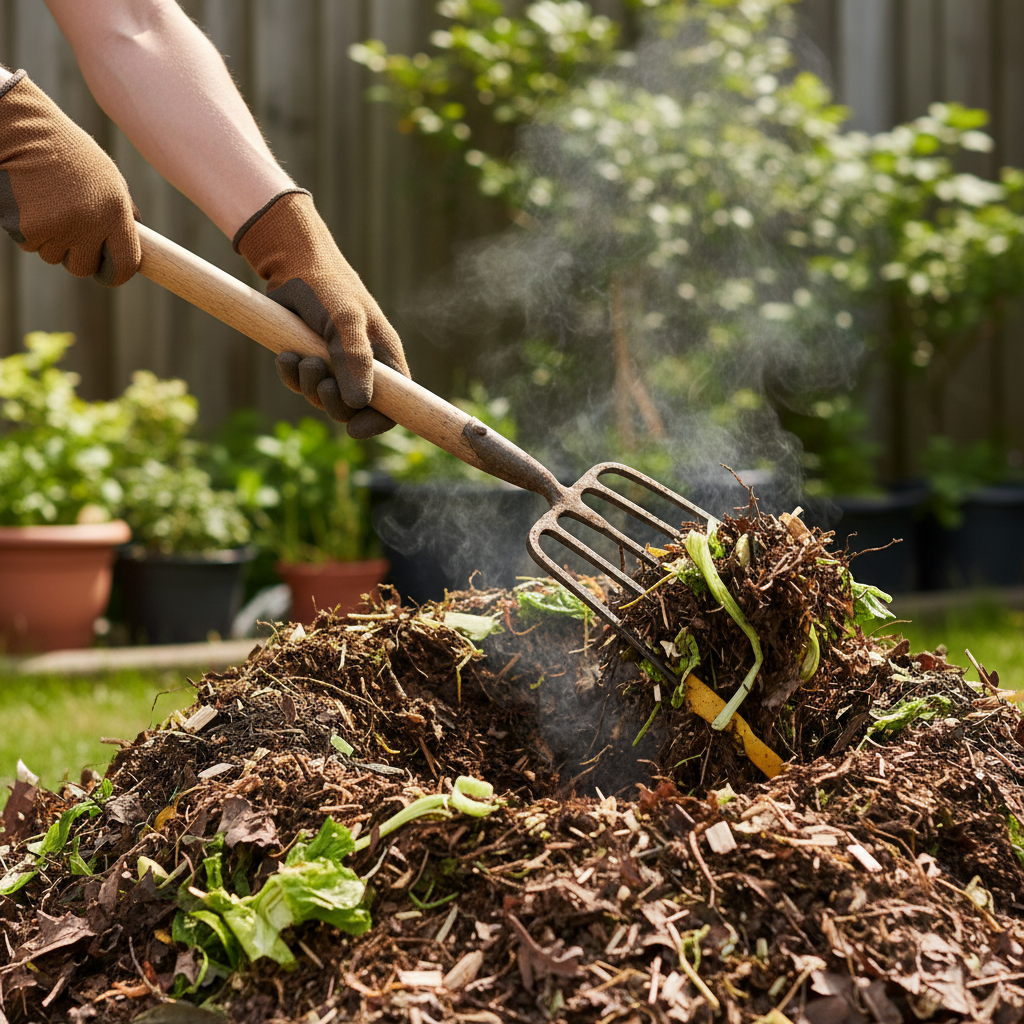
— Oxygen is critical. Before adding anything, use a pitchfork or compost aerator to turn the entire pile thoroughly, breaking up clumps and introducing air. * Safety Note: Always wear gloves when handling compost. Microorganisms can be present that might irritate skin or cause infections if you have cuts.
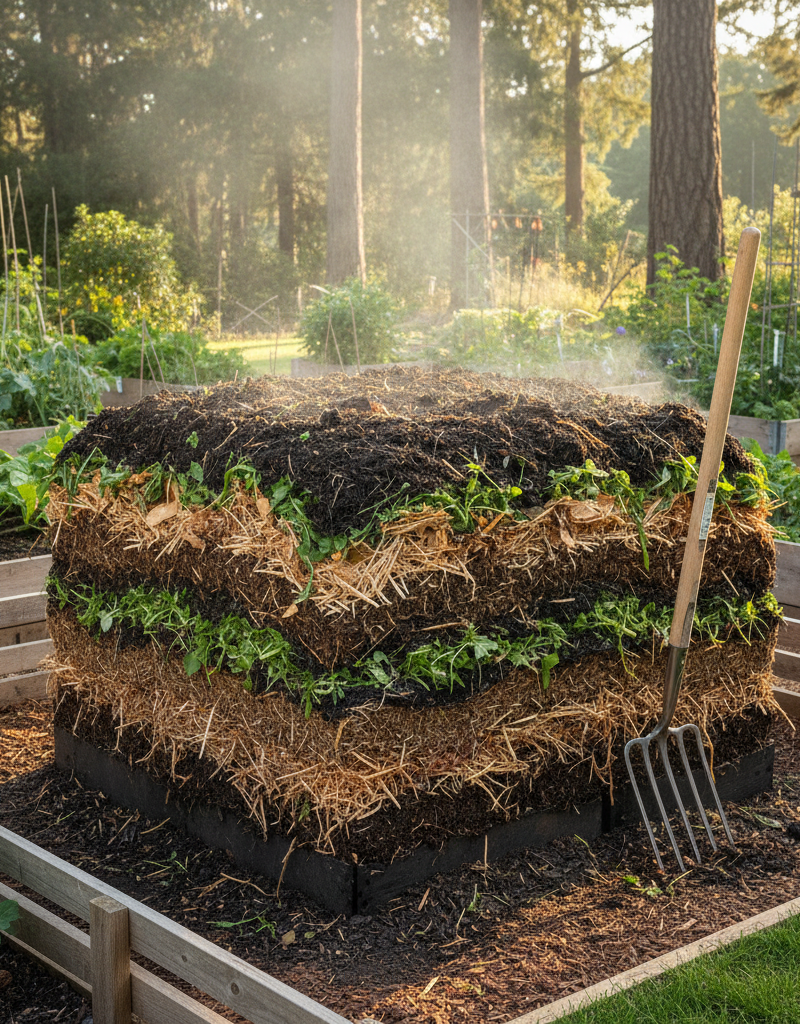
4. Adjust Carbon-Nitrogen Ratio – Layering is Key
— Now, incorporate your gathered materials to correct the balance. * For slimy/stinky piles (add browns): Spread a 4-6 inch layer of dry browns over the top. Then, use your pitchfork to gently mix these browns into the existing wet greens. The goal is to evenly distribute the dry material to absorb excess moisture and provide the missing carbon. * For dry/stagnant piles (add greens and water): Spread a 2-4 inch layer of fresh greens over the pile. Mix these in. Then, gently water the pile until it's moist like a wrung-out sponge, but not soggy. Don't drown it; you want dampness, not standing water.
5. Monitor Moisture – The Squeeze Test
— After adjusting, grab a handful of compost from the middle of the pile and squeeze it. You should feel moisture, and maybe a few drops will come out, but it shouldn't stream water. If it's too dry, add a bit more water; if too wet, add more browns.
6. Turn Again – Distribute and Re-aerate
— Give the pile another thorough turn after adding materials and adjusting moisture. This ensures everything is well mixed and oxygen is reintroduced throughout the pile, kickstarting microbial activity.
7. Check Temperature (Optional but Recommended) – Confirming Activity
— If you have a compost thermometer, insert it into the center of the pile. A healthy, active pile should heat up to between 130°F and 160°F (54°C to 71°C) within a few days of correction. If it doesn't, revisit your C:N ratio and moisture levels. * If this doesn't work: Re-evaluate your proportions. You might need to add a larger quantity of the corrective material. Also, consider the size of your pile; very small piles struggle to heat up effectively.
8. Be Patient and Repeat – Composting Takes Time
— Composting is a biological process that takes time. While you'll see improvements quickly, full decomposition takes weeks to months. Continue to monitor your pile's moisture and turn it every few days to once a week, especially after adding new material.
Common Causes
- Skipping the Browns: Many homeowners enthusiastically add food scraps and grass clippings but neglect dry leaves, straw, or shredded paper. This leads to a nitrogen overdose and a stinky, anaerobic mess.
- Insufficient Aeration: Not turning the pile regularly suffocates the beneficial aerobic bacteria, allowing odor-producing anaerobic bacteria to thrive.
- Incorrect Moisture Levels: A pile that's too dry stops decomposition, while a pile that's too wet becomes waterlogged and anaerobic.
- Too Many Nitrogen-Rich Materials at Once: Dumping a huge batch of fresh grass clippings into the pile without balancing it with browns can throw the ratio off entirely and lead to overheating or odors.
- Pile Size: Piles that are too small (under 3x3x3 feet) struggle to generate and retain enough heat for efficient decomposition.
- Ignoring Particle Size: Large chunks of material break down much slower. Shredding or chopping materials like leaves, branches, or food scraps increases their surface area, speeding up decomposition.
Common Mistakes
- Adding Meat/Dairy/Oils: These attract pests (rodents, flies), can create foul odors, and often don't break down well in home compost piles. Stick to plant-based materials.
- Ignoring the Smell: A healthy compost pile should smell earthy, like forest soil. If it smells sour, rotten, or like ammonia, it's telling you something is wrong – don't ignore it!
- Not Turning the Pile: Forgetting to turn your pile is like holding your breath. The microbes need oxygen, and regular turning ensures they get it, speeding up the process and preventing odors.
- Letting it Dry Out Completely: A dry pile is a dormant pile. Microbes need moisture to survive and thrive. Check the moisture regularly and water as needed, especially during dry spells.
- Adding Diseased Plants: While most plant matter is compostable, adding diseased plants can spread pathogens to your garden when you eventually use the compost.
- Being Impatient: Composting isn't instant. It takes time for nature to do its work. While you can accelerate it, expecting finished compost in a week is unrealistic.
Cost & Time Breakdown
| Task | DIY cost | Pro cost | Time |
|---|---|---|---|
| Assess & Gather Materials | $0–$15 | N/A | 10–20 minutes |
| Aerate & Turn Pile | $0 (if tools exist) | N/A | 15–30 minutes |
| Amend C:N Ratio (adding) | $0–$30 (materials) | N/A | 10–20 minutes |
| Monitor & Re-turn (ongoing) | $0 | N/A | 5–10 min/week |
| Compost Bin/System (initial) | $0–$300 | N/A | 1–3 hours (setup) |
Tips & Prevention
- Balance as You Go: The easiest way to maintain a healthy pile is to add a mix of greens and browns each time you contribute. Layer kitchen scraps with a handful of dry leaves or straw.
- Chop It Up: The smaller your materials, the faster they will break down. Roughly chop fruit and vegetable scraps and shred paper or cardboard.
- Keep a 'Browns' Stash: Store a bag or pile of dry leaves, straw, or shredded paper near your compost bin so you always have carbon material on hand to balance out those sudden influxes of kitchen scraps or grass clippings.
- Maintain Moisture: During dry periods, give your compost pile a light watering. During very rainy periods, cover it loosely to prevent it from becoming waterlogged. Aim for the
Related Articles
Keep troubleshooting with these hand-picked guides from FixlyGuide:
- The 3 Compost Pile Mistakes Even Experienced Gardeners Make — Avoid common pitfalls and build a thriving backyard compost pile with the right mix of greens, browns, and proper aeration for nutrient-ric…
- The #1 Mistake Killing Your Thin Lawn (And How to Fix It in a Weekend) — Overseeding your lawn can transform it from thin and patchy to lush, but many homeowners make a crucial mistake that hinders success. Learn…
- The #1 Lawn Aeration Mistake Most Homeowners Make (And When to REALLY Do It) — Discover the crucial mistake many homeowners make with lawn aeration and learn the optimal timing for a thriving, healthy lawn.
- The #1 Mistake Killing Your Lawn's Clover—and the Easy fix That Spares Your Grass — Discover the most common mistake homeowners make when trying to eliminate clover, and learn how to remove it effectively without harming yo…
- The 3 Hidden Reasons Your Tree Leaves Turn Brown (and the Easy Fixes) — Discover the often-overlooked environmental stressors and specific diseases that cause tree leaves to brown, and learn simple, actionable s…
- The #1 Mistake Homeowners Make When Their AC Drain Clogs (And The $5 Fix) — Discover the most common error homeowners make when tackling a clogged AC drain line and learn a simple, inexpensive solution to prevent co…
Frequently asked questions
Why does my compost pile smell like ammonia?+
An ammonia smell indicates too much nitrogen-rich 'green' material (like fresh grass clippings or food scraps) and not enough carbon-rich 'brown' materials. To fix it, add plenty of dry leaves, straw, or shredded paper and turn the pile well.
My compost pile is dry and cold – what's wrong?+
A dry, cold compost pile likely lacks sufficient nitrogen-rich 'green' materials and moisture. Add kitchen scraps, coffee grounds, or fresh plant trimmings, and thoroughly water the pile until it's damp like a wrung-out sponge.
How often should I turn my compost pile?+
For optimal decomposition and to prevent odors, aim to turn your compost pile every 3 to 7 days, especially after adding new materials. This introduces oxygen and helps distribute moisture and heat.
Can I add meat scraps to my compost pile?+
It's best to avoid adding meat scraps, dairy products, or oily foods to home compost piles. They can attract pests, create foul odors, and may not break down efficiently in a typical backyard setup, potentially harboring harmful bacteria.
What is the ideal moisture level for compost?+
The ideal moisture level for compost is similar to a wrung-out sponge – consistently damp but not soaking wet. If you squeeze a handful, a few drops of water might come out, but it shouldn't stream.
Discussion
Loading comments…