Tools & materials you'll need
Affiliate linksAs an Amazon Associate FixlyGuide earns from qualifying purchases — at no extra cost to you. Prices and availability are accurate as of publication and subject to change.
Quick Answer
Turning a thin, lackluster lawn into a dense, vibrant carpet often comes down to successful overseeding. This process involves adding new grass seed to an existing lawn, boosting its thickness and color. The critical steps include proper soil preparation, choosing the right grass type for your climate, uniform seed distribution, and diligent watering, especially in the crucial two weeks post-seeding. Ignoring proper preparation is the biggest pitfall, as it prevents the new seeds from establishing robust roots.
The Problem
Many homeowners face the frustration of a lawn that looks weak, patchy, or simply lacks the lush density they desire. Despite regular mowing and watering, sections might appear thin, showing bare soil, or be overtaken by weeds. This isn't just an aesthetic issue; a thin lawn is more susceptible to weed invasion, disease, and insect damage because the grass isn't robust enough to outcompete these threats. Foot traffic, pet activity, drought, or even just the natural aging of grass can contribute to thinning. If left unaddressed, these areas will continue to degrade, making the entire lawn look unhealthy and vulnerable.
How It Works
Overseeding revitalizes a lawn by introducing new grass plants that fill in sparse areas, increase density, and improve overall health. Grass plants naturally decline over time, becoming less vigorous and more susceptible to stress. Think of it like a plant 'aging out' – new growth isn't as strong, and the plant's ability to resist disease diminishes. When you overseed, you're essentially giving your lawn a fresh start, adding younger, more vigorous grass that can better compete with weeds and tolerate environmental pressures.
For overseeding to be successful, grass seeds need three main things: direct seed-to-soil contact, consistent moisture, and adequate sunlight. Without proper seed-to-soil contact, seeds simply sit on top of existing thatch and turf, drying out or being eaten by birds. Scarifying or aerating the lawn before spreading seed creates ideal pockets for seeds to nestle into. Once germinated, the new seedlings draw nutrients from the soil and begin photosynthesis, converting sunlight into energy for growth. This process thickens the turf, making it harder for weeds to establish, improving the lawn's drought tolerance, and enhancing its overall appearance. The existing grass provides some protection for the new seedlings, creating a microclimate that helps them thrive, but a balance must be struck – too much existing grass can starve new seedlings of light and nutrients.
Step-by-Step Fix
1. Test Your Soil — Understand your lawn's foundation
Before you do anything else, grab a soil test kit from your local garden center or cooperative extension office. Send a sample in and wait for the results. This will tell you your soil's pH and nutrient levels (nitrogen, phosphorus, potassium). If your pH is off (most lawn grasses prefer a pH between 6.0 and 7.0), you'll need to amend it with lime (to raise pH) or sulfur (to lower pH) a few weeks before overseeding.
- Why it matters: Proper soil pH makes nutrients available to grass. Without it, your new grass won't thrive, no matter how much you water or fertilize.
- If your soil needs amendments: Apply them according to test results at least 2-4 weeks before you plan to overseed to give them time to adjust the soil chemistry.
2. Mow Low and Collect Clippings — Prepare for seed-to-soil contact
Set your mower to its lowest setting – usually 1.5 to 2 inches – and give your entire lawn a thorough cut. It might look brutal, but this exposes the soil and allows sunlight to reach the new seedlings. Bag or rake up all the clippings; you want to remove as much organic matter as possible to prevent it from smothering the new seed.
- Safety Note: Always wear closed-toe shoes and eye protection when mowing. Check your mower for any loose parts before starting.
- Pro Tip: If you have heavy thatch (a spongy layer of organic material above the soil surface), consider dethatching before this step. A dethatcher or verticutter will pull out accumulated dead grass, significantly improving seed-to-soil contact.
3. Scarify or Aerate the Soil — Create a welcoming bed for seeds
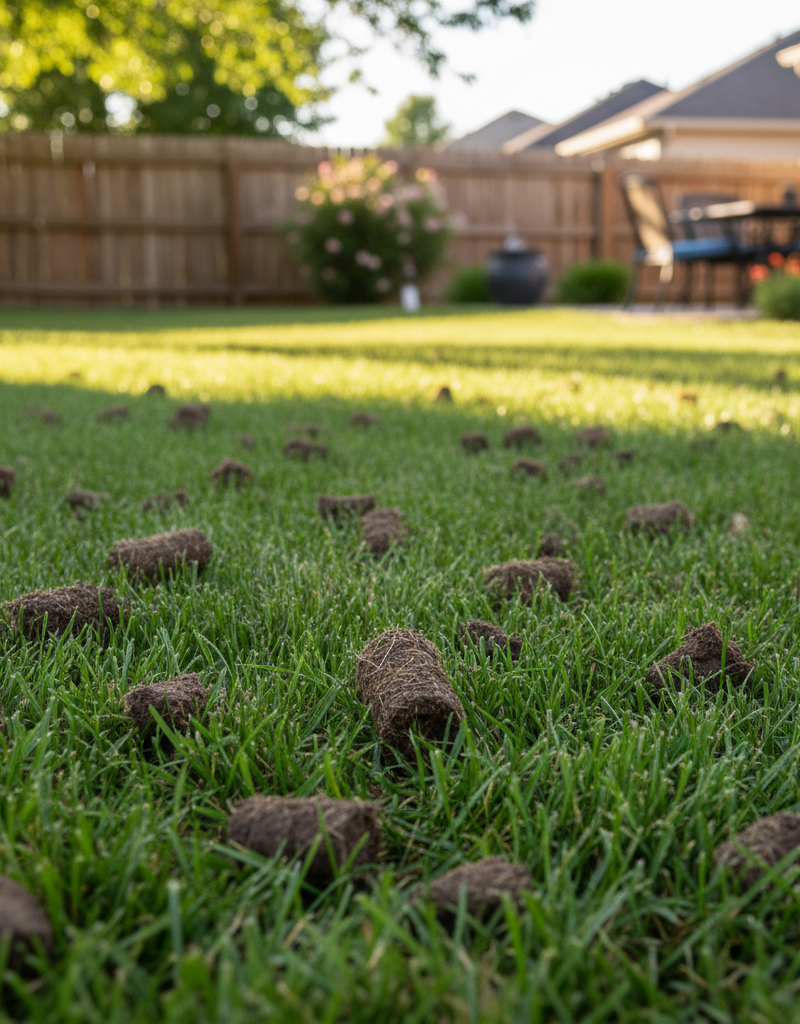
This is the most critical step often overlooked. New grass seed needs direct contact with soil, not just sitting on top of existing grass or thatch. Use a power rake (scarifier) or a core aerator to open up the soil surface. A power rake aggressively scrapes the surface, lifting thatch and creating small furrows. A core aerator pulls out small plugs of soil, leaving holes that improve air, water, and nutrient penetration.
- For light thinning: A stiff rake can be used vigorously to scratch the soil surface, providing some seed-to-soil contact.
- For widespread thinning/compaction: Renting a core aerator or power rake is highly recommended. These can be rented from home improvement stores for about $70-$150 per day.
- Important: If using an aerator, leave the soil plugs on the lawn. They will break down and provide a topdressing for the new seeds.
4. Select the Right Seed — Match your seed to your climate and sun
Choose a high-quality grass seed blend appropriate for your region and specific lawn conditions. Cool-season grasses (fescue, rye, bluegrass) are best for northern climates, while warm-season grasses (Bermuda, zoysia) thrive in southern areas. Consider the amount of sun your lawn receives; some blends are specifically for sun, shade, or a mix.
- Avoid: "Bargain" seeds often contain a high percentage of inert matter or weed seeds. Look for labels with a high germination rate and minimal weed seed content.
- Seed Rate: Read the label carefully for the recommended overseeding rate. It's usually around 2-4 pounds per 1,000 square feet.
5. Spread the Seed Evenly — Consistency is key
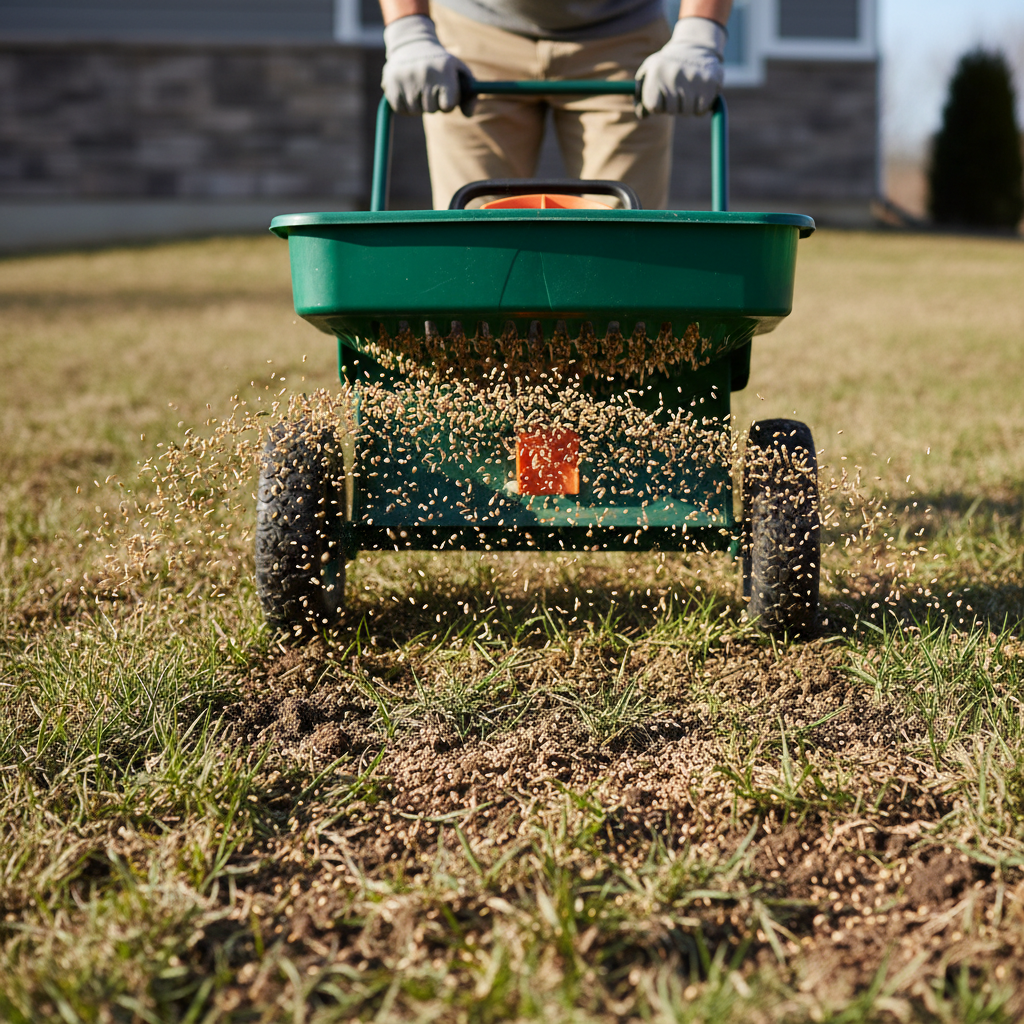
Use a broadcast spreader or a drop spreader for even distribution. Fill the spreader only half full at a time. Make two passes over your lawn, each at half the recommended setting, walking in perpendicular paths (e.g., first north-south, then east-west). This ensures thorough and consistent coverage, preventing noticeable stripes or missed spots.
- Calibration: If your spreader has a calibration guide, follow it. Otherwise, do a test run on a concrete surface to gauge the spread pattern.
- Troubleshooting: If you see piles of seed, gently rake them out to prevent clumping and promote even germination.
6. Lightly Rake (Optional but Recommended) — Enhance seed-to-soil contact
After spreading, use a leaf rake (turned upside down, so the tines act as a drag) or a very light hand rake to gently work the seeds into the nooks and crannies of the soil. The goal is to lightly cover the seeds with a thin layer of soil, not bury them deep. This further improves seed-to-soil contact and protects them from birds or washing away.
- For Aerated Lawns: The soil plugs left by aeration are excellent to break up and spread over the seeds with a rake.
- Consider a thin layer of topdressing: Applying a 1/4-inch layer of compost or peat moss after seeding can greatly boost moisture retention and germination rates, especially for difficult areas.
7. Apply Starter Fertilizer — Give new seedlings a boost
Apply a 'starter' fertilizer specifically designed for new grass. These fertilizers are high in phosphorus, which promotes strong root development, and lower in nitrogen, which would encourage too much top growth too soon. Follow the package directions for application rates.
- Important: Avoid 'weed and feed' products when overseeding, as the pre-emergent herbicides will prevent your new grass seeds from germinating.
8. Water Frequently and Lightly — The most crucial step for germination
This is perhaps the most critical step for success. New grass seeds need consistent moisture to germinate and establish. Water your lawn lightly 2-4 times a day for the first 2-3 weeks, or until the new seedlings are about 1 inch tall. The goal is to keep the top 1/2 inch of soil consistently moist, not soggy. Avoid heavy watering that can wash seeds away.
- Timing: Water in the early morning and late afternoon/early evening to minimize evaporation. Avoid midday watering.
- Signs of success: You should start to see tiny green sprouts within 5-14 days, depending on your grass type and weather conditions.
9. Limit Traffic and Mowing — Protect delicate new growth
Keep foot traffic, pets, and children off the newly seeded areas for at least 3-4 weeks. New seedlings are incredibly fragile and can be easily damaged or uprooted. Wait until the new grass is at least 3-4 inches tall before its first mow. When you do mow, raise your blade to the highest setting and only remove the top one-third of the grass blade. Continue this higher mowing setting for the remainder of the season.
- First Mow: Ensure your mower blade is sharp to prevent tearing young grass. Avoid turning sharply on newly seeded areas.
- Long-term: Continue watering deeply but less frequently once the grass is established, promoting deeper root growth.
Common Causes
- Compacted Soil: Over time, foot traffic, heavy machinery, and even rain can compact soil, reducing air and water penetration, and stunting root growth. This is a common culprit for thin spots, especially in high-traffic areas.
- Thatch Buildup: A thick layer of thatch (undecomposed organic matter between the soil surface and the green grass blades) prevents water, nutrients, and air from reaching the soil. It also harbors pests and diseases, and prevents new seeds from establishing contact with the soil.
- Improper Watering: Shallow, frequent watering encourages shallow root systems, making grass more susceptible to drought and heat stress. Inconsistent watering during critical growth periods can also lead to thinning.
- Nutrient Deficiencies/Imbalances: If your soil lacks essential nutrients or has an imbalanced pH, grass won't be able to grow robustly, leading to weak, thin turf. A soil test is crucial for diagnosing this.
- Pests and Diseases: Grubs, chinch bugs, fungal diseases (like brown patch or dollar spot) can cause significant damage and thinning if left untreated.
- Excessive Shade: Most turfgrasses require a certain amount of sunlight. If architectural features or growing trees are casting more shade, the grass will struggle to photosynthesize and thin out.
- Incorrect Mowing Practices: Mowing too short stresses the grass, depleting its energy reserves. Mowing with dull blades tears the grass, making it more vulnerable to disease.
Common Mistakes
- Skipping Soil Preparation: The biggest mistake! Simply throwing seed on an unprepared lawn means it won't reach the soil, won't germinate efficiently, and will likely be eaten by birds or dry out. Always aerate or scarify.
- Ignoring a Soil Test: Guessing your soil's needs means you might be applying the wrong amendments or fertilizer, hindering growth rather than helping it. A test is a small upfront cost with a huge payoff.
- Overwatering or Underwatering: New seeds need consistent moisture, but not drowning. Too little, and they dry out; too much, and they can rot or wash away. Light, frequent watering is key early on.
- Applying Weed & Feed: Products containing pre-emergent herbicides will prevent your new grass seeds from germinating. Read labels carefully and avoid these when overseeding.
- Rushing the First Mow: Cutting new seedlings too soon or too short shocks them, potentially killing them or severely stunting their development. Be patient and wait until they're established.
- Using Cheap Seed: Bargain seeds often mean low germination rates, high weed seed content, or a blend not suited for your climate. Invest in quality seed from a reputable source.
- Not Protecting New Seedlings: Allowing heavy foot traffic, pets, or even strong winds on newly seeded areas can easily displace or damage fragile sprouts.
Cost & Time Breakdown
| Task | DIY Cost | Pro Cost | Time |
|---|---|---|---|
| Soil Test | $15–$30 | Included | 10 min active |
| Grass Seed (50 lb bag) | $70–$150 | Included | 15 min research |
| Starter Fertilizer | $20–$40 | Included | 5 min active |
| Rent Dethatcher/Aerator | $70–$150/day | Included | 1–3 hours |
| Lawn Mowing & Raking | $0 | $50–$100 | 1–2 hours |
| Seeding & Watering | $0 | $200–$600+ | 2–3 hours active, then daily watering for 3 weeks |
Tips & Prevention
- Aerate Annually: Fall aeration (especially in cool-season grass regions) helps alleviate compaction, improves nutrient uptake, and prepares the lawn for healthy spring growth. This is a critical preventive measure.
- Mow High: Set your mower blade to 3 inches or higher. Taller grass shades the soil, suppressing weeds, retaining moisture, and promoting deeper, stronger root systems. Never remove more than one-third of the blade height at a time.
- Deep, Infrequent Watering: Once established, water your lawn deeply (6-8 inches of penetration) but less frequently, typically once or twice a week, rather than daily shallow sprinkles. This encourages roots to grow deeper in search of water.
- Fertilize Smart: Follow the recommendations from your soil test. Avoid over-fertilizing, which can burn the lawn and lead to excessive top growth at the expense of root development. Split applications in spring and fall are often best.
- Sharpen Mower Blades: Dull blades tear grass, leaving ragged edges that are susceptible to disease and pest infestation. Sharpen your blades at least once per season, or every 20-25 hours of use.
- Seed in the Fall: For cool-season grasses, late summer/early fall (August-October) is the ideal time to overseed. Soil temperatures are warm enough for germination, but air temperatures are cool, reducing stress on new seedlings, and there's less weed competition. For warm-season grasses, late spring/early summer is preferred.
When to Call a Professional
While overseeding is a manageable DIY project, certain situations warrant calling a licensed lawn care professional. If your lawn is severely compacted, consistently waterlogged, or shows signs of significant soil drainage issues, a professional can assess underlying problems that a simple overseed won't fix. Similarly, if you suspect a widespread pest infestation (like grubs) or a persistent fungal disease that you can't identify or control with common remedies, a pro has access to specialized treatments and diagnostic tools. If your lawn is mostly bare soil, or if you're dealing with extreme slopes where seeds are likely to wash away, a professional might recommend hydroseeding or turf installation, which are beyond the scope of typical DIY overseeding. For those with very large properties or limited time, hiring a professional for aeration, dethatching, or the entire overseeding process can save significant effort and ensure optimal results, especially when operating heavy rental equipment like power rakes or core aerators is daunting.
Frequently asked questions
When is the best time to overseed a lawn?+
For cool-season grasses (fescue, rye, bluegrass), the ideal time is late summer to early fall (August to October) when soil temperatures are warm for germination but air temperatures are cooler. For warm-season grasses (Bermuda, zoysia), late spring to early summer is best.
How soon can I mow after overseeding?+
Wait until the new grass seedlings are at least 3-4 inches tall – typically 3-4 weeks. When you do mow, set your deck to the highest setting and only remove the top one-third of the blade length.
How often should I water after overseeding?+
For the first 2-3 weeks, water lightly 2-4 times a day, keeping the top 1/2 inch of soil consistently moist. Avoid heavy watering that can wash seeds away. As seedlings mature, gradually reduce frequency but increase watering depth.
Can I overseed without aerating?+
While technically possible, overseeding without aerating or scarifying significantly reduces success. Seeds need direct contact with soil to germinate properly, and a thick layer of thatch or existing grass prevents this. Aeration creates ideal pockets for seeds.
What kind of fertilizer should I use when overseeding?+
Use a 'starter fertilizer' specifically formulated for new grass. These are typically higher in phosphorus, which encourages strong root development, and lower in nitrogen. Avoid 'weed and feed' products as their herbicides will prevent new seeds from germinating.
Discussion
Loading comments…