Tools & materials you'll need
Affiliate linksNo materials required.
As an Amazon Associate FixlyGuide earns from qualifying purchases — at no extra cost to you. Prices and availability are accurate as of publication and subject to change.
Quick Answer
The most common mistake causing a jammed garbage disposal is treating it like a trash can. Forcing hard, fibrous, or starchy foods down the drain, especially without enough cold water, overwhelms the motor and impellers. This leads to the familiar humming sound of a jam, which can burn out the motor if not addressed correctly. Proper use involves only sending soft, biodegradable food scraps, cutting them into small pieces, using a strong flow of cold water, and letting the water run for 30 seconds after grinding is complete.
The Problem
It’s a sound every homeowner dreads: you flip the switch for the garbage disposal, and instead of the familiar whirring grind, you get a low, angry hum. The motor is energized, but nothing is moving. You have a jammed garbage disposal. This isn't just an inconvenience that prevents you from clearing the sink; it's a sign of a larger problem that can lead to costly repairs. When the disposal hums, it means the motor is straining against a blockage it cannot process. Continuing to run it in this state generates excess heat, which can trip the internal overload protector (the small reset button) or, in worse cases, permanently burn out the motor.
A jammed garbage disposal also puts immense stress on the entire assembly. The impellers can be damaged, the seals can fail, and the strain can even cause the housing to crack and leak. What starts as a simple clog from a stray piece of celery can escalate into a full unit replacement. Furthermore, frequent jams are a clear indicator that your habits are shortening the appliance's lifespan, which should be around 10-12 years. Ignoring the signs—the occasional hum, slow draining, or unusual noises—is a fast track to a dead unit and a $500 plumbing bill. The problem isn't just the jam itself, but the cumulative damage caused by improper use.
How It Works
One of the most persistent myths about garbage disposals is that they contain sharp, spinning blades that chop up food like a blender. This is incorrect and understanding the actual mechanism is key to preventing jams. A garbage disposal doesn’t have blades at all. Instead, it uses a system of centrifugal force to pulverize food waste until it's small enough to be flushed down the drain.
When you flip the switch, you power an electric motor. This motor spins a metal plate, called a flywheel, at high speed (around 1,725 RPMs). On top of this flywheel are two small, blunt "impellers" or "lugs." These are not sharp. As the flywheel spins, the impellers swing outwards, repeatedly striking the food scraps and flinging them against the outer wall of the grinding chamber. This wall, known as the grind ring, is stationary and has dozens of small, sharp-edged teeth and holes. The food isn’t cut; it’s smashed and shredded against this abrasive surface by the force of the impellers. Think of it more like a cheese grater than a knife. Water, which you should always have running, plays a critical role. It helps liquefy the pulverized particles and, most importantly, flushes them through the grind ring’s holes and out into your home’s drain pipe. Without sufficient water flow, this slurry of ground food can’t escape, leading to a clog right inside the unit—the dreaded jammed garbage disposal.
Step-by-Step Fix
-
Safety First: Disconnect All Power — Before doing anything else, turn off the wall switch that controls the disposal. Then, go to your home’s electrical panel and flip the circuit breaker that powers the kitchen outlets. You are about to work with and near an electrical appliance; confirming the power is completely cut is non-negotiable for your safety.
-
Look for Visible Obstructions — With the power off, take a bright flashlight and peer down into the disposal’s opening. Sometimes the culprit, like a fallen spoon, bottle cap, or large chunk of bone, is immediately visible. If you see the obstruction clearly, you can proceed to the next step.
-
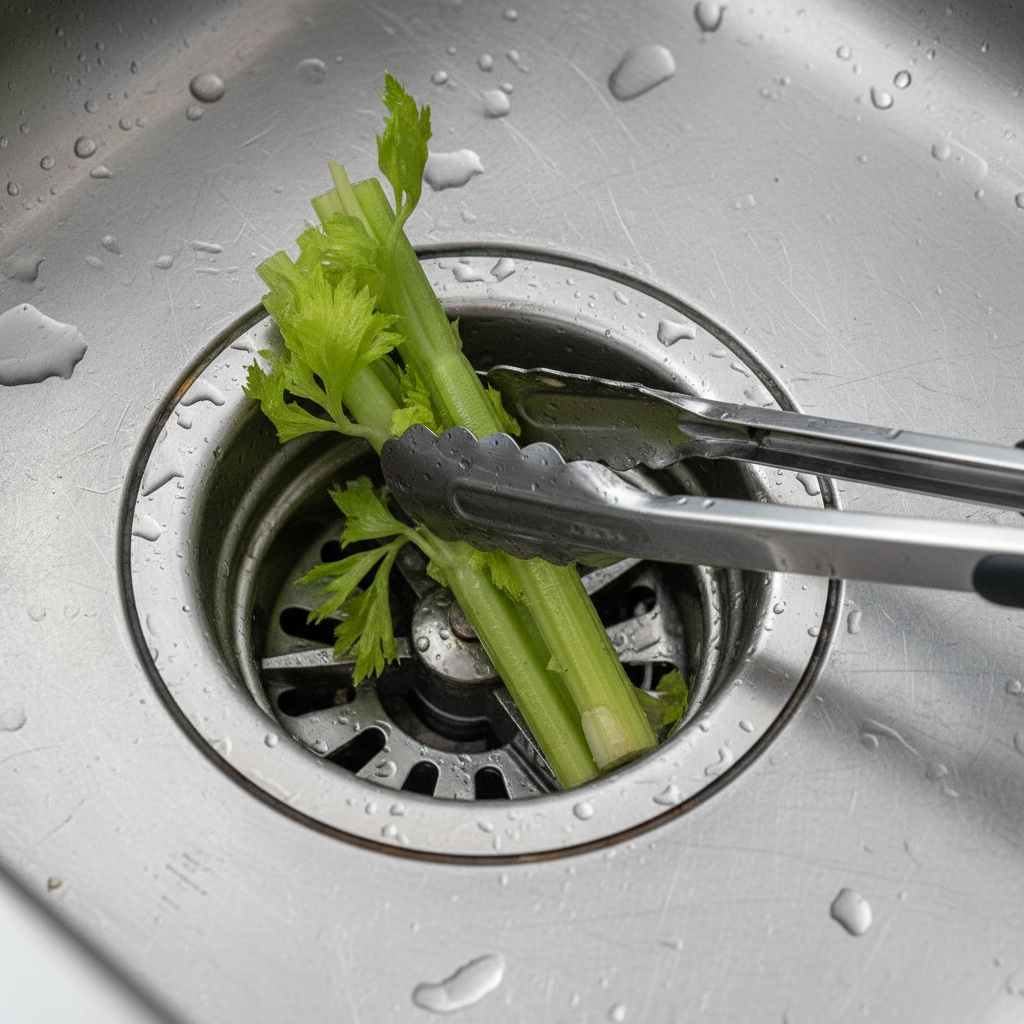
Use Tongs, Not Hands — NEVER put your hand or fingers inside the grinding chamber, even with the power off. Use a pair of long-handled pliers or kitchen tongs to carefully reach in and pull out the visible object. Be firm but gentle to avoid damaging the impellers or grind ring.
-
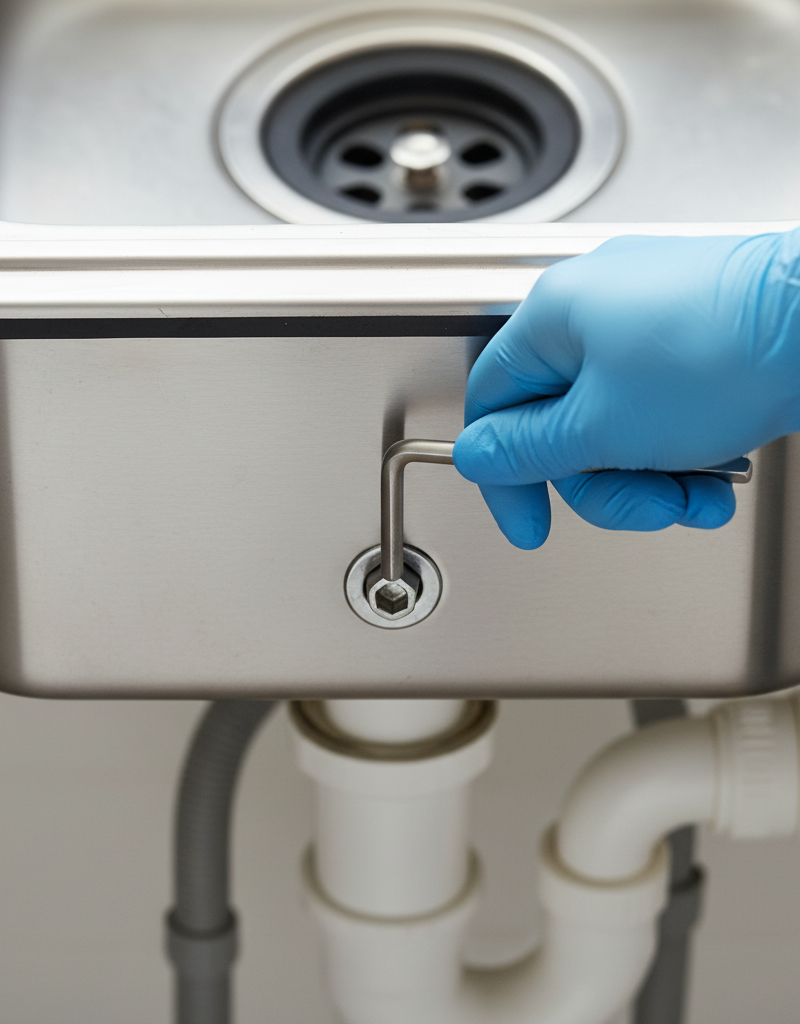
Engage the Manual Crank — If you can't see an obstruction, the jam is likely food waste. Look at the very bottom of the disposal unit under your sink. You should find a small, hexagonal socket right in the center. Most disposals come with a specific Allen key for this, often called a "jam-buster wrench," but a standard 1/4-inch Allen wrench will work. Insert the wrench and turn it back and forth. You’ll feel resistance; your goal is to rock the flywheel to dislodge the compacted food. Work it clockwise and counter-clockwise several times until you can move it freely in a full circle. This indicates the jam is cleared.
-
Press the Reset Button — While you're under the sink, locate the small, typically red or black, reset button on the bottom of the unit. The motor likely overheated from the strain of the jam, causing this button to pop out and cut power. Firmly press the button back in. It should click and stay in place.
-
Restore Power — Now you can safely return to your electrical panel and flip the breaker back on. Then, turn on the wall switch. Do not turn the disposal on yet.
-
Run Cold Water — Turn on your kitchen faucet to a strong, steady stream of COLD water. Let it run directly into the disposal drain. This water is essential to flush out the particles you just loosened.
-
Test the Disposal — With the water still running, flip the disposal switch on. You should hear the motor spin up to its normal speed. It might make some extra noise at first as it clears the last of the debris, but this should quiet down within a few seconds.
-
Grind Ice Cubes and Citrus Peels — As a final cleaning step, toss a few ice cubes into the running disposal, followed by a few strips of lemon or orange peel. The ice helps scour any remaining gunk from the grind chamber and impellers, while the citrus oils act as a natural deodorizer, leaving your sink smelling fresh.
-
Check for Leaks — After running the disposal for about a minute, quickly check the pipes and the unit itself under the sink to ensure no leaks have developed from the pressure of the jam or your work. Everything should be dry.
Common Causes
A jammed garbage disposal is almost always a result of putting the wrong things down the drain. The unit is designed for soft, biodegradable food scraps, not your entire plate.
- Fibrous Vegetables: Items like celery stalks, corn husks, artichoke hearts, and asparagus are notoriously bad. Their long, tough fibers don’t grind up easily. Instead, they wrap around the impellers and flywheel, creating a cord-like mass that chokes the motor.
- Starchy and Expandable Foods: Potato peels are a top offender. Their high starch content turns into a thick, paste-like substance that can clog the chamber and your pipes. Similarly, pasta and rice expand with water, creating a dense, heavy glob that is difficult for the disposal to process and can quickly block the drain line.
- Grease, Oil, and Fats: Pouring liquid grease or oil down the disposal is a cardinal sin of plumbing. While it might be liquid when hot, it cools and solidifies further down the drain line. This creates a sticky trap for other food particles, building up over time into an impenetrable clog that has nothing to do with the disposal itself but is a direct result of its misuse.
- Coffee Grounds and Eggshells: These are two of the most debated items. While they seem harmless, they are problematic in large quantities. Coffee grounds don’t flush well and accumulate in pipes like sediment. Eggshells have a thin membrane that can wrap around impellers, and the pulverized shells themselves become sand-like particles that contribute to sludge in the P-trap.
- Hard Materials: Your disposal is not an industrial crusher. Never put hard objects like animal bones (chicken, pork, or beef), fruit pits (avocado, peach), or inorganic trash down the drain. These items are too dense for the impellers to break down and are the fastest way to cause a loud, violent, and immediate jammed garbage disposal.
- Not Using Enough Water: Attempting to grind food in a dry chamber is a recipe for failure. Water is the lubricant and flushing agent that carries the food particles away. Without a strong, steady flow, the ground-up food has nowhere to go but to compact itself inside the unit.
Common Mistakes
Beyond forbidden foods, certain user habits significantly contribute to a jammed garbage disposal and shorten its life.
- Forgetting to Run Water First: Many people turn the disposal on and then the water. The correct sequence is to start a strong flow of COLD water first, then turn on the disposal.
- Using Hot Water: Using hot water is a critical error, especially when dealing with greasy scraps. Hot water melts the grease, allowing it to flow past the disposal, only to solidify further down the pipe, creating a tough future clog.
- Overloading the Unit: Don't dump an entire bowl of leftovers in at once. A disposal works best when you feed food waste in gradually, in smaller pieces, allowing the motor and impellers to keep up without being overwhelmed.
- Turning the Water Off Too Soon: Once the grinding sound stops, don't immediately turn off the water. Let it run for another 20-30 seconds to ensure every last particle has been thoroughly flushed out of the grinding chamber and down the main drain line.
- Ignoring a Humming Motor: A hum means the motor is stuck. Letting it hum for more than a few seconds generates heat that can trip the reset button or, worse, fry the motor windings, turning a simple jam into a replacement job.
- Using Harsh Chemical Drain Cleaners: Pouring chemicals designed to dissolve hair clogs into your disposal is a terrible idea. These caustic substances can corrode the metal impellers, damage rubber gaskets and seals, and weaken the plastic housing, leading to leaks and premature failure.
Cost & Time Breakdown
| Task | DIY Cost | Pro Cost | Time |
|---|---|---|---|
| Clearing a Simple Jam | $0 - $10 (for an Allen wrench) | $100 - $200 | 15-30 minutes |
| Replacing a Leaky P-Trap | $10 - $25 | $125 - $250 | 30-60 minutes |
| Resetting the Unit | $0 | $75 - $150 (service call) | 5 minutes |
| Replacing the Garbage Disposal | $150 - $400 (unit cost) | $350 - $650 | 2-4 hours |
| Re-wiring a Faulty Switch | $5 - $15 | $150 - $300 | 30 minutes |
| Professional Drain Cleaning | N/A | $250 - $500 | 1-2 hours |
Tips & Prevention
- Always Run Cold Water First: Begin with a strong flow of cold water before you turn the disposal on. Cold water keeps fats and grease solid so the disposal can grind them up and flush them away.
- Cut Scraps Small: Cut larger food scraps into smaller, more manageable pieces before feeding them into the disposal. This prevents large items from bouncing around and potentially lodging themselves.
- Feed Waste in Gradually: Don't overload the chamber. Add food waste slowly while the disposal is running to allow the motor to work efficiently without straining.
- Let Water Run After Grinding: Continue to run the cold water for at least 30 seconds after the grinding noise has stopped. This is crucial for flushing all the particles completely out of your home’s plumbing.
- Clean It Regularly: Once a week, grind up a tray of ice cubes to help scour the grinding chamber. Follow this with some citrus peels (lemon, lime, orange) to deodorize the unit naturally.
- Compost or Trash First: The best way to prevent a jammed garbage disposal is to use it sparingly. Scrape the majority of food waste, especially problematic items, into your trash or compost bin. Only use the disposal for small, soft scraps rinsed from plates.
When to Call a Professional
While a simple jam is often a manageable DIY task, there are clear signs when you need to put down the Allen wrench and call a licensed plumber. If you have tried the manual crank and the motor still only hums when you turn it on, the motor itself may have burned out or have an internal electrical fault. Another critical sign is a water leak coming from the main body of the disposal unit itself (not the pipe connections). This often indicates a cracked flywheel or a failed internal seal, which is not repairable and requires a full unit replacement. If you notice a puddle of water directly under the housing, shut off the power and call a pro. Furthermore, if you restore power and the unit is completely dead—no hum, no sound at all—and you’ve confirmed the reset button is engaged and the outlet has power, you likely have a dead motor or a wiring issue. Finally, if your disposal is jamming every few days, it’s a sign that it’s nearing the end of its life or that you have a significant blockage forming in your drain line that requires professional cleaning.
Frequently asked questions
Why is my garbage disposal humming but not turning?+
A humming sound indicates the motor is receiving power but the flywheel and impellers are stuck, which is a classic sign of a jammed garbage disposal. The motor is trying to spin but is blocked by an obstruction, causing the humming. You must turn it off immediately to prevent the motor from burning out.
Is it okay to use Drano or other chemical cleaners in a garbage disposal?+
No, you should never use harsh chemical drain cleaners in a garbage disposal. These caustic chemicals can severely damage the metal components, rubber seals, and gaskets inside the unit, leading to leaks and premature failure.
What's the little red button on the bottom of my garbage disposal?+
That is the overload protector, or reset button. It's a safety feature that automatically trips to cut power when the motor overheats, which commonly happens during a jam. After clearing the jam, you need to press this button to restore power to the unit.
Can you actually ruin a garbage disposal?+
Yes. Repeatedly forcing hard or fibrous foods down the unit, using hot water with greasy foods, not using enough water, and failing to clear jams promptly can all lead to a burned-out motor, which effectively ruins the disposal and requires a full replacement.
Discussion
Loading comments…