Tools & materials you'll need
Affiliate links- AmazonWhite vinegarFor creating a cleaning solution.
- AmazonReplacement waveguide cover (mica sheet)Ensure it is compatible with your model or get a cut-to-fit sheet.
- AmazonRubbing alcoholOptional, for cleaning before painting.
- AmazonMicrowave cavity paintOptional, for repairing chipped interior paint. Must be specialty paint.
As an Amazon Associate FixlyGuide earns from qualifying purchases — at no extra cost to you. Prices and availability are accurate as of publication and subject to change.
Quick Answer
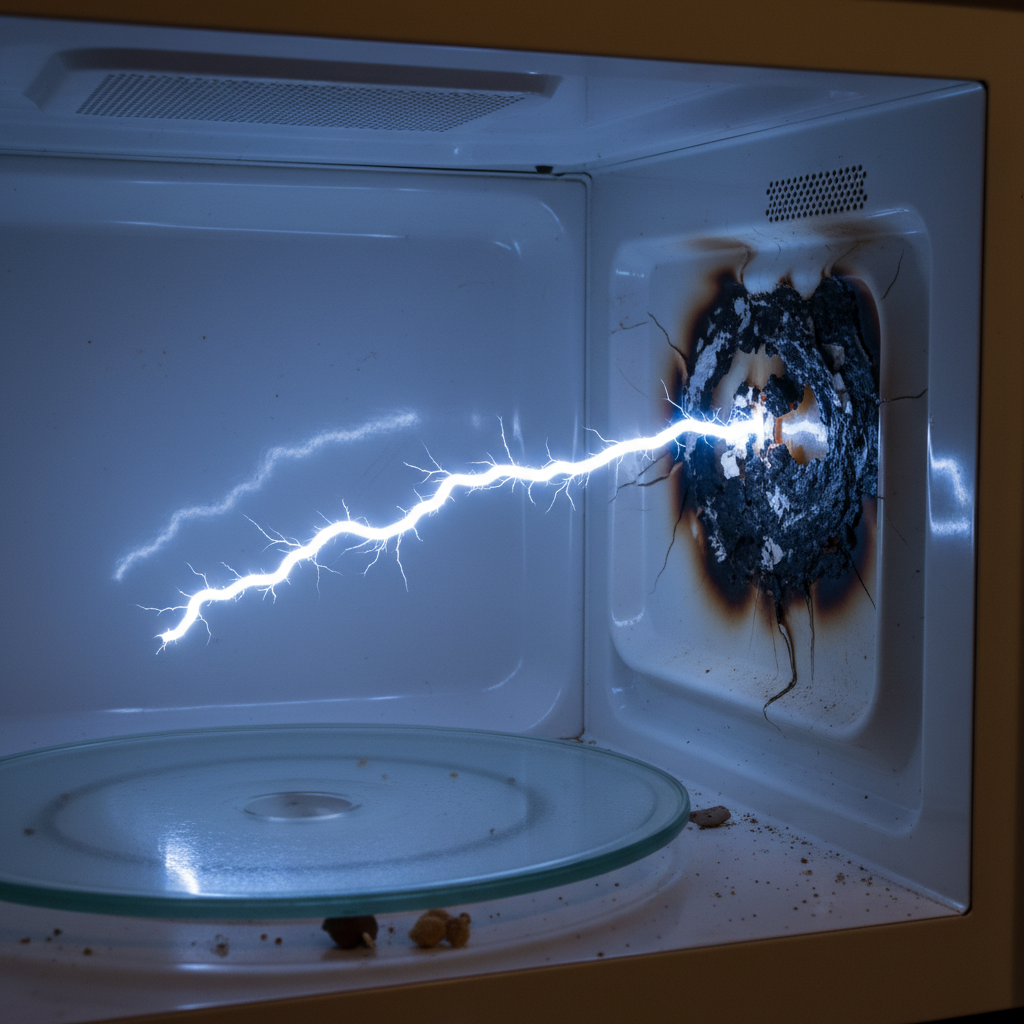
Your microwave is likely sparking due to 'arcing,' an electrical discharge caused when microwaves interact with metal or conductive materials. Common culprits include stray metal utensils, aluminum foil, built-up food debris that has carbonized, or a damaged waveguide cover. A thorough cleaning and, if necessary, replacing the waveguide cover will resolve the issue in most cases.
The Problem
The sound is unmistakable—a sharp, violent CRACK-ZAP from inside your microwave, accompanied by a bright, frightening flash of light. It’s a miniature lightning storm in your kitchen appliance. Your first instinct is to slam the "STOP" button, your heart racing. Is it about to explode? Could it start a fire? You open the door cautiously, half-expecting to see smoke and flames, but find only a lingering smell of ozone and a small black mark on the interior wall.
A sparking microwave is one of the more terrifying appliance malfunctions a homeowner can face. The event, technically known as "arcing," feels inherently dangerous, and for good reason. It's a raw electrical discharge in a powerful appliance, and it should never be ignored. While the cause is often surprisingly simple and easy to fix, continuing to use a sparking microwave can permanently damage the unit beyond repair and, in a worst-case scenario, create a genuine fire hazard. Those sparks can ignite grease, food particles, or even the paper packaging of your food, leading to a much more serious situation. Understanding why it happens is the first step toward a safe and simple fix.
How It Works
To understand why your microwave sparks, you first need to understand how it heats your food. A microwave oven uses a high-voltage component called a magnetron to generate invisible radio waves, or microwaves. These waves are funneled into the main oven compartment through a channel called a waveguide. The metal interior of the oven acts like a mirror, reflecting these waves all around, ensuring they penetrate your food from all sides. When these microwaves hit your food, they cause the water molecules within it to vibrate billions of time per second. This intense vibration creates friction, which generates heat, cooking the food from the inside out.
Arcing—the sparking—occurs when these microwaves hit something they shouldn't, specifically, conductive materials. Metal is the most obvious culprit. A forgotten fork, a tiny piece of aluminum foil, or even the metallic trim on a "non-microwave-safe" plate acts like an antenna. The microwaves induce a powerful electrical current in the metal. If the metal object has sharp edges or is close to the microwave's metal wall, the voltage can become so concentrated that it rips electrons from the air, creating a visible, high-energy electrical arc—a spark.
But it's not always a piece of metal you can see. The same phenomenon can happen with carbonized food. That baked-on splatter from last week's spaghetti sauce contains carbon, which is conductive. Microwaves can use it as a path to arc to the oven's metal chassis. Similarly, the waveguide cover—a small, stiff sheet usually made of a mineral called mica—is crucial. It protects the sensitive electronics (like the magnetron) from food splatters while being transparent to microwaves. If this cover gets saturated with grease or becomes damaged, it can char, create a carbon path, and become ground zero for arcing.
Step-by-Step Fix
Follow these steps carefully to diagnose and fix the cause of a sparking microwave. Do not skip the first safety step.
1. Safety First: Unplug the Microwave — Before you do anything else, unplug the appliance from the wall outlet. Microwaves contain a high-voltage capacitor that can store a lethal electrical charge for hours, even after being unplugged. While the risk of encountering this charge during a simple cleaning or waveguide replacement is low, it is non-zero. For maximum safety, after unplugging, let the unit sit for at least 30 minutes to allow the capacitor to discharge before you begin work.
2. Perform a Visual Inspection — Open the door and look for the obvious culprits. Scan the interior for any metal items: a forgotten spoon, a wire twist-tie that fell off a bread bag, or a piece of aluminum foil. Also, check your cookware; many ceramic or glass dishes have metallic glazes or trim that are not microwave-safe and will cause sparks.
3. Thoroughly Clean the Interior — If there is no obvious metal, the next suspect is food debris. Pay special attention to splatters on the ceiling, walls, and floor. Create a cleaning solution by mixing one cup of water with one cup of white vinegar in a microwave-safe bowl. Place the bowl in the microwave, close the door, and (if you've already tested and know it sparks) you can simply let the bowl sit for 10-15 minutes to let the vinegar aroma loosen grime. For a deeper clean in a non-sparking microwave, you would normally heat the mixture for 3-5 minutes to create steam. Use a microfiber cloth to wipe every surface, including the turntable and the wheels of the support ring. Baked-on food can be scraped away gently with a plastic scraper.
4. Inspect the Waveguide Cover — Locate the waveguide cover. It's typically a small, silvery-gray or light brown rectangular sheet on the upper right side or ceiling of the microwave interior. It might be held in by one or two plastic clips or small screws. Look closely for any black or brown burn marks, holes, or signs that it is saturated with grease and food debris. If it looks anything other than perfectly clean, it must be replaced.
5. Remove the Damaged Waveguide Cover — If the waveguide cover is damaged, carefully remove it. If it’s held by clips, you can usually pry it off gently with a flathead screwdriver. If it has screws, use a small Phillips head screwdriver. Be gentle to avoid damaging the clips or the surrounding area. Do not operate the microwave without the waveguide cover in place, as this can lead to catastrophic damage.
6. Clean Behind the Waveguide Cover — With the cover removed, you have access to the waveguide channel opening. Use a clean, damp cloth to carefully wipe away any soot, carbon, or food particles that have accumulated in this area. A clean surface is essential before installing the new cover.
7. Prepare the New Waveguide Cover — You can buy a direct replacement part if you know your microwave's model number. Alternatively, you can purchase a universal "cut-to-fit" mica sheet, which is often cheaper and faster. Place your old, damaged cover on top of the new sheet, trace the exact outline with a pen, and also mark the screw holes. Use a sharp utility knife or a strong pair of scissors to cut out the new cover.
8. Install the New Waveguide Cover — Position the new cover exactly where the old one was and secure it using the original clips or screws. Ensure it sits flat and is held securely in place. It should not be loose or bent. This is a very common and highly effective fix for a sparking microwave.
9. Address Chipped Paint (If Applicable) — Look for any spots inside the oven where the paint has chipped away, exposing the bare metal underneath. This is another common cause of arcing. To fix this, first, lightly sand the chipped area with fine-grit sandpaper to smooth the edges and remove any rust. Clean the sanded area thoroughly with a cloth and a bit of rubbing alcohol to remove all dust and grease. Apply a thin coat of specially formulated microwave cavity paint. Do not use regular spray paint, as it contains toxic chemicals and cannot withstand the heat. Allow the paint to dry completely according to the manufacturer's instructions (usually 24 hours).
10. Test the Microwave — Once all repairs are complete and any paint is fully cured, plug the microwave back into the wall. Place a microwave-safe cup filled with water inside. Run the microwave for one minute. Watch and listen carefully. If the arcing has stopped, you have successfully fixed the problem.
Common Causes
A sparking microwave is almost always caused by arcing. Here are the most common triggers for arcing, from the simple to the serious:
- Metal Objects: The most frequent cause. Forks, spoons, steel wool, twist-ties, and even small bits of aluminum foil will immediately create sparks. Some "microwave-safe" packaging may have unseen metal foil layers.
- Food Splatters and Debris: When food, especially greasy or sugary food, splatters and bakes onto the interior surfaces, it can carbonize. This carbon acts as a conductor, providing a path for microwaves to arc to the metal chassis of the oven.
- Damaged Waveguide Cover: The mica waveguide cover is a critical component. Over time, it can absorb grease and food particles. When heated, these particles char, turning the cover from an insulator into a conductor, causing sparks to originate from its surface.
- Chipped or Damaged Interior Paint: The interior of a microwave is coated with a special non-conductive, microwave-safe paint. If this paint gets scratched or chipped (often from harsh cleaning or scrapes), it exposes the conductive metal frame of the oven, creating a sharp point where electrical energy can concentrate and arc.
- Wrong Cookware: Many beautiful dishes, particularly older ceramic or glass pieces, have metallic paint or trim. These metal accents will cause sparks just like a fork would. Always check for a "Microwave Safe" label on the bottom of your dishes.
- Faulty Stirrer: Some microwaves don't have a rotating turntable but instead use a "stirrer," which is a metal blade fan located behind the top or side wall that distributes the microwaves. If the stirrer motor fails, the blade can stop in a position that concentrates microwave energy on one spot of the metal wall, causing arcing.
- A Failing Magnetron: This is the most serious and least common cause. The magnetron is the heart of the microwave, generating the radio waves. As it fails, it can create internal electrical shorts that manifest as a loud humming or buzzing sound accompanied by arcing. This is not a DIY repair.
Common Mistakes
When faced with a sparking microwave, homeowners can make the problem worse through simple mistakes. Avoid these common errors:
- Ignoring the Problem: Continuing to use a microwave that sparks is a significant fire risk and can cause irreparable damage to the magnetron, turning a simple fix into a total loss.
- Using the Wrong Paint: Never use standard spray paint or acrylic craft paint for touch-ups. They are not rated for the heat and environment inside a microwave and will release toxic fumes into your food.
- Forgetting to Unplug the Unit: This is a critical safety failure. Always unplug the microwave and wait before performing any inspection or repair to avoid the risk of a severe electrical shock from the capacitor.
- Cleaning a Damaged Waveguide Cover: A waveguide cover that is burnt or saturated with grease cannot be cleaned. The damage is permanent. Attempting to wipe it down will not solve the underlying conductive issue; it must be replaced.
- Trying to Repair High-Voltage Components: The magnetron, capacitor, and transformer operate at thousands of volts. Attempting to test or replace these components without proper training and equipment is extremely dangerous and can be lethal.
Cost & Time Breakdown
Here is a realistic breakdown of what you can expect to invest in fixing your sparking microwave, depending on whether you do it yourself or hire a professional.
| Task | DIY Cost | Pro Cost | Time Estimate |
|---|---|---|---|
| Diagnostic & Full Cleaning | <$5 | $75 - $125 | 30 minutes |
| Replace Waveguide Cover | $10 - $20 | $100 - $150 | 15 minutes |
| Refinish Interior Cavity Paint | $20 - $30 | $125 - $175 | 1 hour + 24 hrs drying |
| Replace Turntable Motor | $25 - $40 | $150 - $200 | 45 minutes |
| Replace Magnetron | Not Recommended | $200 - $350+ | 1 - 2 hours |
| A New Countertop Microwave | N/A | $100 - $400 | N/A |
Tips & Prevention
An ounce of prevention is worth a pound of cure. Follow these tips to prevent your microwave from sparking in the first place.
- Always Cover Your Food: Use a microwave-safe paper towel, wax paper, or a vented lid to cover dishes. This is the single best way to prevent the food splatters that are a primary cause of arcing.
- Wipe Down the Interior Weekly: Don't let food grime build up. A quick wipe with a damp cloth once a week prevents the carbonization that leads to a sparking microwave.
- Use Only Microwave-Safe Cookware: Before using a new dish, check the bottom for the microwave-safe symbol (usually three wavy lines). If there's no symbol, don't risk it.
- Never Run the Microwave Empty: Running an empty microwave allows a massive buildup of energy with nowhere to go. This can severely damage the magnetron and cause arcing against the oven's own walls.
- Inspect the Waveguide Cover: During your weekly cleaning, give the waveguide cover a quick glance. If you see it starting to get discolored or greasy, schedule a more thorough cleaning or a replacement.
- Stop Immediately at the First Spark: If you see or hear a spark, stop the microwave immediately. Do not let it continue. Unplug the unit and perform the inspections outlined above.
When to Call a Professional
While many causes of a sparking microwave are simple DIY fixes, there are clear signs that you need to stop and call a certified appliance repair technician. If you have thoroughly cleaned the interior, replaced the waveguide cover, and are certain there is no damaged paint, yet the sparking persists, the problem is likely internal and high-voltage.
Call a professional if you experience any of the following:
- The sparks are accompanied by a loud, sustained buzzing or humming noise.
- The arcing appears to be coming from behind the interior walls or in an area you cannot access.
- The microwave continues to spark even when empty.
- You smell a strong "burnt electronics" odor.
These are all classic symptoms of a failing magnetron or another major electrical component. At this point, you must also consider the economics of the repair. For a standard countertop microwave, a professional repair of a magnetron can easily cost $200-$350. With new countertop models available for as little as $100-$150, a major repair is often not cost-effective. For a more expensive over-the-range or built-in model, a professional repair is almost always the more logical choice over a full replacement.
Frequently asked questions
Is it safe to use a microwave that sparks once?+
No. Even a single spark indicates an underlying problem that should be investigated immediately. Continuing to use it can cause further damage to the appliance and presents a potential fire risk.
Can a sparking microwave cause a fire?+
Yes, absolutely. The electrical arc can ignite grease, carbonized food particles, or paper inside the oven, leading to a dangerous kitchen fire. It is critical to stop using the appliance until the cause is found and fixed.
Why does my microwave spark with nothing in it?+
This is a serious symptom that often points to a failure of a core component, like the magnetron or the wave stirrer. It could also be caused by severe damage to an interior wall or the waveguide. Unplug the unit immediately and call a professional technician for diagnosis.
What's the little cardboard thing inside my microwave?+
That is the waveguide cover. It's a critical part, usually made a mineral called mica, that protects the microwave's sensitive electronic components from food and moisture while allowing microwaves to pass through. A dirty or burnt waveguide cover is one of the most common causes of a sparking microwave.
Discussion
Loading comments…