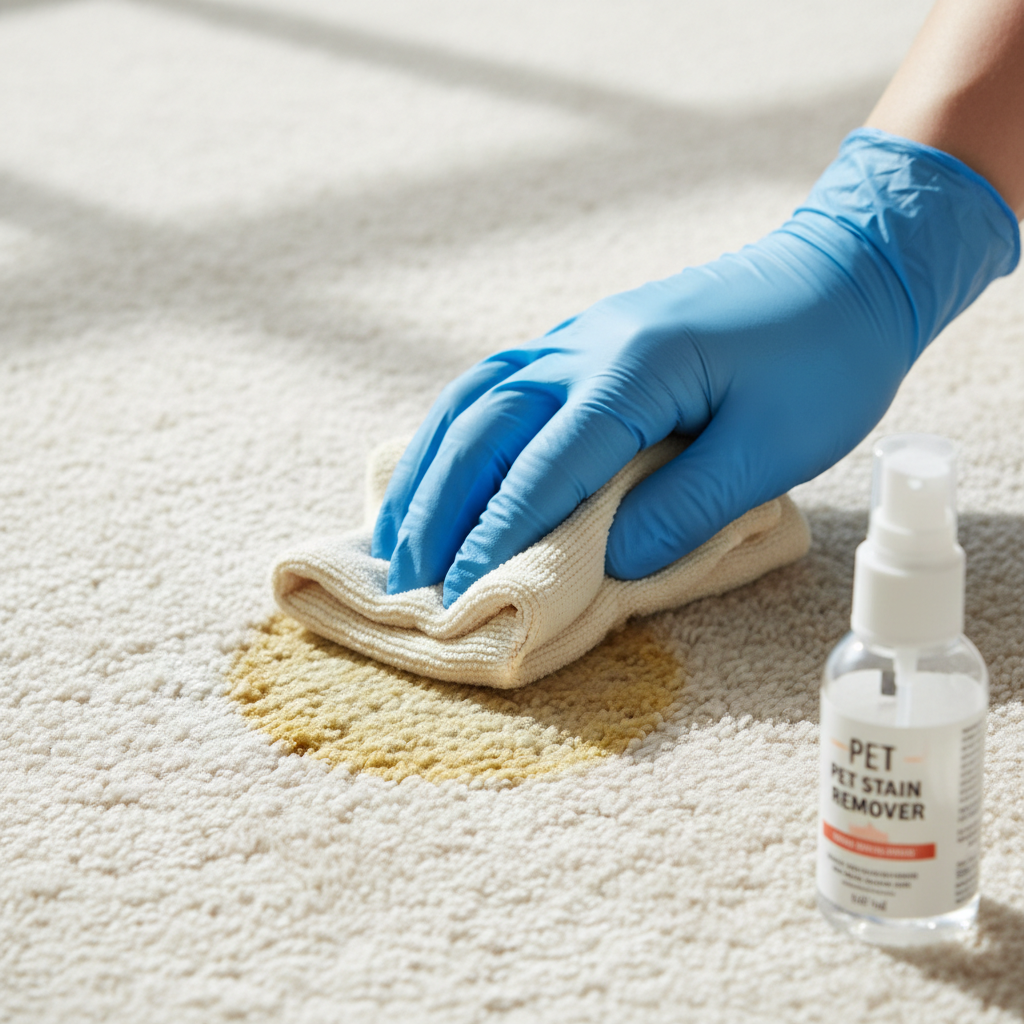
Tools & materials you'll need
Affiliate linksAs an Amazon Associate FixlyGuide earns from qualifying purchases — at no extra cost to you. Prices and availability are accurate as of publication and subject to change.
'''
Quick Answer
To permanently remove pet urine smell from carpet, you must use an enzymatic cleaner. These specialized cleaners contain enzymes that break down and digest the uric acid crystals in urine, which are the source of the lingering odor. Simply blot the fresh stain, then thoroughly saturate the area (and the underlying pad) with the enzyme solution. Let it dwell for at least 30-60 minutes so the enzymes can work, then blot the moisture up and let the area air dry completely.
Why This Works
If you've ever cleaned a pet accident only to have the smell return with a vengeance a week later, especially on a humid day, you've experienced the frustrating science of urine. Standard carpet cleaners, soaps, and even popular DIY remedies like vinegar and baking soda often fail because they don't address the entire chemical composition of the stain. Understanding the enemy is the key to defeating it for good.
Pet urine is made of three main components:
- Urea: A sticky, water-soluble compound.
- Urochrome: The pigment that gives urine its yellow color, which is also water-soluble.
- Uric Acid: The real culprit. Uric acid is composed of non-soluble salt crystals. This is the critical part: it does not dissolve in water.
When you clean with a standard soap or detergent-based carpet shampoo, you are successfully removing the water-soluble components—the urea and urochrome. The stain might look and even smell clean initially because you've removed the most immediate sources of soil and odor. However, the uric acid crystals are left behind, clinging to your carpet fibers and, more importantly, the pad and subfloor underneath.
These crystals are dormant when dry. But as soon as they are exposed to moisture—be it humidity in the air, a steamy day, or even a future cleaning attempt with water or a non-enzymatic cleaner—they reactivate. The bacteria that feed on the urine begin to multiply again, releasing that characteristic, pungent ammonia smell. This is why the odor mysteriously "comes back."
This is where enzymatic cleaners come in. They are not soaps or detergents; they are biological solutions. High-quality enzymatic cleaners, like Rocco & Roxie Stain & Odor Eliminator, Nature's Miracle, or Angry Orange Pet Odor Eliminator, contain specific enzymes (such as protease and amylase) and beneficial bacteria. When applied to the stain, these enzymes act as catalysts, rapidly breaking down the complex, non-soluble uric acid crystals into simple, water-soluble components like carbon dioxide and ammonia (which then evaporates as a gas). The beneficial bacteria then digest the remaining organic material until the food source is completely gone.
Essentially, an enzymatic cleaner doesn't just lift or mask the stain; it eats it. It dismantles the odor-causing molecules at a chemical level, ensuring there is nothing left to reactivate later. This is the only method that provides a permanent solution by destroying the source of the smell, rather than just temporarily cleaning up its most visible parts.
What You Need
Materials
- High-Quality Enzymatic Cleaner: Crucial. Look for brands specifically formulated for pet urine, such as Rocco & Roxie Professional Strength, Nature's Miracle Advanced Stain & Odor Eliminator, or the Angry Orange Pet Odor Eliminator. Don't skimp here; this is the active ingredient doing the real work.
- Paper Towels: A large roll for blotting fresh accidents.
- Clean White Towels or Rags: For blotting treated areas. Using white towels prevents any dye transfer to your carpet.
- Cold Water: For rinsing.
- Optional: Baking Soda: For a final deodorizing step after the area is completely dry.
Tools
- UV Flashlight: Highly recommended. Dried urine stains are often invisible to the naked eye but will fluoresce under ultraviolet light, allowing you to find old, hidden sources of odor.
- Latex or Nitrile Gloves: To protect your hands from both the urine and the cleaning solution.
- Wet/Dry Vacuum (Shop-Vac): Optional but extremely effective for extracting the cleaning solution and dissolved urine from deep within the carpet and pad.
- Heavy, Non-Staining Object: Such as a stack of books wrapped in plastic, to weigh down towels for deep absorption.
Step-by-Step Method
Follow these steps precisely. The key to success is saturation and dwell time.
-
First Response: Blot the Fresh Stain — If the accident is fresh and still wet, your first goal is removal, not treatment. Place a thick layer of paper towels over the wet spot. Stand on the towels for 30-60 seconds to absorb as much urine as possible from the carpet and the pad beneath. Repeat with fresh towels until you are pulling up very little moisture. NEVER scrub; this damages carpet fibers and pushes the urine deeper.
-
Locate ALL the Stains — For dried, older stains, turn off the lights and scan your entire carpet with the UV flashlight. Pet urine stains will glow a dull yellow-green. Lightly mark the outer-edge of each stain you find with a piece of chalk or a sticky note. You will likely be surprised by how many spots you find. It's critical to treat every single one to fully eliminate the odor.
-
Rehydrate and Rinse Old Stains — For old, dry stains, you need to rehydrate them to allow the cleaner to work. Pour a small amount of cold water onto the stain. Then, just as in step one, blot it up thoroughly with paper towels or a clean white cloth. This step flushes out the water-soluble urea and urochrome before you target the uric acid.
-
Saturate with the Enzymatic Cleaner — This is the most important step. Don't just spray the surface. You must use enough of the enzymatic solution to saturate the carpet fibers, the carpet backing, the pad, and even the subfloor if it was a large accident. A good rule of thumb is to use a volume of cleaner equal to the amount of urine you estimate was deposited. Start pouring or spraying from the outside edge of the stain and work your way inward to prevent the stain from spreading.
-
Let the Enzymes Dwell (Be Patient!) — The enzymes need time to work their magic. Do not blot up the cleaner immediately. Check the product's instructions; most recommend a dwell time of at least 30-60 minutes. For very old or stubborn stains, you may need several hours. To ensure the area stays damp and the enzymes stay active, you can lay a damp, clean towel over the treated spot.
-
Blot Away Excess Moisture — After the dwell time has passed, place a thick stack of clean, dry white towels over the treated area. Press down firmly or stand on them to absorb as much of the liquid as possible. You are now pulling up the broken-down, water-soluble remnants of the original stain.
-
The Extraction Step (Highly Recommended) — If you have a wet/dry vacuum, this is the time to use it. Use the vacuum to slowly and thoroughly extract all the liquid from the treated area. Go over the spot from multiple directions. This is the single most effective way to remove the dissolved urine from the carpet pad, dramatically speeding up drying time and increasing your chance of first-time success.
-
Weight it Down for Deep Absorption — If you do not have a wet/dry vac, create a "blotting poultice." Place a fresh, folded, dry white towel (or a thick stack of paper towels) over the spot. Place a heavy, non-staining object on top (e.g., a plastic-wrapped encyclopedia). Leave this overnight. The weight will compress the pad and force the remaining moisture up into the towel.
-
Allow for Complete Air Drying — Remove all towels and let the area air dry completely. This can take 24 to 48 hours, or even longer in humid climates. Keep pets and foot traffic away from the damp area. You can aim a fan at the spot to expedite the drying process.
-
The Sniff and Final Polish — Once the carpet is 100% dry (and not before), get down on your hands and knees and smell the area. The odor should be gone. If a faint odor remains, it means you either didn't use enough cleaner to reach the entire deposit or the stain was extremely old. A second, lighter treatment will usually solve it. If desired, you can sprinkle a light layer of baking soda over the dry area, let it sit for an hour, and then vacuum it up for a final deodorizing touch.
Common Mistakes to Avoid
- Using a Steam Cleaner or Hot Water First: Applying heat to a urine stain will thermally set the proteins in the urine, bonding them to the carpet fibers. This can make the stain and odor permanent and almost impossible to remove. Always use cold or cool water.
- Not Using Enough Enzymatic Cleaner: Simply spraying the surface of the carpet is the #1 reason for failure. The cleaning solution must penetrate as deeply as the urine did. You must soak the carpet pad.
- Scrubbing the Carpet: Scrubbing with a brush or cloth can untwist and fray your carpet fibers, creating a permanent fuzzy spot. It also spreads the stain deeper. Always blot.
- Using Ammonia-Based Cleaners: Many general-purpose household cleaners contain ammonia. Since urine also contains ammonia, using these products can attract your pet back to the same spot to mark their territory again.
- Mixing Cleaning Chemicals: NEVER mix cleaning products. In particular, mixing bleach with ammonia creates toxic chloramine gas. Mixing bleach with an acid (like vinegar or some glass cleaners) creates toxic chlorine gas. Stick to one product for the job.
- Giving Up Too Soon: Don't assume the treatment failed if it still smells slightly when wet. The enzymatic solution has its own scent, and the area needs to be completely and totally dry before you can accurately judge the final result.
Cost & Time Breakdown
| Task | DIY Cost | Pro Cost | Time Estimate |
|---|---|---|---|
| Spot Cleaning a Single Stain | $20 - $40 (for cleaner & towels) | $80 - $150 | 1-2 hours + drying time |
| Finding & Treating Multiple Spots | $40 - $75 (cleaner, UV light) | $200 - $400 | 3-5 hours + drying |
| DIY Full Extraction (with wet/dry vac) | $100 - $200 (if you need to buy vac) | N/A | 4-6 hours + drying |
| Professional Restoration Services | N/A | $500 - $1,500+ | 1-3 days |
Prevention & Maintenance
- Rule Out Medical Issues: Sudden or frequent accidents can be a sign of a urinary tract infection or other medical problems. A check-up with your veterinarian is a wise first step.
- Clean Accidents Immediately: The sooner you can blot up fresh urine and treat it with an enzymatic cleaner, the higher your chance of 100% removal.
- Address Behavioral Marking: If the urination is territorial, consult with an animal behaviorist. For cats, ensure you have enough clean litter boxes (the rule is one per cat, plus one extra).
- Increase Potty Breaks: For dogs, especially puppies and seniors, more frequent trips outside can prevent accidents before they happen.
- Use Pet-Repellent Sprays: After an area is thoroughly cleaned and dried, using a pet-safe repellent spray can discourage your pet from returning to the same spot.
- Protect Vulnerable Areas: For puppies or elderly pets, consider using washable, waterproof pet blankets or pads in their favorite resting spots.
When to Call a Professional
While the enzymatic method is incredibly effective, some situations warrant calling in a professional carpet cleaning company with experience in pet odor remediation. You should consider making the call if:
- The odor is overwhelming and widespread throughout the house, suggesting numerous, large-volume accidents.
- You suspect the urine has soaked through the padding and into the wooden subfloor. A professional can sometimes treat the subfloor with a sealing agent after removing and replacing the contaminated carpet and pad.
- The accident occurred on a delicate or specialty carpet, such as wool or silk, which can be damaged by a DIY soaking process.
- You have tried the enzymatic process multiple times on a single spot and the odor persists. Professionals have access to more powerful, truck-mounted extraction equipment that can flush and extract liquid more effectively than consumer-grade machines.
In severe cases, the only solution is to replace the affected portion of the carpet and pad and seal the subfloor underneath. A professional can help you make this determination. '''
Get the print-ready PDF of this guide
A clean, ad-free, printable version you can keep on your phone or pin to the workshop wall. We'll also send occasional weekly tips matched to your home situation.
- Print-optimized layout
- Tools, materials & every step included
- Unsubscribe anytime
Frequently asked questions
Can I use vinegar and baking soda to clean pet urine?+
Vinegar and baking soda can help neutralize the ammonia smell temporarily, but they do not break down the non-soluble uric acid crystals. The smell will likely return when the area is exposed to humidity. They are a decent first-aid measure but are not a permanent solution like an enzymatic cleaner.
Will a standard carpet cleaning machine remove the smell?+
Only if you use the right cleaning solution in it. Do not use standard carpet shampoos, as they don't destroy uric acid. Instead, pre-treat the stain heavily with a dedicated enzymatic cleaner, let it dwell, and then use the machine with just cold water to extract the area. Some enzymatic cleaners are also designed to be used as the main solution in the machine itself.
How can I tell if the pet urine has soaked into the subfloor?+
The biggest sign is a persistent, strong odor that returns quickly even after multiple, thorough enzymatic cleanings. If you have access, you can pull back the carpet at a corner to look for dark staining or water marks on the carpet pad or the wood/concrete subfloor beneath. A UV light can also show fluorescence on the subfloor.
Why can't I use a steam cleaner on pet stains?+
Steam cleaners and any machine that uses hot water can permanently set the protein in the urine stain. The high heat essentially 'cooks' the stain into the carpet fibers, making both the stain and the odor incredibly difficult, if not impossible, to remove. Always use cold or cool water.
Discussion
Loading comments…