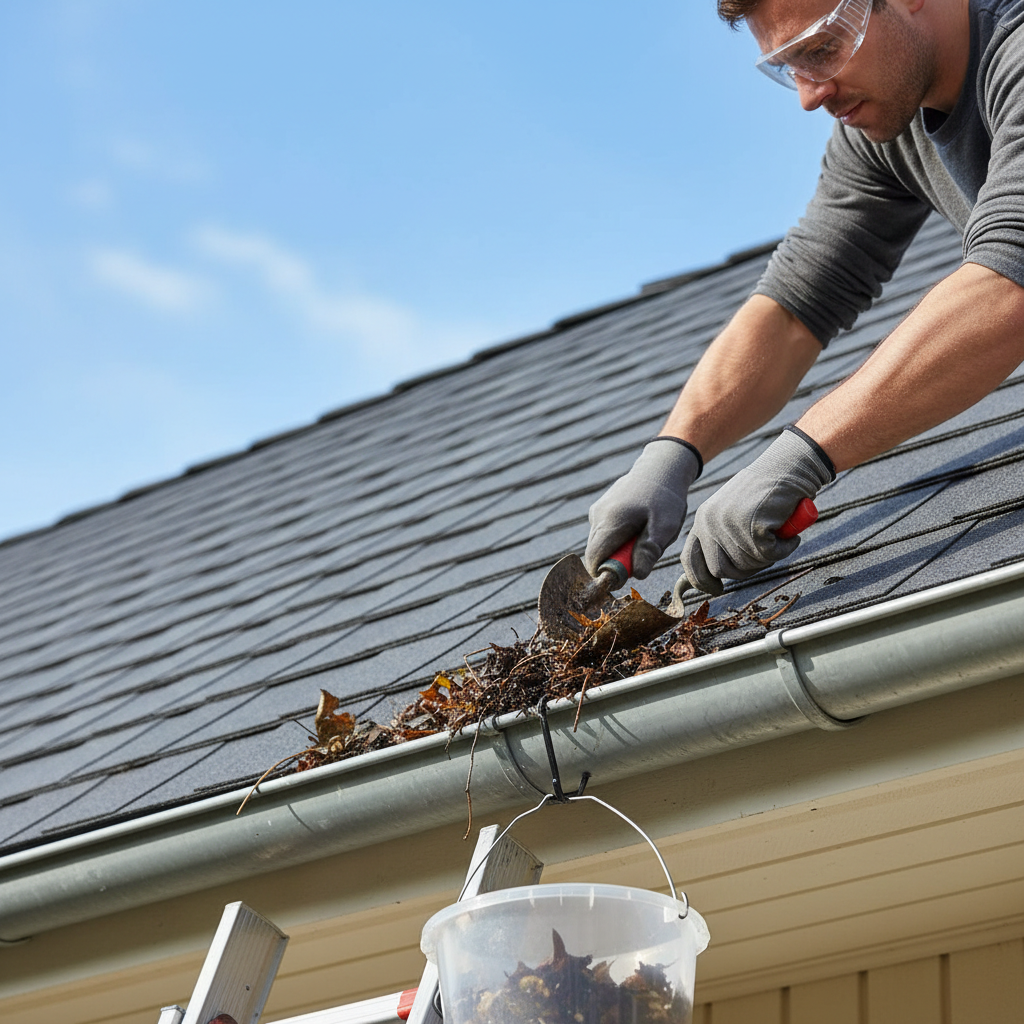
Quick Answer
Regular gutter cleaning and maintenance are essential to prevent water damage to your roof, fascia, and foundation. Clogged gutters cause water to back up, leading to rot, leaks, and ice dams. By cleaning gutters at least twice a year and performing routine checks, you can protect your home from significant water-related issues.
The Problem
When gutters become choked with leaves, twigs, and other debris, they can no longer effectively channel rainwater away from your home. This leads to water overflowing from the gutters, often cascading directly down your home's siding or pooling around the foundation. More critically, backed-up water can seep under your roofing shingles, saturating the underlayment and decking. Over time, this constant moisture can cause wood rot in the eaves and fascia, compromise the integrity of your roof sheathing, and lead to leaks inside your home. In colder climates, trapped water can freeze and expand, creating ice dams that lift shingles and cause severe roof damage.
Step-by-Step Fix
- Gather Your Tools: You'll need a sturdy ladder, work gloves, a small trowel or scoop, a bucket for debris, a garden hose, and safety glasses. Consider wearing long sleeves to protect against scratches.
- Ensure Ladder Safety: Position your ladder on firm, level ground. Have someone hold the ladder for stability if possible. Always face the ladder and maintain three points of contact while climbing or working.
- Remove Large Debris: Starting at one end of a gutter section, use your gloved hands or a small trowel to scoop out larger pieces of leaves, twigs, and muck. Deposit the debris into your bucket. Work slowly and methodically along the entire length of all gutters.
- Flush with Water: Once the bulk of the debris is removed, use a garden hose to flush out any remaining grime and ensure proper water flow. Start from the highest point and let the water run down towards the downspout. Check that water exits freely from the downspout. If water backs up, your downspout may be clogged.
- Clear Downspout Clogs: If the downspout is clogged, try flushing it from the top with the hose. If that doesn't work, you may need to disassemble the bottom section of the downspout to remove the obstruction. A plumber's snake can also be used for stubborn clogs. Safety Note: Never attempt to climb onto your roof to clear downspouts unless you have proper safety equipment and experience. If a clog is inaccessible or you're unsure, call a professional.
- Check for Leaks and Damage: While you're up there, inspect the gutters for any cracks, holes, or sagging sections. Check that all hangers are secure and that gutter sections are firmly joined. Small cracks can be repaired with gutter sealant; larger damage may require replacement sections.
Common Causes
- Falling Leaves and Debris: The most common culprit, especially in autumn, but also from trees shedding throughout the year.
- Shingle Granules: As roofs age, shingle granules can shed and accumulate in gutters, creating a sludgy buildup.
- Nest Building: Birds and other small animals sometimes build nests in gutters or downspouts, causing blockages.
- Lack of Regular Cleaning: Infrequent cleaning allows debris to compact and harden, making removal more difficult.
Tips & Prevention
- Install Gutter Guards: Gutter guards can significantly reduce the amount of debris entering your gutters, though they still require occasional cleaning.
- Trim Overhanging Branches: Cut back any tree branches that extend over your roofline to reduce leaf and twig accumulation.
- Regular Schedule: Clean your gutters at least twice a year – once in late spring after tree pollen and seeds fall, and again in late autumn after all leaves have dropped. If you have many trees, more frequent cleaning may be necessary.
- Annual Inspection: Beyond cleaning, perform an annual inspection for any damage, loose fasteners, or pitch issues. Ensure gutters slope slightly towards the downspouts.
When to Call a Professional
Call a professional if you:
- Are uncomfortable working on a ladder at height.
- Have multi-story gutters that are difficult to access safely.
- Encounter persistent downspout clogs you cannot clear.
- Notice significant damage to your gutters, fascia, or roof that requires repair beyond simple sealing.
- Suspect roof damage or leaks related to gutter issues. Trying to fix complex roof problems yourself can lead to further damage or personal injury.
Frequently asked questions
How often should I clean my gutters?+
You should clean your gutters at least twice a year: once in late spring after tree pollen and seeds have fallen, and again in late autumn after all leaves have dropped. Homes with many nearby trees may require more frequent cleaning.
What tools do I need to clean gutters?+
Essential tools include a sturdy ladder, work gloves, a small trowel or scoop, a bucket for debris, a garden hose, and safety glasses. Long sleeves are also recommended for protection.
Can clogged gutters really damage my roof?+
Yes, absolutely. Clogged gutters cause water to back up and overflow, which can saturate the roof's edge, fascia, and even seep under shingles, leading to wood rot, leaks, and severe structural damage. In winter, they can contribute to damaging ice dams.
Are gutter guards worth it?+
Gutter guards can significantly reduce the amount of debris entering your gutters, making cleaning less frequent and easier. However, they are not maintenance-free and will still require occasional checks and cleaning to ensure optimal performance.
When should I hire a professional for gutter cleaning?+
You should hire a professional if you are uncomfortable working on a ladder, have multi-story gutters that are difficult to access safely, cannot clear a stubborn downspout clog, or suspect significant damage to your gutters, fascia, or roof.



Discussion
Loading comments…