Tools & materials you'll need
Affiliate links- AmazonPowerful Degreaser (e.g., Dawn Powerwash, Krud Kutter)1 bottle · Choose one based on the severity of the grease.
- AmazonDawn Dish Soap1 bottle · For the hot water soak method.
- AmazonOxiClean or Baking Soda1 box · For the boiling method (metal filters only).
- AmazonOld Towels or Newspaperseveral · To protect the cooktop.
As an Amazon Associate FixlyGuide earns from qualifying purchases — at no extra cost to you. Prices and availability are accurate as of publication and subject to change.
Quick Answer
To deep clean a greasy range hood filter, remove it and soak it in a hot water solution with a powerful degreaser like Dawn Dish Soap or a dedicated product like Krud Kutter. While the filter soaks, wipe down the hood exterior and interior with a degreasing spray. After an extended soak, scrub the filter with a non-abrasive brush, rinse it thoroughly with hot water, and allow it to dry completely before reinstalling to ensure maximum efficiency and prevent mold growth.
Why This Works
The sticky, yellow-brown film coating your range hood is more than just grease. It's a complex, stubborn matrix of polymerized oils, aerosolized fats, cooking particulates, and household dust that have been baked into a varnish-like layer by the heat from your cooktop. Simple soap and water barely make a dent. The secret to defeating this mess lies in a three-pronged chemical attack: heat, alkalinity, and surfactant action.
First, heat is your primary weapon. Using the hottest water possible (or even simmering the filters, as we'll discuss) works to melt the solidified fats, loosening their physical bond to the metal. It’s like the difference between scraping cold butter and wiping up melted butter.
Second, we introduce a highly alkaline solution. This is the core of "degreasing." Grease is made of fatty acids. When you introduce a high-pH substance like baking soda, OxiClean (sodium percarbonate), or the alkaline salts in a strong dish soap, you trigger a chemical reaction called saponification. The alkaline agent breaks down the fatty acids into two new substances: soap and glycerol. Essentially, you are turning the grease itself into a primitive, water-soluble soap, allowing it to be washed away easily. This is why degreasers feel slippery to the touch—that's your surface skin oils saponifying!
Finally, powerful surfactants in cleaners like Dawn Powerwash or Krud Kutter finish the job. A surfactant molecule has two ends: one that loves water (hydrophilic) and one that loves oil (lipophilic). The oil-loving ends burrow into the remaining grease particles, breaking them up and surrounding them to form tiny spheres called micelles. The water-loving ends then face outward, allowing the entire grease-filled micelle to be lifted from the surface and rinsed away with water. This combination of melting, chemical transformation, and physical lifting is what allows you to restore your hood and filters to their original, sparkling state.
What You Need
- Degreasing Agent: You have several excellent choices:
- Dawn Dish Soap: The classic choice. A concentrated version works best.
- Dawn Powerwash: Excellent for spraying the hood surface directly.
- Krud Kutter Original Concentrate: A powerful, dedicated degreaser.
- OxiClean or Baking Soda: For the boiling/soaking method for all-metal filters.
- Hot Water: As hot as your tap can provide.
- Large Pot, Basin, or Sink Stopper: Something large enough to fully submerge the filter(s).
- Nitrile or Rubber Gloves: To protect your hands from hot water and degreasers.
- Non-Abrasive Scrub Brush: A stiff nylon brush or an old toothbrush works well.
- Microfiber Cloths (at least 2): One for cleaning, one for drying/polishing.
- Paper Towels: For wiping up heavy initial grease.
- Old Towels or Newspaper: To protect your cooktop from drips and scratches.
- (Optional) Stainless Steel Polish: To finish the job with a streak-free shine.
- (Optional) Baking Soda: To make a paste for stubborn spots on the hood.
Step-by-Step Method
-
Prep and Protect — Lay old towels or newspaper across your entire cooktop surface. This protects it from greasy water dripping from the hood and prevents the metal filter from scratching the surface when you remove it. Turn off the range hood fan and light.
-
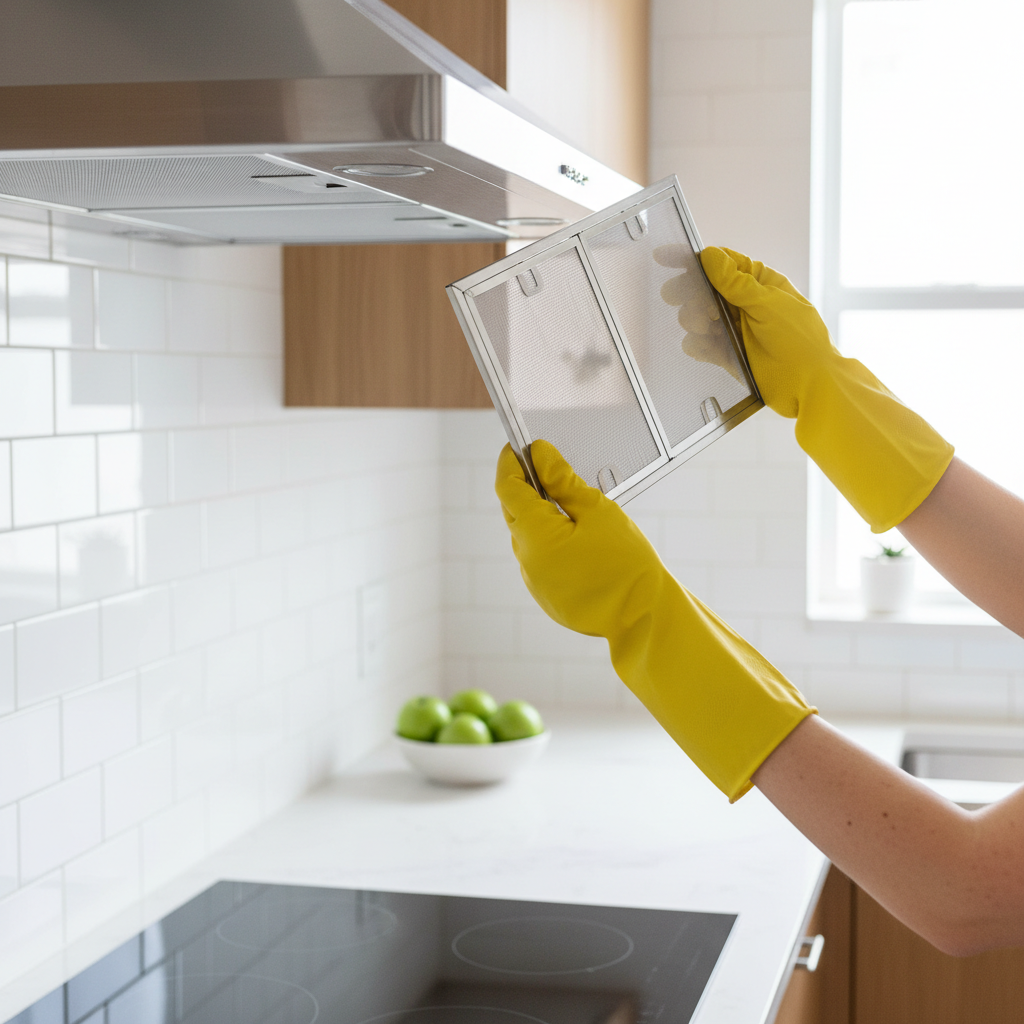
Remove the Filter(s) — Most filters are held in place by a simple latch or sliding clips. Look for a small handle or ring. Slide or push it, and the filter should hinge downward and release. There may be one or two filters. Handle them carefully—they will be greasy and are often sharper than they look.
-
Prepare the Soaking Solution — This is where the magic begins. Choose your method based on your filter type and the severity of the grease.
- For all filter types (Baffle or Mesh): Use a large basin or your kitchen sink. Place the filters inside, squirt a very generous amount of Dawn dish soap (think a 1/4 cup) directly onto them, and then fill the basin with the hottest tap water you have until the filters are fully submerged.
- For Metal Baffle Filters ONLY (The Boiling Method): Find a stockpot large enough to fit at least half the filter. Bring the water to a gentle boil. Slowly and carefully add 1/2 cup of baking soda OR one scoop of OxiClean. WARNING: Adding it too quickly can cause a boil-over. Using tongs, carefully submerge one half of the filter for 15-20 minutes, then flip and submerge the other half. The grease will literally melt off. This method is not safe for aluminum mesh filters as it can cause discoloration and damage.
-
Soak and Dwell — Let the filters soak. The required time depends on the soil level. For a standard monthly clean, 30 minutes in a hot Dawn solution is plenty. For years of baked-on grime, you may need to let them soak for several hours or overnight. You'll know it's working when the water turns a murky, disgusting brown. This is a good sign!
-
Degrease the Hood Enclosure — While the filters soak, attack the hood itself. Spray a quality degreaser like Dawn Powerwash or Krud Kutter onto a microfiber cloth (not directly onto the hood, to prevent cleaner from getting into the motor or light sockets). Wipe down all exterior and interior surfaces. For stainless steel, always wipe with the grain to avoid micro-scratches and achieve a uniform finish. For stubborn, caked-on spots, create a paste of baking soda and a few drops of water. Apply the paste, let it sit for 5-10 minutes, then gently scrub with a non-abrasive brush before wiping clean.
-
Clean the Crevices and Interior — Don't forget the "cave" where the filters sit. Use your cloth with degreaser to wipe down every surface you can reach. Pay special attention to the channels and lips where grease collects. Use an old toothbrush to get into tight corners. Be extremely careful around the fan blades and light bulb sockets.
-
Scrub the Filters — Once the soaking is complete, put on your gloves. Much of the grease should now be soft and loose. Take your non-abrasive brush and scrub both sides of the filter, paying special attention to the overlapping slats on baffle filters or the fine mesh. The grease should come away easily. Add a fresh squirt of dish soap directly to the brush for extra cleaning power.
-
Rinse and Inspect — Rinse the filters thoroughly under hot running water. Use your sprayer function if you have one. As you rinse, the water should run clear. Hold the filter up to a light source. You should be able to see clearly through the openings. If you still see clogged areas, repeat the soak and scrub on that specific spot.
-
Dry Completely — This step is critical. Shake out any excess water and then let the filters air dry completely. You can stand them on end in your dish rack or even place them outside in the sun for an hour. Do not reinstall a wet or damp filter. A damp environment inside a dark hood is a perfect breeding ground for mold and mildew, and moisture can be a hazard near the electrical components.
-
Reinstall and Polish — Once bone-dry, slide the filters back into position until they click securely in place. To finish the job on a stainless steel hood, apply a small amount of stainless steel polish or a tiny dab of mineral oil to a clean microfiber cloth and buff the surface, again, working with the grain. This final pass removes any remaining streaks and helps resist future fingerprints.
Common Mistakes to Avoid
- Scrubbing with Steel Wool: Never use abrasive pads, steel wool, or harsh scouring powders on your range hood, especially if it's stainless steel. You will permanently scratch and ruin the finish.
- Spraying Cleaner Directly Upwards: Never spray cleaner directly up into the hood cavity. The overspray can easily get into the fan motor, wiring, or light sockets, creating an electrical hazard.
- Mixing Cleaners: NEVER mix cleaning chemicals. The most dangerous combination is bleach and ammonia, which creates toxic chloramine gas. Also, avoid mixing bleach with acids (like vinegar or some glass cleaners) or hydrogen peroxide with vinegar.
- Putting Aluminum Filters in the Dishwasher: While many stainless steel baffle filters are dishwasher-safe (check your manual!), most traditional aluminum mesh filters are not. The high heat and harsh detergents (which are highly alkaline) can cause the aluminum to oxidize and turn black.
- Forgetting to Dry: Reinstalling a damp filter is a recipe for mold and can decrease the filter's effectiveness. Be patient and let it dry 100%.
- Ignoring the Interior: Only cleaning the filter and the hood exterior is doing half the job. The greasy buildup inside the enclosure is just as significant and contributes to odors and fire risk.
Cost & Time Breakdown
This breakdown assumes you perform the labor yourself (DIY) versus hiring a professional cleaning service. Pro costs can vary significantly by location.
| Task | DIY Cost | Pro Cost | Time |
|---|---|---|---|
| Basic Filter & Hood Cleaning | $10 - $20 | $125 - $200 | 1-2 hours |
| Deep Cleaning Heavy Buildup | $20 - $30 | $200 - $300 | 2-3 hours |
| Fan & Ductwork Cleaning | N/A | $300 - $500+ | 3-5 hours |
| Filter Replacement (If Damaged) | $25 - $75 | Included in service | 5 minutes |
Prevention & Maintenance
- Clean the filter monthly. Set a recurring calendar reminder. If you frequently fry, sear, or wok-cook, you may need to clean it every two weeks.
- Wipe down the hood exterior weekly. A quick spray and wipe with a simple cleaner or a damp microfiber cloth prevents grease from ever building up to a sticky layer.
- Always use your fan. Turn the fan on before you start cooking to create an airflow pattern that captures steam and grease from the very start.
- Let the fan run after cooking. After you turn off the stove, let the fan run for another 5-10 minutes to clear any residual smoke, steam, and airborne grease particles.
- Use a splatter guard. When pan-frying, a simple mesh splatter guard over your pan can significantly reduce the amount of grease that becomes aerosolized.
When to Call a Professional
While cleaning the hood and filters is a manageable DIY task, there are clear signs when you should call for professional help. If you remove the filters and see a thick, heavy layer of grease extending far up into the ductwork, this is a significant fire hazard that requires specialized tools to clean safely. Do not attempt to clean deep into the ducts yourself.
Additionally, if the fan motor is making grinding or squealing noises, seems underpowered, or doesn't work at all, it's time to call an appliance repair professional. Trying to service the motor yourself can be dangerous and may lead to more expensive damage. Finally, if your home has a commercial-grade or exceptionally complex ventilation system, a professional service familiar with your specific model will ensure it's cleaned correctly without damaging sensitive components.
Get the print-ready PDF of this guide
A clean, ad-free, printable version you can keep on your phone or pin to the workshop wall. We'll also send occasional weekly tips matched to your home situation.
- Print-optimized layout
- Tools, materials & every step included
- Unsubscribe anytime
Frequently asked questions
Can I put my range hood filter in the dishwasher?+
It depends on the material. Most modern, stainless steel baffle filters are dishwasher-safe on the top rack. However, older aluminum mesh filters can be permanently discolored or damaged by harsh dishwasher detergents. Always check your range hood's user manual first. When in doubt, handwashing is the safest method.
How often should I clean my range hood filter?+
For an average household, cleaning the filter once a month is a good rule of thumb. If you do a lot of heavy, greasy cooking like frying or searing, you should clean it every two weeks. If you rarely cook, you might stretch it to every two months. A clean filter is critical for proper ventilation and fire prevention.
What is the best degreaser for a kitchen range hood?+
For general cleaning, a spray like Dawn Powerwash is excellent. For deep cleaning the filters, a hot water soak with concentrated Dawn Dish Soap is highly effective due to its surfactant power. For extreme, baked-on grease, a dedicated solvent-based degreaser like Krud Kutter or the boiling water method with baking soda (for metal filters only) will provide the best results.
Is a greasy range hood actually a fire hazard?+
Yes, absolutely. The grease that builds up on your filter and inside the hood is aerosolized fat, which is highly flammable. If a fire starts on your cooktop (a grease fire), the flames can ignite the buildup in your hood, allowing the fire to spread rapidly up into your ductwork and the rest of your home. It's one of the most overlooked fire hazards in the kitchen.

Discussion
Loading comments…