Tools & materials you'll need
Affiliate linksAs an Amazon Associate FixlyGuide earns from qualifying purchases — at no extra cost to you. Prices and availability are accurate as of publication and subject to change.
A Ground Fault Circuit Interrupter (GFCI) outlet is a tiny life-saver. It detects a current imbalance as small as 5 milliamps — about the difference between a tickle and a fatal shock — and cuts power in 1/40th of a second. They're code-required in kitchens, bathrooms, garages, basements, outdoors, and anywhere within 6 feet of a sink. When one trips, here's exactly what to do.
Step 1: Reset the outlet
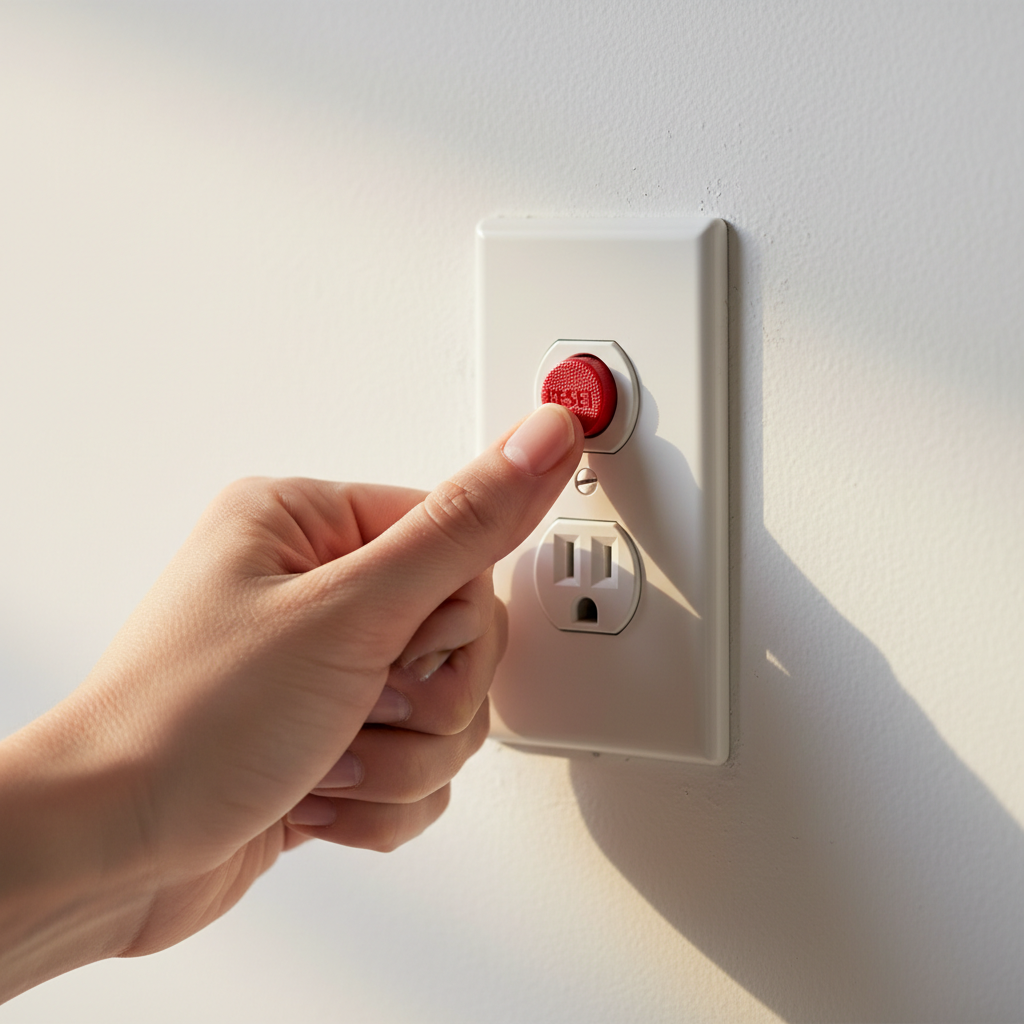
Find the outlet that's not working. In the middle, between the two receptacles, you'll see two buttons: a black one labeled TEST and a red (or sometimes white) one labeled RESET.
- Unplug everything from the outlet.
- Press RESET firmly until you hear or feel a click.
- Plug a lamp or phone charger in to confirm power is back.
If it resets and stays reset, you're done. If it pops out again immediately, keep reading.
Step 2: Find the upstream GFCI
A single GFCI outlet often protects multiple downstream outlets — sometimes the entire bathroom or all exterior outlets. If a regular-looking outlet is dead, the GFCI controlling it might be in a completely different room.
Check these locations in order:
- The bathroom closest to the dead outlet
- The garage
- The basement near the breaker panel
- The kitchen counter area
- Outside under a weatherproof cover
Press RESET on every GFCI you find, then re-test the dead outlet.
Step 3: Identify what's tripping it
If RESET works but the outlet trips again the moment you plug something in, that appliance has a fault. Unplug everything, reset, then plug devices in one at a time until you find the culprit. Common offenders: old hair dryers, space heaters, outdoor extension cords with damaged insulation, and Christmas lights.
Step 4: Check for moisture
Water in the outlet box, conduit, or appliance is the #1 reason outdoor and bathroom GFCIs trip repeatedly. Look for:
- Visible water in the outlet face
- A weatherproof cover that's cracked or missing
- Recent rain followed by a trip
- A bathroom GFCI that trips after every shower
Let the outlet dry for 24 hours, then try resetting. A hair dryer on low can speed this up — but never aim it directly at the outlet.
Step 5: Test the outlet itself
GFCI outlets wear out, especially after 10–15 years. Press the TEST button — you should hear a sharp click and the RESET button should pop out. If TEST doesn't trip it, the outlet has failed and must be replaced. (Code says you should test every GFCI in your home monthly. Almost no one does.)
Step 6: Check the breaker
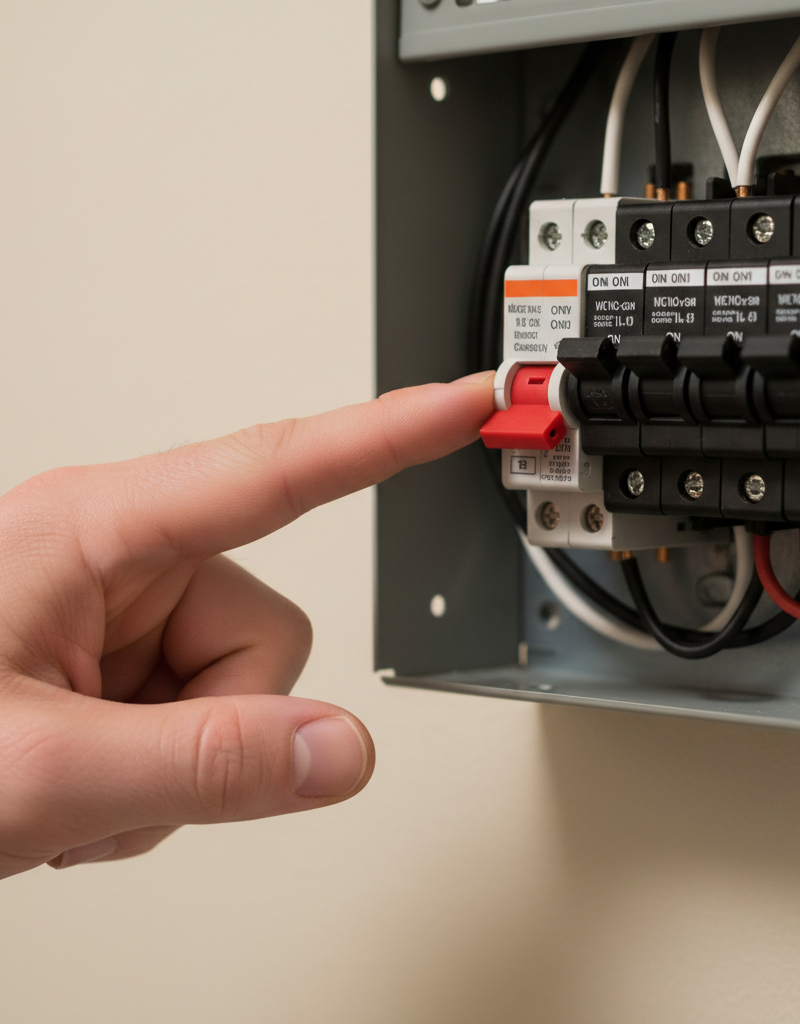
If the GFCI won't reset and the outlet has no power at all (test with a non-contact voltage tester), the upstream breaker may have tripped. Open your panel and look for any breaker that's between ON and OFF — flip it fully OFF, then back ON.
When to stop and call an electrician
- The outlet feels warm to the touch
- You smell anything burning
- You see scorch marks or melted plastic
- The outlet trips repeatedly with nothing plugged in
- You don't know which breaker controls the circuit
These are signs of a real ground fault somewhere in the wiring — not the outlet itself — and finding it requires a meter and experience.



Discussion
Loading comments…