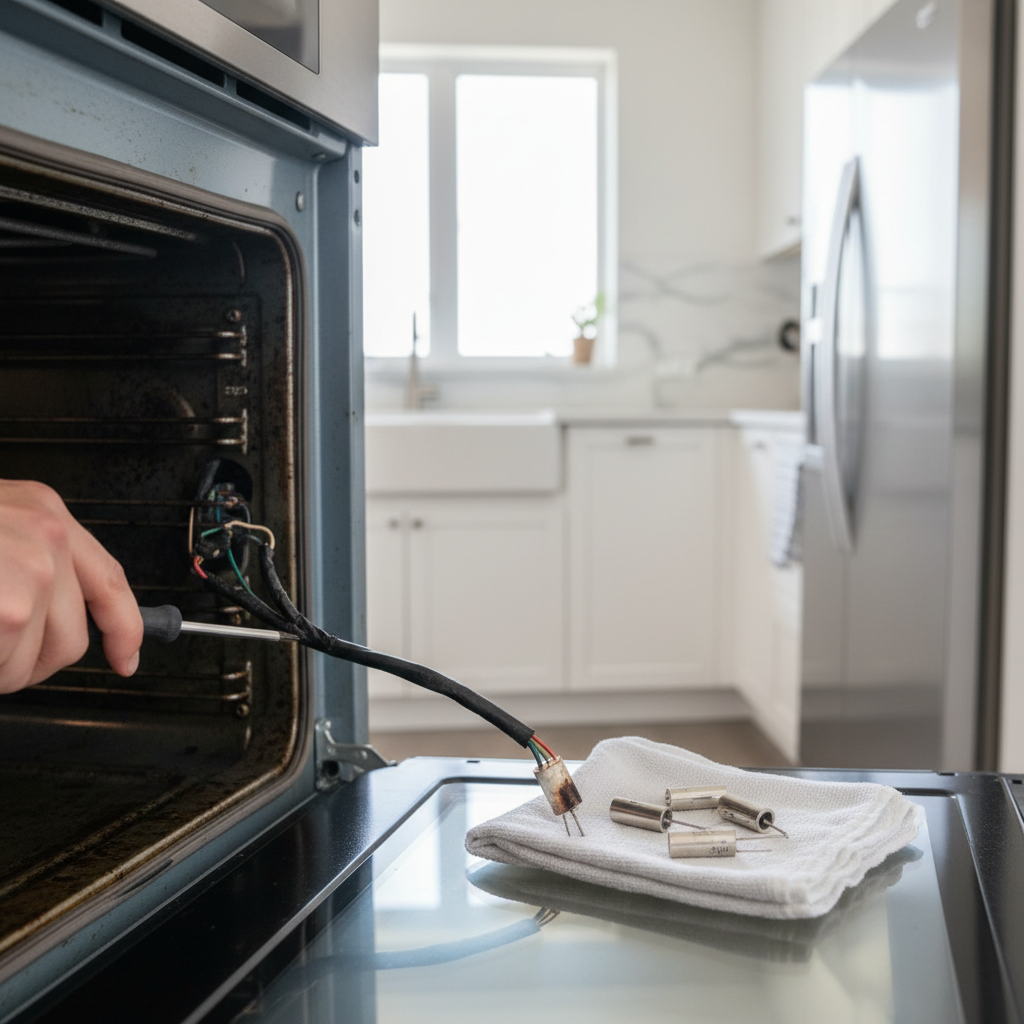
Tools & materials you'll need
Affiliate links- AmazonMultimeter1 · Essential for testing the fuse for continuity.
- AmazonNut Driver Set1 · 1/4" or 5/16" are most common for rear panels.
- AmazonScrewdriver1 · Phillips and flat-head.
- AmazonPliers1 · For pulling wire connectors if they are tight.
- AmazonWork Gloves1 pair · To protect from sharp metal edges.
- AmazonFurniture Sliders1 set · Optional, but very helpful for moving the oven.
- AmazonVacuum with Brush Attachment1 · For cleaning the cooling fan and vents.
- AmazonReplacement Thermal Fuse1 · Must be the exact part number for your oven model.
As an Amazon Associate FixlyGuide earns from qualifying purchases — at no extra cost to you. Prices and availability are accurate as of publication and subject to change.
'''
Quick Answer
Your oven's self-clean cycle is tripping the thermal fuse because the extreme heat (800-1000°F) generated overwhelms the unit's cooling system. The primary culprits are a failed or clogged cooling fan, degraded insulation, or a poor door seal, all of which cause ambient temperatures inside the oven's chassis to exceed the fuse's safety limit, forcing it to blow and cut power to prevent component damage or a fire. Replacing the fuse without addressing the underlying airflow or heat containment issue will only lead to repeated failures.
The Problem
You decided to get your oven sparkling clean. You pressed the "Self-Clean" button, the door locked, and the temperature began to climb. Hours later, you returned to a squeaky-clean oven cavity but a completely dead appliance. The clock is dark, the control panel is blank, and none of the bake, broil, or light functions work. In some cases, the oven door might even be stuck in the locked position. You run the cycle, and the oven dies—every single time. The culprit is almost always a small, inexpensive, and frustratingly effective safety part: the thermal fuse.
This fuse is designed to be the weak link in the chain, a one-time-use device that sacrifices itself to protect the expensive electronic control board (and your home) from the intense heat of the self-clean cycle. When it blows, it completely cuts the electrical circuit to the oven's controls. While replacing the fuse itself is a manageable DIY job, the real question isn't just how to replace it, but why it keeps blowing. Simply swapping in a new fuse without diagnosing the root cause is like repeatedly replacing a flat tire without finding the nail in the tread; the problem will happen again.
How It Works
To understand why the self-clean cycle is so hard on your oven, you have to understand the extreme process involved and the safety systems designed to manage it.
The self-cleaning feature in most modern electric ovens is "pyrolytic," which is a fancy term for using fire and heat to break down substances. When you initiate the cycle, the oven door automatically locks for safety, and the bake and broil elements heat the oven cavity to an astonishing 800°F to 1000°F (430-540°C). For context, a Thanksgiving turkey is typically roasted around 325°F. This punishing temperature incinerates all the baked-on grease, splatters, and food debris, turning them into a small pile of fine, carbonized ash that you can easily wipe away. This process generates an immense amount of ambient heat not just inside the oven cavity, but within the chassis of the appliance itself.
To protect the sensitive electronic controls, wiring, and the surrounding cabinetry from this heat, two key components come into play: the cooling fan and the thermal fuse. The cooling fan, typically located at the top or back of the oven, pulls ambient air from the room, circulates it over the control board and other electronics, and vents the hot air out, usually from under the control panel or above the door. It’s the whirring sound you hear during and long after the oven is turned off.
The thermal fuse is the last line of defense. It’s a simple, non-resettable temperature-sensitive switch wired in series with the main control circuit. If the temperature in the space around the oven controls (monitored by the fuse) exceeds a preset limit—often between 200°F and 250°F—the fuse filament inside melts and permanently breaks the electrical connection. This instantly kills power to the entire unit, preventing a catastrophic failure or fire. It did its job perfectly, but at the cost of rendering your oven useless until it's replaced.
The reason self-clean triggers this event is that it pushes the oven to its absolute thermal limit for several hours. If the cooling fan is weak, clogged with dust, or has failed entirely, or if the oven's fiberglass insulation has sagged or degraded over time, the heat can no longer be effectively managed. The area around the fuse overheats, and the fuse makes the ultimate sacrifice.
Step-by-Step Fix
This guide will walk you through not only replacing the blown thermal fuse but also diagnosing the reasons it failed. The goal is to provide a permanent fix, not a temporary patch.
SAFETY FIRST: This repair involves working with electricity and moving a heavy appliance. Disconnect all power before you begin.
- Turn off the breaker: Go to your home's electrical panel and flip the circuit breaker that controls your oven to the "OFF" position. Ovens are typically on a dedicated 240V double-pole breaker.
- Unplug the oven: If accessible, unplug the large power cord from the wall outlet. If it's hardwired, rely solely on the breaker and verify the oven has no power by trying to turn on the cooktop or oven light.
- Wear PPE: Use work gloves to protect your hands from sharp metal edges.
1. Pull the Oven Out — You need access to the back of the appliance. Freestanding ranges can be heavy (150-250 lbs), so you may need a helper or furniture sliders. Carefully slide the oven straight out from its space in the cabinetry. Be mindful of the flooring. There should be enough slack in the power cord to pull it out several feet.
2. Remove the Rear Access Panel — The thermal fuse is almost always located on the back of the oven. You'll see one or two metal panels attached with a series of 1/4-inch or 5/16-inch hex-head screws or Phillips-head screws. Using a nut driver or screwdriver, remove all the screws securing the main (usually upper) rear panel and set it aside.
3. Locate the Thermal Fuse — Scan the newly exposed back of the oven, typically near the top-center or top-corner of the outer oven cavity. You are looking for a small, white, ceramic, cylindrical component, about 1-2 inches long, with a wire connected to each end. It is often attached to a small metal bracket. There may be two fuses; a lower-temperature one for the general circuit and a higher-temperature one specifically for self-clean protection. The one that blows is usually the primary, higher-temp fuse mounted highest up.
4. Test the Fuse for Continuity — This is the definitive diagnostic step. * Tools: You will need a multimeter set to the continuity setting (often indicated by a sound wave or diode symbol). A meter with an audible "beep" for continuity is best. * Procedure: First, disconnect the two wires from the terminals of the fuse. They usually have spade connectors that you can pull off with pliers. Touch one multimeter probe to each of the fuse's metal terminals. * Results: If the multimeter beeps and/or shows a reading close to zero, the fuse is good and has continuity. If the meter is silent and reads "OL" (Open Line), the fuse is blown and the internal filament is broken. This confirms it is the source of the power loss.
5. Source the Correct Replacement Fuse — This is a critical safety step. You must replace the fuse with an identical part. Find your oven's model and serial number on a tag located on the oven frame (visible when you open the door or bottom drawer). Use this number to look up the exact thermal fuse part number from an online appliance parts supplier. DO NOT use a fuse with a different temperature rating. A lower-rated fuse will blow needlessly, and a higher-rated fuse will fail to protect the oven and presents a serious fire hazard.
6. Install the New Fuse — Use a screwdriver to remove the small screw holding the fuse's mounting bracket to the oven frame. Attach the new fuse in the same orientation. Securely reconnect the two wires to the terminals of the new fuse. Ensure the connections are snug.
7. Address the Root Cause: Inspect the Cooling System — Before you close everything up, investigate why the old fuse blew. * Inspect the Cooling Fan: The cooling fan is a squirrel-cage or blade-style fan located near the fuse. Look for visible blockages. Dust, pet hair, and greasy residue can clog the blades and motor, reducing its effectiveness. Spin the fan blade by hand. Does it spin freely, or does it feel stiff, gritty, or noisy? A stiff fan motor is failing and cannot reach the required RPM to cool the controls, guaranteeing the new fuse will blow. * Clean the Fan and Vents: Use a vacuum with a brush attachment and a soft cloth to thoroughly clean the fan blades, motor housing, and any associated vent openings on the back panel. * Inspect Insulation: Look at the yellow or white fiberglass insulation blanket covering the oven cavity. Over time, it can settle, become compacted, or get saturated with grease vapor, reducing its insulating properties. If the insulation has pulled away from the top of the oven, more heat will radiate upwards toward the controls, contributing to fuse failure.
8. Check the Door Gasket — A worn or damaged oven door gasket allows hot air to leak from the front of the oven, especially during the high-heat self-clean cycle. This forces the heating elements to run longer and harder, increasing the overall thermal load on the appliance and its components. Inspect the woven or rubber gasket around the oven door for any breaks, frayed spots, or areas where it is compressed flat.
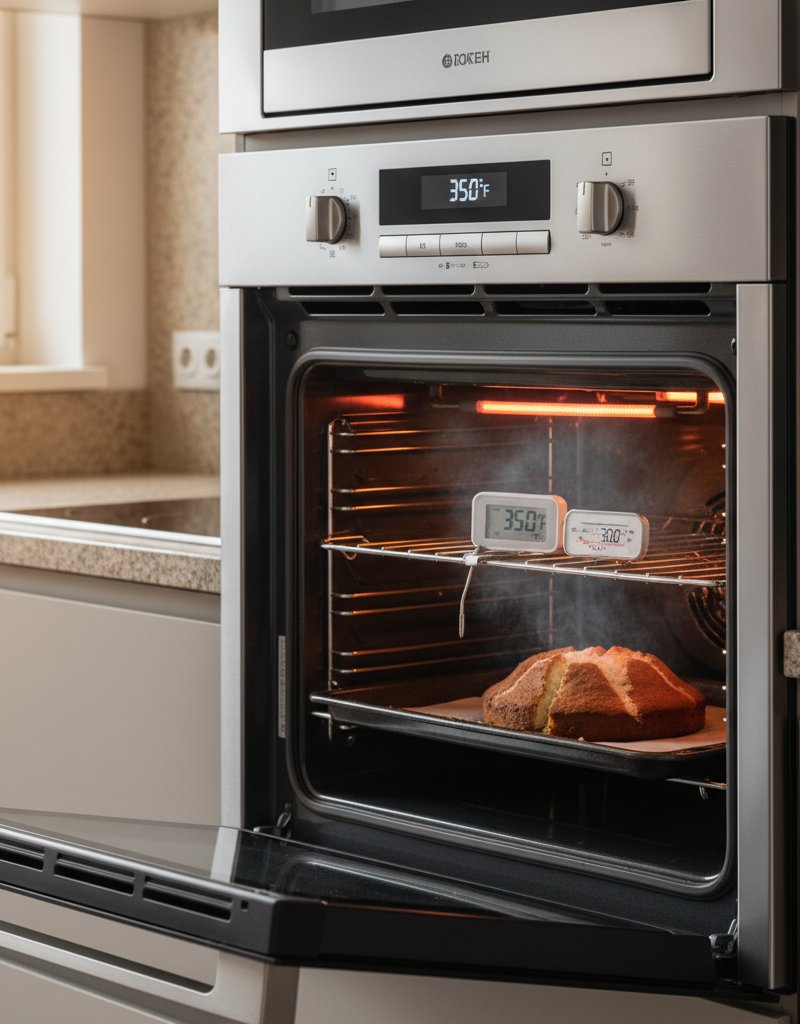
9. Reassemble and First Test — Re-install the rear access panel, ensuring you replace all the screws. Carefully slide the oven back into its position, being careful not to pinch the power cord or block the rear vents. Keep at least 1-2 inches of clearance from the wall. Restore power at the breaker panel. The oven's clock should light up. Test basic functions: turn on the oven light and start a normal bake cycle at 350°F for a few minutes. Listen for the sound of the cooling fan running. If all is well, proceed.
10. Cautiously Test the Self-Clean Cycle — If you have thoroughly cleaned the cooling fan and vents and confirmed the door gasket is in good shape, you can attempt another self-clean cycle. However, if the fuse blows again, it indicates a more serious underlying issue, such as a failing cooling fan motor or a faulty control board. At that point, a professional diagnosis is required.
Common Causes
Here is a summary of the most frequent reasons a thermal fuse blows during self-cleaning:
- Clogged or Failing Cooling Fan: This is the #1 cause. Reduced airflow from dust buildup or a worn-out motor means heat isn't evacuated from the control area fast enough.
- Degraded Oven Insulation: The insulation blanket on top of the oven cavity sags or becomes contaminated over many years, losing its ability to contain the intense heat of the self-clean cycle, which then "soaks" the upper component bay.
- Poor Oven Installation: If the oven is pushed too tightly against the rear wall, it can block exhaust vents and restrict airflow to the cooling fan, creating a pocket of superheated air.
- Faulty Door Gasket: A poor seal around the door lets heat escape, forcing the oven to work harder and longer, leading to overheating of the entire unit.
- Fuse Fatigue: While less common, a thermal fuse can sometimes fail simply due to age and the stress of thousands of heating/cooling cycles, even if the oven is otherwise fine. However, you should always assume an underlying cause first.
- Control Board Malfunction: In rare cases, the electronic control board (ERC) might fail to properly regulate the heating elements, causing a thermal runaway that the fuse correctly stops.
Common Mistakes
Avoid these pitfalls that can lead to repeat failures or safety hazards:
- Forgetting to Disconnect Power: The most critical mistake. Always turn off the breaker for your oven before starting any work.
- Installing the Wrong Fuse: Never substitute a thermal fuse with one of a different temperature or amperage rating. This defeats the safety mechanism and creates a significant fire risk.
- Just Replacing the Fuse: The biggest non-safety mistake. If you don't find and fix the reason the fuse blew (e.g., the clogged fan), the new fuse is doomed to fail again.
- Running Self-Clean with Heavy Spills: Excessive food soil or pooled grease creates more smoke and requires more energy to burn off, pushing the oven's temperature and components to their absolute limit.
- Positioning the Fuse Incorrectly: The fuse must be mounted securely in its original location. It is positioned to accurately read the ambient temperature in a specific zone. Leaving it dangling or moving it can compromise its function.
- Ignoring a Noisy Cooling Fan: A fan that is rattling, grinding, or squealing is a fan that is about to fail. Do not ignore these audible warnings.
Cost & Time Breakdown
Here’s a look at what you can expect to spend in terms of money and time for this repair, comparing a DIY approach to hiring a professional.
| Task | DIY Cost | Pro Cost | Time |
|---|---|---|---|
| Diagnostic & Fuse Replacement | $15 - $30 (for fuse & multimeter) | $150 - $250 | 1 - 2 hours |
| Cooling Fan Motor Replacement | $50 - $120 (for motor) | $250 - $400 | 2 - 3 hours |
| Oven Door Gasket Replacement | $30 - $70 (for gasket) | $125 - $225 | 30 minutes |
| Professional Diagnostic Call | N/A | $100 - $150 | 1 hour |
| Full Insulation Replacement | $80 - $150 (for insulation) | $400 - $600+ (often not cost-effective) | 3 - 5 hours |
Tips & Prevention
- Keep Vents Clear: Regularly vacuum the floor under and behind your oven. If your model has visible vents on the front, wipe them free of dust.
- Ensure Airflow: When installing or cleaning, ensure there is at least a one-inch gap between the back of the oven and the wall for proper air circulation.
- Clean Major Spills Manually: Don't rely on the self-clean cycle for large spills like a pie filling that has bubbled over. Let the oven cool and clean these up by hand to reduce the load on the self-clean cycle.
- Use Self-Clean Sparingly: On ovens more than 7-10 years old, consider the self-clean cycle a high-stress event. Using it once or twice a year, rather than monthly, can prolong the life of the fan and fuse.
- Listen to Your Oven: Pay attention to the sounds it makes. You should hear the cooling fan whirring during preheating and for a significant time after the oven is turned off. If that sound is gone, you have a problem.
- "Aqua" or "Steam" Clean: If your oven has a lower-temperature steam-cleaning option, use it for light-duty cleaning. It’s far less stressful on the appliance's components.
When to Call a Professional
While replacing a thermal fuse is a manageable job for a handy homeowner, there are clear signs that you should put down the tools and call an appliance repair technician.
If you are not comfortable working with electricity, using a multimeter, or moving a 200-pound appliance, this job is best left to a pro. The risk of electrical shock or personal injury is not worth the cost savings. If you replace the fuse and it immediately blows a second time on a normal bake cycle (not even self-clean), you likely have a more complex problem, such as a short in the wiring or a faulty control board, which requires expert diagnostics.
Furthermore, if you inspect the cooling fan and find that the motor itself is seized or clearly burned out, and you don't feel confident replacing it, a technician can perform the job efficiently. Any signs of burned or melted wiring, or a strong smell of burning plastic from the control area, are immediate stop signs. This points to a more dangerous short circuit that needs professional attention. Finally, if your oven is a gas range, the added complexity and safety risk of gas lines mean any repair beyond a simple gasket replacement should be handled by a qualified professional. '''
Related Articles
Keep troubleshooting with these hand-picked guides from FixlyGuide:
- That Self-Clean Button? It Could Cost You $400. — Before you press that button, understand the oven self-clean danger many homeowners face. This convenient feature can lead to toxic fumes,…
- Why Did Just One Electric Stove Burner Stop Working? — It's a common kitchen puzzle: one electric stove burner suddenly quits while the others work perfectly. We dive into the simple, independen…
- That Mildew Smell in Your Washer? Here’s the Real Reason — Is a musty odor taking over your laundry room? That mildew smell from your washing machine isn't just unpleasant—it's a sign of a deeper pr…
- Why Your Dishwasher Leaves Dishes Wet (And How to Fix It) — If your dishwasher leaves dishes wet after a cycle, it's a common and frustrating problem often caused by issues with rinse aid, loading, o…
- Your Refrigerator's Loud Hum? The Fix Most People Miss — A constant, loud refrigerator hum is more than annoying—it's a warning sign. Before you call a pro, discover the #1 most overlooked cause a…
- The Secret Reason Your Oven Fails to Heat (It's NOT Always the Element) — Discover why your oven isn't reaching its set temperature, from common part failures to overlooked calibration issues, and how to fix it.
Frequently asked questions
Can I just bypass or reset an oven thermal fuse?+
Absolutely not. A thermal fuse is a one-time safety device. It cannot be reset. Bypassing it by connecting the wires together would eliminate a critical safety feature designed to prevent overheating and fire. Always replace a blown fuse with an identical part.
Why is my oven door locked shut after the fuse blew?+
The oven door lock is an electronic mechanism that requires power to actuate. When the thermal fuse blows, it cuts all power to the oven controls, including the lock motor. To unlock it, you must first restore power by replacing the blown fuse. In emergencies, some models have a manual release, but this is often difficult to access and replacing the fuse is the proper procedure.
Is it worth fixing an old oven that keeps blowing fuses?+
It depends on the root cause. If the fix is a $20 thermal fuse and a good cleaning of the fan, it's absolutely worth it. If the cooling fan motor ($100+ part) needs replacement on a 15-year-old oven, you might start weighing the cost against the price of a new appliance, as other components may be nearing the end of their service life as well.
How can I tell if the cooling fan is working correctly?+
The easiest way is to listen. During a normal bake cycle, especially as the oven preheats, you should hear a distinct whirring or fan sound from the control panel area. This sound should continue for a considerable time even after you turn the oven off, as it works to cool the electronics. If you never hear this fan, its motor has likely failed.
Discussion
Loading comments…