Tools & materials you'll need
Affiliate linksAs an Amazon Associate FixlyGuide earns from qualifying purchases — at no extra cost to you. Prices and availability are accurate as of publication and subject to change.
'''
Quick Answer
Your washing machine smells like mildew because of mold and bacteria buildup in the rubber gasket, dispenser drawer, and unseen drum components. This is caused by a combination of soap scum, body soil, and trapped moisture from residual water after each wash. To permanently eliminate the odor, you must manually scrub the gasket and dispenser, clean the drain filter, and run two separate, consecutive hot-water cleaning cycles: one with chlorine bleach to kill the mold and mildew, and a second with distilled white vinegar to dissolve soap scum and mineral deposits.
The Problem
You rely on your washing machine to produce fresh, clean laundry. So, when your clothes—and the entire laundry room—start smelling musty, funky, and distinctly like mildew, it's both frustrating and confusing. You might even notice that clothes smell fine coming out of the washer, but develop a sour odor as they dry. This isn't your imagination; it's a clear sign that the machine itself has become a breeding ground for mold and mildew.
The issue is particularly notorious in high-efficiency (HE) front-loading washing machines, though top-loaders are not entirely immune. The airtight seal on a front-loader's door, designed to prevent water leaks, also traps moisture inside the drum when not in use. This dark, damp environment, combined with the residue left behind from detergents and fabric softeners, creates the perfect habitat for smelly microbial growth. You may see visible evidence—black or gray specks on the door's rubber gasket—or the problem might be hidden deeper within the machine's components, perfuming your laundry with that unmistakable mildew smell. Simply masking the odor with scented detergents won't solve the root cause; you need to perform a specific deep clean to eradicate the source.
How It Works
The persistent mildew smell in a washing machine is a direct result of a biological process. It’s a classic "mold triangle": you need moisture, a food source, and a warm, dark environment for mold and mildew spores to thrive. Your modern washing machine, ironically, provides all three in abundance.
Moisture: Modern high-efficiency washers are designed to use very little water. While this is great for conservation, it means they may not always have enough water to fully flush away all the detergent, soil, and additives. Small pools of water are inevitably left behind in the drum, the bellows-like door gasket, the dispenser drawer, and, most critically, in the low-lying drain pump and outer tub assembly that you can't see.
Food Source: What does mold eat? It feeds on organic material. In your washer, the primary food sources are lint, body soil (oils, skin cells), and the chemical residues from laundry products. Liquid fabric softeners and overuse of detergent are major culprits. They create a sticky, biofilm-like layer on the surfaces of the drum and hoses—a veritable feast for mildew.
Environment: Once the wash cycle is done and you close the door, you seal in the moisture and food source, creating a dark, stagnant, room-temperature incubator. The rubber door gasket, with its multiple folds, is the most common and visible site for this growth. However, the smell often comes from the gunk-coated space between the inner wash basket you see and the outer tub that holds the water. A deep clean works by systematically sterilizing and dissolving the buildup in all these hidden areas.
Step-by-Step Fix
This two-stage process using common household products is more effective than most single-use washer cleaning tablets for tackling a serious odor problem. Always wear gloves and ensure the room is well-ventilated.
-
Safety First & Gather Supplies — Unplug your washing machine from the wall outlet for safety. Gather your supplies: chlorine bleach, distilled white vinegar, several old towels or microfiber cloths, a scrub brush or old toothbrush, and a shallow pan. Put on your protective gloves.
-
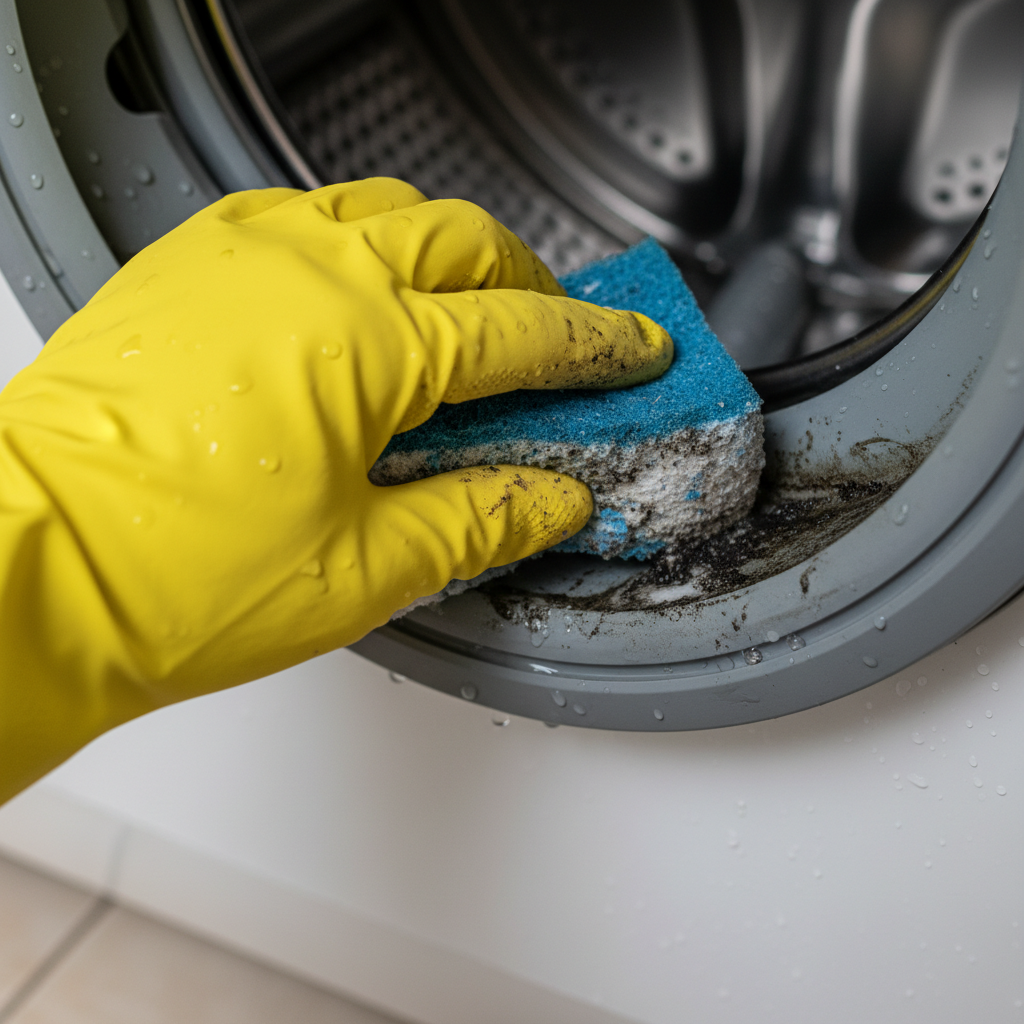
Deep Clean the Door Gasket — This is the most crucial manual step for front-loaders. Gently pull back the large rubber seal (the bellow) between the door opening and the drum. You will likely find a collection of lint, hair, and slimy, dark residue. Spray the inside of the gasket liberally with a 50/50 solution of white vinegar and water, or use a non-abrasive bathroom cleaner. Use your toothbrush or scrub brush to meticulously clean inside all the folds until all grime is gone. Wipe it dry with a cloth.
-
Remove and Scrub the Dispenser Drawer — Most dispenser drawers can be fully removed. Look for a press-down tab or button, often labeled "Push," near the back of the drawer. Pull the drawer out completely. Disassemble any parts like the softener or bleach inserts. Soak the entire drawer and its components in a sink of hot, soapy water or a vinegar solution for 30 minutes. Use a brush to scrub away all the caked-on, slimy residue, paying close attention to the small nooks and the underside. Rinse thoroughly.
-
Clean the Dispenser Housing — With the drawer removed, you can now access the cavity it slides into. This area is often coated in a black, slimy film. Using your vinegar spray and a bottle brush or toothbrush, scrub the interior of the housing, especially the "roof" where water nozzles are located. These nozzles can get clogged with buildup. Wipe everything down with a cloth.
-
Clean the Drain Pump Filter — This is a non-negotiable step. Locate the small access door, usually on the bottom-front of your machine. Place a shallow pan and an old towel underneath it to catch water. Slowly twist the filter cap counter-clockwise; water will begin to drain out. Once it stops, fully remove the filter. It will likely be covered in lint, hair, and potentially lost items like coins or buttons. Thoroughly clean the filter under running water and wipe out the inside of the filter housing before securely screwing it back in.
-
Cycle 1: The Bleach Sanitize Run — Re-insert the clean dispenser drawer and plug the machine back in. Do not add any laundry. Add 2 cups of liquid chlorine bleach directly into the main detergent compartment of your dispenser drawer. Run the machine on its hottest, longest, and largest load-size setting. This is often called a "Sanitize," "Tub Clean," or "Heavy Duty" cycle. This potent bleach cycle will kill the vast majority of mold, mildew, and bacteria throughout the inner drum, outer tub, and hoses.
-
Cycle 2: The Vinegar Descale Run — WARNING: Never mix bleach and vinegar. Once the bleach cycle is completely finished, it's time for the second stage. Pour 4 cups of distilled white vinegar directly into the drum of the washing machine. Run the exact same cycle again: hottest water, longest time, largest load setting. The acidity of the vinegar works to break down and flush away any remaining soap scum, mineral deposits (limescale), and residue that the bleach couldn't remove.
-
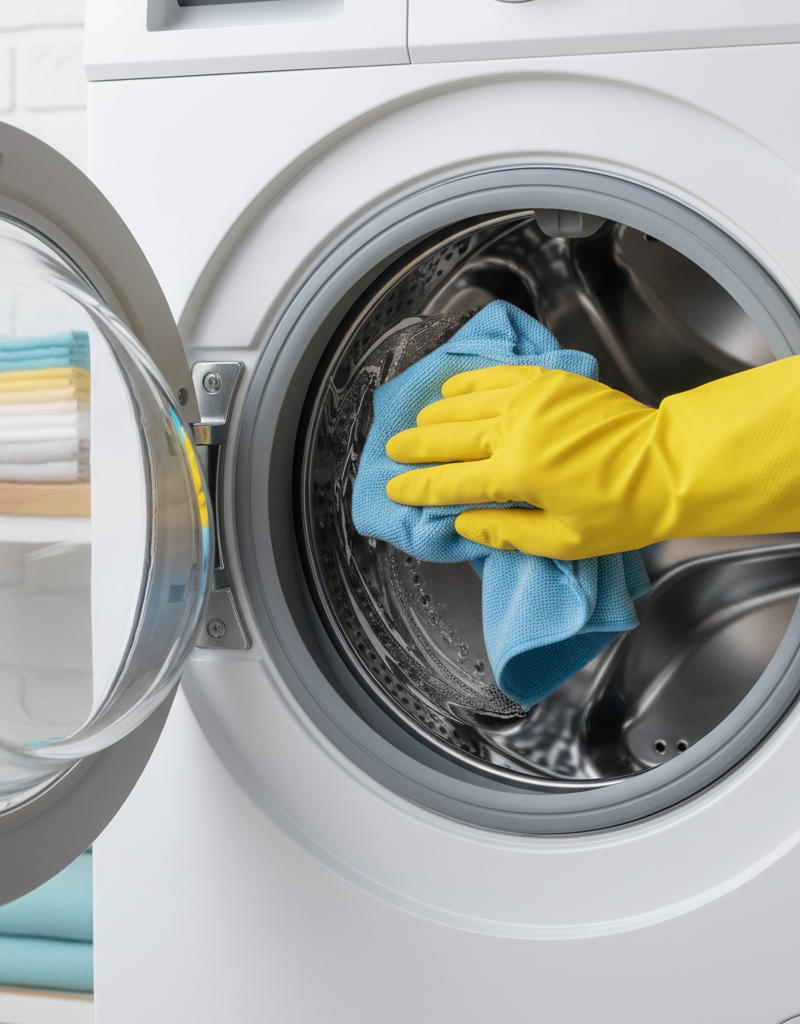
Final Wipe and Dry — After the vinegar cycle completes, the interior of your washer should be sparkling. Take a clean, dry cloth and wipe down the drum, the inside of the door, and the door gasket one last time to remove any loosened particles.
-
Leave Everything Open — This is a critical habit to adopt. Leave the washing machine door wide open or at least ajar. If possible, also leave the dispenser drawer pulled out slightly. This allows air to circulate and the entire machine to dry out completely, preventing new mold growth before it can start.
Common Causes
Understanding why your washing machine smells like mildew is key to preventing its return. The issue is almost always a combination of machine design and user habits.
- Overdosing Detergent: Modern HE detergents are highly concentrated. Using more than the recommended amount (often just a few tablespoons) doesn't make clothes cleaner. The washer can't rinse the excess soap away, leaving a sticky film on the drum and hoses that mildew adores.
- Fabric Softener Use: Liquid fabric softener is a primary cause of waxy, water-insoluble buildup. This residue coats the inside of your machine and becomes a prime food source for mold.
- Immediately Closing the Door: The airtight seal on a front-loader is perfect for trapping residual moisture after a cycle. A damp, dark, and unventilated drum is the ideal environment for mildew to flourish.
- Exclusive Use of Cold Water: Washing primarily in cold water is energy-efficient but less effective at breaking down body oils, soap scum, and killing bacteria. Regular hot washes help to keep the system flushed and sanitized.
- Leaving Wet Clothes Inside: Letting a finished load of wet laundry sit in the machine—even for a few hours—super-charges the humidity inside the drum and promotes mildew growth on both your clothes and the machine itself.
- Neglecting the Drain Pump Filter: A clogged filter prevents the machine from draining all the water. This leaves a small, stagnant pool of dirty water at the bottom of the outer tub after every wash, continuously feeding new mold growth.
Common Mistakes
Avoid these common errors when tackling and preventing washing machine odors:
- Relying Solely on "Tub Clean" Tablets: While helpful for monthly maintenance, these tablets alone are not enough for a deep clean. They can't manually scrub the grime from the gasket or remove the sludge from the dispenser drawer and filter.
- Mixing Bleach and Vinegar: Never, ever mix chlorine bleach and vinegar, even in separate dispenser compartments during the same cycle. This combination creates toxic chlorine gas, which is extremely hazardous to inhale.
- Forgetting to Clean Key Components: The number one mistake is running a cleaning cycle without first manually scrubbing the gasket, dispenser drawer, and cleaning out the drain pump filter. Most of the "food" for the mold lives in these accessible areas.
- Ignoring the Smell When It's Faint: A faint musty odor is the first warning sign. Addressing it immediately with a maintenance clean is much easier than tackling a full-blown mildew infestation later.
- Switching to a Scent-Boosting Detergent: Using heavily perfumed soaps or scent beads to cover the mildew smell is a temporary fix that worsens the problem by adding more residue to the machine.
Cost & Time Breakdown
Here is a realistic breakdown of what to expect when tackling a smelly washer yourself versus hiring a professional.
| Task | DIY Cost | Pro Cost | Time Commitment |
|---|---|---|---|
| Gasket & Dispenser Scrub | < $1 (vinegar) | (part of service) | 20-30 minutes |
| Drain Pump Filter Clean | $0 | (part of service) | 10-15 minutes |
| Bleach Cleaning Cycle | $1-3 | $0 | 1.5 - 2.5 hours (machine time) |
| Vinegar Cleaning Cycle | $2-4 | $0 | 1.5 - 2.5 hours (machine time) |
| Total DIY Deep Clean | $3 - $8 | N/A | 3.5 - 5.5 hours (mostly passive) |
| Professional Deep Clean Service | N/A | $150 - $250 | 1 - 2 hours (technician time) |
Tips & Prevention
Once your machine is clean, keeping it that way is simple with a few new habits.
- Wipe and Dry After Every Use: Make it a habit to quickly wipe the inside of the door gasket with a dry cloth after your last load of the day. It takes 15 seconds and is the single most effective prevention strategy.
- Leave the Door Ajar: Always leave the washer door open when not in use to allow for complete moisture evaporation. A magnetic door stopper can be a great investment if the door swings too wide.
- Measure Detergent Carefully: Use a high-quality HE detergent and follow the manufacturer's instructions for load size. For most loads, this is only 1-2 tablespoons. Less is more.
- Ditch the Fabric Softener: Stop using liquid fabric softener. Opt for wool dryer balls to reduce static and soften clothes, or add a half-cup of white vinegar to your washer's fabric softener dispenser for a natural softening and rinse-aid effect.
- Perform a Monthly Maintenance Clean: Once a month, run an empty hot cycle. You can alternate between a cup of bleach one month and two cups of vinegar the next to keep any new buildup at bay.
- Run a Hot Wash Weekly: Wash items like towels, sheets, or whites on a "Hot" or "Sanitize" setting once a week. The high temperature helps kill germs and dissolve oily residues.
When to Call a Professional
While the DIY deep clean resolves the issue for most people, there are times when you need an expert. If you have followed all the steps above meticulously and the powerful mildew smell returns within a week or two, it’s time to call an appliance repair technician. A persistent odor could be a sign of a more serious problem that is inaccessible to a homeowner, such as a severe clog in the main drain hose or vent tube, a partially failed drain pump that isn't fully emptying the tub, or extreme buildup on the outside of the inner drum that requires partial disassembly of the machine to clean. If you notice any water leaking, the machine makes loud grinding or thumping noises, or it fails to drain completely after cleaning the filter, stop using it and schedule a professional service call to diagnose the underlying mechanical or plumbing issue. '''
Frequently asked questions
Can I just use washer cleaning tablets instead of bleach and vinegar?+
Cleaning tablets are excellent for monthly maintenance on an already clean machine. However, for an existing, strong mildew smell, they are not a substitute for the manual scrubbing of the gasket/dispenser and the two-stage bleach and vinegar cycles, which are more powerful for a true deep clean.
How often should I deep clean my washing machine?+
You should perform this deep clean whenever you notice a persistent musty or mildew odor returning. After the initial deep clean, a monthly maintenance clean (a hot cycle with either bleach or vinegar) should be enough to prevent the problem from coming back.
Will white vinegar damage my washing machine's rubber parts?+
No, the diluted acetic acid in white vinegar is safe for the seals and hoses in modern washing machines. It is highly effective at dissolving hard water mineral deposits and soap scum without harming the components. It's much safer than using harsh, undiluted chemicals.
My top-loading washer smells too. Is the process the same?+
Yes, the principles are identical. While top-loaders have fewer issues because the lid isn't airtight, they can still build up residue. Clean any dispenser trays, the rim of the tub, and the agitator or wash plate. Then, run the same two-step bleach and vinegar hot-water cycles to eliminate the odor.
Discussion
Loading comments…