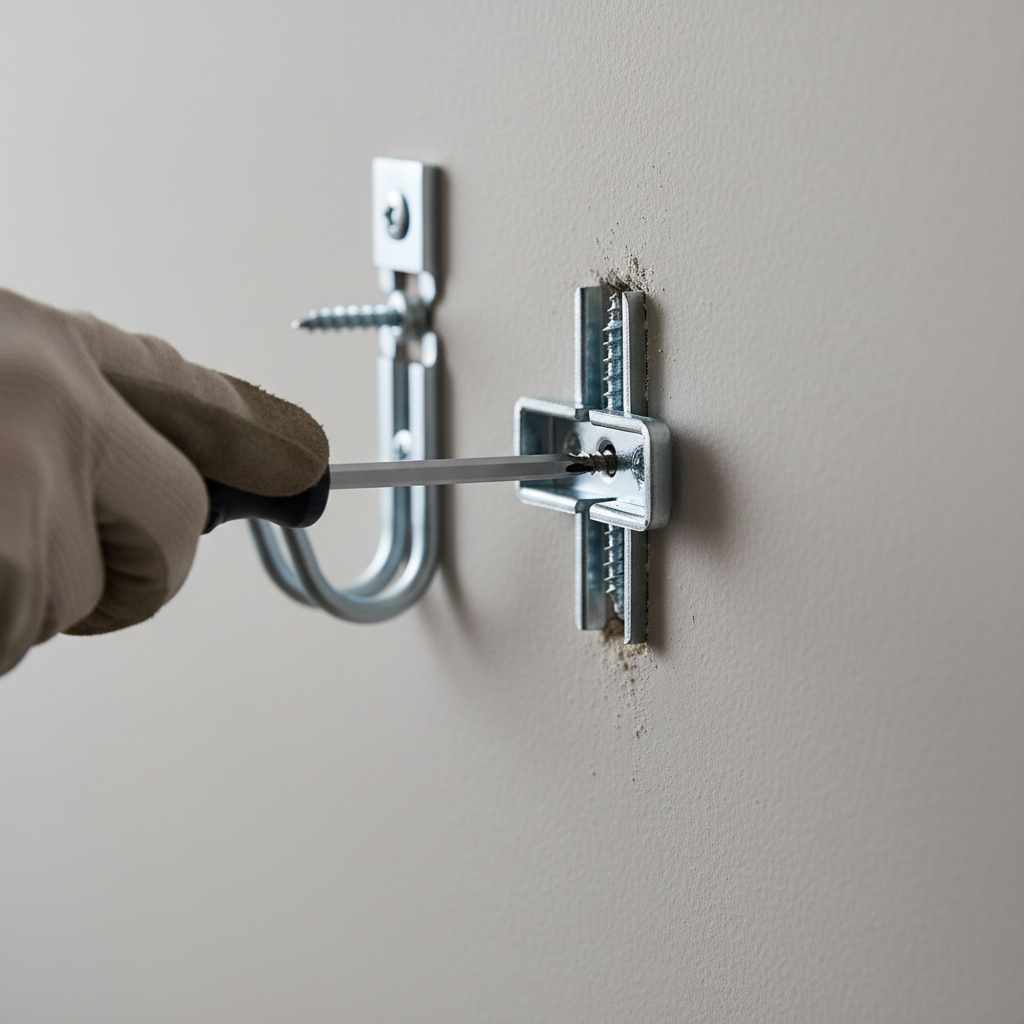
Tools & materials you'll need
Affiliate linksAs an Amazon Associate FixlyGuide earns from qualifying purchases — at no extra cost to you. Prices and availability are accurate as of publication and subject to change.
Quick Answer
To hang a heavy mirror on drywall where no studs are present, the secret is to use a high-capacity, weight-rated wall anchor, such as a snap-toggle or a traditional toggle bolt. You must never rely on the small plastic anchors or simple screws that often come packaged with the mirror, as they are not designed for significant loads. The key is to calculate your mirror's total weight, select an anchor rated for at least double (ideally four times) that weight to ensure a wide safety margin, and follow the installation instructions precisely to guarantee a secure hold that protects your wall, the mirror, and anyone below it.
The Problem
A heavy mirror, whether it's a 50-pound framed antique or an 80-pound modern piece, exerts a significant downward force, known as a shear load, on whatever is holding it. Drywall, a relatively soft material composed of gypsum plaster pressed between two sheets of paper, has very little structural integrity on its own. Driving a nail or screw directly into it is like pushing a pin into a piece of foam—it can't support any meaningful weight. Homeowners often underestimate this, leading to the all-too-common disaster: a loud crash in the middle of the night, a shattered mirror, a huge gash in the wall, and the potential for serious injury. The flimsy plastic anchors often included with home decor items are designed for lightweight picture frames at best and are completely inadequate for anything substantial. Relying on them for a heavy mirror isn't a matter of if it will fail, but when.
How It Works
The secret to securely fastening anything to drywall lies in understanding fastener physics and selecting the right hardware. The fastener doesn't rely on the strength of the gypsum core but on clamping onto the back of the drywall panel itself, distributing the load over a much larger surface area.
Here's a breakdown of the forces and the hardware that masters them:
-
Shear and Tension Forces: A mirror hanging on a hook places a primarily shear load on the fastener (pulling downward, parallel to the wall). If the mirror is bumped or mounted with a wire that pulls the top away from the wall, it also introduces a tensile load (pulling outward, perpendicular to the wall). A good anchor must resist both.
-
The Anatomy of a Failure: A simple nail or screw in drywall fails because the threads or shaft have very little material to bite into. The gypsum crumbles under the load, the hole widens, and the fastener pulls out. Small plastic expansion anchors work by spreading open slightly within the drywall, but the surface area is minimal, providing a weak grip that can't handle heavy loads. They are only rated for about 10-25 pounds in optimal conditions.
-
The Anchor That Actually Works: The Toggle Bolt: The gold standard for heavy applications in hollow walls is the toggle bolt. It consists of two parts: a machine bolt and a spring-loaded "wing" or "toggle." You drill a hole large enough for the folded toggle to pass through. Once inside the wall cavity, the wings spring open. As you tighten the bolt, the wings brace against the back of the drywall, distributing the load over a wide, stable area. This clamping action is incredibly strong.
- Traditional Toggle Bolts: Can hold from 50 to over 100 pounds, depending on their size and the thickness of the drywall (typically 1/2-inch). Their main drawback is that you must drill a fairly large hole (1/2" or more) and the toggle is lost inside the wall if you ever remove the bolt.
- Snap-Toggles (e.g., Toggler SNAPTOGGLE): This modern evolution of the toggle bolt is even better. It features a plastic strap and a metal toggle channel that you insert through the hole. You then slide a cap along the straps to brace the channel against the back of the wall and snap off the excess straps. This leaves you with a permanently threaded fixture in the wall, allowing you to remove and re-insert the bolt as needed. They provide the same, if not greater, load capacity (often 100+ pounds in shear) with a cleaner installation process.
Essentially, the "secret" isn't a proprietary trick but a fundamental engineering principle: bypass the weak gypsum and use the entire drywall panel as a brace. The toggle mechanism is the key to achieving this.
Step-by-Step Fix
1. Weigh the Mirror & Check the Hardware — Before you do anything, use a bathroom scale to get an accurate weight for your mirror. If it came with D-rings or a wire, inspect them. For heavy mirrors (over 50 lbs), a wire is less safe than two independent hooks. A wire concentrates all the weight onto a single point and allows the mirror to swing, which can cause the fastener to work itself loose over time. Two independent D-rings are always superior.
2. Locate Studs (The Best-Case Scenario) — Use a high-quality electronic stud finder to scan the wall where you want to hang the mirror. Mark the edges of any studs you find with a pencil. If a stud happens to be perfectly located for your mirror, your job is simple. You can drive a long screw directly into the stud and hang the mirror with confidence. This is always the preferred method. If no stud is conveniently located, proceed to the anchor method.
3. Calculate and Mark Your Anchor Points — Measure the distance between the D-rings on the back of your mirror. If using a wire, pull it taut to the top of the frame to mimic how it will hang and measure to that point. Transfer these measurements to the wall using a tape measure, a 48-inch level, and a pencil. Use the level to ensure your marks are perfectly horizontal. For two-hook installations, this step is critical for a level mirror.
4. Select the Right Toggle Anchor — Based on your mirror's weight, choose your anchor. For a 50-pound mirror, don't buy an anchor rated for 50 pounds. You need a significant safety margin. A good rule of thumb is a 2x to 4x safety factor. For a 50-pound mirror, choose an anchor system rated for at least 100 pounds. For an 80-pound mirror, look for something rated for 200+ pounds. A 1/4-inch or 3/8-inch snap-toggle is an excellent choice for almost any heavy mirror.
5. Drill the Pilot Hole — The anchor packaging will specify the exact drill bit size required. This is not a suggestion; it is a requirement. For a typical heavy-duty snap-toggle, this might be a 1/2-inch hole. Place a piece of painter's tape over your pencil mark to prevent the drill from "walking" and to ensure a cleaner hole. Drill straight into the drywall at your mark.
6. Insert the Toggle Anchor — For a snap-toggle: Hold the metal channel flat alongside the plastic straps and push it through the hole. Wiggle it to ensure the channel has flipped vertically behind the drywall. For a traditional toggle: Unscrew the bolt, place the toggle through the hole, and listen for the spring-loaded wings to pop open.
7. Set the Anchor — For a snap-toggle: Slide the plastic cap down the straps until it is flush with the wall. Hold the straps and pull the cap tight to clamp the toggle channel against the back of the drywall. Snap the straps off by bending them back and forth. For a traditional toggle: Re-insert the bolt through your hook or hanging hardware, then into the toggle inside the wall, and tighten it until it feels snug.
8. Install the Hook/Screw — With the snap-toggle captive nut now firmly in the wall, place your hook over the hole, insert the included machine bolt, and tighten it with a screwdriver. Do not overtighten—just make it snug. The anchor is doing the work, not the torque of the screw.
9. Test the Hold — Before hanging the mirror, pull down firmly on the installed hook(s) with your hand. It should feel absolutely solid, with no wiggling or give. This simulates the load and confirms the anchor is properly engaged.
10. Hang the Mirror... Carefully! — Get a helper for this step. Heavy mirrors are awkward and dangerous to lift alone. Lift the mirror, line up the D-rings or wire with the hooks, and gently lower it into place. Double-check that it is securely seated on the hooks. Step back and use your level to check that it's straight, adjusting as needed.
Common Causes
- Anchor Type Mismatch: The number one cause of failure is using a small, plastic expansion anchor or a simple nail for a heavy object. These are not designed for shear loads exceeding 10-20 pounds.
- Incorrect Installation: Even a high-quality toggle bolt will fail if installed incorrectly. This includes drilling a hole that is too large, which prevents the toggle from getting a firm grip on the back of the drywall.
- Dynamic Loading: The listed weight capacity of an anchor is for a static load (an object that doesn't move). If a mirror is in a high-traffic area where it can be bumped, or in a house that experiences vibrations, the effective load increases, potentially leading to failure over time.
- Degraded Drywall: Older drywall, or drywall that has been exposed to moisture, can be brittle and weak. An anchor installed in compromised drywall will not perform to its rated capacity and may fail by tearing a large chunk out of the wall.
- Missing the Stud: A homeowner might believe they are screwing into a stud but have only caught the edge or missed it entirely. The screw will feel tight initially but has no real holding power in the empty wall cavity.
Common Mistakes
- Trusting the Included Hardware: Assuming the screws and anchors that came with the mirror are adequate. They are almost never suitable for a heavy mirror on drywall.
- "Knock and Guess" for Studs: Relying on knocking on the wall to find a stud is notoriously inaccurate and should never be trusted for a heavy installation.
- Ignoring the Safety Factor: Using a 50-lb anchor for a 48-lb mirror. Always buy anchors rated for at least twice, and ideally four times, the weight of the object.
- Forgetting to Account for Wire Slack: When using a wire, failing to measure from the peak of the taut wire, resulting in the mirror hanging much lower than intended.
- Overtightening the Bolt: Cranking down on the final screw with excessive force can strip the threads in the toggle or even crack the drywall around the anchor, weakening the installation.
- Drilling a Messy or Oversized Hole: Using the wrong size bit or a dull bit can create a jagged, oversized hole that the anchor can't grip properly.
Cost & Time Breakdown
| Task | DIY Cost | Pro Cost | Time |
|---|---|---|---|
| Materials (Anchors/Screws) | $5 - $15 | (Included in labor) | 10 mins (shopping) |
| Tool Purchase (Stud Finder) | $20 - $50 | (Included) | N/A |
| Layout and Marking | $0 | $20 - $30 | 15 - 20 mins |
| Anchor Installation | $0 | $40 - $60 | 10 - 15 mins |
| Hanging & Leveling | $0 (plus a friend) | $40 - $60 | 10 - 15 mins |
| TOTAL | $25 - $65 | $100 - $150 | 35 - 50 mins |
Tips & Prevention
- Use Painter's Tape for Marking: Before you measure, apply a long strip of blue painter's tape on the wall. You can make all your pencil marks on the tape, which is easier to see and can be removed without a trace.
- The Toothpaste Trick: To transfer hanging points from the mirror to the wall, put a tiny dab of toothpaste on the D-rings. Press the mirror against the wall where you want it to hang, and the toothpaste will leave perfect marks for your drill points.
- Clean the Mirror First: It's much easier and safer to clean the glass and frame thoroughly before you hang the mirror on the wall.
- Always Use a Level: Don't eyeball it. Use a long level (24" or 48") to ensure your anchor points are perfectly aligned. A crooked heavy mirror is very noticeable.
- Get a Helper: For any mirror over about 30 pounds, attempting to hang it by yourself is a recipe for a strained back or a broken mirror. Don't be a hero.
- Ditch the Wire: If your heavy mirror comes with a hanging wire, consider removing it and adding D-rings to the frame instead. Two independent anchor points are always safer than one.
When to Call a Professional
While hanging a heavy mirror is a very manageable DIY project, there are specific situations where calling a professional handyman or installer is the smartest choice. If the mirror is exceptionally heavy (over 100 pounds) or is an irreplaceable antique, the risk may outweigh the cost savings. Professionals have experience with a wide variety of wall types and specialized anchoring systems. You should also call a pro if you are dealing with a wall surface other than standard drywall, such as plaster and lath, brick, or concrete, as these require different tools and anchoring techniques. Finally, if you feel any uncertainty about the process—from finding studs to drilling holes—a professional can complete the job quickly and give you peace of mind that your investment is secure and your family is safe.
Related Articles
Keep troubleshooting with these hand-picked guides from FixlyGuide:
- Your Floating Shelves Failed? 3 Hidden Drywall Mistakes. — Learn how to safely and securely install floating shelves into drywall using the right anchors and tools, avoiding common mistakes.
- Your Floating Shelves Sag? The 3 Drywall Mistakes You're Making — Learn how to install floating shelves into drywall securely and prevent common issues like wobbling or damage with the right tools and tech…
- The 7 Critical Wall Prep Mistakes That Ruin Your Paint Job (And How to Fix Them) — Discover the crucial wall preparation steps often overlooked by DIYers that lead to peeling, cracking, and uneven paint finishes, and learn…
- The 4-Inch Drywall Hole Fix: Why Spackle Alone Always Fails — Learn the right way to patch a small drywall hole (up to 4 inches) to ensure a strong, invisible repair that spackle alone can't achieve.
- That New Grout Is Already Cracking? Here’s the Hidden Cause — Cracked grout weeks after a renovation is often a sign of a deeper issue with your subfloor or tile installation, not just a problem with t…
- The Secret Cause of Your Leaky Chimney (It's Not Always the Obvious Suspect) — A leaking chimney during rain can signify several issues, often stemming from a deteriorated crown rather than just flashing.
Frequently asked questions
What is the best anchor for hanging a heavy mirror on drywall?+
The best anchors are toggle bolts or snap-toggles. They brace against the back of the drywall, distributing the weight over a large area, and can often hold over 100 pounds safely.
How much weight can drywall hold with anchors?+
It depends entirely on the anchor. A standard plastic anchor might hold 10-25 pounds. A self-drilling anchor can hold up to 50 pounds. A high-quality toggle bolt can hold over 100 pounds in 1/2-inch drywall.
Can I hang a 50 lb mirror on drywall?+
Yes, you can safely hang a 50 lb mirror on drywall, provided you do not use a simple nail or screw. You must use a heavy-duty wall anchor rated for at least 100 pounds, such as a 1/4-inch toggle bolt or snap-toggle.
Is it better to hang a heavy mirror on one or two hooks?+
It is always safer to hang a heavy mirror on two independent hooks rather than a single wire. Two hooks distribute the load and prevent the mirror from swinging, which could cause a single fastener to fail over time.
What if I can't find a stud to hang my mirror?+
If you cannot find a wall stud in the desired location, your best and safest option is to use a toggle-style drywall anchor. Choose one with a weight rating that is at least double the weight of your mirror.
Discussion
Loading comments…