Tools & materials you'll need
Affiliate links- AmazonReplacement batteries (9V, AA, or CR123A)1-2
As an Amazon Associate FixlyGuide earns from qualifying purchases — at no extra cost to you. Prices and availability are accurate as of publication and subject to change.
Quick Answer
That persistent chirp from your smoke detector every 30-60 seconds is almost universally a low battery warning. It’s an urgent alert designed to get your attention and ensure your home remains protected. While a dead battery is the most common culprit, especially in older units, there are a few other reasons your detector might be telling tales out of school, including dust accumulation, an expiring unit, or a power interruption in hardwired systems. Fixing it usually involves a simple battery swap or a quick cleaning, bringing back peace and quiet—and more importantly, reliable safety—to your home.
The Problem
That maddening chirping sound, typically repeating every 30 to 60 seconds, is your smoke detector's way of crying for help. It's not a malfunction; it's a built-in safety feature designed to alert you to a critical maintenance need. The overwhelming majority of the time, this specific pattern means the battery is low and needs to be replaced. However, if you've already swapped batteries and the chirping continues, the problem could be a dust-clogged sensor, an expired unit that needs full replacement, or, for hardwired detectors, a temporary power outage or loose connection. Ignoring this chirp isn't just an annoyance; it means your smoke detector might not function when you need it most, putting your home and family at risk.
How It Works
Most residential smoke detectors operate using one of two primary technologies: ionization or photoelectric, or sometimes both in a dual-sensor unit. Ionization detectors contain a small amount of Americium-241, a radioactive material, between two electrically charged plates. This creates a small, constant electric current. When smoke enters the chamber, it disrupts the flow of ions, triggering the alarm. Photoelectric detectors, on the other hand, use a chamber with a light source and a light sensor. In normal operation, the light travels in a straight line, missing the sensor. When smoke enters the chamber, it scatters the light, directing some of it onto the sensor, which then triggers the alarm.
Regardless of the sensing technology, all smoke detectors, whether battery-powered or hardwired, have a backup battery. This battery is crucial for maintaining protection during power outages in hardwired units or as the sole power source in battery-only models. A sophisticated internal circuit continuously monitors the battery's voltage. When this voltage drops below a certain threshold—typically after months or years of use—the detector's internal microprocessor activates the low-battery warning, which is the infamous chirp. This chirp is distinct from a full alarm, usually consisting of a single, short beep repeated at regular intervals (commonly 30 or 60 seconds). This distinct pattern signals a maintenance requirement, not an immediate fire threat, prompting occupants to address the issue before the battery fully dies and leaves them unprotected.
Step-by-Step Fix
1. Identify The Chirping Culprit — Before you start, listen carefully. If you have multiple detectors, the chirp can echo, making it hard to pinpoint the source. Cup your hands around your ears and walk slowly through your home until the chirping is loudest. Mark the unit with a sticky note.
- If you're unsure which one it is: Turn off all lights and use a flashlight to aim at each detector, listening for the chirp to confirm the source.
2. Power Down Safely — For battery-only units, simply twist counter-clockwise to remove from its mounting bracket. For hardwired units with a battery backup, you'll need to remove it from the bracket and disconnect the wiring harness BEFORE removing the backup battery.
- Safety Note: Always treat electrical components with caution. For hardwired units, consider flipping the circuit breaker for your smoke detectors if you're uncomfortable disconnecting wiring while it's still potentially live.
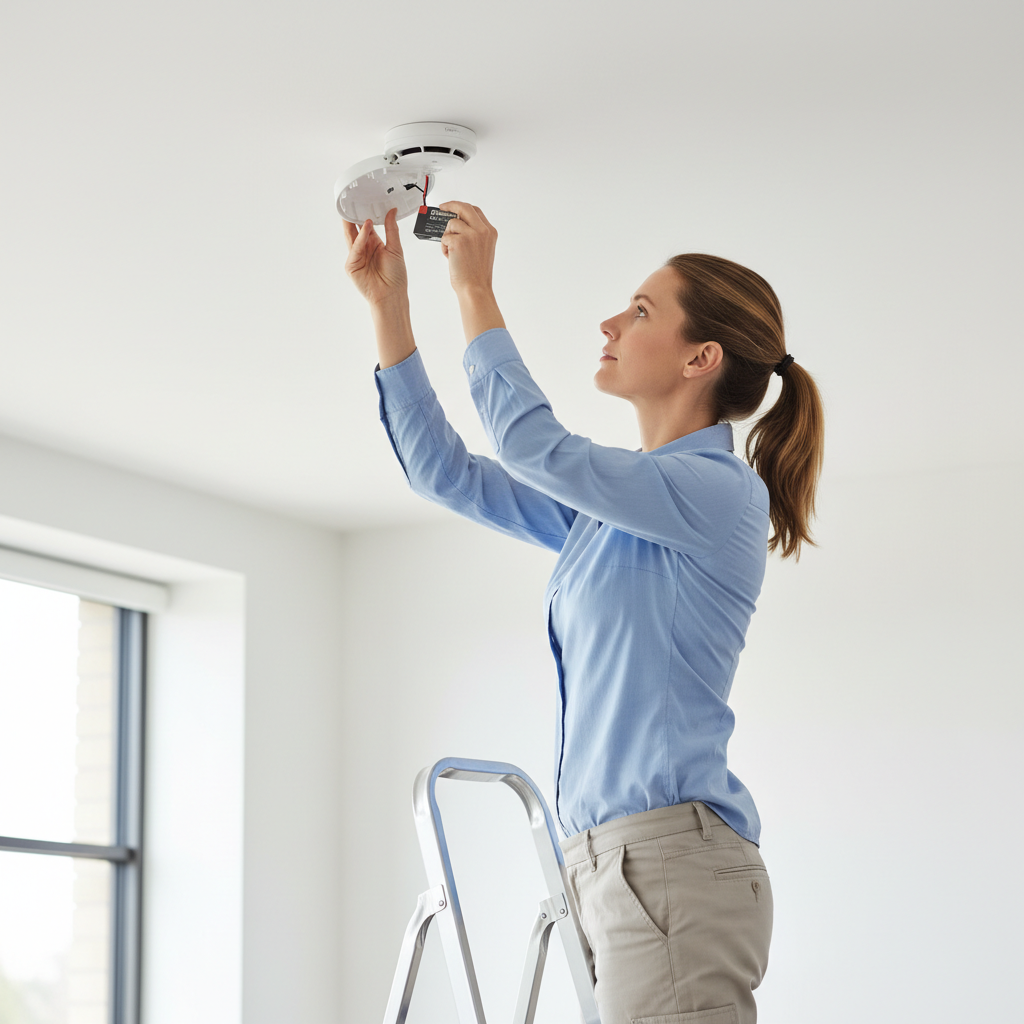
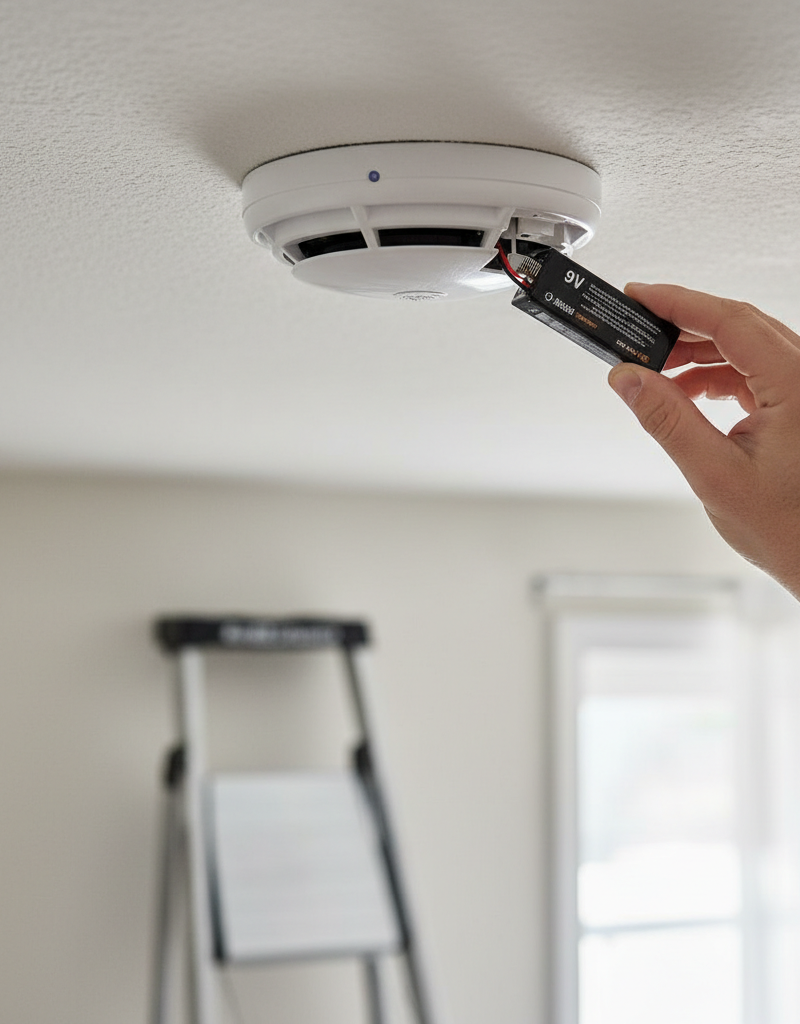
3. Replace Old Batteries with NEW Ones — This is the most common fix. Open the battery compartment (usually a slide-out tray or a hinged door) and remove the old battery. Insert a brand-new, fresh alkaline battery (AA, 9V, or CR123A, depending on your model). Verify the polarity (+/-) matches the markings inside the compartment.
- Use quality batteries: Cheap, off-brand batteries may not last as long or provide consistent power, leading to early chirping.
- Check expiration dates: Even new batteries can have expiration dates. Ensure yours are fresh.
4. Clean The Detector's Vents — Dust, insects, and cobwebs can accumulate inside the detector's sensing chamber, mimicking smoke conditions or interfering with operations, sometimes causing errant chirps. Use a can of compressed air to clear out the vents and interior, or a soft-bristled brush on your vacuum cleaner hose.
- Don't use liquids or harsh cleaners: These can damage the sensitive electronics inside.
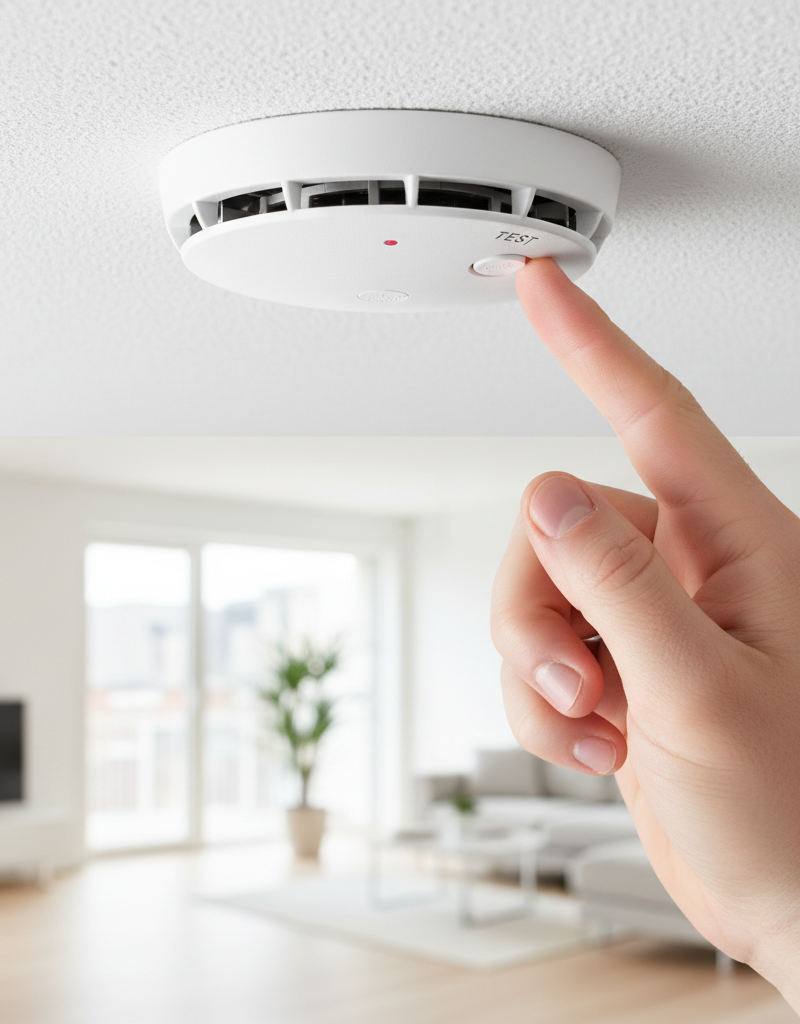
5. Reset The Detector — After replacing batteries and cleaning, a full reset can clear any lingering error codes. For most models, press and hold the test button for 15-20 seconds. You might hear a quick chirp or see a light flash, indicating the reset is complete.
- For hardwired units: After reconnecting the wiring and mounting back onto the bracket, restore power at the circuit breaker.
6. Test The Detector — Once everything is reassembled, press and hold the 'Test' button. You should hear a loud, piercing alarm. This confirms the unit is functioning correctly. A brief chirp after releasing the button is normal; persistent chirping is not.
- If the alarm is weak: The battery might be low, despite being new. Try another fresh battery.
7. Confirm Detector Expiration Date — Smoke detectors have a lifespan, typically 7-10 years from the date of manufacture (not installation). Look for a manufacturing date printed on the back or side of the unit. If it's passed its expiry, even with new batteries, it needs to be replaced.
- Why they expire: The sensors degrade over time, losing their sensitivity and reliability, whether they've been used or not.
8. Check Hardwired Connections (If Applicable) — For hardwired units, ensure the wiring harness is firmly connected to the detector and that the wires themselves are secure at the wire nuts. A loose connection can cause intermittent power, leading to chirping.
- Pro Tip: If you're uncomfortable with electrical wiring, call a qualified electrician. Never attempt to work on live circuits without proper training.
Common Causes
- Low Battery: The most frequent cause. The detector's internal sensor detects the voltage drop and signals a low power state.
- Expired Unit: Smoke alarms have a 7-10 year lifespan. Beyond this, even with new batteries, the sensor loses efficacy and may chirp as a reminder for replacement.
- Dust/Debris Accumulation: Dust, dirt, or insects can enter the sensing chamber, blocking the sensor or mimicking smoke, leading to random chirps.
- Improper Battery Installation: Batteries inserted backward or not fully seated can cause chirping, as the circuit doesn't detect a proper power source.
- Power Interruption (Hardwired Units): Brief power outages or
Related Articles
Keep troubleshooting with these hand-picked guides from FixlyGuide:
- The 30-Second Chirp: Why Most Homeowners Misdiagnose Their Smoke Detector (And The Real Fix) — A smoke detector chirping every 30 seconds almost always means a dying battery, but it can also signal an expired unit or a buildup of dust.
- The Secret Cause of Ceiling Fan Wobble (It's Not Always What You Think) — A wobbling ceiling fan isn't just annoying; it can be a sign of a deeper issue. Learn the common culprits and how to restore balance safely.
- The Surprising Culprit Behind Your Wobbling Ceiling Fan (It's Not Always Loose Screws) — A wobbling ceiling fan is annoying and potentially dangerous. Learn how to diagnose and fix the most common causes, from imbalanced blades…
- The 3 Hidden Reasons Your Ceiling Fan Wobbles (And the Easy Fixes) — A wobbling ceiling fan isn't just annoying; it can be a sign of underlying issues that are simple to fix with the right approach.
- That One Warm Breaker Is Trying to Tell You Something — A single warm circuit breaker is not normal; it's a critical warning sign of an electrical issue, often an overload or a dangerous loose co…
- Your Dishwasher Dishes Come Out Cloudy? It's This, Not Soap — Tired of cloudy glasses and spotty plates? The unsightly white residue from your dishwasher is almost always caused by hard water mineral d…
Frequently asked questions
Why does my smoke detector keep chirping even after I change the battery?+
If your smoke detector continues to chirp after a battery change, it could be due to several reasons: the unit might be expired (check the manufacturing date, usually 7-10 years), dust or debris might be interfering with the sensor, or the detector may need to be reset. For hardwired units, a brief power interruption could also be the cause.
How do I reset my smoke detector?+
To reset most smoke detectors after changing the battery or cleaning, press and hold the 'Test' button on the unit for 15-20 seconds. You might hear a quick chirp or see a light flash to confirm the reset. For hardwired units, you may also need to briefly turn off the power at your circuit breaker, wait a minute, and then restore power.
How often should I change smoke detector batteries?+
You should change your smoke detector batteries at least once a year, even if they aren't chirping. A good practice is to do it when you change your clocks for daylight saving time. Test your smoke detectors monthly by pressing the 'Test' button to ensure they are functioning.
How long do smoke detectors last?+
Most smoke detectors have a lifespan of 7-10 years from the date of manufacture. The manufacturing date is usually printed on the back or side of the unit. After this period, the internal sensors degrade, and the entire unit should be replaced, regardless of whether it appears to be working.

Discussion
Loading comments…