Tools & materials you'll need
Affiliate linksAs an Amazon Associate FixlyGuide earns from qualifying purchases — at no extra cost to you. Prices and availability are accurate as of publication and subject to change.
Quick Answer
Baseboards that are pulling away from the wall are a common, frustrating issue often signaling deeper problems than just loose trim. While it might seem like a simple matter of re-nailing, a lasting fix requires understanding the root cause. This often boils down to humidity fluctuations causing wood movement, natural house settling, or original installation errors. The best approach involves carefully removing the affected sections, cleaning both the trim and wall surfaces, and then reattaching the baseboard securely into wall studs using construction adhesive and finish nails. Addressing these underlying factors ensures your repair isn't just a temporary patch.
The Problem
You walk into a room and notice it: that unsightly gap where your baseboard should be flush against the wall. Maybe it's a small separation in a corner, or perhaps a significant section has bowed outwards, creating a noticeable void. This isn't just an aesthetic issue; gaps behind baseboards can allow drafts, provide entry points for pests, and collect dust and debris, making cleaning difficult. Over time, recurring movement can even damage the wall finish or the baseboard itself, leading to cracking paint or splintered wood. Ignoring it often means the problem will worsen, making a more extensive repair necessary down the road. Understanding why this happens is the first step to fixing it correctly and ensuring it stays fixed.
How It Works
Baseboard trim, typically made of wood or MDF (medium-density fiberboard), is designed to cover the unsightly joint where the wall meets the floor. They're usually attached directly to the wall studs using finish nails or construction adhesive. However, homes are dynamic environments, constantly subjected to subtle changes that can impact even seemingly static elements like trim.
Wood is a hygroscopic material, meaning it absorbs and releases moisture from the air. When humidity is high, wood swells; when it's low, it shrinks. This natural expansion and contraction, if not accounted for during installation, can exert significant force on the fasteners, eventually pulling the baseboard away from the wall. MDF is less susceptible to humidity changes than solid wood, but it's not immune, especially if exposed to direct moisture.
The structural integrity of your home also plays a role. Houses naturally settle over time, a process that can cause slight shifts in framing members. This settling can lead to drywall movement, uneven floors, or even minor changes in wall plumbness, all of which can place stress on rigidly installed baseboards, causing them to detach.
Furthermore, the quality of the original installation is critical. If baseboards weren't adequately nailed into studs (the vertical wooden or metal supports behind the drywall), or if insufficient adhesive was used, the trim will have a weaker hold. Over time, even minor vibrations from daily life, such as walking or doors closing, can exacerbate these weaknesses, leading to separation. Nails driven only into drywall, rather than studs, have very little holding power and are prone to pulling out.
Finally, uneven wall surfaces or large drywall imperfections can prevent the baseboard from sitting flush in the first place. Installers might try to force the trim to conform, but the constant outward pressure will eventually win, causing the baseboard to spring away from the wall in those areas.
Step-by-Step Fix
Before you begin, ensure you have gathered all your tools and materials. Always work in a well-lit area and wear appropriate safety gear, such as safety glasses, especially when cutting or nailing.
1. Assess the Damage and Underlying Cause — Identify why the baseboard separated.
Carefully examine the loose baseboard sections. Is it just a small gap, or has a larger section pulled away? Gently try to push the baseboard back into place. Does it spring back out? This suggests tension. Look for signs of water damage (stains, swelling) or pest activity. If the house has undergone significant settling (cracks in walls, doors sticking), this might be a contributing factor. Also, consider the seasonal changes in your home's humidity levels. Knowing the cause will inform your repair strategy.
2. Prepare the Area — Clear and clean the workspace.
Remove any dust, debris, or old caulk from the gap between the baseboard and the wall. Use a utility knife to carefully cut and peel away any existing caulk. A putty knife can help scrape off paint drips or adhesive residue from the wall or the back of the baseboard. For severely warped baseboards, or if you suspect water damage, you may need to gently pry the entire section away from the wall using a pry bar and shims to avoid damaging the drywall. Mark the location of wall studs approximately every 16 or 24 inches on center using a stud finder and a pencil line slightly above where the baseboard will sit.
3. Address Underlying Issues (If Needed) — Flatten walls or repair damage.
If the wall surface is significantly uneven, you might need to skim-coat with joint compound to create a flatter plane. For minor bowing in the drywall, you may be able to force the baseboard flush, but severe issues might require more extensive drywall repair. If previous water damage caused the baseboard to warp, you might need to replace the section altogether. Ensure the wall surface is dry and sound before reattaching the baseboard.
4. Apply Construction Adhesive — Secure a stronger bond.
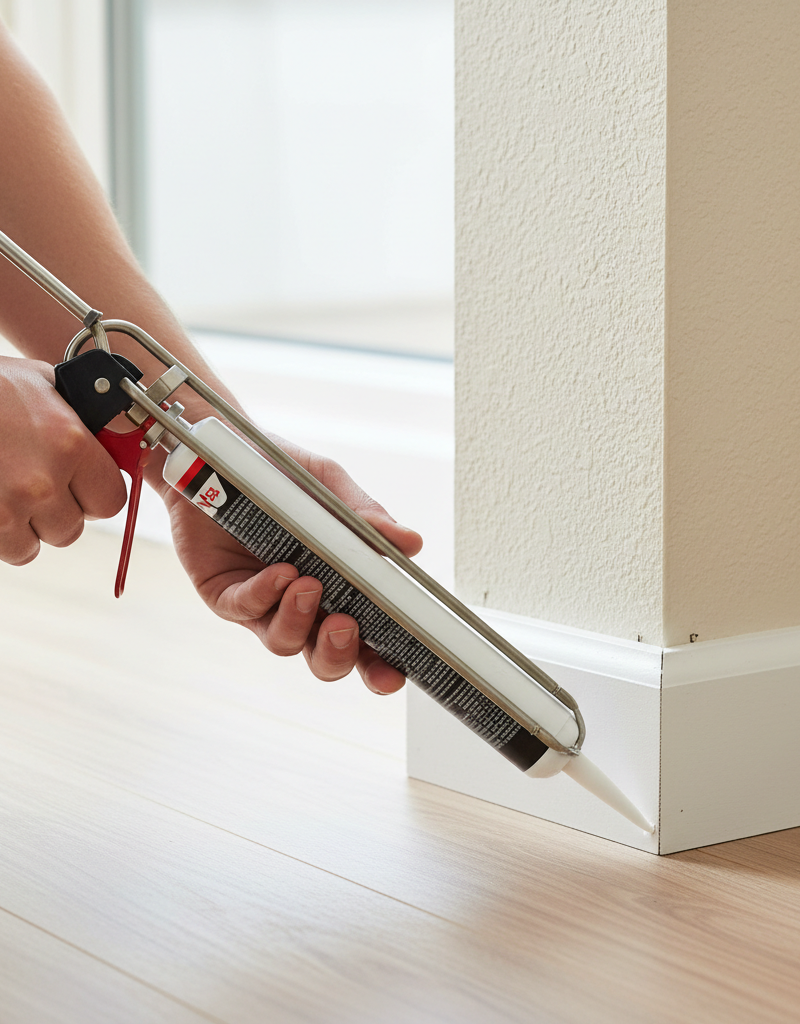
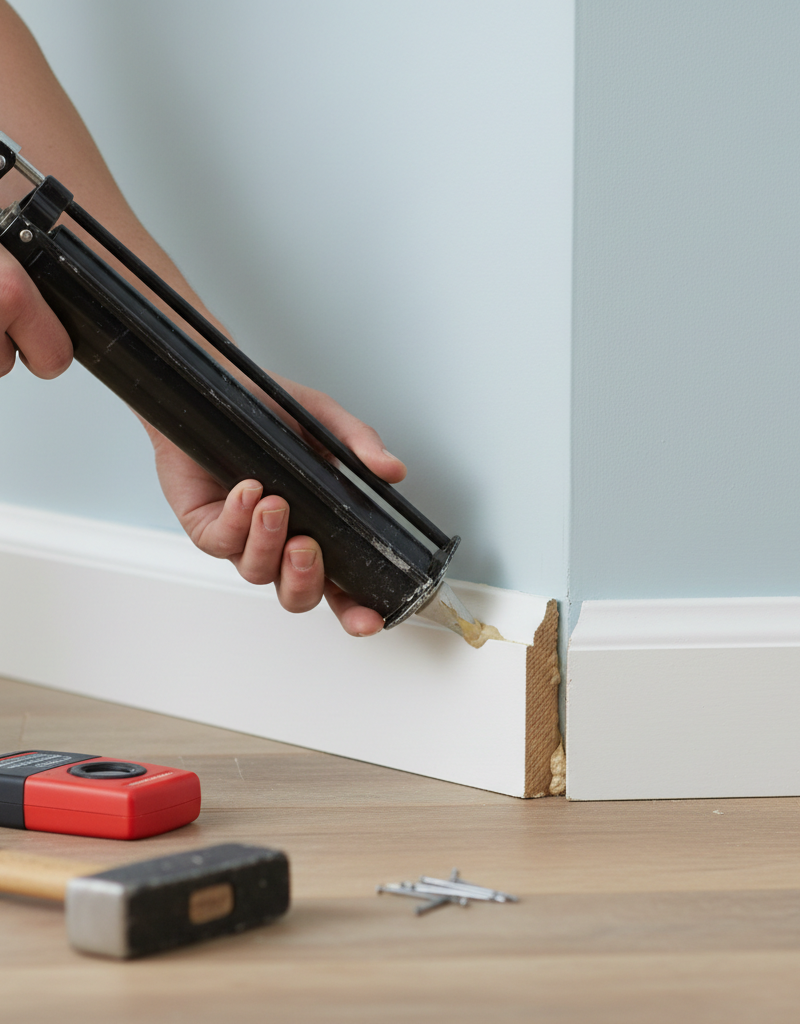
Apply a continuous bead of high-quality construction adhesive along the back of the baseboard, focusing on the top edge and any areas that had previously pulled away. Make sure the bead is not so close to the edges that it will squeeze out when pressed against the wall. A zigzag pattern can also provide excellent coverage on wider baseboards. For sections that were completely removed, it’s often best to apply the adhesive to the entire back surface.
5. Reattach the Baseboard — Press firmly and position correctly.
Carefully position the baseboard back against the wall, aligning it with the floor and any adjoining trim pieces. Press firmly along the entire length of the baseboard, ensuring the adhesive makes good contact with the wall. Wipe away any immediate squeeze-out with a damp cloth or rag. You may need to hold it in place for a moment or use painter's tape to secure it while the adhesive sets slightly.
6. Secure with Finish Nails — Provide mechanical fastening into studs.
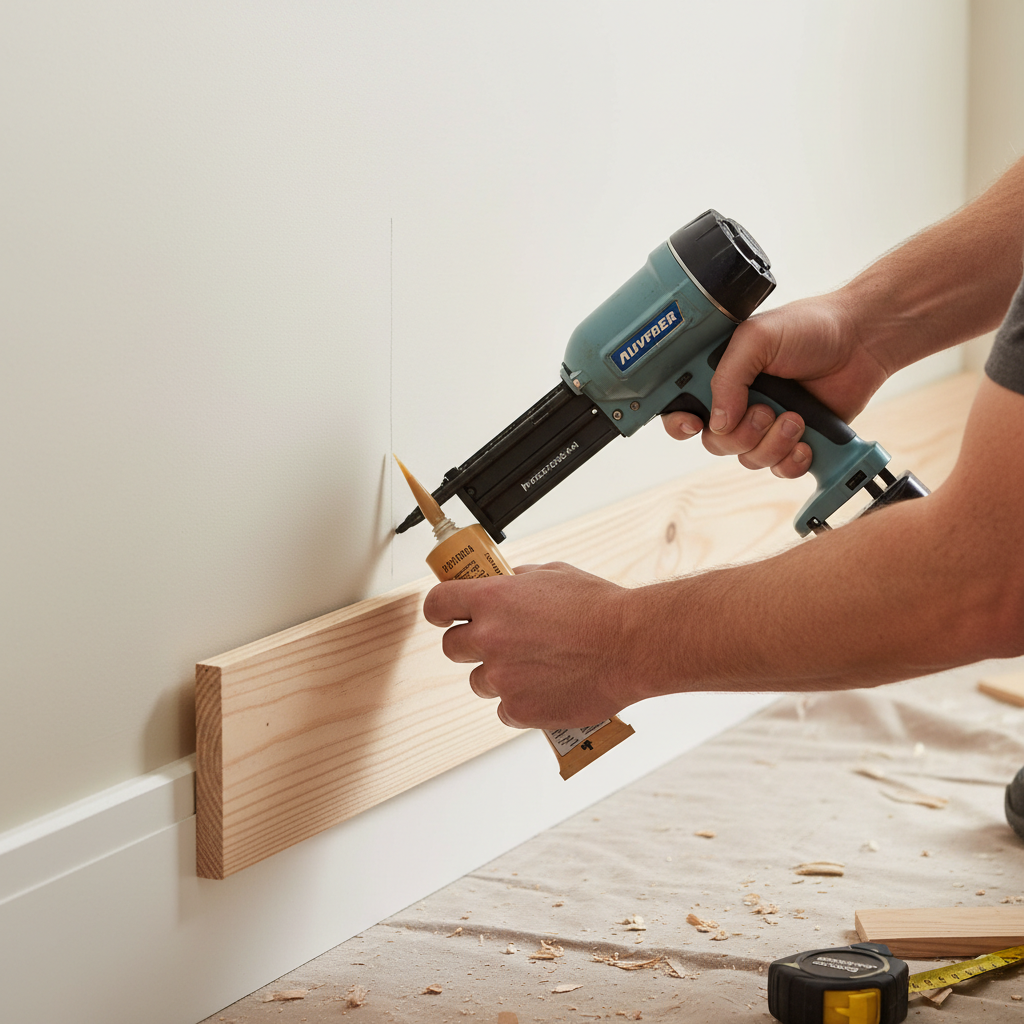
Using a nail gun or hammer and finish nails (1.5 to 2 inches long, depending on baseboard thickness), drive nails through the baseboard into the wall studs you marked earlier. Aim for two nails per stud, one near the top and one near the bottom edge of the baseboard, driving them at a slight angle for better holding power. If you don't have a nail gun, use a nail set to countersink the nail heads slightly below the surface of the wood. For areas not over studs, you can drive nails at opposing angles (toe-nailing) to create a mechanical lock, or use specialized drywall anchors designed for trim.
7. Fill Nail Holes and Caulk Gaps — Finish for a seamless look.
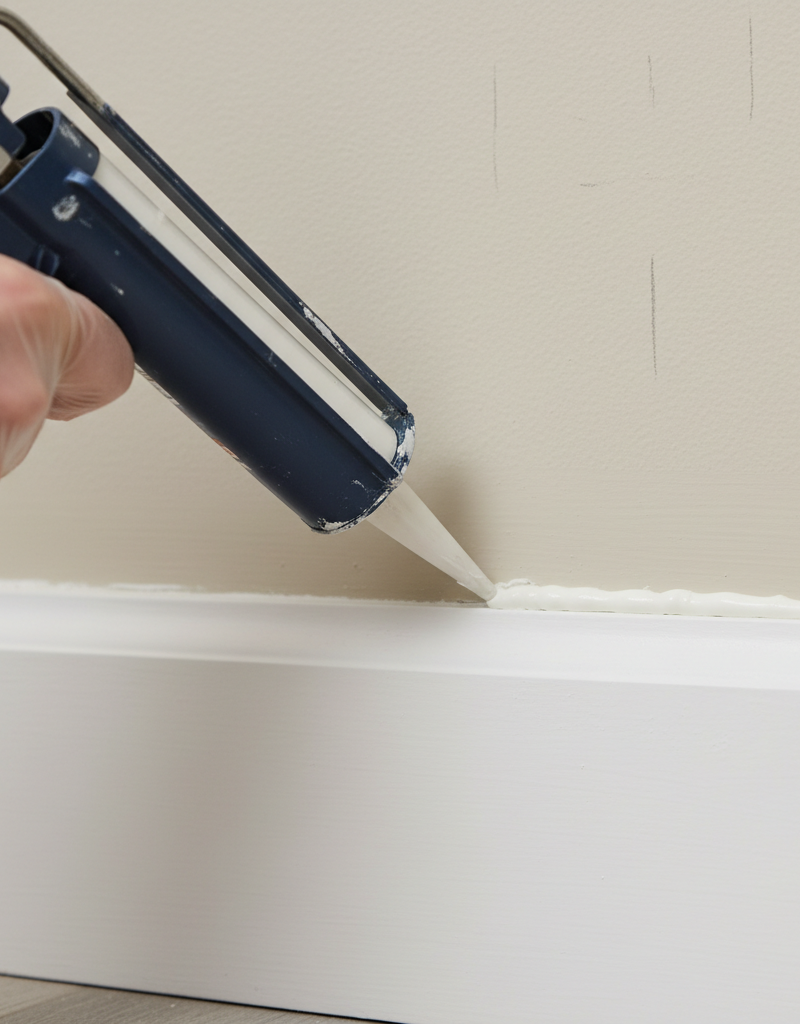
Once the baseboard is securely reattached, fill all nail holes with wood putty or spackle. Allow it to dry completely, then sand smooth with fine-grit sandpaper. Apply a thin bead of paintable acrylic latex caulk along the top edge of the baseboard where it meets the wall. Use a wet finger or a caulking tool to smooth the bead for a clean, professional finish. If there are gaps at the bottom where the baseboard meets the floor, these can also be caulked, or addressed with shoe molding or quarter-round for a more finished look.
8. Prime and Paint — Complete the repair.
Once the caulk and wood putty are dry, prime any filled areas or new caulk lines. Then, paint the baseboard to match the existing trim color. Apply two thin coats if necessary, allowing adequate drying time between coats for a smooth, even finish.
Common Causes
- Humidity Fluctuations: The most frequent culprit. Wood naturally expands when it absorbs moisture and shrinks when it dries out. If baseboards are installed during a dry period, they might swell and push away from the wall when humidity increases. Conversely, if installed during high humidity, they may shrink and pull away in drier conditions.
- House Settling: All houses settle over time, especially newer constructions. This natural movement can cause walls and floors to shift slightly, impacting the connection points of trim and leading to separation.
- Improper Installation: This includes using too few nails, not nailing into studs, using nails that are too short, or relying solely on adhesive (or insufficient adhesive). If the baseboard was not adequately secured to the framing from the start, it's more likely to pull away.
- Uneven Wall Surfaces: If the drywall or plaster wall behind the baseboard isn't perfectly flat, the baseboard may be under constant tension, trying to bridge a gap. Over time, this pressure can cause it to detach.
- Water Damage: Leaks from plumbing, spills, or high humidity can cause wood baseboards to swell significantly. As they dry out, they may warp or pull away from the wall, often with visible staining or softening of the wood.
- Foundation Problems: In more severe cases, significant foundation movement can lead to widespread structural shifts, including walls moving and baseboards detaching. This is usually accompanied by other signs like large wall cracks, sticking doors, and uneven floors.
Common Mistakes
- Only Nailing into Drywall: Nailing directly into drywall provides very little holding power. The nails will eventually pull out. Instead: Always use a stud finder and nail into the wall studs for a secure, long-lasting fix.
- Using Insufficient Adhesive: Relying on just a few dabs of construction adhesive, or none at all, is a common error. Instead: Apply a generous, continuous bead of high-quality construction adhesive along the back top and bottom edges, and in a zigzag pattern for wider trim, to create a strong bond.
- Not Addressing the Root Cause: Simply re-nailing or re-caulking without understanding why the baseboard separated in the first place is a temporary fix. Instead: Take the time to identify if humidity, settling, or poor initial installation is the culprit and factor that into your repair strategy.
- Over-Nailing or Under-Nailing: Using too many nails can split the wood, while too few won't provide adequate hold. Instead: Aim for two finish nails per stud location (top and bottom edges) and potentially one or two toe-nailed nails in between studs if desired, ensuring they penetrate the stud by at least 1 inch.
- Ignoring Wall Imperfections: Trying to force a baseboard onto a severely uneven wall without addressing the wall surface first. Instead: Use shims behind the baseboard in concave areas or skim-coat the wall with joint compound for a flatter surface before reattaching the trim.
- Using the Wrong Caulk: Using non-paintable or unsuitable caulk for the application. Instead: Opt for a high-quality, paintable acrylic latex caulk for trim work. It's flexible, adheres well, and can be easily painted for a seamless finish.
Cost & Time Breakdown
| Task | DIY Cost | Pro Cost | Time |
|---|---|---|---|
| Materials (adhesive, nails, caulk, putty, paint) | $15–$50 | Included in labor | N/A |
| Basic Tool Rental (nail gun if needed) | $0–$30 (per day) | Included in labor | N/A |
| Repair per room (DIY) | $15–$50 | N/A | 1–3 hours |
| Professional trim repair | N/A | $200–$500 per room | 2–4 hours (pro) |
| Extensive wall repair/leveling | $50–$150 (DIY) | $300–$800 (pro) | 4–8 hours (DIY/pro) |
Tips & Prevention
- Acclimate Wood Trim: If installing new baseboards, allow the wood to acclimate to your home's humidity for several days (up to a week) before installation. This helps prevent excessive expansion or contraction after installation.
- Maintain Stable Humidity: Use humidifiers in dry climates and dehumidifiers in humid climates to maintain a relatively stable indoor humidity level (ideally between 35-55%). This minimizes wood movement.
- Check for Leaks: Regularly inspect areas behind baseboards, especially near bathrooms, kitchens, and exterior walls, for signs of moisture or leaks. Address any water issues immediately.
- Use Proper Fasteners: Always use sufficient lengths of finish nails (typically 1.5 to 2 inches) and ensure they penetrate directly into wall studs. Supplement with construction adhesive for a secure bond.
- Inspect Annually: Once a year, do a quick walk-through of your home and visually inspect all baseboards for any signs of separation or damage. Early detection makes repairs much simpler.
- Consider Flexible Caulk: For areas with persistent minor movement, consider using a more flexible caulk designed for dynamic joints, though standard paintable acrylic latex is usually sufficient.
When to Call a Professional
While repairing separated baseboards is often a manageable DIY task, there are specific situations where calling a licensed professional is crucial. If you observe significant cracks in your walls, doors and windows that stick or are difficult to open, sloped floors, or extensive, recurring baseboard separation throughout multiple rooms, these can be indicators of underlying structural issues or foundation problems. A structural engineer or a reputable general contractor should be consulted to assess the integrity of your home's foundation or framing. Additionally, if the baseboards are severely warped due to extensive water damage or mold growth, a professional might be needed for proper remediation and replacement, especially if the drywall behind the baseboard is also compromised. Finally, if you lack the necessary tools or feel uncomfortable using a nail gun and handling trim work, a skilled finish carpenter can ensure a precise and aesthetically pleasing repair.
Related Articles
Keep troubleshooting with these hand-picked guides from FixlyGuide:
- The 3 Hidden Reasons Your Baseboards Are Pulling Away (And How to Fix It FAST) — Don't ignore separating baseboards—they’re not just an eyesore. Learn the surprising culprits behind the gaps and how to permanently fix th…
- The #1 Mistake When Fixing Baseboards That Pull Away From Walls — Discover the crucial mistake homeowners make when reattaching baseboards and how to properly secure them for a lasting fix.
- The Tiny Gap Behind Your Baseboards That Costs You $100s in Drafts — Discover why your baseboards are pulling away from the wall and the simple, inexpensive fixes that can seal drafts and improve your home's…
- Is Your Roofline Hiding a $10,000 Secret? 7 Soffit & Fascia Warning Signs — Discover the critical warning signs of soffit and fascia damage, why these often-overlooked components are crucial, and how to tackle commo…
- Is Your Roofline Hiding a $10,000 Secret? 7 Warnings Your Soffit & Fascia Are Failing — Discover the critical signs of soffit and fascia damage that could indicate widespread problems and how to properly address them before the…
- The #1 Mistake Homeowners Make After Finding Missing Shingles (And How to Fix It Right) — Discover the crucial steps to take after a storm rips shingles from your roof, ensuring a proper, lasting repair and preventing costly futu…
Frequently asked questions
Why do baseboards separate from the wall?+
Baseboards typically separate due to natural wood expansion and contraction from humidity changes, house settling, or improper installation lacking sufficient nails into studs or adequate adhesive.
Can I just nail baseboards back into place?+
While you can re-nail, it's often a temporary fix if you don't use construction adhesive and ensure the nails go into wall studs. Without addressing the underlying cause and proper fastening, they will likely pull away again.
What kind of adhesive should I use for baseboards?+
Use a high-quality construction adhesive designed for trim and paneling. It provides a strong, flexible bond that complements the mechanical fastening of nails.
How do I find studs behind the wall?+
A stud finder is the most reliable tool. Run it along the wall where the baseboard will sit, and it will indicate the location of the hidden studs, usually every 16 or 24 inches on center.
Discussion
Loading comments…