Tools & materials you'll need
Affiliate linksAs an Amazon Associate FixlyGuide earns from qualifying purchases — at no extra cost to you. Prices and availability are accurate as of publication and subject to change.
Quick Answer
Crafting a bluebird house from a single cedar board is a simple and impactful DIY project that supports local bird populations. Using specific cuts and design elements, you can provide a safe, attractive nesting box that encourages bluebirds to inhabit your garden, contributing to natural pest control and adding beauty.
The Problem
Many common backyard birdhouses aren't designed with the specific needs of bluebirds in mind, leading to low occupancy rates or even harm to the birds. Bluebirds require very particular entrance hole sizes, internal dimensions, and proper ventilation to thrive. Without these precise conditions, other, more aggressive species might take over the box, or the bluebirds may abandon it entirely. Furthermore, predator access is a significant concern for nesting bluebirds, and many off-the-shelf houses offer inadequate protection from raccoons, snakes, and cats. Homeowners wanting to attract bluebirds often find generic birdhouses ineffective, missing the opportunity to support these beneficial and beautiful native songbirds.
How It Works
A successful bluebird house design mimics the natural tree cavities bluebirds would typically seek out for nesting. The material, cedar, is naturally rot-resistant and provides good insulation, keeping the nest cool in summer and warm in early spring. The specific dimensions are critical: the interior floor space needs to be around 4x4 inches, and the entrance hole must be precisely 1.5 inches in diameter for Eastern bluebirds, placed approximately 6-8 inches from the floor. This size is small enough to deter larger birds like starlings, which can outcompete bluebirds for nesting sites. The hole should also be free of perches, as perches can aid predators in accessing the nest.
Ventilation is achieved through small gaps or drilled holes near the top of the house, allowing heat to escape and preventing overheating of the nestlings. Drainage holes in the bottom prevent water accumulation, which can lead to hypothermia and disease. A hinged or removable side or roof panel is essential for annual cleaning after nesting season, preventing the build-up of parasites and old nesting material. The house should be mounted on a smooth, predator-resistant pole, ideally 5 to 6 feet high, with a baffle installed below to prevent climbing predators. The strategic placement of the entrance hole, combined with proper ventilation and drainage, creates a microclimate within the box that is ideal for bluebird reproduction and survival, encouraging consistent use year after year as bluebirds are known to return to successful nesting sites.
Step-by-Step Fix
-
Prepare Your Cedar Board — Begin by selecting a single 1x6 cedar board, ideally 6 feet long. Cedar is naturally weather-resistant and holds up well outdoors without chemical treatment. Check the board for any significant knots or cracks that could compromise its integrity or make cutting difficult. Use a tape measure and pencil to mark out all your cuts carefully, double-checking each measurement before cutting to minimize waste. Always wear safety glasses when operating power tools.
- Safety Note: Always wear eye protection and gloves when handling wood and operating power tools. Ensure your workspace is clear and stable.
- Pro Tip: If your board appears warped, lay it flat on a stable surface and use clamps to secure it before cutting to ensure straight, accurate pieces.
-
Cut the Components — Precisely cut the cedar board into seven pieces: two side panels (9.5 inches long, mitered at a 30-degree angle on one end), a front panel (10.5 inches long), a back panel (12 inches long, mitered at 30 degrees on one end), a floor (4x4 inches), and two roof pieces (6.5 inches long, with one mitered at 30 degrees). Accuracy here is paramount for proper assembly and weather sealing. Use a miter saw for angled cuts to ensure precision.
- Material Check: Ensure all cuts are smooth; use sandpaper to deburr any rough edges before assembly.
-
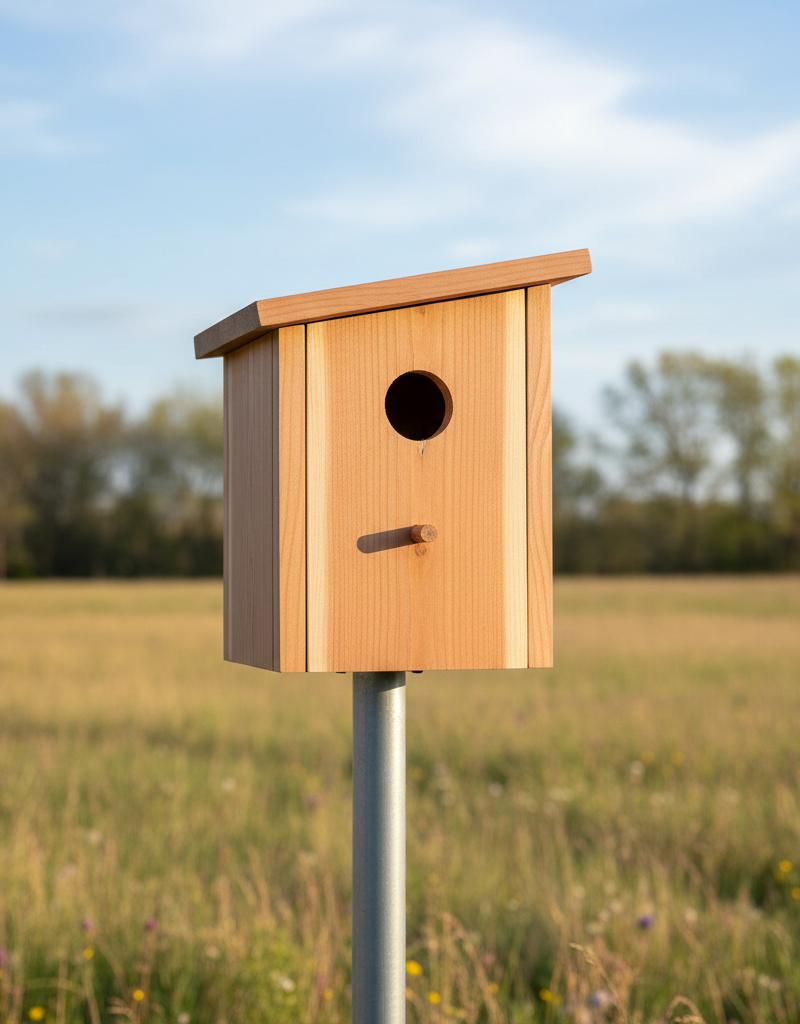
Drill the Entrance Hole — On the front panel, measure down 6 inches from the top and mark the center. Using a 1 1/2-inch spade bit or hole saw, carefully drill a clean entrance hole. Avoid drilling perches below the hole, as they can provide leverage for predators. Smooth the edges of the hole with sandpaper to prevent injury to the birds.
- Important Dimension: The 1 1/2-inch diameter is crucial for Eastern bluebirds; larger holes will invite competitor species.
-
Add Ventilation and Drainage — Drill two 1/4-inch ventilation holes near the top of each side panel to allow heat to escape. On the floor piece, drill four 1/4-inch drainage holes, one in each corner, to prevent water accumulation. These small details are vital for the health and safety of nesting bluebirds.
-
Assemble the Sides and Front — Using 1 5/8-inch rust-resistant deck screws, attach the side panels to the front panel, ensuring the mitered ends of the side panels align with the top edge of the front panel. Use wood glue in addition to screws for a stronger, more weather-tight bond. Pilot holes are recommended to prevent splitting the cedar.
-
Attach the Floor — Slide the 4x4-inch floor piece into the assembled front and side panels, positioning it so it sits flush with the bottom edges. Secure it with screws through the bottom of the side and front panels. Ensure the drainage holes are clear.
-
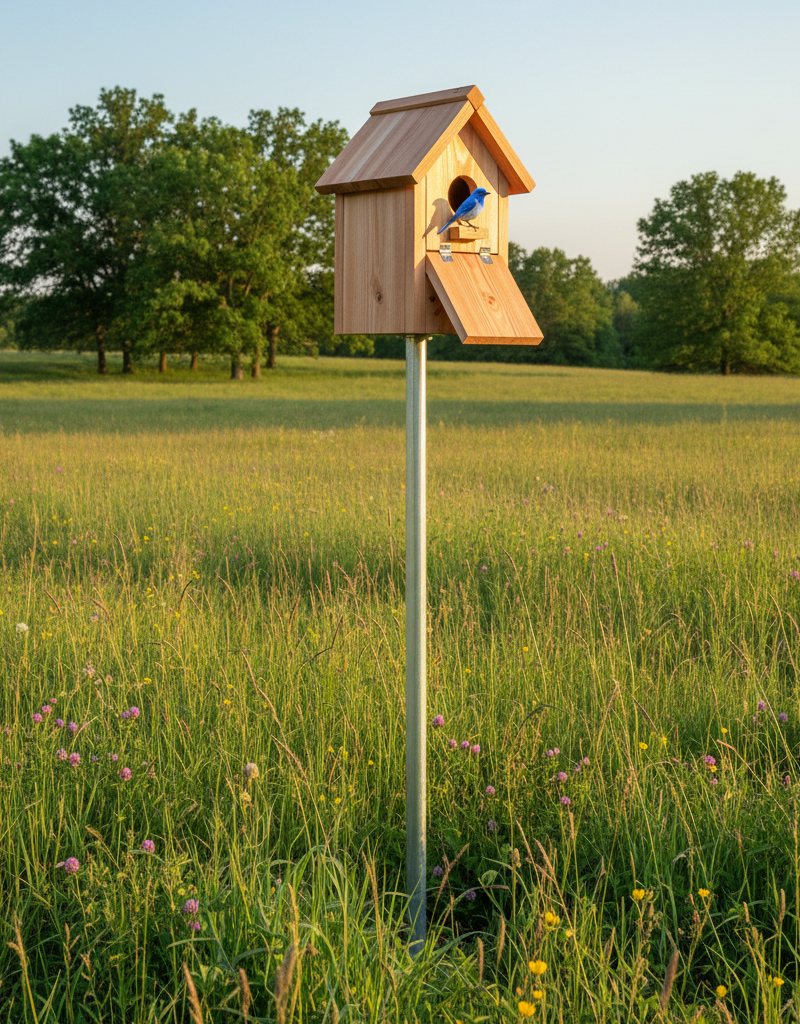
Install the Back Panel and Hinge — Attach the taller back panel to the assembly with screws. This panel provides the main mounting point for the bluebird house. For easy cleaning, attach one roof piece to the top edge of the back panel using two small hinges. The other roof piece will be stationary, secured to the front and side panels, overlapping the hinged piece slightly to shed water.
- Cleaning Access: Make sure the hinged roof piece can open fully for annual cleaning.
-
Secure the Roof — Attach the stationary roof piece to the top edges of the front and side panels, ensuring it overhangs slightly to provide protection from rain. This piece should create a tight seal with the hinged roof when closed. Use screws and wood glue for durability. Add a small latch or hook to the hinged roof piece to keep it securely closed while allowing for easy opening when needed for cleaning.
-
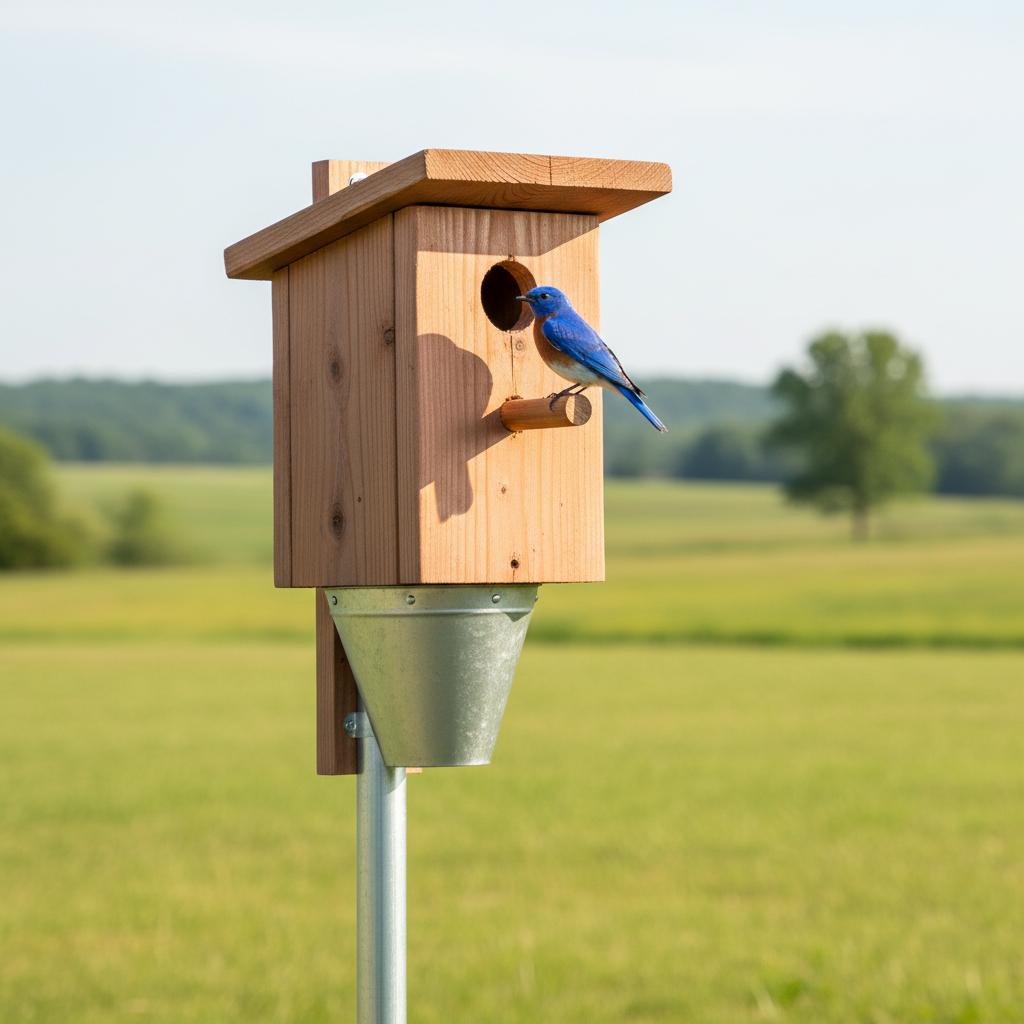
Mounting Considerations — Mount the bluebird house on a smooth metal pole, 5 to 6 feet high, situated in an open area with scattered trees if possible. Crucially, install a predator baffle (stovepipe or conical design) on the pole below the house to deter raccoons, snakes, and other climbing predators. Orient the entrance hole away from prevailing winds, typically facing east or southeast, to protect nestlings from harsh weather.
- Location, Location: Bluebirds prefer open fields with some perches, not dense forests.
- If this doesn't work: If bluebirds don't occupy the house in the first year, consider relocating it to a slightly different spot or adjusting the height. Sometimes small environmental changes make a big difference.
Common Causes
- Incorrect Entrance Hole Size: The most frequent reason bluebirds avoid a house, or other species take over, is an improperly sized entrance hole. A 1 1/2-inch diameter is essential for Eastern bluebirds.
- Lack of Predator Protection: Without a baffle, raccoons, snakes, and cats can easily access the nest, leading to nest failure and discouraging bluebirds from returning.
- Poor Ventilation and Drainage: Houses lacking proper air circulation or drainage can become too hot or waterlogged, creating an unhealthy environment for nestlings.
- Perches Below Entrance: Perches provide an easy resting spot for predators, making it simpler for them to reach the entrance hole.
- Competition from Other Species: Larger, more aggressive birds like starlings or house sparrows will readily take over improperly designed or unprotected bluebird houses.
- Incorrect Placement: Bluebirds prefer open habitats with sparse trees and clear sightlines, not dense woods or areas with heavy human traffic.
Common Mistakes
- Using Pressure-Treated Wood: Never use chemically treated wood, as the chemicals can be toxic to birds. Stick to natural, untreated cedar or pine.
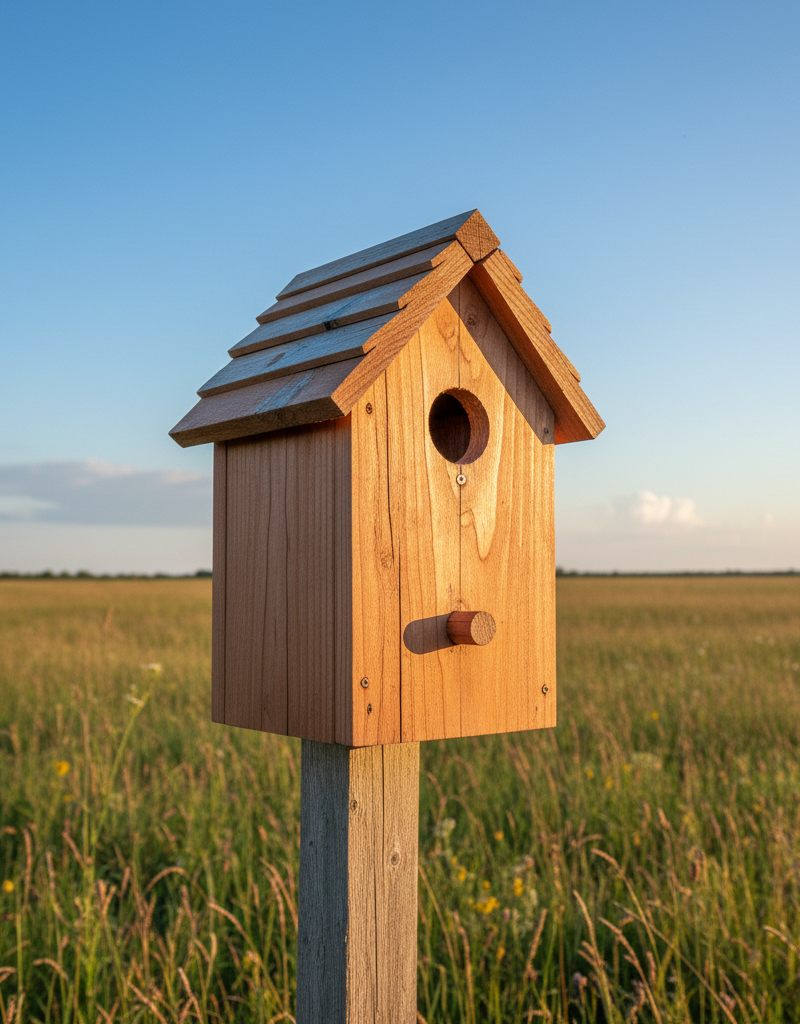
- Adding a Perch Below the Hole: While seemingly helpful, a perch makes it easier for predators to access the nest. Bluebirds do not need a perch to enter their nest box.
- Forgetting Ventilation and Drainage Holes: These are crucial. Without them, the interior can become dangerously hot or accumulate water, leading to abandoned nests or fatalities.
- Mounting on a Tree or Fence Post: Mounting directly on a tree or wooden fence post allows easy access for climbing predators. Always use a smooth metal pole with a baffle.
- Neglecting Annual Cleaning: Bluebird houses should be cleaned out each fall or winter after the nesting season. Old nests harbor parasites and diseases, and bluebirds prefer a clean box for new nests.
- Placing Too Close to Human Activity: While bluebirds can tolerate some human presence, placing a house in a high-traffic area might deter them. Choose a quiet spot in your yard.
Cost & Time Breakdown
| Task | DIY Cost | Pro Cost | Time |
|---|---|---|---|
| Cedar Board | $15–$30 | $0 | 0 |
| Screws & Hinges | $5–$10 | $0 | 0 |
| Predator Baffle (DIY) | $10–$20 | $0 | 1–2 hours |
| Mounting Pole | $10–$25 | $0 | 0 |
| Assembly & Finishing | $0 | $0 | 1.5–2.5 hours |
| Total (DIY) | $40–$85 | $0 | 2.5–4.5 hours |
Tips & Prevention
- Annual Cleaning: After the last brood has fledged (typically late summer to early fall), remove old nesting material. This reduces parasite buildup and discourages mice or other unwanted occupants during winter.
- Monitor for Pests: Regularly check the bluebird house for signs of parasitic mites or wasps. A quick inspection once or twice a month during nesting season can help you intervene early, but avoid disturbing nesting birds excessively.
- Baffle Maintenance: Ensure your predator baffle remains secure and free of debris that could provide a bridge for climbing predators. Check it at the start of each nesting season.
- Strategic Placement: Place bluebird houses in open areas, away from dense woods, and at least 100 feet apart if you're putting up multiple boxes to reduce territorial disputes.
- Avoid Pesticides: Bluebirds primarily feed on insects. Minimizing or eliminating pesticide use in your yard will ensure a healthy food supply for them and their young.
- Check for Damage: Periodically inspect the house for wear and tear, loose screws, or damage from weather or animals. Make repairs promptly to maintain a safe nesting environment.
When to Call a Professional
While building a bluebird house is a fantastic DIY project, there's rarely a need to call a professional for this specific task. However, if you're struggling with significant woodworking challenges, lacking the necessary tools, or concerned about proper and safe construction, a local handyman or finish carpenter could assist with the cuts and assembly. If you encounter issues with persistent predators that your baffle cannot deter, or if you suspect a diseased bird in the vicinity, contacting a local wildlife rehabilitation center or ornithological society might be more appropriate for advice than a home repair professional.
Related Articles
Keep troubleshooting with these hand-picked guides from FixlyGuide:
- The Single Cedar Board Secret to Attracting Bluebirds to Your Yard — Discover how to construct an ideal bluebird nesting box using just one cedar board, providing a safe and inviting habitat for these cherish…
- The 4 Critical Dimensions of a Bluebird House (Most DIY Plans Miss One) — Discover the precise measurements and often-overlooked design elements essential for building a bluebird house that truly attracts nesting…
- 7 Hidden Equity Drains Costing You Thousands Annually — Your home is an asset, but silent problems like minor leaks, poor insulation, and deferred maintenance can drain its value. Discover the se…
- Is a Wall-Mounted Pressure Washer Right for Your Garage? The Unvarnished Truth — Discover if a wall-mounted pressure washer is the right cleaning solution for your home, offering a powerful and space-saving alternative t…
- The Secret to Endless Hot Showers? It's Not Your Water Heater's Age — Inconsistent hot water or no hot water at all often points to a single, often overlooked culprit: the thermostat. Understanding its role is…
- The 7 Critical Yard Prep Steps Smart Homeowners Never Miss (And Why) — Prepare your yard for a thriving spring with these essential steps, from soil testing to tool maintenance, ensuring a vibrant outdoor space.
Get the print-ready PDF of this guide
A clean, ad-free, printable version you can keep on your phone or pin to the workshop wall. We'll also send occasional weekly tips matched to your home situation.
- Print-optimized layout
- Tools, materials & every step included
- Unsubscribe anytime
This article was independently written by FixlyGuide based on the source topic.
Frequently asked questions
What is the best material for a bluebird house?+
Cedar is highly recommended due to its natural resistance to rot and insects, and its excellent insulating properties, which keep the nest cool in summer and warm in winter. Untreated pine is also a suitable option.
What size entrance hole do bluebirds need?+
For Eastern bluebirds, a precisely 1 1/2-inch diameter entrance hole is crucial. This size deters larger, more aggressive species like starlings while allowing bluebirds easy access.
How high should a bluebird house be mounted?+
Bluebird houses should ideally be mounted on a smooth metal pole 5 to 6 feet high. This height, combined with a predator baffle, offers the best protection against climbing animals.
Why is a predator baffle important?+
A predator baffle is essential because it prevents climbing animals like raccoons, snakes, and cats from reaching the nest box, significantly increasing the chances of successful nesting for bluebirds.
How often should I clean my bluebird house?+
You should clean your bluebird house annually, ideally in late fall or early winter after the last brood has fledged. This removes old nesting material and parasites, preparing a clean space for the next nesting season.
Discussion
Loading comments…