Tools & materials you'll need
Affiliate linksAs an Amazon Associate FixlyGuide earns from qualifying purchases — at no extra cost to you. Prices and availability are accurate as of publication and subject to change.
Quick Answer
Building a bluebird house from a single cedar board is a rewarding and relatively simple DIY project that significantly benefits local bluebird populations. The key to success lies in precise cuts and assembly, ensuring proper ventilation, drainage, and predator protection. A well-constructed bluebird house offers a safe, inviting nesting site, encouraging these beneficial insect-eaters to take up residence in your garden and enhance its natural beauty.
The Problem
Many common birdhouses sold commercially or built without specific species in mind often fail to meet the unique needs of bluebirds. Incorrect entrance hole sizes, inadequate ventilation, poor drainage, and lack of predator protection can deter bluebirds or, worse, lead to nest failure. Bluebirds are secondary cavity nesters, meaning they rely on existing holes rather than excavating their own. With natural cavities becoming scarcer due to habitat loss and competition from more aggressive species like House Sparrows and European Starlings, providing purpose-built nesting boxes is crucial for their conservation. Generic birdhouses often become death traps or are simply ignored, leaving homeowners frustrated and bluebirds without a home.
How It Works
An effective bluebird house is more than just an enclosed box; it's a carefully designed microhabitat. The most critical element is the entrance hole. For Eastern Bluebirds, the ideal entrance hole is 1-1/2 inches in diameter. Western and Mountain Bluebirds can use slightly larger holes up to 1-9/16 inches. This specific size is small enough to exclude larger, more aggressive starlings but large enough for bluebirds. The hole should be positioned 6 inches above the floor to provide ample nesting space below and keep nestlings out of reach of predators. The floor dimensions, typically 4x4 inches, prevent other competing birds from nesting while still offering sufficient space for a bluebird clutch. Cedar is the preferred material for its natural resistance to rot, insects, and harsh weather, ensuring longevity without the need for toxic treatments. The unpainted, rough interior provides grip for nestlings to fledge. The house must also include ventilation gaps (small cuts at the top of the side panels, or a gap between the roof and the sides) to prevent overheating, especially during hot summer months, and drainage holes (1/4-inch drilled holes in the floor) to keep the nest dry. A hinged side or front panel is essential for monitoring and cleaning, which should be done after each brood fledges. Predator guards, such as a wooden block around the entrance hole with a deeper tunnel, deter raccoons and cats.
Step-by-Step Fix
Building a bluebird house from a single 1x6 cedar board requires careful cuts and assembly to create a safe and functional home.
-
Cut the Cedar Board Pieces – Precise cuts are essential for proper assembly and bluebird safety.
- Using a miter saw or circular saw, cut the 1x6x8' cedar board into the following pieces:
- Back: One piece at 16 inches long
- Front: One piece at 9-1/2 inches long
- Sides: Two pieces at 9-1/2 inches long, with the top edge cut at a 15-degree angle
- Floor: One piece at 4 inches long
- Roof: One piece at 7-1/4 inches long
- Using a miter saw or circular saw, cut the 1x6x8' cedar board into the following pieces:
-
Prepare the Front Panel – Create the vital entrance hole and ventilation.
- Find the center of the front panel, 6 inches up from the bottom edge. Drill a 1-1/2 inch diameter entrance hole for Eastern Bluebirds (or 1-9/16 inch for Western/Mountain Bluebirds). Ensure the edges are smooth.
- Drill two 1/4-inch ventilation holes near the top corners of the front panel, approximately 1 inch from the top and sides.
-
Prepare the Side Panels – Ensure proper drainage and a snug fit.
- On one long edge of each side panel, measure up 6 inches from the bottom and mark a point. From the opposite long edge, measure up 9-1/2 inches and mark. Connect these two marks to create the 15-degree angle for the roof slope.
- Drill two 1/4-inch drainage holes in the floor piece, spaced evenly apart.
-
Assemble the Side-Back Connection – Begin forming the box structure.
- Align one side panel with the edge of the back panel, ensuring the bottom edges are flush. Attach using 1-1/2 inch deck screws, pre-drilling pilot holes to prevent splitting. Use two screws per joint.
- Repeat for the other side panel, creating a three-sided box.
-
Attach the Floor – Secure the base of the nesting chamber.
- Fit the floor piece snugly between the side panels, flush with the bottom edges of the back and side panels. Attach it using 1-1/2 inch deck screws through the pre-drilled drainage holes into the side panels. Ensure it's level.
-
Attach the Front Panel (Hinged) – Allow for easy monitoring and cleaning.
- Position the front panel against the side and bottom edges, aligning the bottom with the floor. Secure the bottom edge of the front panel to the floor and the lower part of the side panels with a single 1-1/2 inch deck screw on each side, leaving them slightly loose for now.
- Attach two small stainless steel hinges to the top of the front panel and the top edges of the side panels, allowing the front panel to swing open downwards.
- Install a small latch (e.g., a hook and eye latch or a pivoting wood block) on the side of the house to keep the front panel securely closed.
-
Install the Roof – Protect the interior from the elements.
- Align the roof piece so it overhangs the front, back, and sides equally. Attach it to the top edges of the side panels and back panel using 1-1/2 inch deck screws. Ensure a slight gap (1/8 inch) for ventilation between the roof and the sides, if no other ventilation holes were drilled.
-
Mounting the House – Proper placement is key for attracting bluebirds.
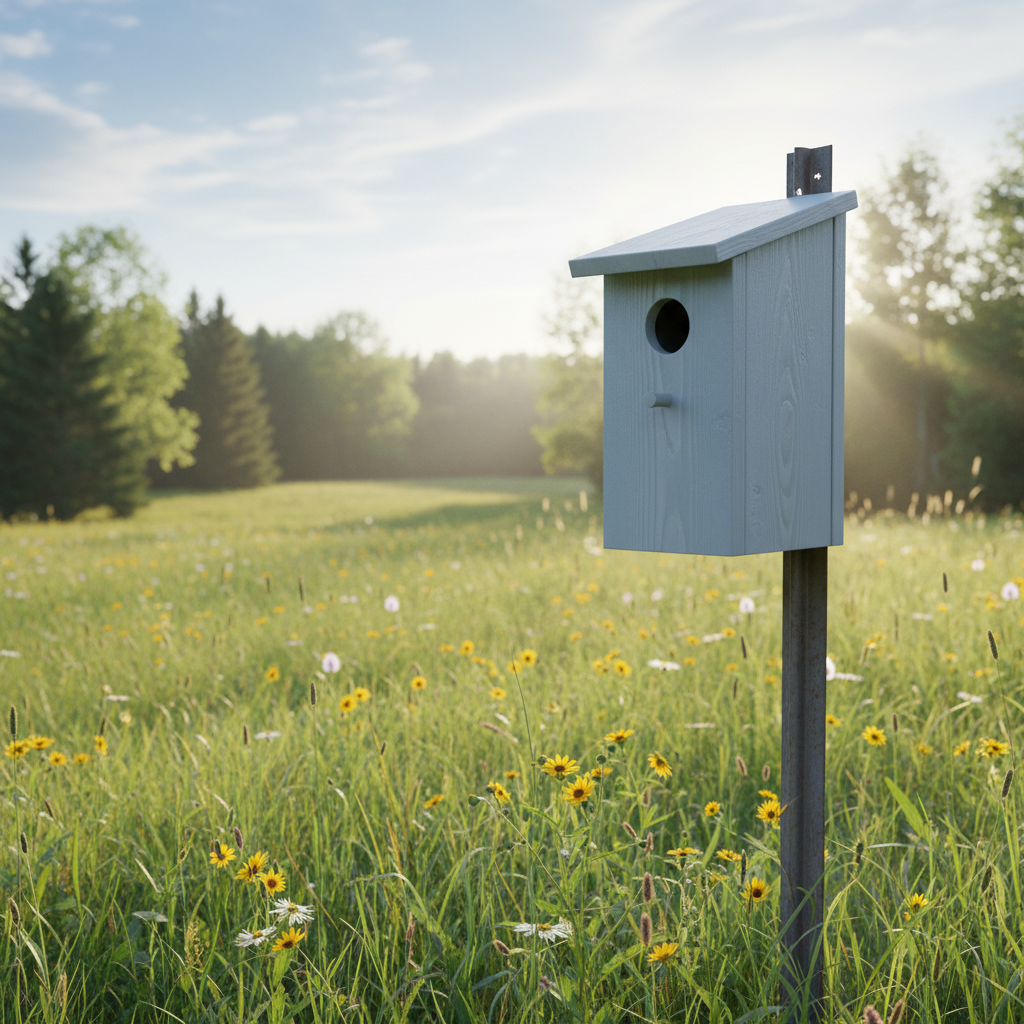
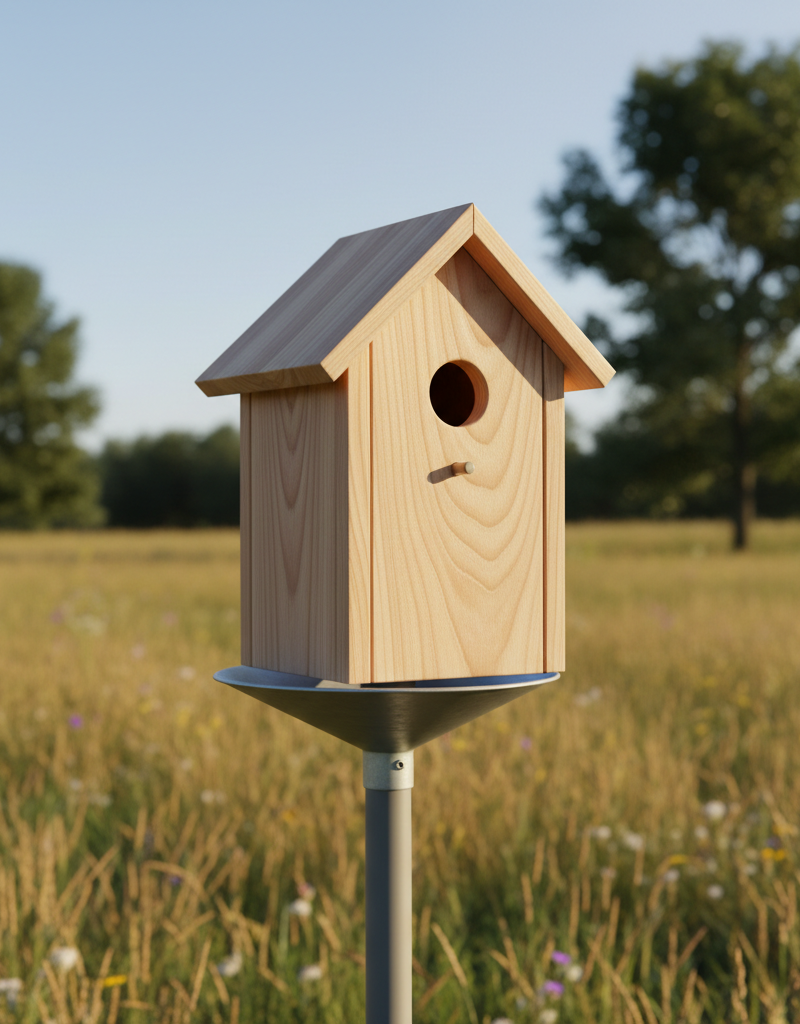
- Mount the bluebird house on a metal pole (like a galvanized conduit pipe) 5 to 6 feet above the ground, in an open area with scattered trees, facing the entrance hole away from prevailing winds (usually East or Northeast). A baffle on the pole is crucial to prevent climbing predators.
Common Causes
- Habitat Loss: Modern landscaping often removes old trees and snags that provide natural nesting cavities for bluebirds.
- Competition: Non-native aggressive species like House Sparrows and European Starlings outcompete bluebirds for nesting sites.
- Predation: Raccoons, snakes, cats, and even larger birds can prey on bluebird eggs and nestlings if houses lack adequate predator protection.
- Pesticide Use: Insecticides reduce the bluebird's primary food source – insects – impacting their ability to feed young.
- Improper House Design: Incorrect entrance hole size, lack of ventilation or drainage, and the presence of perches (which attract predators) are common flaws.
Common Mistakes
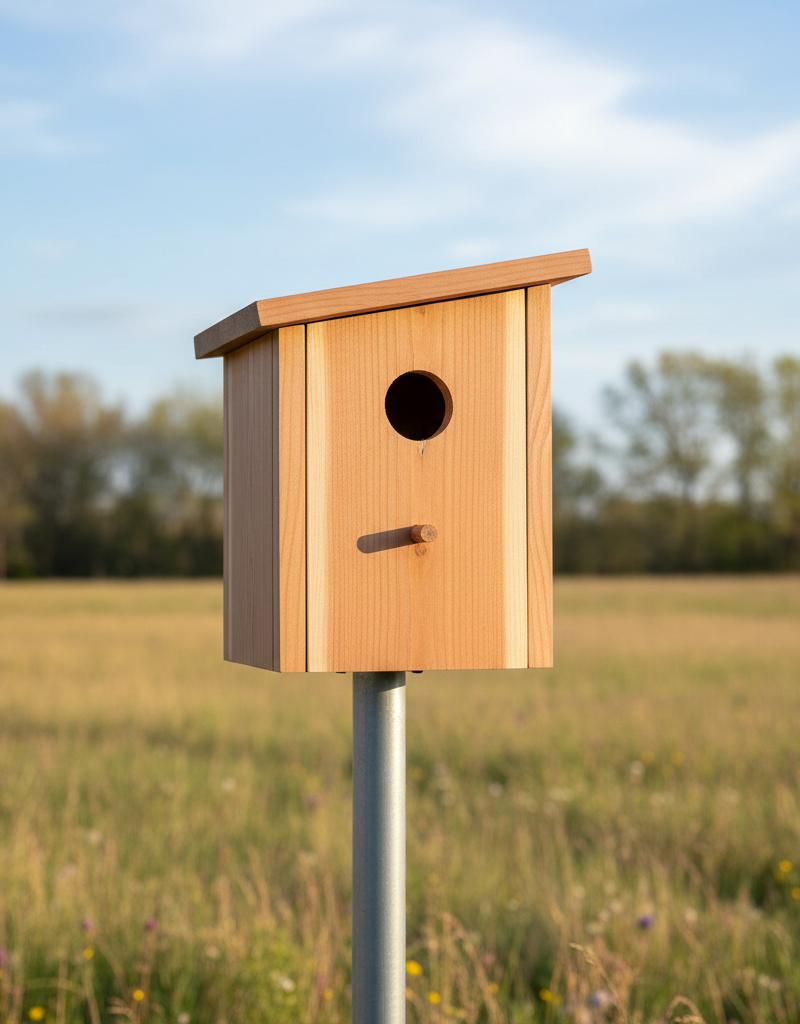
- Adding a Perch: Bluebirds do not need a perch; they can cling to the roughened interior. Perches only aid predators in reaching the nest.
- Instead: Ensure the interior surface beneath the entrance hole is rough (unplaned wood) to help nestlings fledge.
- Incorrect Entrance Hole Size: Too large, and starlings will take over; too small, and bluebirds can't enter.
- Instead: Stick to 1-1/2 inch for Eastern Bluebirds and 1-9/16 inch for Western/Mountain Bluebirds.
- No Ventilation or Drainage: Leads to overheating and wet nests, which can be fatal to nestlings.
- Instead: Include small gaps at the top (under the roof) for ventilation and 1/4-inch holes in the floor for drainage.
- Improper Mounting Location: Placing the house too close to dense woods, buildings, or in areas with too much human traffic.
- Instead: Mount in open, grassy areas with scattered trees, facing away from prevailing winds, 5-6 feet high on a predator-guarded pole.
- Failure to Clean Annually: Old nests harbor parasites and diseases, and prevent new broods.
- Instead: Clean out old nests promptly after each brood fledges, typically in late summer, and once more before the next nesting season begins in early spring.
- Using Treated Wood or Paint: Chemicals can be toxic to birds, and smooth painted interiors prevent nestlings from climbing.
- Instead: Use untreated cedar, cypress, or redwood. Leave the exterior unfinished or use a non-toxic, water-based stain on the exterior only.
Cost & Time Breakdown
| Task | DIY Cost | Pro Cost | Time |
|---|---|---|---|
| Cedar Board (1x6x8') | $15–$25 | N/A | N/A |
| Hardware (screws, hinges, latch) | $5–$10 | N/A | N/A |
| Tools (saw, drill, bits) | $0–$100+* | N/A | N/A |
| Assembly | N/A | N/A | 1–2 hours |
| Mounting Pole & Baffle | $20–$40 | N/A | 30–60 mins |
| *Depends on existing tools |
Tips & Prevention
- Monitor Regularly: Check the house weekly during nesting season for signs of activity, predation, or competing species. Use the hinged front panel carefully to observe the nest without disturbing the birds. This also helps identify issues with House Sparrows early.
- Install Sparrow Spookers: If House Sparrows become a problem, a
Related Articles
Keep troubleshooting with these hand-picked guides from FixlyGuide:
- The Single Cedar Board Secret to Attracting Bluebirds to Your Yard — Discover how to construct an ideal bluebird nesting box using just one cedar board, providing a safe and inviting habitat for these cherish…
- The Single Board Secret to Attracting Bluebirds: A Quick DIY House — Discover how to construct an ideal bluebird house using just one cedar board, providing a safe and inviting home for these cherished backya…
- The Single Cedar Board Secret to Attracting Bluebirds This Spring — Discover how a single cedar board can be transformed into a welcoming home for bluebirds, enriching your yard with their vibrant presence a…
- The 4 Critical Dimensions of a Bluebird House (Most DIY Plans Miss One) — Discover the precise measurements and often-overlooked design elements essential for building a bluebird house that truly attracts nesting…
- The Secret to Endless Hot Showers? It's Not Your Water Heater's Age — Inconsistent hot water or no hot water at all often points to a single, often overlooked culprit: the thermostat. Understanding its role is…
- The 7 Critical Yard Prep Steps Smart Homeowners Never Miss (And Why) — Prepare your yard for a thriving spring with these essential steps, from soil testing to tool maintenance, ensuring a vibrant outdoor space.
Get the print-ready PDF of this guide
A clean, ad-free, printable version you can keep on your phone or pin to the workshop wall. We'll also send occasional weekly tips matched to your home situation.
- Print-optimized layout
- Tools, materials & every step included
- Unsubscribe anytime
This article was independently written by FixlyGuide based on the source topic.
Frequently asked questions
What is the best material for a bluebird house?+
Cedar is widely considered the best material for a bluebird house due to its natural resistance to rot, insects, and moisture. It's durable, weathers well, and does not require chemical treatments that could harm birds. Other good options include cypress and redwood.
What size entrance hole do bluebirds need?+
Eastern Bluebirds require an entrance hole that is 1-1/2 inches in diameter. Western and Mountain Bluebirds can use a slightly larger hole, up to 1-9/16 inches. This specific sizing is critical to allow bluebirds entry while deterring larger, more aggressive species like European Starlings.
How high should a bluebird house be mounted?+
Bluebird houses should typically be mounted on a sturdy pole 5 to 6 feet above the ground. This height helps protect the nest from ground predators and places it at an accessible level for monitoring. Ensure the pole has a predator baffle to deter climbing animals.
Should a bluebird house have a perch?+
No, a bluebird house should never have a perch. Bluebirds do not need perches, as they can cling to the rough interior wood. Perches only provide an easy landing spot for predators, allowing them to access the nest more readily. The interior of the front panel should be left rough to give nestlings grip to exit.
Discussion
Loading comments…