Tools & materials you'll need
Affiliate linksAs an Amazon Associate FixlyGuide earns from qualifying purchases — at no extra cost to you. Prices and availability are accurate as of publication and subject to change.
Quick Answer
If your dishwasher leaves behind food particles, grime, or a cloudy film, the most common and easily overlooked issue is a blockage in the spray arms or a dirty filter. Over time, hard water minerals, food debris, and detergent residue accumulate, severely impeding the flow and pressure of water needed to thoroughly clean your dishes. A simple, hands-on cleaning of these components—which typically takes less than 15 minutes—can often restore your dishwasher's performance to like-new condition, saving you the expense and hassle of a service call.
The Problem
You've loaded your dishwasher, run a cycle, and eagerly opened the door, only to find dishes that are still dirty, coated in a gritty film, or encrusted with dried food. This frustrating experience means your trusty appliance isn't doing its job. The core problem usually boils down to insufficient water pressure, poor water distribution, or a lack of proper drainage during the wash cycle. Instead of effectively blasting away food and rinsing it clean, the water is either not reaching all areas, or it's laden with particulates that redeposit onto your dishes. Before you blame the detergent, water temperature, or your loading technique, it's crucial to inspect the internal components directly responsible for water delivery and filtration.
How It Works
A dishwasher operates on a surprisingly simple yet effective principle: it sprays hot water mixed with detergent under high pressure onto soiled dishes, then drains away the dirty water, and finally rinses and dries them. Here's a quick breakdown of the key components involved in this process:
- Water Inlet Valve: This valve opens to allow hot water from your home's supply into the dishwasher tub.
- Circulation Pump: Once water is in the tub, the circulation pump draws it through a heating element (to maintain optimal cleaning temperature, typically 120-150°F) and then forces it up into the spray arms.
- Spray Arms: These rotating arms, typically one in the bottom, one in the middle, and sometimes one at the top, feature numerous small jets. The force of the water exiting these jets causes the arms to spin, ensuring water reaches all surfaces inside the dishwasher. The pressure and unobstructed flow from these jets are critical for effective cleaning.
- Heating Element: Located at the bottom of the tub, this element heats the water during wash cycles and often assists in drying dishes at the end of the cycle.
- Filters: Most dishwashers have a multi-stage filter system, usually located at the bottom of the tub. This system catches food particles and debris, preventing them from being recirculated onto your dishes and protecting the pump. These filters are the primary defenders against debris re-deposition.
- Drain Pump: After the wash and rinse cycles, the drain pump activates to expel the dirty water through the drain hose and into your home's plumbing system.
- Detergent Dispenser: This compartment releases detergent at the appropriate stage of the wash cycle.
When a dishwasher isn't cleaning, one or more of these components, particularly the spray arms or filters, are compromised. Clogged spray arm jets reduce water pressure and distribution, while a dirty filter allows food particles to remain in the wash water, leading to dirty dishes.
Step-by-Step Fix
1. Safety First — Always disconnect power before reaching into the dishwasher tub.
- Safety Note: Before attempting any inspection or repair inside your dishwasher, always turn off the circuit breaker that supplies power to the unit. This prevents accidental startup or electrical shock. For gas models, also ensure the gas supply is turned off if you plan to move the appliance.
2. Clear the Lower Rack — Access the bottom of the dishwasher.
- Remove the lower dish rack completely to gain full access to the bottom spray arm and the filter assembly. You may need to pull the rack out and then lift it slightly from its rollers or tracks.
3. Inspect and Clean the Bottom Spray Arm — Look for clogged jets.
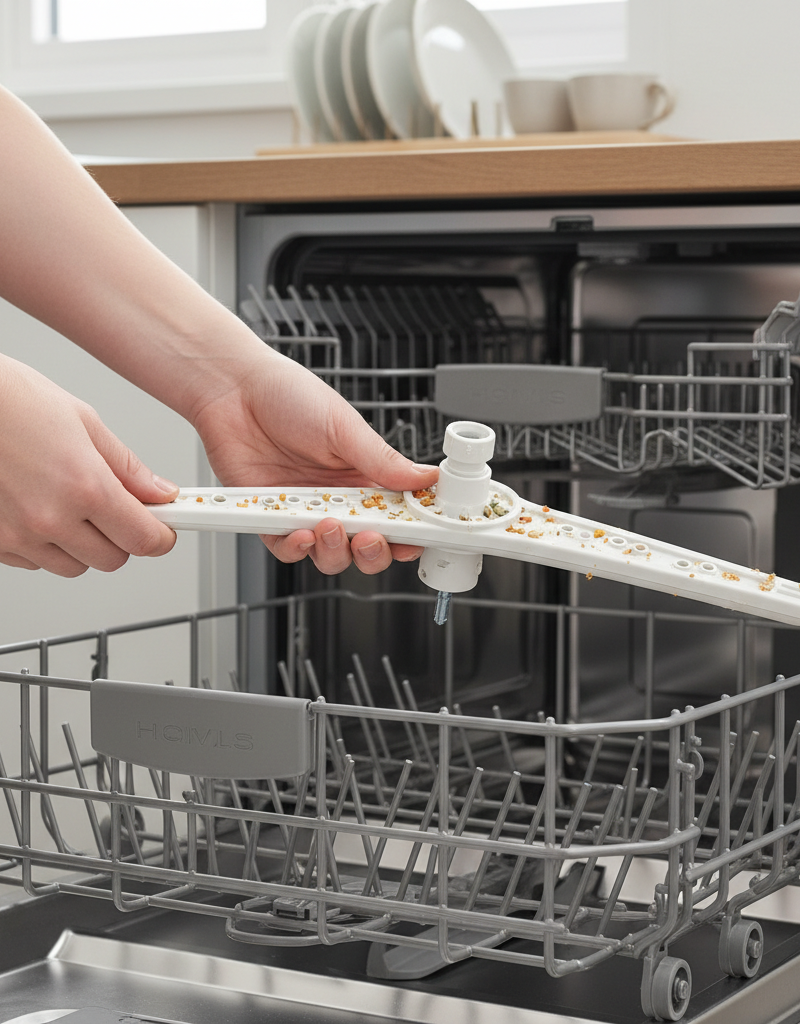
- Remove the arm: The bottom spray arm usually unscrews or lifts off a central hub. Turn it counter-clockwise to loosen or gently pull up. Note how it attaches so you can reassemble it correctly.
- Inspect jets: Hold the spray arm up to a light source. Are any of the tiny holes blocked by food particles, mineral deposits, or labels?
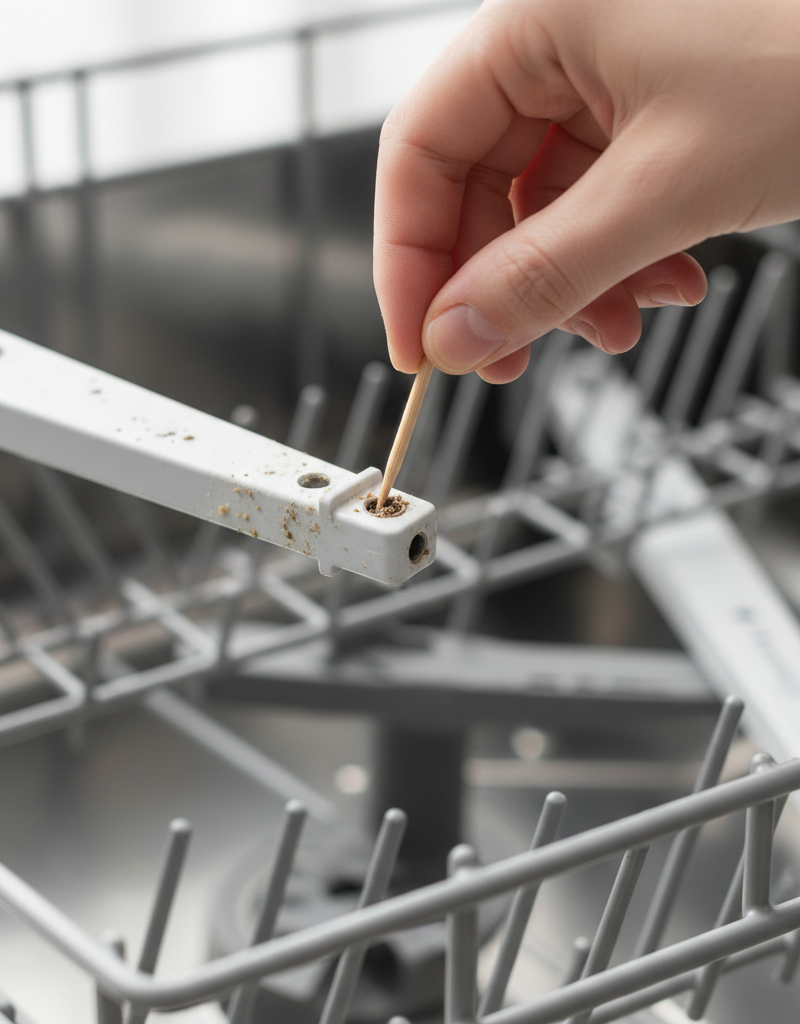
- Clear blockages: Use a toothpick, a straightened paperclip, or a thin piece of wire to carefully poke out any obstructions from each jet. Run water through the arm in both directions to flush out loosened debris.
- Rinse thoroughly: Rinse the spray arm under a faucet to ensure all loosened debris is gone.
4. Address the Middle and Top Spray Arms (If Applicable) — Don't forget these.
- Middle arm: The middle spray arm (often attached to the upper dish rack) can usually be unclipped or unscrewed. Repeat the inspection and cleaning process as with the bottom arm.
- Top arm: Some dishwashers have a small third spray arm at the very top of the tub. Inspect and clear any blockages here as well.
5. Clean the Dishwasher Filter — This is a major culprit.
- Locate the filter: The filter is typically a cylindrical or flat screen assembly located at the bottom of the dishwasher tub, often under the bottom spray arm.
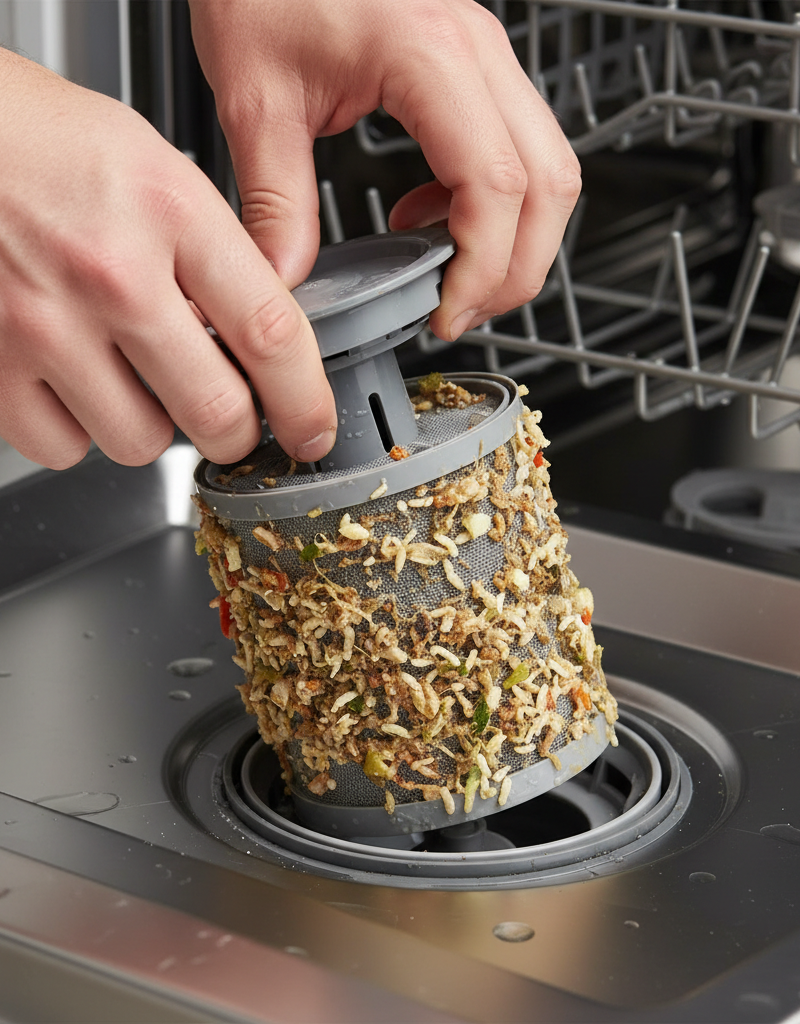
- Remove filter components: Most modern dishwashers have a two-part or three-part filter system. There's usually a coarse filter (larger mesh) and a micro-filter (fine mesh). Twist the handle or outer ring of the cylindrical filter counter-clockwise to unlock it, then lift it out. For flat filters, you might need to unsnap them. Refer to your owner's manual for exact removal instructions.
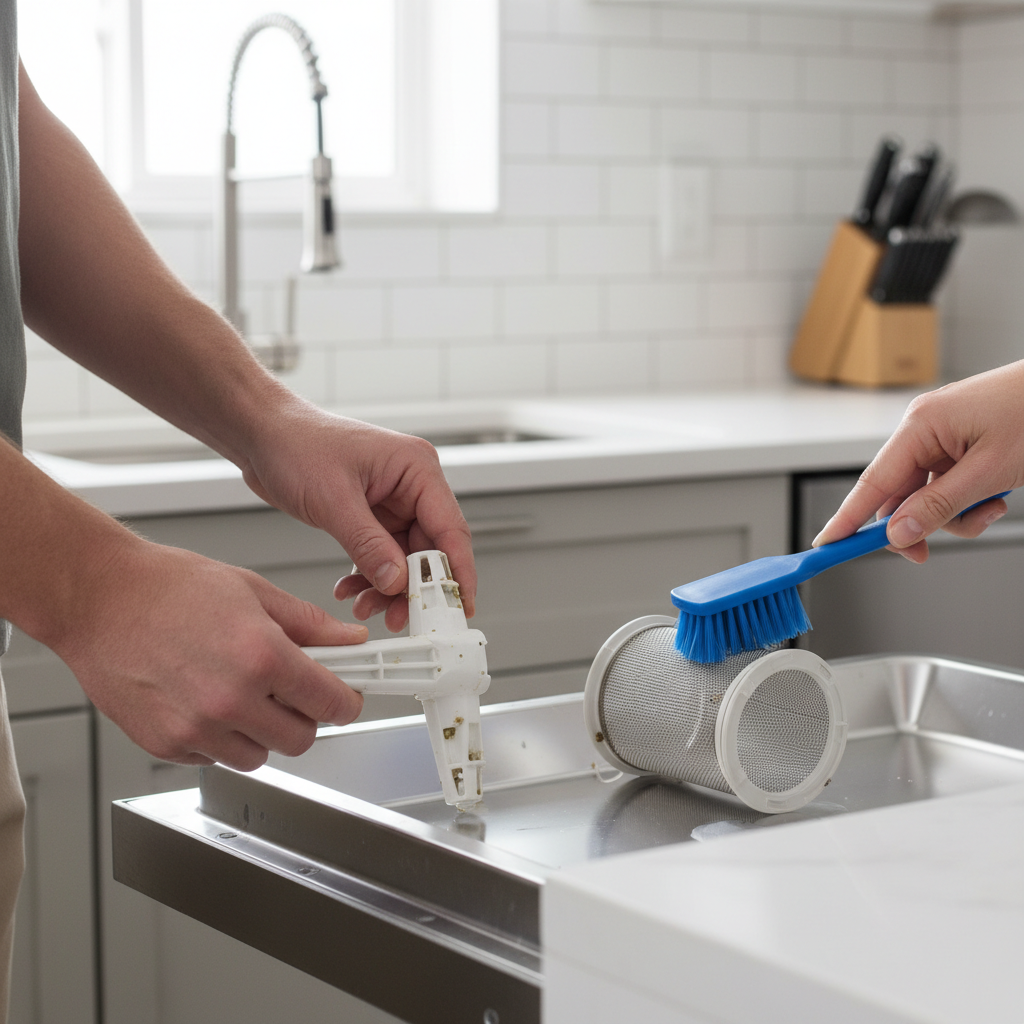
- Rinse thoroughly: Take the filter components to your sink and rinse them under hot running water. Use a soft brush (like a dish brush or an old toothbrush) and a small amount of dish soap to scrub away any trapped food particles, grease, and mineral buildup. Pay close attention to the fine mesh of the micro-filter.
- Ensure clarity: The filter should be visibly clean and free of any debris. All mesh openings should be clear.
6. Inspect the Sump Area — Look for hidden gunk.
- With the filter removed, peer into the sump area at the very bottom of the dishwasher tub. You might see standing water or accumulated debris. Use a paper towel or sponge to remove any visible food scraps, broken glass, or other foreign objects.
7. Check for Blocked Drain Holes — Beyond the main culprits.
- Around the filter area and near the drain opening, there might be small drain holes. Ensure these are also free from debris. A toothpick can be useful here.
8. Reassemble Components — Put it all back together.
- Carefully reinsert the filter components, ensuring they are properly seated and locked into place. An improperly seated filter will lead to poor performance and potential damage.
- Reattach all spray arms, making sure they can spin freely and are securely fastened. Give them a gentle spin by hand to confirm they move without obstruction.
- Replace the lower dish rack.
9. Run a Cleaning Cycle — Test your work.
- No dishes: Load the dishwasher with a dishwasher cleaning tablet or 2 cups of white vinegar (placed in a bowl on the bottom rack). Do not add regular detergent.
- Hottest cycle: Run the dishwasher on the hottest and longest wash cycle available (e.g.,
Related Articles
Keep troubleshooting with these hand-picked guides from FixlyGuide:
- The #1 Mistake Homeowners Make When Their Dishwasher Stops Cleaning (And the Simple Fix) — Discover the most common reason your dishwasher isn't cleaning dishes and learn a simple, effective fix you can do yourself in minutes.
- The #1 Mistake Homeowners Make When Their Dryer Stops Drying (And How to Fix It Free) — If your dryer is taking too long to dry clothes, the most common culprit is a clogged vent, which can be easily fixed with simple tools.
- The #1 Reason Your Ice Maker Stopped (It's Not Clogged!) — Discover the most overlooked culprit behind a non-working ice maker and how a simple fix can restore fresh ice to your freezer.
- The #1 Mistake Homeowners Make When Their Ice Maker Stops (And the Easy Fix) — Is your refrigerator ice maker on strike? Often, a simple oversight or minor clog is the culprit, easily fixable with basic tools.
- The Silent Killer of Your Ice Maker: Why Most Homeowners Miss This Easy Fix — A non-functioning ice maker is a common refrigerator issue, often due to a clogged water line or a faulty fill valve, which homeowners can…
- The #1 Mistake When Your Oven Isn't Heating (and the $0 Fix) — Fix your oven not heating to the correct temperature by understanding a common overlooked issue and simple troubleshooting steps.
Frequently asked questions
Why are my dishes still dirty after a dishwasher cycle?+
The most common reasons are clogged spray arm jets, a dirty or improperly seated filter, or incorrect loading that blocks water flow. Less common causes include low water temperature, a faulty detergent dispenser, or a malfunctioning pump.
How often should I clean my dishwasher filter?+
For optimal performance, inspect and rinse the dishwasher filter monthly, or more frequently if you use your dishwasher daily, have hard water, or pre-rinse dishes minimally.
Can hard water cause my dishwasher to not clean properly?+
Yes, hard water can lead to mineral buildup (limescale) in the spray arm jets and filter, reducing cleaning effectiveness and leaving a cloudy film on dishes. Regular cleaning and using a rinse aid can help mitigate this.
What happens if I don't clean the dishwasher's spray arms?+
If spray arm jets are clogged, water pressure will be reduced and water won't be distributed evenly across all dishes. This results in dirty, poorly rinsed dishes and can eventually strain the pump.
Discussion
Loading comments…